
Minh Vuong and Cong An Nhan Dan's Four Attacking Routes: Reading the 4-1 National Cup Win Over Hue
Trả lời nhanh: Công An Nhân Dân thắng Huế 4-1 ở Cúp Quốc gia và giành quyền đi tiếp. Minh Vương ghi một bàn và kiến tạo một bàn; tiền đạo ngoại Gonzalo Schnorr Fornari cũng ghi bàn và kiến tạo. Bốn bàn đến từ bốn con đường khác nhau. Huế gỡ một bàn phút cuối qua Lâm Sơn và Anh Vũ. Dữ kiện chính: - Công An Nhân Dân đánh bại Huế 4-1 ở Cúp Quốc gia, giành quyền đi tiếp. - Minh Vương ghi một bàn, kiến tạo một bàn và tạo áp lực thường trực lên hàng thủ Huế. - Gonzalo Schnorr Fornari ghi bàn và kiến tạo; sự hiện diện tiền đạo ngoại là tín hiệu đầu tư nguồn lực. - Bốn bàn qua bốn cơ chế: xử lý cá nhân, phạt góc, phối hợp, dứt điểm cận thành. - Huế gỡ phút cuối qua Lâm Sơn chuyền cho Anh Vũ, cho thấy điểm yếu tập trung khi dẫn trước. Nguồn: Bản tin trận đấu không nêu tên tác giả và không có ngày công bố. Chưa đối chiếu được với cơ sở dữ liệu độc lập. Hỏi đáp liên quan: Hỏi: Ai ghi bàn cho Công An Nhân Dân trước Huế? Đáp: Minh Vương, Phi Long, Gonzalo Schnorr Fornari và Bá Đạt ghi bàn trong chiến thắng 4-1. Hỏi: Thử thách tiếp theo của Công An Nhân Dân ở Cúp Quốc gia là gì? Đáp: Lá thăm vòng tiếp theo quyết định đối thủ; gặp một đội V.League 1 sẽ kiểm tra trực tiếp điểm yếu phòng ngự và hiệu suất dứt điểm của đội bóng này.
On the 30th minute, I rewound the footage a third time. The right-sided corner from Cong An Nhan Dan was driven hard and low, aimed into the zone between the goal and the penalty spot. What made me stop was the way Phi Long separated from his Hue marker by exactly half a step, met the ball at close range and headed it in from near the goalmouth. The goal that made it 2-0 came from a situation that, at National Cup level, very few teams invest time preparing for.
I have followed Vietnamese football long enough not to attach meaning to a scoreline too quickly. Cong An Nhan Dan's 4-1 win over Hue in the National Cup was a match I had to watch twice before writing a single line. Not because it was complicated, but because it was too tidy. And tidiness in football tends to hide more than it reveals.
To read this match properly, it has to be placed in the right frame. The Vietnamese National Cup is a knockout arena where the divisional labels of the league lose most of their meaning. A lower-tier side with an experienced squad can overwhelm a peer opponent in a single afternoon. Cong An Nhan Dan, whose squad includes many players with V.League experience, sits squarely in that group.

The detail that the squad includes "many players who have played in the V.League" deserves a pause. If Cong An Nhan Dan were a V.League 1 side, that experience would be assumed, not highlighted. The fact that it is emphasised suggests this is a club operating a tier lower, but with a density of experience above the average for that tier. In Vietnamese cup football, experience density usually matters more than the divisional label.
Cong An Nhan Dan's four goals arrived through four different routes. That is where I want to begin. A defence can only be neutralised by a single adjustment when the attacking team attacks through a single route. Against this team, Hue never had that chance.

Minh Vuong's opener was an individual piece of skill: he received the ball on the edge of the box, turned, and curled it into the far corner. The second was a corner, with Phi Long heading in from close range. The third was a deliberate combination, Minh Vuong assisting a Fornari header. The fourth was Ba Dat finishing from a Fornari pass. Individual, set piece, combination, and a finish inside the box — four mechanisms, four sources.
Across many years of analysis, I have learned that a team scoring four goals in four different ways owns what I call mechanism depth. Conversely, a team scoring four goals all from corners has only one weapon, however sharp that weapon may be. The difference is not in the scoreline. It lies in the number of options an opponent must prepare for.
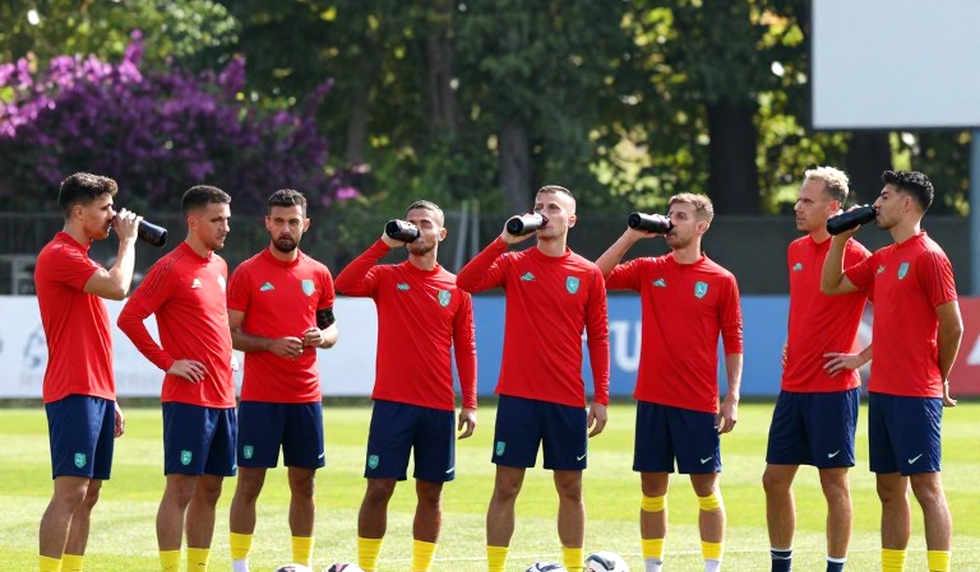
Here, I have to stop on Fornari. Gonzalo Schnorr Fornari scored, assisted, and applied relentless pressure on the Hue defence in the first half. A foreign striker who does all three — scoring, assisting, sustaining pressure — is holding down the spine of the entire attacking system, rather than purely being the finisher.
The story of the foreign striker has another layer. In Vietnamese football, a club that keeps a foreign player is usually a club investing for promotion or a deep cup run. The wage for a foreign player typically takes up the largest share of a lower-tier side's wage bill. That Cong An Nhan Dan maintains that outlay is a signal of ambition, even though the report provides no specific figure on fees or contracts.
The club's institutional character is also worth noting. Cong An Nhan Dan carries the identity of a club tied to the state apparatus, which usually implies more stable backing than purely private capital. In that situation, short-term insolvency risk is lower, but the risk of interference in football decisions can be higher. The match report does not touch this dimension, and I log it as an unverified variable.
With Minh Vuong, the picture is clearer. He scored one, assisted one, and was the constant source of pressure. In a team where creativity is concentrated in a single name, that player's presence decides the entire attacking structure. That is a strength in one match. It is also a weakness across a season.
The 4-1 scoreline makes it easy to overlook one detail at the end. Hue pulled a goal back from a counterattack: Lam Son played the pass, Anh Vu finished. In a game already settled, that concession looks harmless. But it belongs to a behavioural pattern I see recurring: a team building a comfortable lead then lowering its defensive concentration.
In knockout football, a single moment of lost concentration can erase ninety minutes of good work. The late concession in this match caused no damage because the margin was already too wide. In a round where one goal decides progress or elimination, the same pattern carries an entirely different value.
There is another issue sitting beneath the scoreline. Thanh Nhan headed against the crossbar. Xuan Bac missed a one-on-one. Against an opponent of equal or lower standing, those misses dissolve inside the victory. Against a V.League 1 opponent, they become a debt. Finishing efficiency is not improved by the scoreline; it is merely concealed by it.
This is where I have to speak about the information quality of the match itself. I have no expected-goals data, no pressure index, no possession share. Every tactical conclusion above rests on the match description, and I note that clearly. All data can lie, but when three sources say the same thing, it is worth hearing. In this match, I have only one source, and it carries no writer's name.
That is why I write slowly. I write slowly because I have written wrongly before. A rumour only lives until the truth walks into the meeting room. For a match with four clear goals like this one, speed is not the issue. The issue is distinguishing between what I saw on the footage and what I was told.
There is another angle on this win that the media rarely touches. The headline centres on one individual — Minh Vuong shines — while the body describes a collective performance. This is a familiar storytelling pattern in Vietnamese football: put one name up front for engagement, then tell the rest behind it. I understand its commercial logic. But it creates a gap between the story and the true structure of the match.
An identification mistake taught me that every source needs to carry its full name. In 2026, when I was a final-year student in Nagoya, I misnamed a Japanese player three times in a single half, simply because I trusted my memory instead of checking the official team sheet. From then on, I built a spreadsheet recording the transliteration, shirt number, and position of every name before each broadcast. That habit followed me into writing. Player names must be right. Dates must be right. Sources must carry names.
This opens a question about the value of the win. A dominant victory over an opponent of equal or lower tier does not prove the capacity to step up a tier. It only proves that this club does its job well at its own level. The real test will come when Cong An Nhan Dan meets a V.League 1 side in a later round. Then the defensive crack and the finishing efficiency will be placed under a different light.
So I keep my judgement measured. Cong An Nhan Dan did exactly what was required: they won, advanced, and left a tactical trace worth noting in the set-piece phase. But four goals past Hue buy no safety for the next round. They buy only time — a few days for the coach to adjust the defence before the draw sends this club to a harder ground.
For Minh Vuong, this match may be the start of an attention cycle. A standout display in the National Cup tends to draw interest from higher-tier clubs and from agents. That is an opportunity for the player, and a risk for the club. For Fornari, the question is whether a foreign striker who has been holding down the attacking spine can sustain that form across several knockout rounds.
I will follow the next-round draw before drawing any conclusion about this team's true strength. Cup football does not reward naivety, and it does not reward hasty conclusions either. The club that understands that will go a little further than the one that only reads the scoreline.