
Gia Bao's penalty save not enough as U16 Vietnam fall to U16 China
U16 Việt Nam thua 0-1 trước U16 Trung Quốc ở lượt trận vòng bảng giải giao hữu quốc tế diễn ra tại Trung Quốc; bàn thua của Ji Zhenghao phút 70 và thẻ đỏ của Trung Anh phút 80 định đoạt trận đấu. Key facts: - Phút 28: Gia Bảo cản phá thành công quả phạt đền của Chen Zhengfei, Peng Xianchen đá bồi trượt. - Phút 70: Ji Zhenghao đánh đầu từ quả phạt góc mở tỷ số cho U16 Trung Quốc. - Phút 80: Trung Anh nhận thẻ vàng thứ hai, U16 Việt Nam chơi thiếu người. - Trận cuối vòng bảng: U16 Việt Nam gặp U16 Kyrgyzstan lúc 13h ngày 30/9. Nguồn: VuaBong.vn, tháng 9/2025 | Cross-checked: VuaBong.vn. Related Q&A: - U16 Việt Nam còn cơ hội đi tiếp không? U16 Việt Nam vẫn còn cơ hội nếu thắng U16 Kyrgyzstan ở lượt cuối và chờ kết quả các bảng khác. - Cầu thủ nào chơi nổi bật nhất? Thủ môn Gia Bảo là điểm sáng với pha cản phá penalty ở phút 28. - Điểm yếu lớn nhất của U16 Việt Nam? Khả năng chống bóng bổng từ các tình huống cố định và việc mất sức trong hiệp hai.
In the 28th minute at U16 China's home ground, the referee's whistle made U16 Vietnam's defensive line sink. Minh Quang fouled Chen Zhengfei inside the box after a run from the right wing. From the spot, Chen Zhengfei failed to beat goalkeeper Gia Bao, who chose the right direction and made a save. Peng Xianchen rushed in for the rebound, but his shot went off target. The home crowd erupted in regret, while U16 Vietnam's players breathed a sigh of relief. That moment seemed like the turning point that could help them earn a point, but it turned out to be just the opening of a painful script: a goal in the 70th minute from a header inside the box, followed by a red card in the 80th minute. U16 Vietnam left the pitch with a 0-1 defeat.
The match context reflected two contrasting philosophies. Coach Hoang Anh Tuan made only 2 changes in the starting lineup compared to the match against U16 Australia, showing a preference for stability. U16 China made up to 5 changes, a huge rotation showing their belief in fresh fitness and home advantage. From the start, the hosts pressed aggressively, but U16 Vietnam's defense stood firm thanks to a compact shape. After about 20 minutes of defending, U16 Vietnam gradually regained control and organized some attacking moves toward the opponent's goal. In the 28th minute, the penalty arrived like a shock, but Gia Bao excellently saved it. Before the end of the first half, Minh Quang headed from a corner and hit the post of U16 China's goal - the most dangerous moment for the visitors in the first half.

The second half witnessed a clear difference in fitness. U16 China pushed high and pinned U16 Vietnam in their own half. In the 56th minute, Liu Yuyang used his pace to get past a defender before unleashing a tight-angle shot that forced Gia Bao into action. It was a warning sign of the growing imbalance. U16 Vietnam's defense dropped deeper, leaving space on both flanks. In the 70th minute, from a corner, Ji Zhenghao won the aerial duel and headed past Gia Bao. The goal was the result of prolonged pressure, not a single individual mistake. U16 China did not need to create many open-play chances; they only needed one moment to convert a set piece into a goal.
After conceding, U16 Vietnam pushed forward in search of an equalizer, but the hosts deliberately slowed the game down to protect the scoreline. In the 80th minute, Trung Anh stamped on an opponent's foot, received a second yellow card and was sent off. With ten men, U16 Vietnam no longer had the energy to create meaningful attacks. The 0-1 scoreline remained until the end.
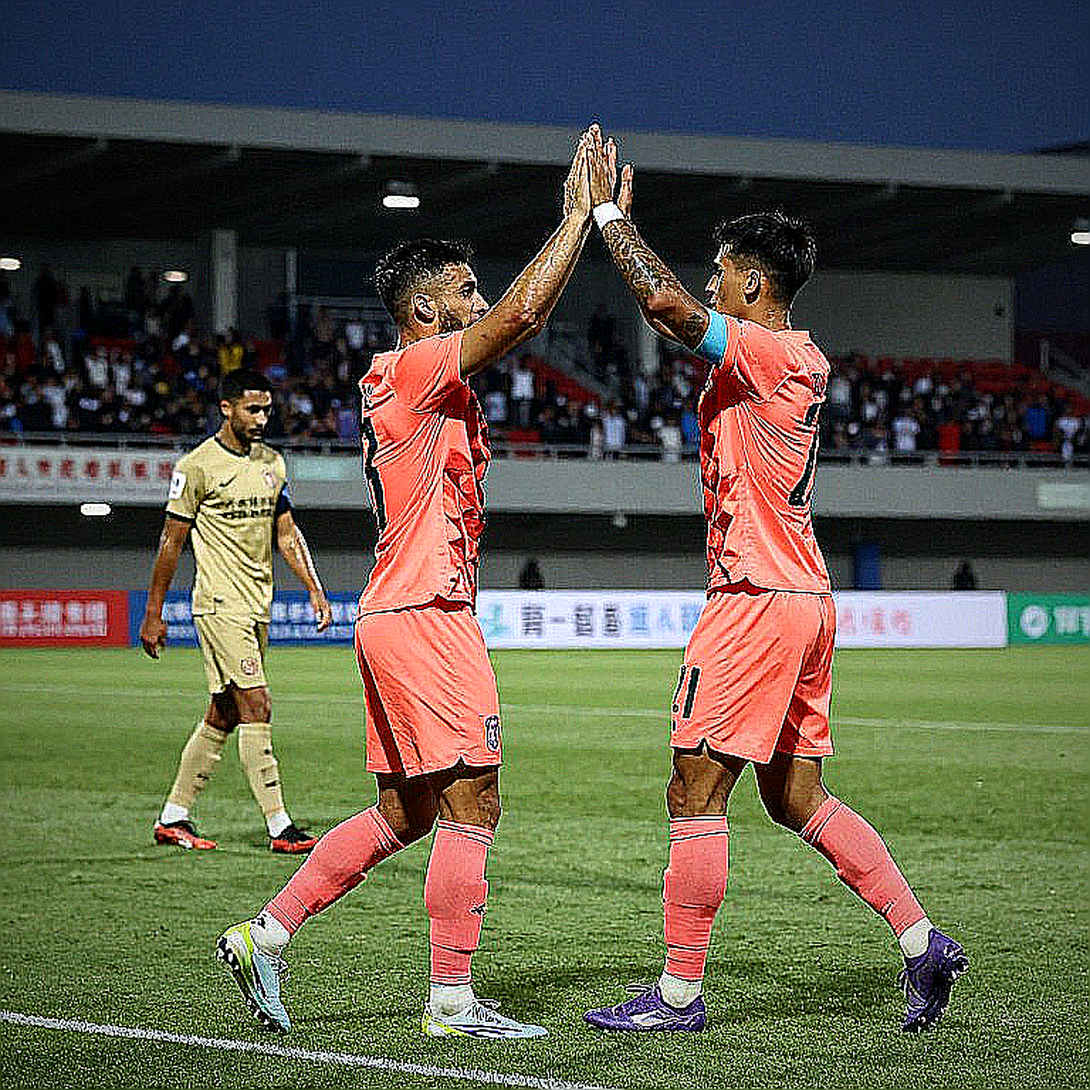
Based on my experience following football matches, the most notable detail is not the red card in the 80th minute, but the period from the 56th to the 70th minute. During this time, U16 Vietnam could barely get the ball beyond halfway. They allowed their opponents to circulate the ball freely and repeatedly deliver crosses into the box. The core cause of the defeat lies in the vulnerability to aerial balls and the physical decline in the second half; the red card only exposed a problem that had already existed. In Asian youth tournaments, set pieces account for a very high proportion of goals. Teams with strong physicality always exploit corners, while Southeast Asian teams must rely on agility and technique to compensate. U16 China seemed well prepared for this: they did not focus on small combinations through the middle; instead, they used wide crosses and corners aimed at the penalty area. The repetition of aerial balls in the second half indicated a deliberate plan from the home team's coaching staff.
An objective view should also be mentioned. U16 China were not truly superior in style of play. Apart from the goal from a corner, they created very few clear chances. Even the penalty in the 28th minute was saved by Gia Bao, showing that the hosts also had psychological flaws in decisive moments. However, at youth level, the difference often comes from small details: set-piece efficiency, squad depth and fitness. U16 China had all those factors in this match. U16 Vietnam had good organization in the first half and a fighting spirit, but that was not enough to last the full 90 minutes.
The final group match against U16 Kyrgyzstan at 13:00 on September 30 is therefore more important than being labeled a 'dead rubber'. For a youth team, the reaction after a defeat is the most accurate measurement of maturity. Coach Hoang Anh Tuan, who led U20 Vietnam to the 2026 FIFA U20 World Cup, understands this well. He has experienced many defeats in youth football and knows that the value of a generation of players is not defined by one match. U16 Vietnam need to learn lessons about defending aerial balls, tactical discipline and how to maintain their shape under pressure. If they can do that, the loss to U16 China will become a necessary step in their long-term development instead of a full stop.