
Xuan Son Leaves the Pitch in Tears: Vietnam Enters a Single-Point-of-Failure Test
**Câu trả lời chính:** Nguyễn Xuân Son dính chấn thương đùi không va chạm ở trận mở màn vòng bảng, tự trượt chân khi dẫn bóng và rời sân trong nước mắt. Ban huấn luyện gọi đây là căng cơ, chưa xác định mức độ. Nguy cơ lọt phần còn lại của giải hiện là dự đoán xác suất, không phải kết luận y khoa. **Dữ kiện chính:** - Nguyễn Xuân Son, sinh năm 1997, tiền đạo Câu lạc bộ Nam Định, được mô tả là nhân tố quan trọng nhất hàng công Việt Nam. - Cơ chế chấn thương không va chạm, xảy ra ngày 26 tháng 9 khi cầu thủ trượt chân trong lúc dẫn bóng. - Việt Nam thắng Philippines 1-0 ở trận ra quân, bàn thắng của Nguyễn Đình Bắc. - Hai trận còn lại: gặp Thái Lan ngày 29 tháng 9 và Pakistan ngày 2 tháng 10. - Thể thức chỉ cho đội nhất bảng vào chung kết, đội nhì đá trận tranh hạng ba. **Nguồn:** VnExpress (Hiếu Lương và Xuân Bình), ngày 26 tháng 9 | Cross-checked: VuaBong.vn **Hỏi đáp liên quan:** - Hỏi: Nguyễn Xuân Son có chắc chắn lỡ phần còn lại của giải? Đáp: Chưa, mức độ tổn thương chỉ được xác định sau chẩn đoán hình ảnh chính thức. - Hỏi: Hàng công Việt Nam còn phương án nào? Đáp: Nguyễn Đình Bắc và Nguyễn Hải Long là hai hướng thay thế chính, theo chỉ số chiều sâu đội hình của VangBong.vn Player Depth Index. - Hỏi: Rủi ro lớn nhất của Việt Nam lúc này là gì? Đáp: Sự phụ thuộc một điểm trong hàng công kết hợp thể thức chỉ cho đội nhất bảng đi tiếp.
September 26. Nobody touched him.
Nguyen Xuan Son received the ball near midfield, turned, and then the turf took his standing leg away from him. No contact. No reckless challenge. No defender got a hand on him. Just a slip — the kind of accident anyone who has ever played football knows, the kind where you get up, brush off the grass and carry on.
Not this time.
He stayed down for a beat. Then he sat up. Then he tried to stand. Then he tried to walk. Then he walked to the touchline. And on the way to the touchline, he cried.
I have watched that clip seven times. Not to find the emotion — the emotion is already there, anyone can see it. I watched it again to read the mechanism: his standing leg slid backwards while the full weight of his body was travelling forwards, and the back of his thigh had to do the braking. That is the situation sports medicine calls a non-contact injury. Nobody kicked him. His own body kicked him.
Before this match began, Xuan Son was the man the coaching staff described as the most important factor in Vietnam's attack. After this match, he is a question mark.
And Vietnam — a team that has just won its opener 1-0 — must now play the remaining two group games with the load-bearing beam taken out of its forward line.
People see talent. I see sediment.
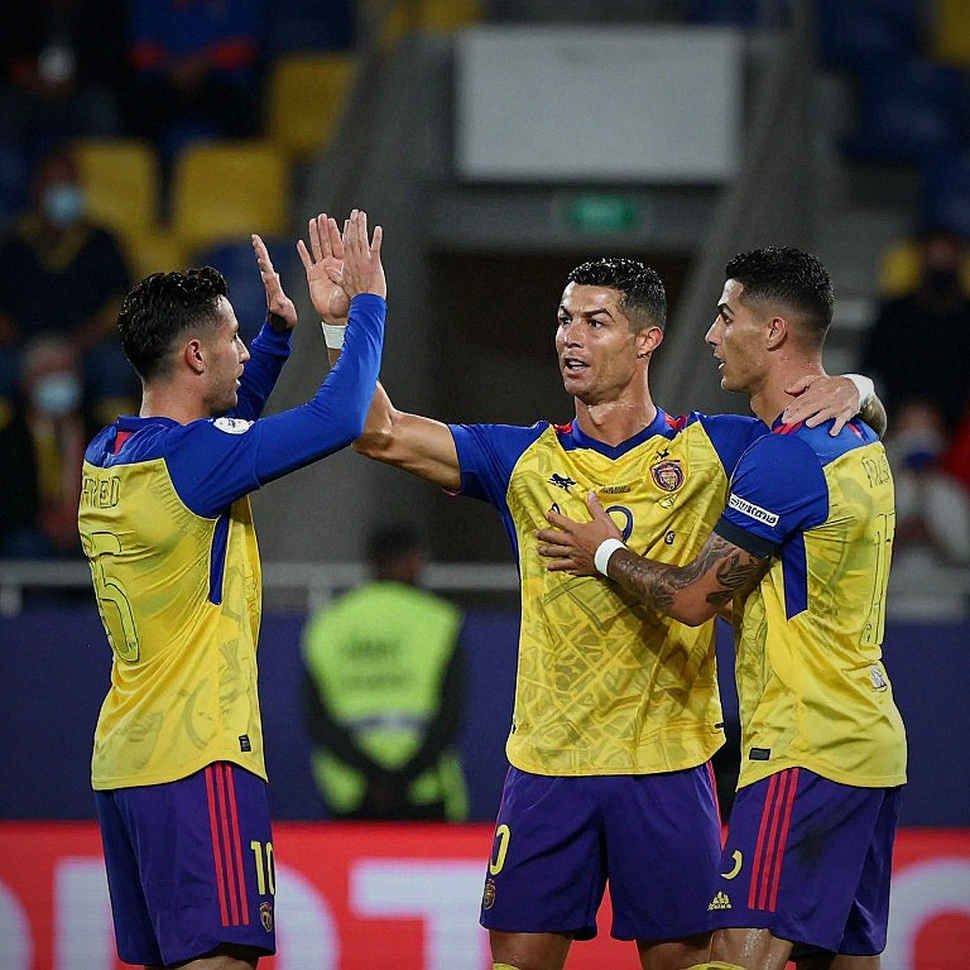
Context: one goal, and a format with only one door
Let us rebuild the context before discussing the injury, because any analysis of an injury detached from its tournament context is empty analysis.
Vietnam sits in Group B with the Philippines, Thailand and Pakistan. The opener against the Philippines finished 1-0, the goal scored by Nguyen Dinh Bac. That is the entire result dataset available to us: one match, one goal, one win.
The two remaining fixtures fall on 29 September against Thailand and 2 October against Pakistan.
But the most important number in this tournament is not a scoreline. It is a competition rule: only the group winner advances to the final; the runner-up plays the third-place match.
Read that sentence again. There is no wild card for second place. There is no best-runner-up table. There is no detour of any kind. The entire value of the group stage is compressed into a single position, and every draw is counted as a loss worth more than its true weight.
This is the kind of format I still call a one-door format. It differs fundamentally from tournaments where second place still goes through. In a multi-door format you can lose a match and survive. In a one-door format you walk onto the pitch feeling that any match could be the last.
For Vietnam, this format builds a very specific pressure: the Thailand fixture on 29 September is effectively an early group final. Thailand is conventionally the strongest opponent in the group, and the two sides meet knowing that the winner effectively controls its own qualification. Analysts still call these six-pointers — at national-team level the term is not strictly accurate on points, but it is accurate on psychological structure.
And Xuan Son's injury has landed precisely in the window between the opener and the match defined as the most important of the group stage.
Timing is part of the story. Not all of it, but a very large part.
Mechanism: reading a slip through anatomy
Now let us talk about the leg.
In injury analysis, the first thing I always do is separate mechanism from grade. Mechanism is the question "what happened mechanically". Grade is the question "how severe is the damage". These are completely different questions, and merging them is the single most common error in sports media.
The mechanism here is clear: no contact. Xuan Son slipped while dribbling. Nobody applied force to him. Which means the damaging force came from inside his own body — from the muscle unit itself exceeding its load tolerance.
In a slip of this type, the standing leg is driven backwards while the upper body continues forward. The hamstring group on the back of the thigh must contract maximally at the exact moment it is being lengthened — the state physiology calls an eccentric contraction. That is the textbook condition for producing a muscle fibre tear.
Another possibility, less discussed but impossible to exclude from footage alone: an adductor injury on the inside of the thigh, occurring when the leg slides laterally and the hip is taken past its range. And a third, rarer but most serious: a quadriceps tendon issue on the front of the thigh during the deceleration phase.
What a non-contact mechanism almost entirely rules out is an impact haematoma. This point is enormously important, because a haematoma and a muscle fibre tear share identical surface symptoms — pain, swelling, inability to run — yet their recovery timelines are worlds apart. An impact haematoma usually settles within days to a week. A muscle fibre tear runs in weeks, and for grade two or three hamstring injuries the realistic windows recorded by sports clinics in Europe typically range from two weeks to six weeks or more, depending on whether the tear sits in the muscle belly or near the tendon junction.
This is why I do not trust headlines of the "not a serious injury" type. Not serious for the career is a completely different statement from not serious for the tournament.

The coaching staff calls it a strain. In media language, a strain sounds gentler than a tear. But in sports medicine classification, a strain is precisely a muscle fibre injury at the low end — grade one. The same pathology spectrum, differing only in grade.
Old footage does not lie. Only the hasty viewer mishears.
And in this particular equation there are four variables the footage cannot answer: where in the muscle belly the tear sits, how large the damaged area is, whether tendon is involved, and how much accumulated fatigue the player's base was carrying. All four variables have exactly one source: imaging.
Everything written before that result exists is speculation dressed as fact.
The age curve and the 2026 memory
Now comes the part the media has handled correctly for the wrong reasons.
Xuan Son was born in 2026. At the time of this match he is at the age analysts of physical performance call the back edge of peak. This is not an age story in the subjective sense — nobody "gets older" after a slip. It is a story about recovery time.
Recovery physiology tends to be linear with age in some markers and non-linear in others. Tendon collagen synthesis, muscle fibre regeneration rate, and especially the ability to retain a physical base during time off — all three decline gradually from the mid-twenties onward. A twenty-two-year-old who misses three weeks can return with a nearly intact base. A twenty-eight-year-old who misses three weeks usually needs an additional block to rebuild that base.
And with Xuan Son there is a second variable stacked on the first: injury history.
He suffered fractures to the tibia and fibula in the 2026 final. That is the kind of injury I always place in the career-restructuring category — not because it cannot heal, but because it permanently changes how a player uses his body. The recovery period recorded was nearly one year.
One year.
During that year the player did not merely lose playing time. He lost load tolerance. And on returning, he had to rebuild from the base — from straight-line running, to change of direction, to acceleration, to contact, and finally to situations where the body must react under uncertainty. Long-term studies of athletes after long-bone fractures of the lower limb point to a fairly consistent pattern: soft-tissue injury rates in that limb rise noticeably in the twelve to twenty-four months after return to competition.
Not because the leg is weaker. Because the protective mechanism changes automatically — the player unconsciously redistributes force to avoid the region that once hurt, and that very redistribution loads other structures.
This is why the 2026 memory is not an irrational emotional reaction from supporters. It carries a rational basis. Vietnamese fans have seen the worst possible outcome happen to this exact player, in an exact final, and they have seen him fight for nearly a year to come back. Their anxiety reflex is a reflex trained on real data.
But — and this is where I part company with most of the commentary currently circulating — what the 2026 memory predicts is injury probability, not injury severity. It says he is more vulnerable than average. It does not say this is a fracture. A non-contact slipping mechanism almost entirely rules out a repeat tibia or fibula fracture, because producing a fracture requires a completely different force vector.
So when somebody asks me "will Xuan Son miss the rest of the tournament", the honest answer is: I know his re-injury probability is higher than most, and I have no idea whether this is grade one or grade three.
Those two things do not contradict each other. They are simply two different questions.
Every superstar was once an unanswered question forgotten in the archive.
The tactical cost: losing an anchor, not just a striker
This is the part short reports skip, and the part that matters most for Vietnam over the next seven days.
In an attack, the central striker has more than one function. Tactical analysts usually split his role into three layers: the finishing layer, the linking layer, and the anchoring layer.
The finishing layer is the part the media notices most and the least complex part.
The linking layer is the ability to receive between the lines and pivot the attack — Xuan Son is described as the most important factor in the attack, and that sits mainly in this layer.
But the most important layer in a match where your team deliberately sits deep is the anchoring layer.
When Vietnam took the lead against the Philippines, the team proactively dropped the block and increased defensive support. That is an entirely reasonable game-state management decision — protect the lead, pull the opponent away from dangerous zones, concede the ball in low-value areas.
But a low block needs two things to survive: someone who can hold the ball high up the pitch so the team has time to push up, and someone willing to drop in and join the first defensive phase.
Xuan Son does both. He is recorded as having actively retreated into his own half before breaking down. Which means he is part of the defensive system, not merely a man the defensive system serves.
When you remove a central striker from a low block, you do not just lose a goalscorer. You lose the ability to hold the ball high, which means opposition counter-attacks begin higher up and finish faster. You lose a body in the first pressing phase, which means the midfield must step up earlier to compensate, and when the midfield steps up, the space behind them opens.
That is the domino chain I want people to see before they look only at the scoreline.
Nguyen Hai Long came on. The simple reading is a like-for-like substitution. The more accurate reading is a structural rebalance. These two players are not the same profile: one plays through volume and position, the other through movement and rhythm. When you change the profile of your striker mid-match, you are not just changing a player. You are changing the entire spatial map your attack occupies.
And there is one detail I consider the most significant signal of the whole match: Nguyen Dinh Bac — already the scorer of the only goal — took the armband after Xuan Son departed.
Nguyen Hoang Duc is the captain. Xuan Son is the vice-captain. Dinh Bac was the third man to wear the armband inside one fixture.
Three levels of leadership appeared in ninety minutes. That can be read in two opposite ways.
Reading one: this is a clearly tiered leadership structure with a contingency at every level, and activating the third tier is a sign of good preparation.
Reading two: this is a sign that leadership depth is being tested to its limit, and the contingency chain had to run a full loop inside a single match.
I lean toward the second reading, but with medium confidence. The reason is specific: when a captaincy chain has to reach its third tier, it has not broken. But it has shown that the second tier is not robust enough to stand firm in the match where the team most needs emotional stability.
The replacement options: three names and one unverified claim
Head coach Kim Sang-sik has made a very clear statement: the team still has replacement options.
As man-management, that statement is correct. It protects the dressing room, it stops a wave of panic spreading from outside in, and it places responsibility on the collective rather than on one man in pain.
As analysis, it is an untested claim at this level.
A squad having substitute forwards does not mean that squad has a replacement option. A replacement option exists when the man coming on can perform the function the man going off has left behind. If the man going off holds the ball with his back to goal and the man coming on runs into space, the team has not replaced — the team has converted. Conversion is a process, and a process needs time. Vietnam has seven days.
Three names sit in this equation.
Nguyen Dinh Bac is the first and brightest. He scored the only goal of the opener. He took the armband when Xuan Son left. He is in a form state recorded as good. If there is one player the staff can pivot the attack toward, it is him.
But there is a distinction I want to state plainly: Dinh Bac is a movement profile. He attacks through timing of runs, through appearing in space before the defender registers it, through changes of direction in the half-spaces. That is a highly effective profile — but it is not an anchoring profile. When you replace a positional player with a movement player, you do not change one player. You change how the whole team must move to create the same space.
Nguyen Hai Long is the second name, and the structural one. His introduction immediately after the injury shows he sits high in Kim's depth chart. If Dinh Bac is the replacement in terms of output, Hai Long is the replacement in terms of balance.
The third name is not a player but a shape: the option without a genuine central striker, with three mobile attackers behind an advanced midfielder. This is a solution many Southeast Asian teams have used when losing their centre-forward, and it has one obvious advantage: it denies opposing centre-backs a fixed man to mark. But it has one fatal weakness when protecting a lead: the team loses the ability to hold the ball high, and therefore absorbs continuous pressure with no release valve.
With the remaining fixtures — Thailand on 29 September, Pakistan on 2 October — I would treat the third option as an in-game contingency, not a starting plan.
The contrarian angle: the news is running faster than the medicine
Now allow me to swim against the current.
The headline circulating is: Xuan Son risks missing the rest of the tournament.
Read that sentence slowly and parse its structure. It is a probability statement. It is not a finding. It says that with what we currently know, there is some chance the player will not feature again in this competition.
But when that sentence is placed in a headline, the reader absorbs it as a conclusion. And that conclusion has no medical basis — because there is no diagnosis.
This is not the fault of any single newsroom. It is the structure of sports journalism: speed is part of the product, and in the window between the final whistle and the imaging result, only two kinds of information exist — what can be seen with the eye, and what those involved say. Neither is sufficient to determine recovery time.
But there is one detail I consider more important than all of it, and it lies in the use of imagery itself.
Across every report, the most emphasised detail is the tears. And those tears are placed in the same paragraph as the memory of the 2026 final, when he fractured tibia and fibula. The two facts are welded together, and the result of that weld is a feeling that everything is repeating.
But those two facts are not the same kind of fact. One is the emotional expression of a man in pain who knows he may have just lost the last real chance of his career at this age. The other is a bone fracture diagnosis. Placing them side by side does not produce data. It produces feeling.
And I believe there is a second reason for the tears — one less discussed but possibly truer.
A player born in 2026 who has already spent nearly a year out with a fracture knows exactly what his body has been through. When he feels a pain in his thigh while dribbling with nobody touching him, the first reaction is not "this hurts". The first reaction is "not again".
Psychological fear is harder to fix than the body. That is something I always keep in mind when tracking any player returning from a long injury. Muscle fibres heal along a relatively predictable curve. But the sense of safety inside a body does not heal along that curve — it needs minutes, successful duels, and many, many full-speed runs during which nothing happens.
And notably, Kim's messaging reflects this reality in its most standard form: not too serious an injury for the player's career, but the team is not sure whether he can return soon.
Read both halves carefully. The first is a long-term assurance. The second is a short-term disclaimer. When someone combines those two messages in one answer, it signals that the medical information is sufficient to speak about the distant future and entirely insufficient to speak about the next seven days.
And I want to add one thing about the third element: the replacement options. Stating that the team has replacement options, in the same press conference as an unclear return timeline, serves a second function that few name. It pre-frames an explanation for the result. If Vietnam beats Thailand without Xuan Son, the story is collective strength. If Vietnam does not win, the story has a ready-made explanatory variable.
That is not a cynical tactic. It is expectation management, and at national-team level it is a mandatory skill.
But for the reader it is a signal to be read correctly: when a coach builds an explanatory frame in advance, it is usually because he has considered the possibility of needing it.
The format is the real risk, not the injury
This is the central argument of this entire piece, and I want to give it its own section.
While everyone is discussing Xuan Son's thigh, I would argue that Vietnam's biggest risk in this tournament is not anyone's thigh. It is the format.
The one-door format — only the group winner reaches the final — has a very specific structural consequence that few calculate. It does not merely increase the penalty for dropped points. It changes the value of every match in the sequence, and therefore changes how teams must allocate resources.
In a normal format you can plan rotation, you can accept a draw, you can budget for another match. In a one-door format every match carries the same maximum weight, because any dropped point could be the decisive one. The consequence is that you cannot rotate. You are forced to field your strongest XI every time.
That leads to a very familiar paradox.
The paradox is this: the harsher the format, the more a team depends on its best players. And the more a team depends on its best players, the more those players must play. And a player playing heavily in a short window is the textbook configuration for producing soft-tissue injury.
In other words: Xuan Son's injury is not a random accident falling out of the sky. It is the logical output of a system in which the team has no right to rest.
I have written about this before and I stand by it: most of the metrics packaged as effort metrics — distance covered, sprints, high-intensity runs — can look impressive purely because a player ran a lot without creating value. A player who covers eleven kilometres in a match where most of it is running back toward the ball has a beautiful stat line and a low contribution. But that stat sells. And when the stat sells, it creates reverse pressure on the player himself: fail to run and you are judged to lack effort.
That is the mechanism I call the load loop. And Xuan Son sits at the centre of it: he is the most important man in the attack, therefore he cannot be substituted, therefore he must play in a state of accumulated fatigue, and his body must carry an additional share of load it would not normally carry.
There is one background datum I want to place beside this argument, not to compare players but to compare patterns. During the period when I was building my own classification system for European youth competitions, I recorded a case of a young Spanish midfielder who played seventy-three matches in eleven months, including an Olympic tournament. I wrote a warning paragraph about that number. I put it in an appendix. Nobody read it.
Three years later, people called him a genius and started calculating how many more matches he could play.
I tell that story not to boast about a prediction. I tell it because I learned a lesson from my own mistake: I buried the risk warning at the end of the piece because I wanted to prove my analytical model right. The consequence was that I had written the right thing in a way nobody could read.
Since then I force myself to put the warning before the prediction. Not because the warning matters more, but because a prediction without a warning is a useless prediction for the reader.
And the warning in Xuan Son's case is very simple. No team can build a format requiring seven matches in seventeen days and simultaneously build an attack that depends entirely on one man. One of the two will break. In this case, what broke was the man.
Transmission: from the club to the naturalisation conversation
There are three layers along which an injury like this propagates, and I want to walk through each.
The first layer is the national team, and it is the layer covered above: losing an anchoring striker at the phase where the format forbids dropping points.
The second layer is the parent club. Xuan Son plays for Nam Dinh. Any recovery period extending beyond the international window bleeds directly into the club's domestic schedule. This is the pattern European analysts call the international-break virus — a player leaves fit, returns needing rehabilitation, and the club pays for something it does not benefit from.
At the financial level I simply do not have the data to say anything quantitative. I have no transfer fee, no book value, no wage figures. Anyone offering a specific number for the financial damage of this event is fabricating. The only thing I can state at medium confidence is an indirect inference: a player at national-team tier, who has featured among the leading scorers of a regional tournament, carries a certain asset value for his club. A long absence reduces that value in the market. But how much cannot be stated without financial statements.
The third layer is public opinion, and it is the layer with the longest lifespan.
Xuan Son is a foreign-born forward who naturalised and became a pillar of the Vietnam national team. That fact is normal in contemporary Southeast Asian football — several regional teams supplement with naturalised forwards to close the gap with stronger opponents. But it is normal only as long as results hold.
When results are good, the story is added depth.
When results turn, the story changes completely. It becomes: the national team depends too heavily on a naturalised element, and where are the domestic strikers.
I am not saying that debate is right. I am saying it will appear, and it will appear faster than people think, if Vietnam fails to get out of this group. This is a form of risk that sports media calls structural-identity opinion risk: the debate is not triggered by the truth about naturalisation, but by results.
And it has a longer-term consequence I find more interesting still: if Vietnam plays well without Xuan Son, players like Dinh Bac receive a volume of trust and commercial attention that under normal conditions would take them years to earn. If Vietnam plays poorly, conversely, they will carry a share of blame they do not deserve to carry.
That is how opinion pressure allocates: never by contribution. Always by visibility.
Three risk tiers and how to read them
I keep to my old habit: before drawing conclusions, I build a risk table. No table, no conclusion.
Tier one, high: Xuan Son misses the rest of the tournament. Probability medium to high, impact high. Mitigation lies in activating the contingency attack — Dinh Bac and Hai Long. But to be clear: this is mitigation, not replacement.
Tier two, high: single-point dependency in the attack. Probability high, impact high. This is the tier I consider most important and most underrated, because it is not attached to any single event that generates a headline. It is a property of the team, not a piece of news.
Tier three, medium: re-injury or aggravation of an old problem. Probability low to medium, impact high. Mitigation is to let medicine decide rather than the fixture list. This is the tier I worry about most on the long horizon, and the tier that developed football nations habitually weight more heavily than developing ones.
Tier four, medium: leadership-chain overload. Three captaincy levels activated inside one match. This is a signal, not a conclusion.
Tier five, medium: opinion pressure amplified by the 2026 memory. Probability high, impact medium. Mitigation is transparent medical communication with a clear timeline. Silence is the worst possible handling of an injury to a beloved player.
Tier six, medium: the one-door format. Probability medium, impact high. Mitigation is to secure the Pakistan result and treat the Thailand match as the group decider.
Stacked together, Vietnam's overall risk rating in this tournament sits at medium to high. It is pushed up by the convergence of four things at once: an injury to the team's most important attacking asset, single-point dependency, a remaining fixture sequence of Thailand then Pakistan, and a format that permits no mistakes.
What is notable is that within this list, financial risk is near zero. Governance risk is near zero. The entire weight sits in two groups: sporting and opinion.
That is usually the signature of a situation where the real problem is not the thing being talked about.
What I will be tracking over the next seven days
I do not conclude. I list signals and their trigger thresholds.
Signal one is the official imaging result. How to observe: any statement from the national team, federation or club mentioning a specific grade. Trigger threshold: a grade number appears. Impact: it determines almost the entire probability of a tournament exit.
Signal two is Xuan Son's appearance in training. How to observe: camp updates. Trigger threshold: he appears in a training session or matchday squad list. Impact: it changes Vietnam's entire attacking plan.
Signal three is the starting XI against Thailand on 29 September. How to observe: the official team sheet. Trigger threshold: Dinh Bac and Hai Long both start. Impact: it tells us whether Kim has chosen to convert the attack or simply patch a position.
Signal four is who wears the armband. How to observe: the team sheet. Trigger threshold: Dinh Bac keeps it. Impact: it is a sign of an ongoing leadership transition, not a temporary assignment.
Signal five is the Pakistan result on 2 October. How to observe: scoreline and goal difference. Trigger threshold: any scenario requiring Vietnam to win by a margin. Impact: it shows which way the pressure on the Thailand match has shifted.
Number 17 never disappears. He is merely removed from the table.
Closing: the question I carry
There is one thing I always remember in this job: excavating talent is like excavating history. Only occasionally does a layer of gold appear between the dust.
But most of the work is not finding the gold layer. Most of the work is reading the ordinary sediment layers and recording them in the correct order, before somebody shuffles them to tell a more compelling story.
In this case, the correct order is as follows. A player slips while dribbling, with no contact from anyone. A suspected soft-tissue injury to the thigh. A grade that has not been determined. A coach saying this is not too serious for the player's career but that the team is unsure he can return soon. A format that admits only the group winner to the final. Two remaining fixtures against Thailand and Pakistan.
Everything else — single-point dependency, the naturalisation debate, financial risk, the narrative about mentality — is layers painted on top by writers and readers.
I am not saying those layers do not matter. I am saying we are reading them before the bottom layer has been read.
And there is one question I consider the right question of this week, a question the next two matches will answer on our behalf:
When a team builds its attack around one man, in a format that permits no mistakes, what is it actually building its attack around?
If the answer is "around a player", then the lesson here is not a lesson about injury. It is a lesson about design.
And if the answer is "around a system that can run without one specific name", then the match on 29 September is the first test — and perhaps the only test we need to watch.
A rejection is a footnote. The contract behind it has not yet been written.