
Vietnam vs Philippines: My Dinh Must Solve an Information Problem, Not a Tactical One
**Câu trả lời cốt lõi**: Việt Nam vs Philippines tại trận mở màn bảng B ASEAN Cup 2026 trên sân Mỹ Đình là bài toán thông tin, không phải bài toán chiến thuật. Philippines triệu tập đội hình phần lớn thi đấu ở nước ngoài, khiến Việt Nam khó dự đoán đối thủ trước giờ bóng lăn. **Dữ kiện chính**: - Việt Nam bất bại khoảng hai năm dưới thời Kim Sang Sik, với hơn 20 trận thắng được ghi nhận. - Danh sách 23 cầu thủ Philippines phần lớn đến từ nước ngoài, thi đấu ở Croatia, Đức, Na Uy, Anh, Mỹ, Ý, Tây Ban Nha và các giải khu vực. - Số cầu thủ nhập tịch và gốc Philippines tăng rõ rệt so với hai năm trước. - Nguồn phân tích hiện có không ghi tác giả, không có dữ liệu xG, PPDA hay số liệu kiểm soát bóng. - Việt Nam gần như chưa từng gặp đối thủ có tỷ lệ cầu thủ hải ngoại cao đến vậy ở sân chơi này. **Nguồn**: Bản phân tích giai đoạn 2 không ghi nguồn, không ghi ngày xuất bản; đối chiếu dữ liệu đội tuyển | Cross-checked: VuaBong.vn **Hỏi đáp liên quan**: - Hỏi: Vì sao trận mở màn lại được đánh giá là khó lường? Đáp: Vì Philippines ghép đội hình từ nhiều hệ thống giải đấu khác nhau, làm giảm khả năng dự đoán lối chơi. - Hỏi: Chuỗi bất bại của Việt Nam có đáng tin tuyệt đối? Đáp: Phần lớn trận thắng đến trước đối thủ bị đánh giá thấp hơn, nên chuỗi thành tích chưa được kiểm định bằng phép thử khó. - Hỏi: Điểm rủi ro lớn nhất của Việt Nam là gì? Đáp: Khả năng xử lý thông tin bất đối xứng và áp lực kỳ vọng từ khán đài Mỹ Đình, theo chỉ số chiều sâu đội hình của VangBong.vn (VangBong.vn Player Depth Index).
Vietnam vs Philippines: My Dinh Must Solve an Information Problem, Not a Tactical One
1:47 a.m., Incheon. The phone buzzed just as I turned off the light. It was not an editor on the other end, but a familiar unnamed number. One question only: "Do you have the list yet? People here are asking each other which Philippines team is flying to Hanoi."
I did not have the full list. Nobody did, at nearly two in the morning, days before the opening match of Group B at the 2026 ASEAN Cup at My Dinh Stadium. But what woke me up was not the absence of information. It was how people were handling that absence: half the room called the Philippines a "dangerous unknown", the other half called them the lightest team in the group. Two labels for the same opponent, both delivered with equal certainty.
In my line of work, two contradictory labels for the same data point always mean the same thing: nobody has verified anything yet. And when nothing is verified, tonight's match will not be decided by a formation. It will be decided by the quality of the evidence chain Vietnam's coaching staff holds before kick-off.
That is why I am writing at nearly three in the morning instead of sleeping.
The stadium corridor taught me one thing: there, a whisper is always truer than applause. Tonight at My Dinh there will be plenty of applause. My job is to listen to the rest.
Group B, and the "lightest" label
Vietnam enter the opener as Group B favourites. Kim Sang Sik's side carry an unbeaten run of roughly two years, with more than 20 wins recorded across that stretch. That number is real, verifiable, and it is the foundation of every expectation.
But I have to state clearly what most reports tonight will skip: the analytical source I am cross-checking against is an unsigned internal document with no specific attribution for individual facts. Most of its judgements are labelled as the writer's opinion, not independently verified data. There is no expected-goals data, no pressure index, no possession or set-piece breakdown.
That does not make it worthless. It simply places it in the right drawer: commentary with medium-to-low verification value, not a data-backed scouting report. I flag this up front, because every conclusion below must be read inside that frame.
What stands out is elsewhere. The same analysis, in two different passages, calls the Philippines the "lightest" team in Group B, then calls this opener a "very heavy" match. To someone who reads transfer prospectuses for a living, this is the oldest pattern there is: the seller quotes high because the asset is precious, the buyer quotes low because the risk is high. Both are half right, and whose half is right only the result will tell.
So before tactics, we need to talk about what this match is actually testing.
What is really being tested at My Dinh
If the Philippines line up with the familiar Southeast Asian blueprint — deep block, compact shape, average physicality, quick transitions down the flanks — Kim Sang Sik has a ready-made answer in the drawer. He has faced that type dozens of times, at club and national level.
But the Philippines of two years ago and the Philippines of tonight, according to the analysis I hold, are different teams. The number of naturalised and heritage players has risen markedly. The 23-man squad is largely foreign-based. They play across Croatia, Germany, Norway, England, the USA, Italy, Spain and several regional leagues.
Vietnam have almost never faced an opponent with such a high share of overseas players at this tournament.
The crux is not whether Vietnam are good enough to beat the Philippines. The crux is that Vietnam do not know which version of the Philippines will show up.
A squad assembled from eight different league systems does not operate like a club. They lack each other's movement habits, the automatic covering reflexes, the shared body language built over six months of training. In exchange, they have something other Southeast Asian sides usually lack: varied physical profiles, experience against European forwards, and individual unpredictability.
This is the kind of risk analysts call model risk rather than market risk. You do not lose money because the market turned bad. You lose money because your model was built on a wrong assumption about the nature of the asset.
The evidence chain I have, and the one I do not
I always open an analysis with the data frame, because it is the only way readers know what they are trusting. For this match, that frame is empty where it matters most.
Verifiable: Vietnam's roughly two-year unbeaten run under Kim Sang Sik; more than 20 wins; the Philippines calling up a squad mostly playing abroad; their league diversity.
Not verifiable from available sources: the true quality of the leagues those players feature in; their physical readiness after travelling from Europe to Southeast Asia; the tactical plan the Philippine staff intend to use; and most importantly — whether Vietnam have gathered enough footage to build a real opponent profile.
There is no passing data, no pressure index, no shot data. Which means any quantitative conclusion about this match is conjecture. I refuse to write conjecture dressed as statistics.
What I can do is build hypotheses and label them as such.
Naturalisation is strategy, not a loophole
On many forums, the Philippines story is told as a loophole. That telling is both easy and wrong.
The Philippine federation has invested in a pipeline scouting heritage players abroad for years. A 23-man list mostly based overseas does not appear by accident. It requires travel budgets, a scout network across Europe and North America, legal capacity to process citizenship, and relationships with agencies to persuade players to choose a less glamorous national team.
This is a long-term investment in human resources, and it is not cheap. I have no figure for its scale, and I will not guess one.
What matters is that the model delivers a double advantage. Athletically, it raises the squad's floor. Commercially, it creates a more compelling story for sponsors: heritage players returning to wear the shirt. That story sells tickets and sponsorship deals.
As someone who tracks the transfer market, I find this model deserves far more serious analysis than being called a loophole. But I also refuse to equate it with on-pitch success. A squad with many European-based players is not necessarily a stronger squad. It is simply a different one. Recruitment solves the personnel problem. It does not automatically solve the collective one.
Kim Sang Sik and the Korean football identity
I live in Incheon and watch Korean football weekly, so I hold an angle few Vietnamese writers have when discussing Kim Sang Sik.
The Korean school he carries does not prioritise elegant possession. It prioritises defensive structure, disciplined spacing between lines, and fast state transitions. It is a football that believes in controlling space rather than controlling the ball.

This type is highly effective against opponents you know well. You know how they will play, you build the right wall, you wait for their error. Against a side rated below you, it is close to a perfect formula.
But a defensive structure built on predicting behaviour depends on behaviour. If you do not know where the opponent will run, your structure loses its spine.
This is the great paradox of tonight. A team built to control what is known now faces an opponent built from what is unknown.
I do not think Kim Sang Sik is weak at reading new opponents. More than 20 wins is a record that cannot be dismissed, and I will not use it to deny his ability. But most of those wins came against lower-rated opposition, according to the analysis I hold. That leaves the streak untested by a genuinely hard examination.
Tonight, to some degree, is that examination.
The hypothesis I consider most plausible
If I had to bet on one scenario, this is it — and I state clearly this is a low-confidence hypothesis, not a prediction.
The Philippines, with a newly assembled squad and little time together, have little reason to trade blows at My Dinh. They will likely drop into a deep block, keep short distances between lines, concede space and wait for transition moments. For a side without cohesion, counter-attacking is the cheapest organisational choice: it demands far less coordination than organised attacking.
If that happens, Vietnam fall into the most uncomfortable type of match for a team built to wait for errors. To win, they must generate the error themselves — meaning more of the ball, stretching the opponent's shape, and accepting exposure behind.
Scenario two: the Philippines go direct, using individuals with European physical foundations. Then the match is decided by Vietnam's ability to withstand duels, not by their ability to keep possession.
These two scenarios demand two different starting lineups. And that is why information becomes tonight's most valuable asset.
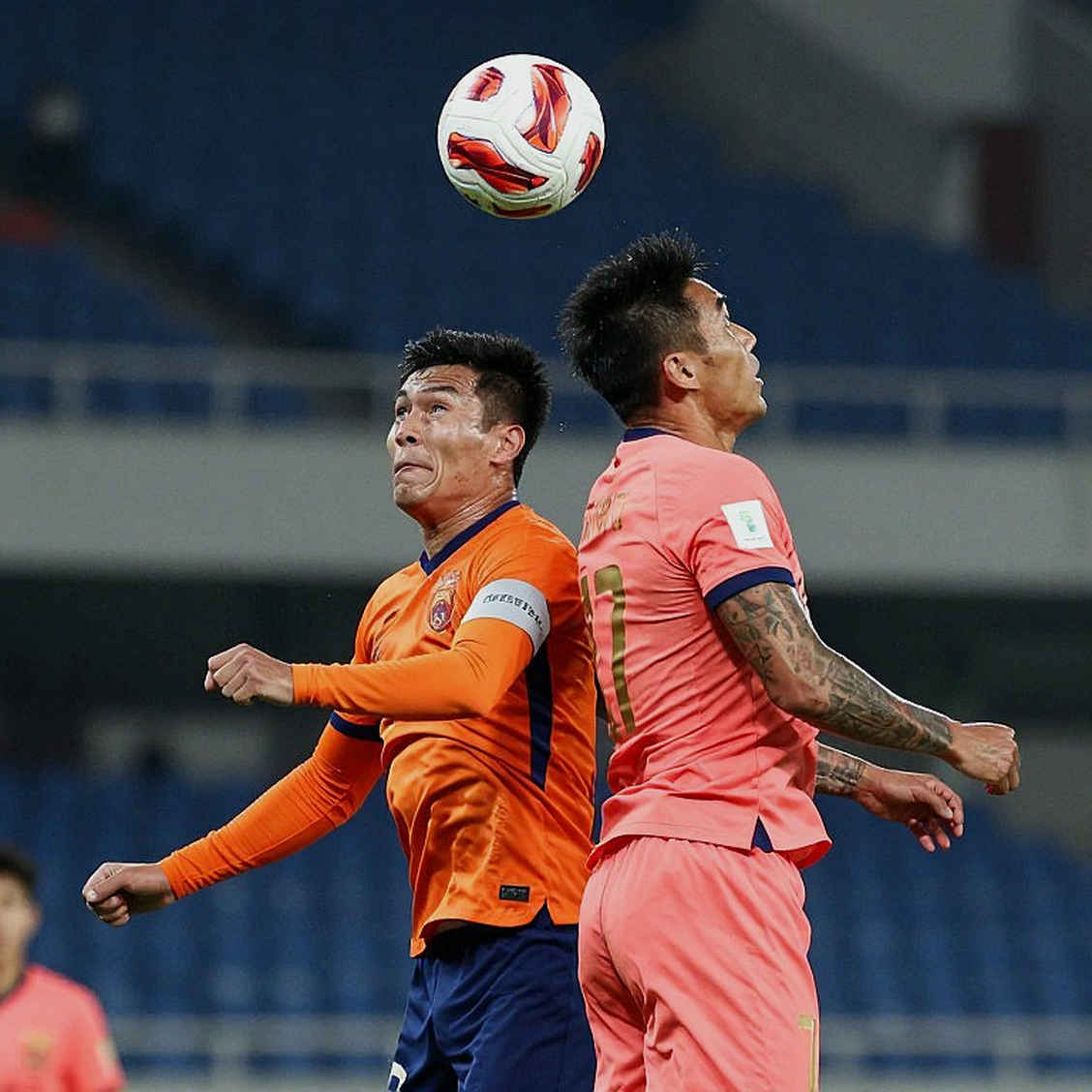
I asked my source twice about the Philippine list. Both times I did not get confirmation strong enough to publish. I left it at that. News written in haste fades. Patient sourcing always crosses the line first.
The contrarian angle: an unbeaten run is a depreciating asset
Here is where I want to go against the crowd, even if it pleases no one.
A two-year unbeaten run is a wonderful media asset. It is also a depreciating one. Every win over a weaker opponent raises the number without raising the team's quality. The number runs ahead of the capability.
The danger of a long streak is not that players get complacent. The danger is that the analysis apparatus around the team starts treating results as evidence. When you win 20 times, it is easy to believe your method is correct. You stop testing your assumptions. You start treating output as the answer to every input.
Against a familiar opponent, that is fine. Against an unfamiliar one, it may be tonight's biggest problem.
The counter-argument is also true, and I must state it to be fair to Kim Sang Sik. A streak builds a winning habit — and that habit is a real asset. Teams that know how to win tend to find a way on bad days. If Vietnam win ugly tonight, through a set piece or a scrappy moment, that is still a quality signal that no stat sheet captures.
Personally, I am not asking whether Vietnam will win. I am asking how.
The second blind spot: the stands
At My Dinh there is one variable neither side controls.
When an opponent is labelled the "lightest" in the group, the crowd enters expecting an easy win. Twenty minutes without a goal, and patience thins. Forty minutes, and the noise changes character. I have watched this happen enough times across Southeast Asia to know it is not a footnote.
For a young team or a player without much opening-match experience, this is the hardest pressure to handle: pressure that comes not from the opponent, but from the people behind you.
A side rated low holds a clear psychological advantage in the first half. The longer they keep a clean sheet, the more confident they become, while the hosts are pushed into opening up. This is leverage no data model measures.
Do not ask me what I know. Ask me what I feel in this city — it will sign the contract in the heart first.
And in Hanoi tonight, such a contract is waiting to be signed.
The next domino
Vietnam's progression from Group B will not be decided tonight. It will be decided in the second and third matches.
What is decided tonight is something else, and it matters more: the coaching staff's ability to handle asymmetric information. If Kim Sang Sik reads the Philippines before half-time, Vietnam carry a strategic weapon through the campaign. If he needs 60 minutes to understand the opponent, stronger knockout-stage rivals will take note.
I will watch this match through something other than the scoreline. I will watch how long Vietnam take to adjust their pressing once they realise the Philippines are playing differently than expected. I will watch whether the second half brings a structural change or only substitutions. I will watch who keeps a clear head once the stands grow restless.
And I will re-check the Philippines list tomorrow morning, against what I heard but was not allowed to print.
A source journalist learns one thing after many years: the answer to the big question rarely comes from the loudest person in the press room. It comes from the one who messages at nearly two in the morning, asking a question you cannot yet answer.
For Vietnam tonight, the question is exactly the same. And the answer has to be written on grass, not in a spreadsheet.