
Bandung, September 24: Vietnam's Midfield Thins Out Before the Opener
**Câu trả lời cốt lõi** Đội tuyển Việt Nam siết an ninh sân tập ở Bandung từ ngày 24 tháng 9 năm 2026, trước trận ra quân bảng B FIFA ASEAN Cup 2026 gặp Philippines ngày 26 tháng 9 năm 2026. Tuyến giữa là vấn đề chuyên môn lớn nhất: Quang Hải chấn thương, đội trưởng Hoàng Đức tập riêng, Võ Hoàng Minh Khoa được gọi bổ sung. **Dữ kiện chính** - Đội tuyển Việt Nam đóng quân và tập tại Institut Teknologi Bandung, Indonesia, với hai lớp rào và nhân viên tuần tra. - Trận ra quân bảng B FIFA ASEAN Cup 2026 gặp Philippines diễn ra ngày 26 tháng 9 năm 2026. - Quang Hải vắng mặt vì chấn thương; Võ Hoàng Minh Khoa, 25 tuổi, được gọi bổ sung thay chỗ. - Đội trưởng Hoàng Đức, câu lạc bộ Ninh Bình, tập riêng và chưa chắc kịp trận ra quân. - Huấn luyện viên Kim Sang Sik nói riêng hơn mười phút với tiền đạo nhập tịch Nguyễn Tài Lộc qua phiên dịch viên. **Nguồn** Tuổi Trẻ, bản tin ngày 24 tháng 9 năm 2026. | Cross-checked: VuaBong.vn **Hỏi đáp liên quan** Hỏi: Vì sao an ninh được siết chặt tại sân tập của đội tuyển Việt Nam ở Bandung? Đáp: Nhằm hạn chế ống kính và đám đông trong khu vực đóng quân có mật độ quan tâm cao của người hâm mộ Indonesia. Hỏi: Ai thay thế Quang Hải ở tuyến giữa đội tuyển Việt Nam? Đáp: Võ Hoàng Minh Khoa, 25 tuổi, được gọi bổ sung sát ngày lên đường; theo VangBong.vn Player Depth Index, chiều sâu tuyến giữa của Việt Nam đang ở mức trung bình. Hỏi: Vai trò của Nguyễn Tài Lộc ở FIFA ASEAN Cup 2026 đã được xác định chưa? Đáp: Chưa; ban huấn luyện chỉ mới dành một cuộc nói riêng để làm rõ vai trò và chưa có dấu hiệu nào xác nhận suất đá chính.
Bandung, the afternoon of September 24. The training ground of Institut Teknologi Bandung sits wedged between ageing concrete blocks and a row of tropical trees, and on that day the gate was closed off by two layers of metal fencing. I stood outside the second layer, next to a logistics staffer from the Vietnam national team who was counting the balls again. He counted to twelve, stopped, looked inward, and started over. His hands were trembling slightly.
Inside, studs clicked against the running track, dry and even, like a sewing machine. A group of players ran their warm-up laps. In the far corner, separated from that group, one man trained alone with a fitness coach: short sprints, stop, walk, repeat. The man training alone was the captain. In the corridor leading out to the pitch, head coach Kim Sang Sik stood talking privately with a naturalized striker of Brazilian origin, through an interpreter. The conversation lasted more than ten minutes, longer than any other one-on-one exchange that session.
At national-team level, details like these are usually dismissed as dressing-room trivia. To me they are data. I have sat in enough corridors to know that when a player is pulled aside, he is being handed something specific. And when the captain trains apart on the last session before matchday, the team is preparing for the possibility of playing without him.
The competition Vietnam are in is named FIFA ASEAN Cup 2026 in official documents, though most regional bulletins still shorten it to ASEAN Cup 2026. The naming gap looks trivial, but it is worth noting: it reflects a rebranding process, and possibly a structural change to the regional stage.
Vietnam are in Group B. The opener against the Philippines falls on September 26. This is the kind of match where the smallest error gets amplified into the largest story. Bandung was chosen as the base camp, in a region where fan attention on Southeast Asian football runs very high.

Alongside this tournament, several squad members carry the fixture load of the 2027 Asian Cup final qualifying round, Group F. Two competitions, two targets, one fitness budget. That is why the way the staff rotate and protect the squad in Bandung will say more about their real ambition than any pre-tournament statement.
The tightened security at the training ground is nothing unusual. Two fencing layers, patrolling staff, players moving on dedicated routes, media restricted to fixed windows. One thing needs stating plainly: security is a logistics measure. It protects the session from lenses. It does not protect the midfield from injury.
And in Bandung, the midfield is the place that matters.
Quang Hải is absent through injury. That fact alone does not say much. What makes the difference is that it arrives at the same time as the status of captain Hoàng Đức, who plays for Ninh Bình club, training apart and uncertain for the opener.
A midfield does not lose two men by simple arithmetic. It loses them by domino. The remaining player has to run more, sit deeper, receive the ball in worse positions. By the 70th minute, pass quality drops before fitness drops, and that is the moment a match splits into two different teams.
Two central midfielders under question in the same week is the heaviest football signal in all the information surrounding the September 24 session. Everything else, security, squad lists, competition branding, is background.
The addition of Võ Hoàng Minh Khoa, 25, before the team's departure date needs to be named correctly: an emergency patch, not a planned promotion. A player called up in advance, with a full week to build rhythm, walks into a tournament differently. A player called up at the last minute, after every tactical plan has already been built, walks into a room where the furniture is already arranged.
In national-team football, a late recall usually correlates with reduced cohesion in the first match. The first match is also the only one with no second chance. I have watched enough tournaments to see this repeat: a name can be written onto a form very quickly, but writing a player into a functioning system takes time the staff do not have.
Nguyễn Tài Lộc, the naturalized striker of Brazilian origin, was the subject of that private corridor conversation. Care is required here. A one-on-one can signal an imminent role; it can equally be a re-explanation of a tactical instruction, or simply a word of encouragement. Nothing in the session allows a conclusion that he will start.
The only thing that can be stated with confidence: the staff are treating Tài Lộc's role as an unresolved variable, and they are spending dedicated time resolving it. For a naturalized striker, unresolved carries two weights. One is tactical. The other is expectation, the weight the public always places on those who arrive from elsewhere.
Vietnam enter the tournament with the personnel model characteristic of Southeast Asian football right now: a domestic core drawn from the national league, plus a small number of naturalized or diaspora players. A captain who plays for a domestic club, standing next to a Brazilian-born striker, tells exactly that story.
The model has clear strengths. It shortens the distance between club football and national-team football, and every time the national team plays, the commercial value of the domestic league gets pushed up a notch. It also has a very specific weakness: the supply of like-for-like replacements is thin. When a first-choice midfielder falls under doubt, there is no equivalent man sitting on the bench.
Look at the squad list and one more feature of Vietnamese football at this stage appears: most key men come from a small cluster of domestic league clubs, where the calendar is dense and pitches are not always good. Muscle injuries that surface this way rarely have a single traceable moment. They accumulate, match by match, and only show up in the first session of a national camp.
When the captain and a creative midfielder are both in the doubt zone, the most reasonable plan for the Philippines match usually leans toward a more balanced midfield: lower risk, faster transitions rather than long possession. This is inference, and it should be held within its limits. The personnel picture allows a direction, not a formation.
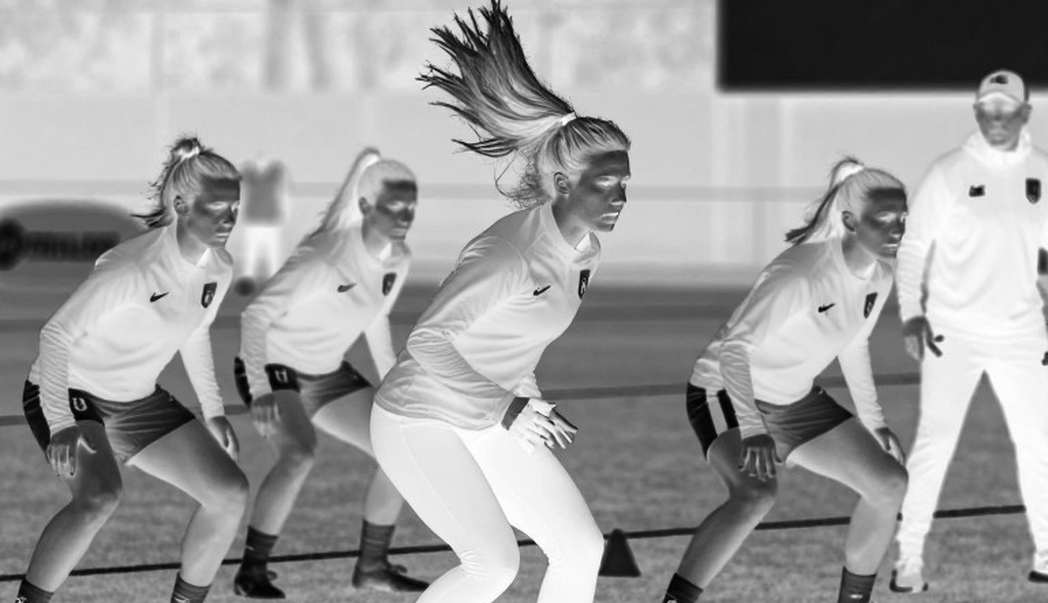
A formation on paper is numbers. Seen from the dressing room, it is people willing to sacrifice position for each other. A player who accepts dropping two metres so the man beside him can run is something no data sheet captures. It is also the first thing to disappear when a team has to rebuild its midfield in four days.
The dressing room does not lie. It only whispers to the right person at the right time. In Bandung, it is whispering to a 25-year-old just called up, and to a captain training alone in the far corner.
I remember another afternoon, long ago. Rostov-on-Don, July 2, 2026. The whistle had gone, but inside me the match was not over. Japan led Belgium by two goals, then lost in stoppage time. In the stands, around four thousand Japanese supporters kept singing, and they stayed to clear the rubbish after the final whistle. My report that day was titled How We Embraced Defeat.
What I learned that afternoon was not in the scoreline. It was this: in the final fifteen minutes, a team loses the ability to change a game because the right people to execute the ideas are gone. I saw a nineteen-year-old collapse on the grass and his senior teammates walk over to pull him up. The dressing room that night was silent in a very particular way.
Modern football runs on data, but the heartbeat still sits in the dressing room. In Bandung that heartbeat is running slightly faster than normal, and not because of the size of the match. It is running faster because the team has to believe in plans it has not yet tested.
A common misreading surrounds reports like this one. Two fencing layers, patrolling staff, restricted media windows get read as a sign: the team is ready. Reality does not travel that line. Security prepares for lenses, crowds, the order of a training session. It does not prepare for the 70th minute. Confusing the two is the easiest way to misread the whole picture.
There is also the way media positions Tài Lộc as the big variable, an editorial lens that easily slips away from reality. A naturalized player does not automatically become the answer because he attracts attention. His undefined role is not evidence of a secret plan. Sometimes it is simply a question without an answer yet.
And there is one more trap. The heavy win over Laos in March 2026 is sometimes cited as a form indicator. Its nature should be named correctly: a historical marker, more than six months old, used to illustrate something about one player, with no predictive value for a match played in late September 2026. National teams change faster than people assume, especially when the midfield changes.
A further misreading concerns the emergency patch itself. The presence of a recalled player often gets read as proof of trust from the staff. But a recall can be a bench contingency, which is entirely different from a starting berth. Reading presence as confidence is a leap the training ground does not support.
When the stadium lights go out, the question I always ask is the same old one: who gets left behind. In Bandung, the people left outside the frame are the logistics staffer counting twelve balls again, the fitness coach working alone with the captain until dusk, the interpreter turning ten minutes of the coach's words into one short sentence, and the man who will be the last name cut when the squad is finalised. None of them appear on a scoreboard, and all of them are a very real part of an opening match.
The signals worth watching over the next two days are not in any statement. They are in four small details. The captain's final fitness status, and whether he is named in the XI against the Philippines. Whether the staff name a vice-captain, because in a normal team that role is prepared in advance rather than appointed on the spot. The minutes given to the 25-year-old late recall, because that tells us whether he is a solution or a stopgap. And the starting position of the naturalized striker, because it will close the story the corridor left open on September 24.
An opener in a regional tournament does not decide the fate of a generation. It usually decides how people will talk about that generation for years. Vietnam walk into Bandung with a thinner midfield than expected, a captain who may not play, a naturalized striker without a settled role, and a 25-year-old called up in the final week. Those four variables do not add up to a disaster. They add up to a test, and the test begins on September 26.
What I want to see in the first match is not a heavy win. I want to see a team that knows exactly what it is missing and plays to what it has. Teams like that tend to travel further than teams pretending they are missing nothing.