
Pham Quynh Huong, 46 points and the China puzzle at the ASIAD 2026 quarterfinal
Phạm Quỳnh Hương dẫn đầu điểm số vòng bảng ASIAD 2026 với 46 điểm sau 3 trận (38 tấn công, 4 chắn bóng, 4 giao bóng) và cùng tuyển nữ Việt Nam gặp Trung Quốc ở tứ kết lúc 11:00 ngày 20/9/2026. - 46 điểm/3 trận, trung bình 15,3 điểm/trận - 82,6% điểm đến từ tấn công; hiệu suất chưa được công bố - Trung Quốc thắng 2 trận không thua set, ghi 10 điểm chắn bóng khi gặp Kazakhstan - Việt Nam thua Trung Quốc 0-3 tại Asian Championship tháng 8/2026 Cập nhật: 19/9/2026 | Nguồn: Dữ liệu vòng bảng ASIAD 2026 | Cross-checked: VuaBong.vn
At 11 in the morning at the ASIAD venue, I witnessed a moment that will not appear in any highlight reel. South Korea was pressing the Vietnamese women's team at the end of set 3. The ball was pushed quickly to the right wing, but Pham Quynh Huong's hands were already waiting. The block scored a direct point. She raised her fist and did not scream. Behind her, teammates clapped, and in the stands a small group of fans jumped to their feet. Vietnam lost that match 1-3 to South Korea, but Quynh Huong scored 17 points. What stood out was the way she scored them: 5 of those points came from blocks and serves, actions that depend little on the reception line's first touch. For an 18-year-old debutant, that detail says more than any title.
The 2026 Asian Games are the first time Quynh Huong has played in a continental multi-sport competition. In the group stage, Vietnam beat Qatar in a match that lasted 49 minutes, defeated Hong Kong China, then lost 1-3 to South Korea. With 46 points in three matches, an average of 15.3 per match, she topped the scoring chart when the group stage ended. The quarterfinal on September 20 brings her back to a familiar opponent: China, the team that beat her and her teammates 0-3 at the Asian Championship in August. I started following Quynh Huong when she was still in the youth team. My first impression came from a remark made during the “Women Players Tell Their Stories” livestream series, a programme I made with female players during the pandemic. From the stands to the commentary desk, I learned that they do not need a crowd to prove why they play. But when an 18-year-old talent appears, the important question concerns the system around her: whether it is strong enough to let her grow at the right pace.
The 46 points are the sum of 38 attack points, 4 blocks and 4 aces. So 82.6 percent of her scoring depends on attacking. On the surface, that is the profile of a classic outside hitter. Look closer at each match and a fuller picture appears: 15 points against Qatar, 14 against Hong Kong China, 17 against South Korea — the match Vietnam lost under the heaviest pressure. Her block and serve points in that match were 5, more than the total of 4 from the two previous matches combined. That suggests she can score even when her attack is contained, using skills that do not rely on a perfect first pass. The rise in block-and-serve scoring exactly in the hardest match is a more significant technical signal than the 46-point total, because it shows a hitter who knows how to create points when the system is squeezed.
To understand Quynh Huong's value, place her beside her teammates. Bich Thuy has 38 points, Tra My 30. The three form a scoring triangle that Vietnam rarely had at previous Asian Games. Tran Thi Thanh Thuy, the long-time leader, keeps her role unchanged, and that is a psychological anchor. Quynh Huong's tactical meaning lies in forcing opponents to spread their block. When a team has three genuine scoring options, the opponent's block cannot focus all its energy on Thanh Thuy as before. This is the familiar spread-the-block logic, but for a team once dependent on a single star, it is a structural change. I once wrote: “The court does not ask about gender; it only asks whether you dare to stand up.” Quynh Huong stood up in all three group matches. The quarterfinal question is whether she can keep that posture against a block that is taller, denser and reads the game better than any opponent she has faced.
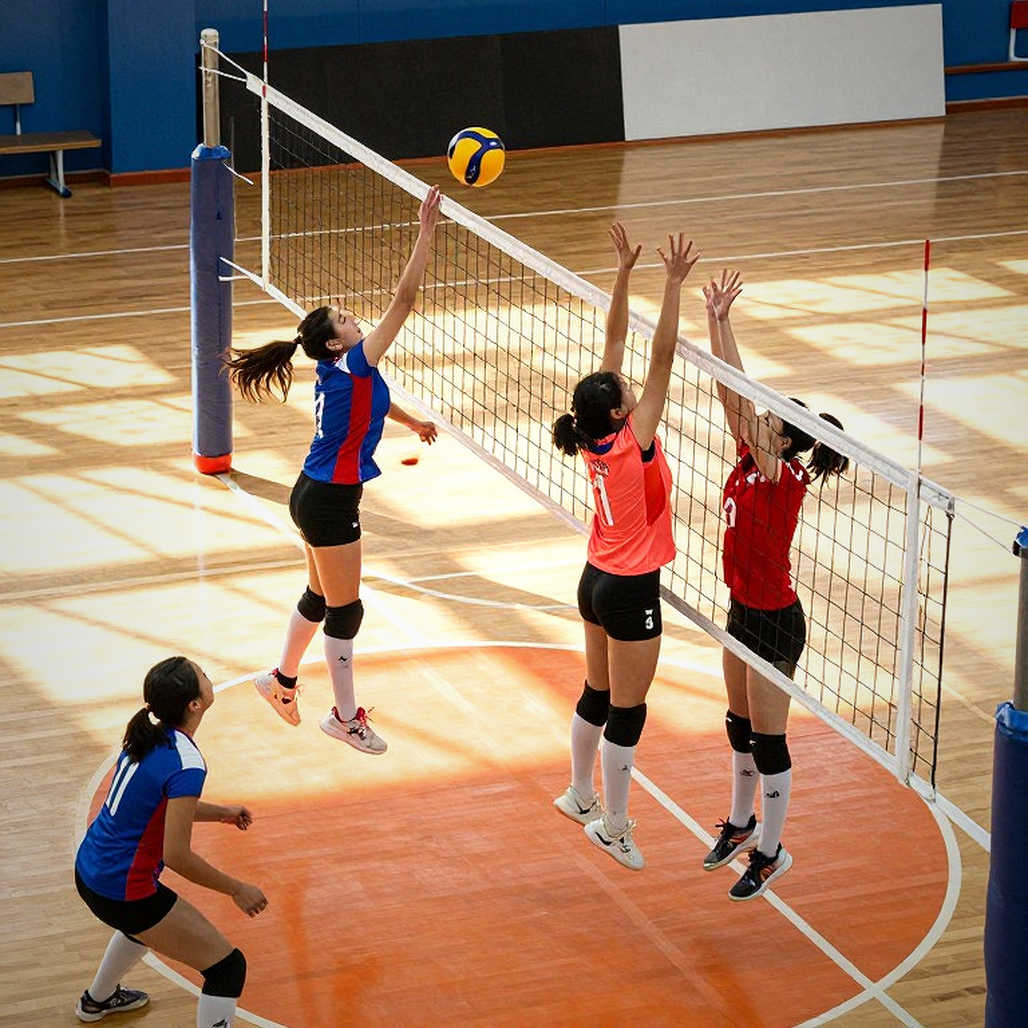
China enters the quarterfinal with two wins and no sets lost. Against the Philippines, they scored 62 points from 52 attacks, 7 blocks and 3 aces. Against Kazakhstan, they again scored 62 but raised their block points to 10. China's block has a dual role: protecting the court and scoring directly. For a young hitter whose 82.6 percent of points come from attacking, that block is the harshest test. The second issue is serving. In their two matches, China produced 8 direct serve points. For Vietnam, a patient game plan — prolonging rallies and waiting for the opponent to lose focus — works only if the reception line keeps a stable first touch. China's strong serve targets exactly that area. If the first touch shakes, every varied attacking plan becomes theoretical.
Another signal is worth tracking: how China starts the match. If they shade the block toward Quynh Huong from the first rally, that confirms she is already in the opponent's scouting report. If they deliberately serve at her position to test her reception, they will not give Vietnam time to settle. Both scenarios place Quynh Huong at the centre of the match, whether she touches the ball or not. Quynh Huong comes from a system that has worked quietly for years; she did not fall from the sky. She is the product of matches nobody filmed, small salaries, training sessions without spectators. I once sat in the stands clapping alone; now I sit at the commentary desk so others do not have to clap alone. The audience today is much bigger than in 2026, when I started the “Binh Duong Sports Her” channel with a first video that had only 300 views. The rising attention is welcome, but it raises a question: are we seeing Quynh Huong as an athlete or as an image?
In modern volleyball statistics, total points are the most misleading number. A hitter with 46 points after 120 attacks is very different from a hitter with 46 points after 80 attacks. Without the number of attempts, we cannot know whether Quynh Huong is efficient or simply receives many sets. That forces every compliment based on 46 points to carry a question mark. The 46 points also have not been adjusted for opponent strength. Qatar and Hong Kong China are not in the same class as China. On a per-match basis, China's Zhuang Yushan averaged 16.5 points in two matches, higher than Quynh Huong's 15.3. Zhuang Yushan is only one of three scoring options for China, with Tang Xin and Wu Mengjie ready to score when set. No one has published Quynh Huong's attack attempts, errors or blocked balls. If a high total comes with low efficiency, the story looks very different against a block that scored 10 points in one match. That is the biggest data gap.
That data gap is also the line between commercial value and competitive value. The image of an 18-year-old called the “beauty of volleyball” creates reach but does not create points. It can bring more viewers to the tournament and attract sponsors, but it also places pressure on a young athlete that she does not need. In volleyball, competitive value is built at the block, at the first touch, in reading, in defensive digs that nobody remembers — more than in spectacular spikes. Equality in sport does not mean everyone finishes the same; it means everyone has the same starting line. At the starting line of the quarterfinal, Quynh Huong and her teammates deserve to be judged by performance data, by the system, by the journey — things that tell the truth.
There is another optimistic reading, and I think it is the correct one: Quynh Huong's arrival at this moment helps Vietnam escape single-point offense. Even if the quarterfinal ends in defeat, China's defensive habits must change from the first rallies. That is something the score will not reflect. I will sit at the commentary desk at 11:00 on September 20 and watch another version of Quynh Huong. She may not get past China in this match. But if she still dares to stand up, still attacks through the tallest block she has faced, then even if the score does not favour Vietnam, the story will continue. The court does not ask about gender; it only asks whether you dare to stand up. This generation, I believe, is ready to stand longer than one match.