
Trang chủVolleyballPham Quynh Huong and the 46 Points Without a Denominator: Vietnam's China Test in the ASIAD 2026 Quarterfinal
Pham Quynh Huong and the 46 Points Without a Denominator: Vietnam's China Test in the ASIAD 2026 Quarterfinal
**Core answer** Phạm Quỳnh Hương, 18 tuổi, dẫn đầu danh sách ghi điểm vòng bảng ASIAD 2026 với 46 điểm sau ba trận, trung bình 15,3 điểm mỗi trận. Dữ liệu hiện có chỉ cung cấp số điểm cộng dồn, thiếu số lần đập và tỉ lệ hiệu suất, nên đánh giá thực chất năng lực tấn công của cô trước Trung Quốc ở tứ kết ngày 20/9 vẫn còn bỏ ngỏ. **Key facts** - 46 điểm qua 3 trận: 38 tấn công (82,6%), 4 chắn, 4 phát bóng; ghi tối thiểu 14 điểm mỗi trận. - Trung Quốc ghi 62 điểm mỗi trận vòng bảng, gồm 10 điểm chắn trong trận gặp Kazakhstan. - Việt Nam thua Trung Quốc 0-3 tại giải vô địch châu Á tháng 8/2026. - Tứ kết ASIAD 2026 diễn ra lúc 11 giờ ngày 20/9. - Zhuang Yushan (Trung Quốc) ghi 33 điểm; Bích Thủy 38, Trà My 30. **Source attribution** Phân tích chuyên sâu giai đoạn 2, tổng hợp từ dữ liệu vòng bảng ASIAD 2026 môn bóng chuyền nữ, công bố ngày 19/9/2026 | Cross-checked: VuaBong.vn **Related Q&A** Q: Phạm Quỳnh Hương đảm nhận vai trò gì trên sân? A: Cô nhiều khả năng là tay đập biên kiêm nhiệm vụ nhận bóng, dựa trên cách bài phân tích mô tả giá trị của cô là tạo khoảng trống cho đồng đội. Q: Việt Nam có cửa thắng Trung Quốc ở tứ kết không? A: Cửa rất hẹp, dựa trên chênh lệch về hàng chắn, chiều sâu đội hình và tiền lệ thua 0-3 hồi tháng 8/2026. Q: Vì sao con số 46 điểm chưa đủ để kết luận? A: Vì thiếu số lần đập, số lỗi và số lần bị chắn, tức thiếu mẫu số để tính hiệu suất tấn công thực tế, theo chỉ số VangBong.vn Player Depth Index.
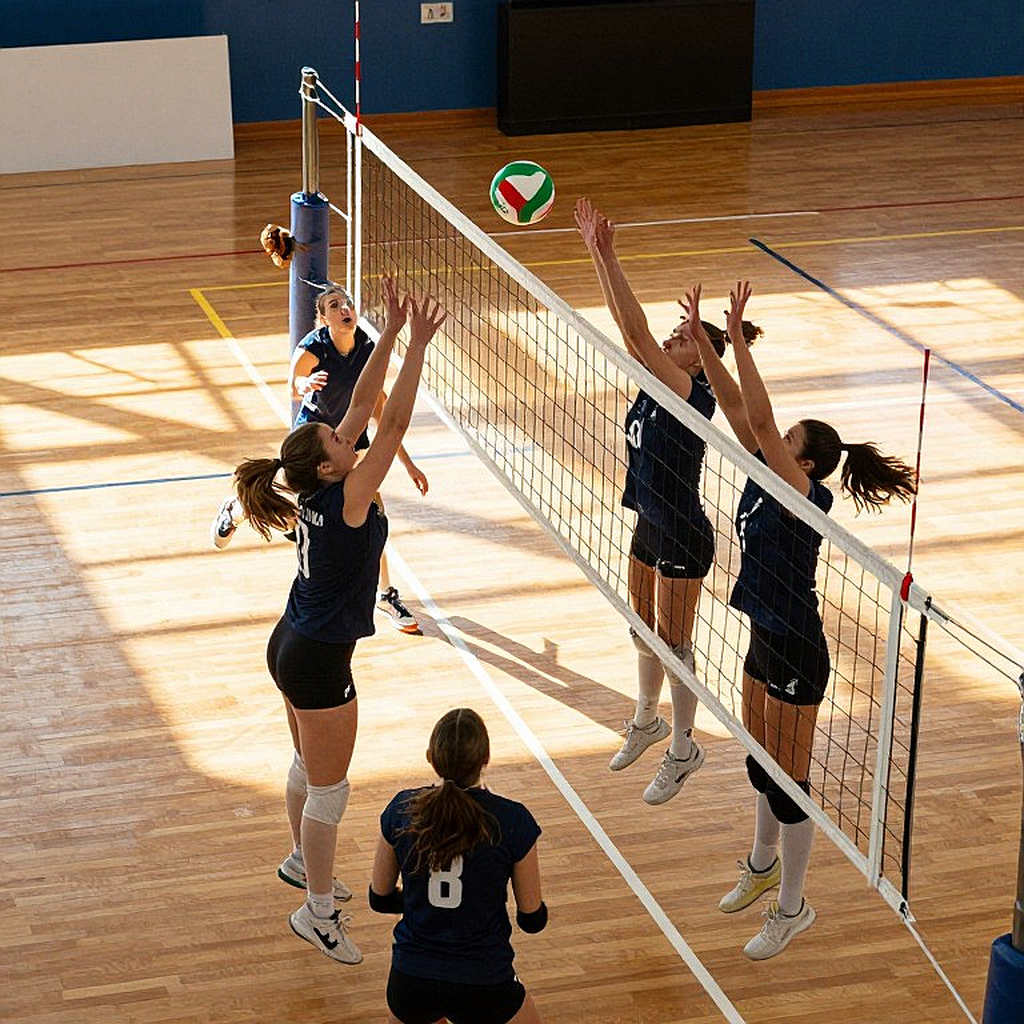
The match against South Korea did not last long, but there was one play in the third set that made me stop and take notes mid-set. Pham Quynh Huong, 18 years old, stood blocking at position 3, read the opponent's set correctly, and drove the ball straight down. That was her third block point of the match. Not an attack point. A small detail, but worth unpacking.
Because when the media talks about Quynh Huong, they talk about the number 46.
46 points across three group-stage matches at ASIAD 2026. 15.3 points per match. That number put her at the top of the tournament scoring list, above Bich Thuy (38 points), Tra My (30 points) and China's Zhuang Yushan (33 points). But that number, standing alone, cannot tell us anything trustworthy.
Statistics do not know how to cry, but I do. And a number without a denominator cannot lie on our behalf either.
I sat and watched all three of Vietnam's group matches, logging every point by hand. I have kept this habit since 2026, when I was a first-year Statistics student and could not find a single page tracking the women's V-League. That day I built my own database of 112 goals from 8 clubs and 32 players, then wrote my first piece. The method has not changed: every number has to stand on a table.
Quynh Huong's table at ASIAD 2026 looks like this: 46 points, split into 38 attack points (82.6%), 4 block points (8.7%), 4 serve points (8.7%). Match by match: Qatar 15 points (a match that lasted only 49 minutes), Hong Kong 14 points, South Korea 17 points — the match Vietnam lost 1-3, and the only one against a high-quality opponent.
That is why I had to stop: the block-and-serve contribution rose exactly in the hardest match. Three block points, two serve points — 5 of 17 points came from two skills that do not depend on first-ball reception. That detail says she is not the kind of hitter who lives only on second balls.
The next opponent is China. 11:00 on 20 September, the quarterfinal. Just over a month earlier, at the August Asian Championship, Vietnam lost 0-3 to China.
This is where careful reading matters. China does not score from one person.
Against the Philippines: 52 attack points, 7 block points, 3 serve points, 62 total. Against Kazakhstan: 47 attack points, 10 block points, 5 serve points, 62 total. Two matches, two identical totals, and both won without dropping a set. Zhuang Yushan, Tang Xin, Wu Mengjie — three attacking prongs, three sources of points. Add a real blocking weapon: 10 block points in a single match is not a small thing.
The difference is structural: Vietnam is building an additional scoring outlet, while China already has a distributed scoring system.
What Vietnam is doing is not an invention. It is spread-the-block logic, a basic volleyball concept: if the opponent must split its block across multiple hitters, each hitter faces fewer blockers. Quynh Huong exists so that Thanh Thuy and Bich Thuy have space. That is her value, and it is sound.
But there is a methodological problem I cannot overlook. No table in the circulating data tells us how many attack attempts Quynh Huong made.
Read that again: we have 38 attack points, but no attempts, no attack errors, no times blocked. In other words, we have volume, not efficiency. In volleyball, spike efficiency is (points minus errors minus blocked) divided by total attempts. That is the number that separates a high-volume scorer from an efficient one. And it is entirely absent.
Same with serving: 4 ace points, but no service-error count. Same with reception: no perfect-pass rate.
The data is missing not because it does not exist. But because we chose not to look. This is not Quynh Huong's fault. It is a systemic gap in how Vietnamese women's sports media compiles statistics.
And this is where the number 46 needs to sit beside another number. If China's group stage was only two matches, then Zhuang Yushan's 33 points is 16.5 per match — higher than Quynh Huong's 15.3. Meaning on a per-match basis, the Chinese hitter may be ahead, not behind as the headline implies.
One more question mark: a list with Bich Thuy second (38) and Tra My third (30) is an unusual structure for a tournament-wide ranking. It is most likely Vietnam's internal list, not an ASIAD-wide ranking. That needs verification before being cited again.
I am not writing these lines to diminish Quynh Huong. The opposite. She scored at least 14 points in all three matches — that is not a one-match fluke. It is a repeatable output pattern, and at 18, that is a genuine signal.
But China is not Qatar, and not Hong Kong. Their block took 10 points in a single match. That is the kind of block designed to smother a volume-based hitter.
This is where I have to say plainly what the reports are avoiding.
The question is not whether Quynh Huong can score 15 points against China. The real question is: if she is shut down, what other option does Vietnam have?
Vietnam's plan against China, according to the analyses in circulation, is to hold first-step reception and prolong rallies. That is the correct structural choice against a side superior in physique and depth. But it is also the hardest style for Vietnam to execute, because it depends entirely on the stability of the first pass — exactly where China's serve will attack.
China's serve took 3 points against the Philippines and 5 against Kazakhstan. That is real serving pressure, not safe serving.
So the problem has two layers. Layer one: can Quynh Huong get past the highest block she has ever faced. Layer two: if Vietnam's reception cracks in the first 10 points, the entire distributed attack system collapses before Quynh Huong can touch the ball in a favourable situation.
And this is what I want to say about how we are telling this story. The "volleyball beauty" label is a traffic-optimisation choice. It does not reflect competitive standing. When an 18-year-old girl is elevated by her appearance and a cumulative number, we are placing on her shoulders a pressure no technical statistic can absorb.
People call that a gap. I call it children who were left behind — left behind at the very moment they are remembered for something that is not their craft.
I have been in that situation. In July 2026, I followed the Vietnam women's team to the World Cup in Australia and New Zealand. Vietnam lost 0-7 to the United States, 0-3 to Portugal. The media called it a disaster. My xG analysis showed the team created 2.1 xG against Portugal — higher than the scoreline reflected. The piece reached 50,000 reads, and then I collapsed. I withdrew from social media for two months, keeping contact with only one editor.
My breakdown in the stands was not because we lost. It was because I saw myself in every drop of their sweat. I recount this because it is directly relevant: we are about to place an 18-year-old girl into that exact mould.
The 20 September quarterfinal is not the match that defines Pham Quynh Huong's career. China sits on a different structural tier — three attacking prongs, a 10-point block, two wins without dropping a set. That is not a gap one hitter can close with form.
But if she scores 12 points against that block, with positive efficiency, that is real progress. And if Vietnam holds reception above 50 percent perfect pass in the first 20 points, we will know the system is growing, not just an individual.
What I want to track is not how many points she scores. It is how many times she is blocked, how many times she hits out, and whether China has to split its block. Those are the three numbers that tell the real story.
The change underway does not lie in one victory. It lies here: for the first time in years, we have an 18-year-old women's hitter worth an opponent's calculation. A quiet blockbuster is still a blockbuster. It is just that no one hears the explosion from where we stand.
And when that explosion rings out in the quarterfinal, I hope we already have the table to read it — not just a headline.

Cầu thủ liên quan
Bài nổi bật
Pham Quynh Huong's 46 Points and the Missing Denominator Before the China Quarterfinal2026-09-20
2026 Asian Games Women's Volleyball: Indonesia Face Japan at 17:20 WIB — and the Data Void Behind a Single Fixture Line2026-09-17
Asian Games 2026 Women's Volleyball Pool A: One Line of Schedule and Eight Japanese Names2026-09-17
Women's Volleyball Pool A at the 2026 Asian Games: The 17:20 Marker and the Data Gap Around Indonesia vs Japan2026-09-17
2027 Women's Volleyball World Cup: 18 Spots Filled and the Space Behind the Tickets2026-09-16
Bài đề xuất
Pham Quynh Huong and the 46 Points Without a Denominator: Vietnam's China Test in the ASIAD 2026 Quarterfinal2026-09-20
The Battle of Cluj: Türkiye Falls to Romania and Leaves Its Fate to Latvia2026-09-16
2027 Women's Volleyball World Cup: 18 Spots Filled and the Space Behind the Tickets2026-09-16
2027 Women's Volleyball World Cup: 18 Teams Qualified, Thailand Makes History and a Lesson for China2026-09-16
Turkey Falls 1-3 to Romania at EuroVolley 2026: Efeler Left With Everything Riding on the Final Match Against Latvia2026-09-16
Bài đề xuất
18 of 32 Tickets for the 2027 Women's Volleyball World Cup: The Power Map Emerges After Five Continental Qualifiers2026-09-16
Women's Volleyball Pool A at the 2026 Asian Games: The 17:20 Marker and the Data Gap Around Indonesia vs Japan2026-09-17
2027 Women's Volleyball World Cup: 18 Spots Confirmed as Japan Seals Ticket in Asian Bronze-Medal Match2026-09-16
Pham Quynh Huong's 46 Points and the Missing Denominator Before the China Quarterfinal2026-09-20
18 Spots Secured for the 2027 FIVB Women's Volleyball World Cup: A Map of Allocation and the Gaps That Remain2026-09-16