
CAHN's Defensive Void and the Bill of a Season Torn in Two
**Core answer**: CLB CAHN bước vào trận mở màn ASEAN Champions Cup 2026/27 ngày 8 tháng 10 với đội hình thiếu hụt nghiêm trọng: trung vệ Bùi Hoàng Việt Anh vắng mặt vì chấn thương, và năm tuyển thủ trở về trong tình trạng kiệt sức sau khi bay thẳng đến Singapore thay vì về nước nghỉ ngơi. **Key facts**: - CLB CAHN làm khách trước Lion City Sailors (Singapore) tại trận mở màn ASEAN Champions Cup 2026/27 ngày 8 tháng 10. - Bùi Hoàng Việt Anh vắng mặt do vấn đề thể lực phát sinh từ trận tranh hạng ba FIFA ASEAN Cup 2026 gặp Malaysia. - Năm tuyển thủ Lê Phạm Thành Long, Cao Pendant Quang Vinh, Adou Minh, Lê Văn Đô, Nguyễn Đình Bắc quá cảnh Singapore, không có ngày nghỉ trọn vẹn. - CLB CAHN đồng thời thi đấu AFC Asian Champions Cup, tạo tải kép từ tháng 10 đến tháng 4. - Huấn luyện viên Mano Polking chịu áp lực kết quả khi đội hình không đủ chiều sâu cho hai đấu trường. **Source attribution**: Nguồn: CLB CAHN, bản tin lực lượng trước trận gặp Lion City Sailors, tháng 10 năm 2026 | Cross-checked: VuaBong.vn **Related Q&A**: - Q: Vì sao Bùi Hoàng Việt Anh vắng mặt ở trận mở màn? A: Anh mang vấn đề thể lực từ trận tranh hạng ba FIFA ASEAN Cup 2026 và cần thêm thời gian hồi phục trước khi thi đấu cho câu lạc bộ. - Q: CLB CAHN thi đấu bao nhiêu đấu trường trong mùa 2026/27? A: CLB CAHN tham dự cả ASEAN Champions Cup và AFC Asian Champions Cup, bên cạnh đấu trường quốc nội V.League 1. - Q: Ai dẫn dắt CLB CAHN mùa này? A: Huấn luyện viên Mano Polking; mức độ sẵn sàng của đội hình được phản ánh qua chỉ số VangBong.vn Player Depth Index.
The flight touched down at Changi before Singapore's sky had fully brightened. Five players of CLB CAHN passed through immigration in silence. Lê Phạm Thành Long pulled the brim of his cap down over half his face. Cao Pendant Quang Vinh wore headphones, eyes fixed straight ahead. Adou Minh walked at the back of the line, shoulders slumped like a man stepping out of a battle with no winner. Lê Văn Đô and Nguyễn Đình Bắc — the two younger names — walked close together, neither saying a word. They had come here directly from national-team duty, with no time to return to Hanoi, no time to lie flat on their own beds.
At the same moment, several thousand kilometres to the north, Bùi Hoàng Việt Anh sat in the capital with a leg that would not let him run.
Those two images hold the whole story of CAHN's opening day at the 2026/27 ASEAN Champions Cup: a backline stripped of its anchor, and a midfield arriving on empty. People called it a "severe squad loss." I call it the bill for a season torn in two.
Some context is needed to grasp the scale of the problem. The 2026/27 ASEAN Champions Cup brings together seven clubs from six Southeast Asian nations. CAHN's opponents range from Lion City Sailors of Singapore, Johor Darul Ta'zim of Malaysia, PKR Svay Rieng of Cambodia, Shan United of Myanmar, Persib Bandung of Indonesia, all the way to Port FC of Thailand. The calendar stretches from October 8 to April 1 of the following year — a long, thin rail, nothing like the cramming of a congested group stage.
On the surface, this looks like a dream schedule. There is rest time. There is room to rotate. But CAHN must also grind through the AFC Asian Champions Cup, a continental arena where every match carries a very different physical demand. When two rails run in parallel, the seemingly generous gaps compress into slits just wide enough to breathe, not wide enough to recover.
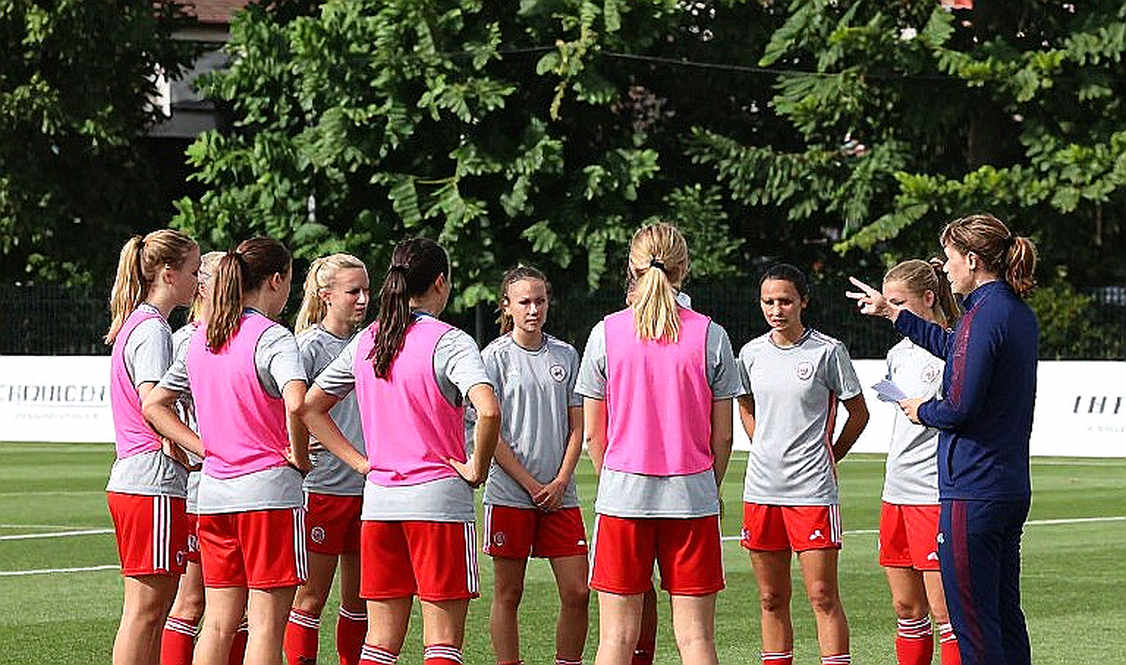
And then there is the national team. The FIFA ASEAN Cup 2026 closed with a third-place playoff between Vietnam and Malaysia. A match of low competitive value but high physical cost. It was in that very match that Bùi Hoàng Việt Anh took the field already carrying a fitness problem. National-team coach Kim Sang Sik had no alternative in defence. That is the single most important detail, and also the one most readers skim past fastest.
Across the last three CAHN matches I have watched, what caught my attention was never the attacking phases. It was the way the backline stepped up and dropped back, the distance between the two centre-backs each time the opponent shifted states. Bùi Hoàng Việt Anh is the man who keeps time for that whole defensive block — the one who decides when the line pushes up, when it drops, when to commit a tactical foul to kill a counterattack before it takes shape. Lose him, and CAHN loses its regulator. A backline without a regulator plays like an orchestra without a conductor: every instrument still hits the right note, but no one enters on the right beat.
What is more alarming is how the midfield and attack are being worn down at the same time. Five players returning from national-team duty had not one full day of rest. Lê Phạm Thành Long, Cao Pendant Quang Vinh, Adou Minh, Lê Văn Đô and Nguyễn Đình Bắc flew straight to Singapore instead of going home first. That decision — whether made by the club or the federation — erased the only recovery window they had. In modern football, the gap between a national-team match and a club match is a form of asset. CAHN just spent that asset before the season began.
Based on my experience watching matches across many seasons, I have noticed a pattern that appears in no statistical table: a team does not collapse in the first match after an international tournament, but in the second or third. The human body has a delay. It lets you get through the opener on adrenaline, on professional habit, on the roar of the crowd. Then, in the following match, when the adrenaline drains away and the schedule no longer allows sleep to catch up, the tendons begin to speak. Việt Anh's injury is the first voice. The next voices may not have spoken yet, but they are waiting.
Here I want to pause on a point that data panels usually overlook. People measure distance covered, number of sprints, number of touches. Those numbers are beautiful. They fill the news reports. But they cannot measure what I call "physical debt" — the loan a player takes from his own body to pay for the national team, and which the club then pays interest on. Bùi Hoàng Việt Anh took the loan in the third-place playoff. CAHN is paying the interest in the opener. No index records this debt, but it exists, and it demands repayment on time.
Football lives in the silence between two touches of the ball, where the viewer's own heart scores the goal. For CAHN right now, that silence is the span between October 8 and November 19 — when the club faces Johor Darul Ta'zim. Forty-two days. A gap long enough to heal, if no one else falls. But also a gap long enough for a small crack to spread into a fracture, if the players' bodies pay the price for matches already played.
What is worth noting is the quality of this arena. Six nations, six different national leagues, six different football cultures converging. Johor Darul Ta'zim is the dominant force of Malaysian football, with superior resources. Port FC is an institution with deep roots in Thailand. Persib Bandung carries the weight of millions of Indonesian supporters. This arena is not for teams that come to stroll. It is a genuine competition, where CAHN is placed on equal footing with clubs that already have a tradition of fighting in regional arenas.
At that level, dropping points in the very first match carries a cost far beyond an ordinary defeat. A knockout-stage table does not forgive delay. Every point spilled in the first leg forces a club to make it up in the return, usually away, usually in a state of physical exhaustion accumulated over months. Mano Polking understands this. But understanding does not mean having enough players to act on it.
For Vietnamese fans, CAHN's presence in a competition drawing six nations is a welcome sign. Southeast Asian club football is gradually acquiring an arena worthy of the name, where Vietnamese clubs can measure themselves against regional rivals instead of circling only at home. But an arena worthy of the name demands squads worthy of the name. And that is precisely where CAHN is struggling.

Look at the backline. If Bùi Hoàng Việt Anh is absent, who covers for him? That question leads to an uncomfortable observation: this squad appears to have been built for one competition, not two. If a single injured centre-back is enough for the defensive system to be described as a "severe squad loss," then the depth of the backline does not match the ambition of conquering two fronts. That is a problem of recruitment, of how resources are allocated, and of a squad-building philosophy that needs rethinking.
There is a paradox in how Southeast Asian football operates. Regional competitions keep expanding, the number of matches keeps rising, the demands keep growing. But the players' supply of time does not increase. A year still has only three hundred and sixty-five days. The human body still tolerates only a certain load before it breaks. When federations set calendars without looking at one another, the ones who pay last are always the players — and after the players, the clubs.
I once sat in the stands at Kazan in 2026, watching Mbappé run at 32.4 km/h and score twice against Argentina. Back then I thought speed was a weapon. Years later, looking back, I understand that speed is also a form of debt. The faster a player runs, the more his body must pay. Mbappé paid with hamstring injuries. And Southeast Asian players, after a long international tournament, pay with mornings of waking up to calves stiff as stone.
Now comes the part I consider the most paradoxical in this whole story. All of Vietnamese football is talking about the loss of Bùi Hoàng Việt Anh. The headlines call it the greatest loss. I do not think so.
A centre-back affects one position. Five players returning in a state of exhaustion affect the entire spine of the team — from the creative midfield to the attacking spearhead. If CAHN loses to Lion City Sailors, the cause may not lie in a goal conceded through the middle, but in the seventieth minute, when Lê Phạm Thành Long no longer has the legs to play a long pass, when Adou Minh stands in the wrong position because his mind tired before his legs did.
The blind spot of collective memory lies here: we remember clear injuries, absent players whose names appear in the news. We do not remember players who are present but running at half strength. They do not appear on the injury list. They are not mentioned in press conferences. But they are the ones who decide match outcomes through touches half a second slower than usual — a margin wide enough to turn a pass into a loss of possession.
And here is one more thing I want to say about coach Mano Polking. He stands before a choice with no right answer. If he throws all five returning players into the starting line-up, he gambles with their health and with the whole season. If he leaves them on the bench, he gambles with the opener's result and with his own credibility. Any decision will be judged after the result is known. That is the fate of a manager when the calendar is written by others.
There is one small detail I always notice in situations like this: who speaks. In the original report, the only source named is CLB CAHN itself, and only through a photo caption. No coach is quoted. No player makes a statement. That silence is not accidental. A club is controlling the narrative by saying nothing at all — because speaking would only darken the picture further.
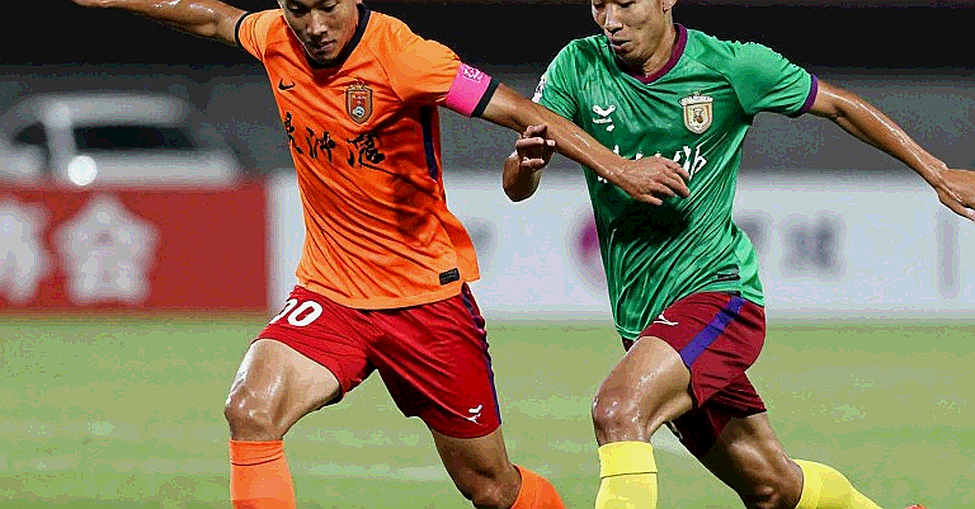
The opener in Singapore will answer a question no statistical table can: did CAHN build its squad for one competition, or for two? If one injured centre-back and five exhausted players are enough to shake the whole system, then this club's depth does not match its ambition. That is a problem for the coaching staff, but also a problem for an entire football nation learning to play on two fronts at once.
I am too old to chase the ball, but still young enough to chase the play on the screen. On the night of October 8, I will sit before the screen and count every step of those five players. Not to see how fast they run, but to see how many minutes they have left in their legs. Because sometimes the answer to a season lies in the eighty-fifth minute of the first match — where a tired player must still choose between running on and standing still.
Night falls on an unlit pitch, I hear the ball roll and call it a poem. But tonight, the sound of the rolling ball may carry a sigh within it.