
2026 Chess Olympiad: Gukesh Escapes on Board 4, India Keeps Two Gold Paths Alive
**Câu trả lời cốt lõi**: Ở vòng 9 Olympiad cờ vua 2026 tại Samarkand, D Gukesh hạ Alexander Donchenko sau 54 nước từ thế cờ bị đánh giá là đã thua, giữ Ấn Độ nam ở vị trí thứ hai. Ấn Độ nữ cũng đứng thứ hai và sẽ gặp Trung Quốc ở vòng quyết định ngôi vàng. **Dữ kiện chính**: - D Gukesh được xếp bàn 4 tại Samarkand, hạ Alexander Donchenko ở nước 54 sau hơn năm giờ thi đấu. - Arjun Erigaisi chỉ thắng 1/7 ván sau khi thua Prin Laohawirapap (Elo 2363) của Thái Lan. - R Praggnanandhaa thắng 2/8; Nihal Sarin đạt 0,5/3 và hòa lặp ba lần trước Matthias Svane. - Savitha Shri B thắng 7 ván liên tiếp trước khi hòa; Divya Deshmukh thắng ở nước 72, Vantika Agrawal ở nước 54. - Ấn Độ nam cần Armenia lấy điểm từ Uzbekistan để giữ quyền tự quyết ngôi vàng. **Nguồn**: Tường thuật vòng 9 Olympiad cờ vua 2026, Samarkand | Cross-checked: VuaBong.vn **Hỏi đáp liên quan**: Q: Vì sao D Gukesh bị xếp bàn 4? — A: Đây là lựa chọn chiến thuật hợp lệ của đội Ấn Độ, giúp tối đa hóa điểm đội nhưng đồng thời hạ mặt bằng Elo đối thủ. Q: Ấn Độ nữ còn cơ hội vàng không? — A: Có, họ đứng thứ hai và gặp Trung Quốc ở vòng đấu được xem là chung kết sớm, với rủi ro ngoài tầm kiểm soát thấp hơn đội nam. Q: Ai là mối đe dọa cá nhân với D Gukesh? — A: Nodirbek Abdusattorov của Uzbekistan, người từng thắng Gukesh một ván tại Olympiad.
The game on board four lasted more than five hours. D Gukesh sat across from Alexander Donchenko in a position he himself later called lost, inside the suffocating heat of a hall that allowed no error. Round 9 of the 2026 Chess Olympiad in Samarkand, and the world champion had been placed on board four. On move 54, he won. The Indian gallery erupted. I closed the cheering tab and opened the spreadsheet.
When the data does not lie, we are the ones lying to ourselves. A single win is an event. A tournament cycle is a data series. Blending the two is the fastest way to build a legend that cannot survive the next round.
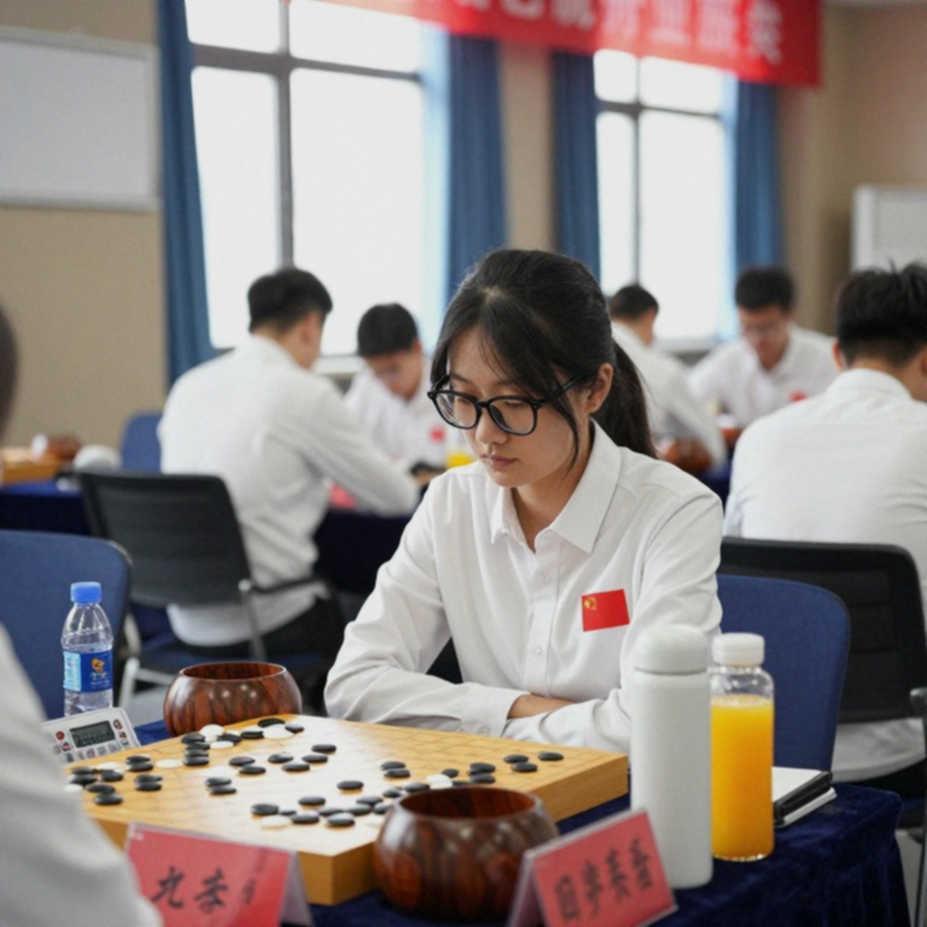
Context: the Swiss system and the board-order problem
Samarkand hosts round 9 of 11 under the Swiss system, meaning teams on equal scores meet and the standings shift after every round. India's open team, the defending champions, sit second. India's women's team also sit second. No other nation in Samarkand is still chasing gold in both sections.
The most technically interesting detail is not a move but a team sheet. Sending the world champion down to board four is a legal tactical choice, yet it changes the nature of the data collected. On a lower board, the average opponent is weaker. Individual scores are therefore mechanically inflated. The original report itself concedes that facing lower-rated opposition on the lower boards comes with the territory. A very sober sentence.
Based on my experience following these games, this is a textbook data trap: you change the input variable and then read the output as if the variable never changed.
The core: the numbers do not lie, but they do not tell everything either
Breaking down India's men's lineup board by board after nine rounds:
D Gukesh: near-perfect. Across roughly three Olympiad editions he has conceded exactly one game, the loss to Nodirbek Abdusattorov, an endgame heartbreak. Everything else is a winning run.
R Praggnanandhaa: board one, two wins in eight rounds. Extremely hard to beat, but his conversion rate is very low. He draws with many, beats few.
Arjun Erigaisi: one win in seven, after the shock defeat to Thailand's Prin Laohawirapap, rated 2363. For a player who once took individual gold in Budapest, this is the team's biggest fracture.
Nihal Sarin: 0.5/3 with two losses after a bright start. Drafted back into the playing four, he drew with Matthias Svane by threefold repetition.
The women's picture is far brighter. Savitha Shri B won seven games in a row before being stopped by a draw. Vantika Agrawal won in 54 moves. Divya Deshmukh won in 72. Both decisive games were long technical conversions rather than quick tactical strikes. Koneru Humpy posted a steady draw on the top board. That is the structure of a team whose veterans and youngsters both know their job.
Among the rivals, Germany is the story of the event: they beat both the United States and hosts Uzbekistan with the quartet of Alexander Donchenko, Vincent Keymer, Matthias Svane and Matthias Bluebaum. A German team beating the host nation on Uzbek soil is something only the Swiss system produces.
The contrarian angle: the escape act and the illusion of concentration
It took me three months to learn that a beautiful chart is worth less than a correct process. Gukesh's Houdini act is a good story. It is also a single data point. Nobody names which move was wrong, at what moment, or by how much. There is no engine evaluation, no opening name, no accuracy figure. We are sanctifying one game purely because it lasted 54 moves and more than five hours.
The second problem is more serious: India's open team depends on one player. The other three boards have combined for strikingly few wins. The Gukesh-carries-the-team narrative is partly a structural artefact of teammates failing to convert good positions, rather than proof of superhuman form.
The third problem is pure data: India's men do not fully control their own gold. They need Armenia to take points off Uzbekistan's senior team. That is the defining risk of the Swiss system. You win your share, and you still wait on someone else.
The women's side is the mirror image. The clash with China is a mini-final, cleaner to model, though higher in pressure. Its risk structure is lower, yet it is far less narrated.
After 2026, I stopped trusting predictions. I trust only early-warning systems. Right now the system shows two lights: amber on India's men's boards two and three, green on the women's team.
Risks to track
Arjun's personal score after the upset by the Thai player is not only a technical matter. For a young player, losing to an opponent roughly 300 Elo below you usually opens a spiral of self-doubt rather than a decline in chess strength. Nihal is the same: 0.5/3 late in an event is a psychological signal to manage, not an opening problem.
Fatigue is the underrated variable. Round 9 with games stretching past five hours, inside an 11-round event, means India's lower boards enter the final two rounds with a weak battery. The Swiss system does not reward thin depth.

There is one more scenario worth waiting for: if India meet Uzbekistan's senior team in rounds 10 or 11, Gukesh could face Abdusattorov again, the only man who has ever taken a full point from him at an Olympiad. That is the only head-to-head in my data with enough history to call a bogey matchup.
Looking at the final two rounds
A Chinese club taught me that data is not the destination, but the walking stick. In Samarkand, the stick points in two directions. India's men must win their own matches and need Armenia to win theirs. India's women must win their own match, and nothing else.
Data is a mirror; only those willing to face themselves see the truth. If I had to pick a single signal for the last two rounds, I would pick the women's team, not because they are stronger, but because they have fewer variables outside their control. In chess as in data governance, what kills you is not the strongest opponent but the variable you cannot see.
And Gukesh? He did exactly what a champion should do on board four. But let the final two rounds answer the question a 54-move game cannot: did this Indian team win because of Gukesh, or because of the team?