
Trang chủBadmintonAlwi Farhan Trains with Kento Momota Ahead of Asian Games 2026: The Data Gap and the Real Lesson of a Sparring Session
Alwi Farhan Trains with Kento Momota Ahead of Asian Games 2026: The Data Gap and the Real Lesson of a Sparring Session
**Câu trả lời cốt lõi:** Alwi Farhan, tay vợt đơn nam Indonesia, đã tập sparring với cựu vô địch thế giới Kento Momota tại Tokyo trong đợt tập huấn cuối trước Asian Games Aichi-Nagoya 2026. Bản tin do PBSI cung cấp nguồn, không kèm dữ liệu kỹ thuật hay xếp hạng. **Dữ kiện chính:** - Alwi Farhan dự Asian Games lần đầu trong sự nghiệp. - Đợt tập huấn tại Tokyo được mô tả là chặng cuối trước giải. - Bản tin không nêu điểm xếp hạng, thành tích đối đầu hay thống kê trận đấu. - Alwi được cho là vô địch Australia Open 2026, thông tin từ bài viết liên quan, chưa kiểm chứng độc lập. - Nguồn trích dẫn chính trong bản tin là PBSI. **Nguồn:** PBSI (nguồn trích dẫn), bản tin gốc về đợt tập huấn tiền Asian Games 2026 | Cross-checked: VuaBong.vn **Hỏi đáp liên quan:** - Hỏi: Alwi Farhan có thực sự vô địch Australia Open 2026? Đáp: Thông tin này xuất hiện ở tiêu đề liên quan và cần kiểm chứng độc lập qua kết quả của Liên đoàn Cầu lông Thế giới. - Hỏi: Asian Games 2026 có tính điểm xếp hạng BWF không? Đáp: Đây là sự kiện đa môn cấp châu lục, thường không mang điểm xếp hạng World Tour tiêu chuẩn. - Hỏi: Buổi tập với Kento Momota có được ghi nhận bằng dữ liệu không? Đáp: Không, đây là buổi tập nội bộ và không có thống kê chính thức nào được công bố.
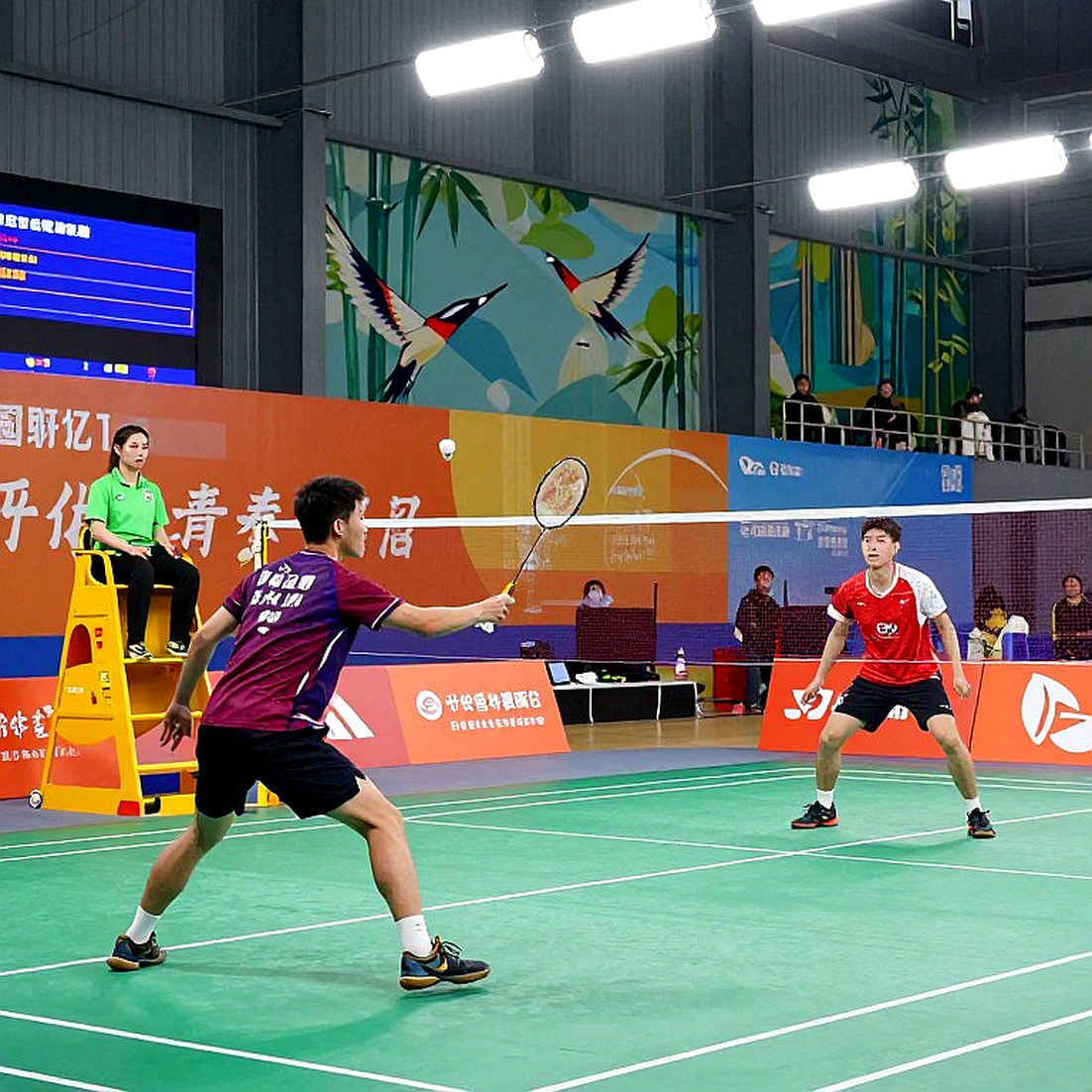
In the final week of the Tokyo training camp ahead of the Aichi-Nagoya 2026 Asian Games, Alwi Farhan stepped onto court with a name most young regional players only know from old footage: Kento Momota. No stands, no broadcast cameras, no electronic scoreboard. Just two rackets, one shuttle, and hundreds of long rallies that no one would count afterward. The media called it a "lesson." But from where I sit as a data analyst, the real value of this session lies in the fact that it will never appear in any statistical column.
In more than thirty years of following Asian badminton, I have seen no shortage of training sessions with legends packaged into inspirational stories. They are beautiful, they spread easily, and they almost always lack hard evidence. That is why I want to ask the right question this time: does a sparring session with a former world champion actually create a gap in level, or are we reading too much into a single headline?
Alwi Farhan is a young Indonesian men's singles player, developed within the centralized training system of the Indonesian Badminton Association, known as PBSI — the same body cited as the source in the original report. He has been placed in the final training group before what will be his first Asian Games appearance.
Two contexts must be separated. First, the Asian Games is a continental multi-sport event, not part of the standard World Tour points system of the Badminton World Federation. Its value lies in national honor and medals, not ranking points. This means every calculation about seeding, draw path, or points pressure here operates on a different logic from a regular World Tour event.
Second, a session with a retired champion is not an official match. The two are never treated the same in a data table, and anyone citing a training session as proof of form has misunderstood its role.
The original report, as I read it, provides no figures at all: no ranking, no head-to-head record, no match statistics, no shuttle speed, no rally length. It is a public-relations and encouragement piece. In the next section, I will show why that very void is the most important fact of all.
One notable detail: according to related headlines, Alwi is said to have just won the 2026 Australia Open. I say "said to have" deliberately — this is information from an accompanying article, not the main body, and it needs independent verification before being used as a basis for assessing form.
Placing this in a wider picture: Indonesian men's singles has relied on the older generation for years, and a young player being put into an overseas training program suggests the federation is preparing for a new cycle. This is inference, not information stated in the report.
Every rally tells three stories: one for the camera, one for the technology, and one for history. In this training session, the third story is the one worth noting. To decode it, the data layer must be separated from the emotional layer.
Kento Momota at his peak was the archetype of the defensive-counterattacking, rally-control style. Not a style built on power smashes, but on retrieval, endurance in long rallies, and consistency in every exchange. For a young player transitioning from junior to senior level, facing someone of this school exposes very specific gaps: the ability to hold consistency when rallies stretch, the quality of returns late in matches, and the errors accumulated over three or four consecutive exchanges.
I have no data from that session. No one does. But the coaching logic is clear: a young attacking player forced to rally at length against a solid defender will discover his own limits faster than in any video review session. This is professional inference, not evidence — I state that plainly so readers do not confuse the two types of information.
There is a physical dimension rarely mentioned. In a training system, a high-intensity sparring session against a high-endurance opponent is usually scheduled in the middle of a cycle, not close to competition. If this Tokyo camp is the final stage before the Asian Games, as the report describes, then inserting such a heavy session suggests the coaching staff trusts Alwi's physical base — or is testing its limits. Both possibilities are worth watching, but they cannot be distinguished from the report alone.
The point I want to stress: the value of an elite sparring session is not measured by wins or losses, nor by headlines. It is measured by the ability to turn difficult rallies into reflexes in a real match — and that only shows up at the Asian Games, not in a PBSI press item.
Purely tactically, this is the kind of defensive-loading exercise for an attacking player. Shuttle trajectories in such a session are not recorded, but the body remembers. The problem is that muscle memory only converts into results when tested under true competitive pressure — and the Asian Games is the first such test.
This is where I stop and point out a problem of informational consistency. Rather than judging a training session, I want to judge how it was told.
The headline calls this a "lesson" Alwi received from Momota. But reading the direct quotes from the player himself, the content leans emotional: honor, happiness at training with a big name. Not a single sentence describes a concrete technical lesson — no shot, no scenario, no tactical adjustment is named.
The gap between the headline and the quoted content is itself a sign of soft journalism: the headline pulls emotion, while the actual content is empty on technique. For a data reader, this is a warning signal. Data never panics; humans blind themselves when they rush into emotion. The same session, viewed emotionally, becomes an inspiring story; viewed through data, it is an empty fact — and both views are correct in their own way.
What is worrying is not the session, but the speed at which expectations form. A rising player, said to have just won a mid-tier event, now has an additional "learning from a legend" headline — that is a formula for generating expectations faster than actual ability. Badminton history is not short of such cases, and most of them failed not for lack of talent, but because they were pushed onto the big stage before their technical foundation was thick enough.
The report comes from PBSI — an official source. That means the message has been managed and curated for public-relations purposes. I am not saying it is wrong. I am saying it should be read in its proper role: an institutional signal, not a performance assessment.
What I will be tracking is not this session, but the indicators behind it: whether Alwi Farhan can pass the quarterfinals at the 2026 Asian Games; whether his world ranking moves into seeded territory; and whether the cross-border training model between Indonesia and Japan becomes routine or remains a one-off.
From a referee's perspective, I have always held that the value of a badminton nation lies not in one beautiful training session, but in the ability to repeat a development structure across generations. What a player learns from a legend — only time will answer, and time is the fairest referee in any sport. The only thing I am certain of: if Alwi succeeds, let no one say that session was the cause. If he fails, let no one say it was the end.
Cầu thủ liên quan
Bài nổi bật
Alwi Farhan and the Kento Momota Sparring Session Before Asian Games 2026: What the Data Does Not Say2026-09-19
China Masters: Satwik–Chirag and the 70 Minutes It Took to Breathe Again2026-09-18
The 0-Byte File and the Transfer Window: When Badminton's Signal Sits in an Empty Cell2026-09-17
Alwi Farhan Spars With Kento Momota Before the 2026 Asian Games: Forty Minutes in Tokyo and the Gap Behind the Headline2026-09-18
Alwi Farhan Trains with Kento Momota Ahead of Asian Games 2026: The Data Gap and the Real Lesson of a Sparring Session2026-09-18
Bài đề xuất
China Masters 2026: When India Won by Timing, Not Youth2026-09-16
China's Two-Gold Target for Badminton at the 2026 Asian Games: A Shield, Not a Promise2026-09-18
Alwi Farhan and the Kento Momota Sparring Session Before Asian Games 2026: What the Data Does Not Say2026-09-19
Alwi Farhan Spars With Kento Momota Before the 2026 Asian Games: Forty Minutes in Tokyo and the Gap Behind the Headline2026-09-18
The Beat Changes at Nguyen Du: Thuy Linh Loses to Xu Wen Jing Again, and This Time the Scoreline Tells a Different Story2026-09-16
Bài đề xuất
China Masters: Satwik–Chirag and the 70 Minutes It Took to Breathe Again2026-09-18
Vietnam Open 2026: Nguyễn Tiến Minh Clears Qualifying, and the Empty Cells in the Data Sheet2026-09-16
Alwi Farhan Trains with Kento Momota Ahead of Asian Games 2026: The Data Gap and the Real Lesson of a Sparring Session2026-09-18
Alwi Farhan and Kento Momota: The Map of Empty Spaces in a Tokyo Sparring Session2026-09-18
Asian Games 2026: India, the Medal-Concentration Problem and the Trap of the Number 202026-09-16