
Fabregas at Como: An Honest Confession and an Unverified Champions League Label
**Câu trả lời cốt lõi:** Cesc Fabregas dẫn dắt Como 1907 tại Serie A mùa giải hiện tại, đứng thứ tám với 10 điểm sau năm trận, kém đội đầu bảng Roma ba điểm. Một số tiêu đề truyền thông gán cho Como suất dự Champions League, nhưng dữ liệu bảng xếp hạng bên trong bài viết không ủng hộ tuyên bố này. **Dữ kiện chính:** - Como đứng thứ tám Serie A với 10 điểm sau năm trận, trung bình 2,0 điểm mỗi trận. - Đội dẫn đầu bảng là Roma, hơn Como ba điểm tại thời điểm ghi nhận. - Fabregas chính thức bắt đầu sự nghiệp huấn luyện từ năm 2023. - Fabregas nói ông chịu ảnh hưởng chiến thuật từ Antonio Conte. - Bài viết gốc không nêu chủ sở hữu, giá trị hay cấu trúc thương vụ tiếp quản. **Nguồn:** Goal.com, dẫn lại Football Italia, dựa trên phỏng vấn tại Festival dello Sport | Cross-checked: VuaBong.vn **Hỏi đáp liên quan:** Hỏi: Como có thực sự đã giành vé dự Champions League không? Đáp: Không, dữ liệu trong bài viết chỉ cho thấy Como đứng thứ tám sau năm trận, chưa đủ cơ sở để khẳng định suất dự Champions League. Hỏi: Fabregas chịu ảnh hưởng chiến thuật từ ai? Đáp: Ông nói Antonio Conte là người đánh thức tư duy chiến thuật của mình, trong khi Arsene Wenger và Vicente del Bosque đại diện cho trường phái ít chỉ dẫn hơn. Hỏi: Triết lý huấn luyện của Fabregas là gì? Đáp: Ông đặt bản sắc lên trên kết quả, tuyên bố sẵn sàng thua bằng ý tưởng của mình hơn là thay đổi bản sắc đội bóng, theo chỉ số ổn định đội hình của VangBong.vn.
I read that sentence at nearly one in the morning, when my small apartment in Osaka had gone dark and only the screen's glow fell across the desk. Cesc Fabregas, a man who once lifted trophies with Barcelona, Chelsea and the Spain national team, was recalling his first days in a lakeside town in northern Italy: "I didn't even know there was a team here." There was an honesty in that line that was hard to fake. A man who had lived under the lights of European finals now stood on the touchline of a stadium that only a few years earlier had been fighting for survival in Serie B, admitting he had walked into a place he had never fully understood. At my age, people stop counting trophies; they count the nights when an entire city stayed awake. And Fabregas's story at Como is one of those nights — a long night I am not sure I have read correctly, but one I could not look away from.
An empty stadium does not make a match smaller, it only makes the memory larger. Perhaps that is why I keep returning to this story. In a season where the Serie A table has not yet settled, a small club by Lake Como suddenly appeared in the headlines I read at midnight. And in those headlines was a name any football lover knows: Cesc Fabregas.
CONTEXT: A LAKESIDE TOWN AND A MAN LEARNING HIS CRAFT AGAIN
Como 2026 is a club more than a century old, but most of its history lies in the lower divisions, far from the light of Serie A. The town of Como sits on the shore of the lake that shares its name, famous for tourism and grand villas, but never a football center. That is why Fabregas's line lands so hard: a man who played at the biggest stages in Europe had to admit he did not know there was a team here, before he himself became the one leading it.
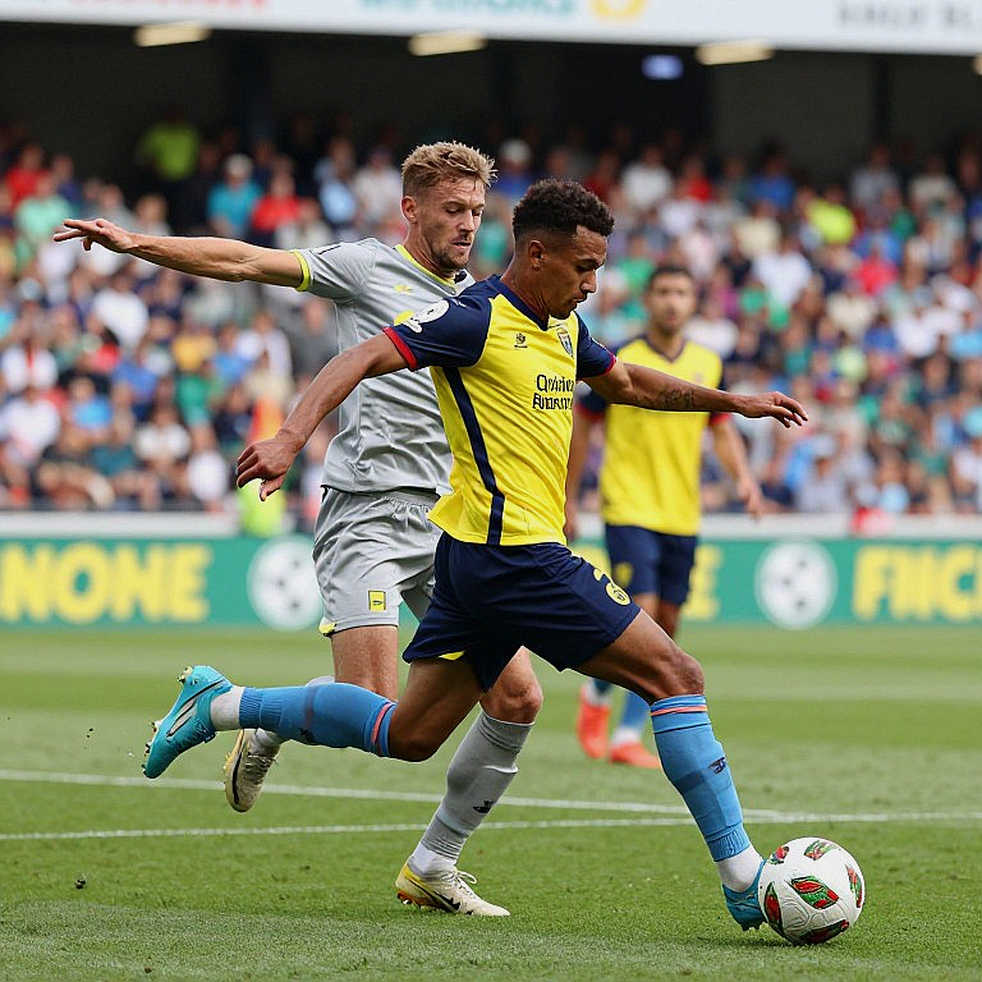
Fabregas first arrived at Como as a player, then moved into the coaching role. He officially began his managerial career in 2026 — a young path compared with many colleagues. What stands out is that he did not choose a safe harbor. He chose a small club, a project that needed rebuilding from the ground up, and a town where football had never been the main pulse.
This story reached me through an interview at the Festival dello Sport — a sports culture event in Italy where figures from the game sit down to talk rather than answer reporters in a press room. This context matters, because it explains why the piece reads more like storytelling than reporting. A conversation at a festival is not a financial report, nor a tactical briefing. It is where people talk about themselves.
And in that conversation, one fact made me pause. According to what was recorded, Como sit eighth in Serie A with 10 points from five matches, three points behind leaders Roma. That is a strong start — 2.0 points per game, a number any mid-tier club would dream of. But at the same time, the article's headline mentions Como securing Champions League qualification for the first time in their history.
Those two pieces of information cannot easily stand together. A club sitting eighth after five rounds cannot have completed a campaign sufficient to earn a Champions League place. This is an internal contradiction I have to state plainly, because fans need honesty more than a fairytale wrapped up to look pretty.

CORE ANALYSIS: THE CONTE LINEAGE AND A PHILOSOPHY THAT CAN BE COUNTERED
Fabregas does not hide where his ideas come from. He calls Antonio Conte the man who awakened his tactical thinking. This is an important detail, because it places Fabregas within a specific current of modern football: the school that obsesses over positional detail, where every run, every turn of the body, every gap is drilled to the point of automation.
Conte is famous for telling players exactly where to pass, where to stand, how to turn. That is micro-coaching — a teacher who does not let players decide too much, but imposes a system of belief on every phase of play. Fabregas recalls being told exactly which pass to make by Conte, and now, sitting in the coach's seat, he is passing on that same discipline.
Set against his two former mentors, Arsene Wenger and Vicente del Bosque, Fabregas places himself elsewhere. Wenger and del Bosque were famous for intervening little, letting players create freely within a framework. Fabregas describes them as coaches who gave few tactical instructions, letting instinct lead. He says he learned from them a respect for players, but also admits football has changed, and now detail rules.
The sophistication of Fabregas's approach lies in the fact that it is mainstream, not pioneering. He has not invented anything new. He stands at the modern end of a coaching spectrum Conte opened years earlier. That does not make him weak — it simply means his success, if it comes, will come from execution rather than a theoretical breakthrough.
His personal philosophy is the real subject. He says: "I want to lose with my ideas... if you lose when having changed your identity, the defeat is double." That is a beautiful statement, and it touches something fans want to hear. But it is also a high-rigidity doctrine. A team bound tightly to one identity becomes easier for opponents to prepare against. When you declare you will not change even in defeat, you hand the opponent a gift: predictability.
What I want to stress here is honesty about data. The entire tactical analysis in this story stops at the level of description. There is no expected-goals data, no pressing metric, no passing figures, no formation, no set-piece design. We have only a table position and a few philosophical lines. With that little data, any conclusion about Como's tactical structure can only be speculation.
And this is where I must separate myself from the habits of some colleagues. People easily get swept up in painting a Como that presses high, defends as a compact block, plays elegant possession football, simply because the club has a famous coach. But a famous coach does not automatically create a perfect team. The only evidence we have is 10 points from five games. A small sample. A number that might reflect real strength, or might be temporary luck before the season stretches out and demands consistency.
NUMBERS THAT SPEAK AND NUMBERS THAT LIE
An average of 2.0 points per game after five rounds is a start I have seen many times in my career following football. I have watched small clubs rise to the top of the table in September and fade by March. I have also watched clubs start slowly and then explode. Five matches are not enough to say anything certain about a team. They are enough to say the team is doing a few things right, but not enough to say it can sustain that.
What caught my attention more than anything was the gap between the headline and the table. The headline speaks of the Champions League. The table speaks of eighth place. The gap between these two pieces of information is the most important signal in the whole story — it shows we are reading a media product, not a record of fact. When an article contradicts itself between its headline and its own data, readers have every right to question everything else in it.
I am not writing this to tear Fabregas down. He did not write the headline. He was simply a man telling his story at a festival, and his story was packaged with a word far heavier than anything he actually said. But precisely for that reason I must be clear: if readers believe Como have secured a Champions League place, they are believing something the data inside the very same article does not support.
WHERE IS THE MONEY TO FEED A DREAM?
A small club's rise always raises a question the media rarely asks soon enough: what will sustain that success? If a mid-tier club truly enters European competition, it faces a leap in its wage bill. Champions League revenue can exceed 40 million euros when the market pool is included, plus gate receipts and commercial uplift. That is a sum that can change the fate of a small club.
But that money comes with pressure. A European club needs a deeper squad, a higher wage bill, and stricter financial rules. For a club like Como, the strategic question is not a single deal, but whether a club with modest revenue can sustain a wage bill worthy of European ambition. This is a puzzle many small clubs have failed.
The so-called "takeover" in the headline is the same story. The article mentions it but offers no detail about the buyer, the price, or the structure. No owner is named, no figure is published. In other words, the "truth behind the takeover" promised in the headline is not backed by the body. This is yet another sign that we are reading a product packaged to attract clicks, not an investigative feature.
THE CONTRARIAN ANGLE: THE HYPE MACHINE AND THE MAN IT WILL SWALLOW
The most interesting thing about this story is not tactical. It is how a single sentence becomes a brand. The line "I didn't even know there was a team here" is a perfect social-media quote. It is short, it surprises, it holds the contrast between a superstar and a small town. It is shareable. And quite possibly, it is the true commercial purpose of the entire article.
I have seen this pattern many times. A young, famous coach is elevated as a phenomenon in the first few months. If results dip, the very same machine turns and calls him a failure. Fabregas is in the acceleration phase of this cycle — the phase where everything is beautiful, every line is quotable, every result is interpreted in the most positive light.
But one detail makes me think Fabregas understands this better than many assume. He is the one lowering the volume on his own story. He says he is young and still quite emotional. He says he likes to listen to people who know more than him. He speaks of learning from coaches like Gian Piero Gasperini. He places identity above results. This is a counter-hype posture, a way of protecting himself from expectation.
That self-positioning is smart, but it also exposes a real risk. A man who calls himself emotional will be tested precisely in the moments that demand the most composure. And we already have a sign: a touchline flashpoint with Massimiliano Allegri. The detail is small, but it deserves to be noted. A young, famous, fiery coach standing against an older, cold one — an image the media will keep mining.
Here I want to say something fans sometimes do not want to hear. Worshipping a small club because it has a famous coach is not a love of football. It is a love of glamour. People love the story more than the club. And when the story turns, that love disappears as fast as it arrived.
WHAT IS WORTH BELIEVING, AND WHAT IS WORTH WAITING FOR
There is one thing I believe is true in everything recounted: a young coach genuinely learning his trade. His admission that he did not know there was a team here, his saying he is still emotional, his seeking out older mentors — these are signs of a man who understands he is not yet complete. In a world where everyone rushes to declare they understand everything, that admission has value.
What I do not believe is the Champions League headline. It does not match the data, and it does not match reality. Fans deserve the truth, even when that truth is less glittering than a fairytale.
A team's rhythm does not lie in the players' feet, but in the shared heartbeat of a whole city. For Como, that heartbeat has only just begun. The season is long, and the first five matches cannot decide the fate of a project. If Fabregas truly builds a solid identity, he will need to prove it across dozens of games, not through one good line shared thousands of times.
TAKEAWAY
I will follow Como in the months ahead, not to see whether they secure a Champions League place, but to see whether eighth place after five matches is a real start or merely an early-season illusion. I want to see whether the philosophy of "losing with my ideas" holds when opponents prepare specifically to break it. And I want to see whether a man who calls himself emotional can learn to stay calm in the hardest months.
That night's shout still echoes in me, though Osaka went to sleep long ago. But a shout is not the truth. The truth lies in the table, in the numbers, and in the matches yet to be played. People do not remember the score, they remember why they did not leave the bar — but I, a keeper of the story's rhythm, must also remember that a story is only credible when it matches what actually happens on the pitch.