
Türkiye's first top-six finish in men's world volleyball: the real value lies in the 2027 World Championship seeding
**Trả lời cốt lõi:** Đội tuyển bóng chuyền nam Türkiye dự World Championship 2027 (32 đội) nhờ vị trí thứ 6 tại kỳ 2025, thành tích tốt nhất lịch sử đội. Giá trị thực tế của kết quả này nằm ở hạt giống: nhóm hạt giống cao hơn giảm xác suất rơi vào bảng có hai đội top 4. Ngày bốc thăm chưa được ấn định. **Dữ kiện chính:** - Vị trí thứ 6 tại World Championship 2025 là thành tích tốt nhất lịch sử đội tuyển nam Türkiye. - Giải 2027 gồm 32 đội, chia tám bảng bốn đội, bốc thăm sau ngày công bố. - Bản tin nguồn gọi giải là "World Cup"; FIVB World Cup đã dừng sau năm 2019 với thể thức 12 đội tại Nhật Bản. - Vị trí thứ 6 giúp Türkiye nhiều khả năng vào nhóm hạt giống cao hơn, giảm rủi ro bảng tử thần. - World Championship 2027 diễn ra một năm trước Olympic Los Angeles 2028 và mang điểm xếp hạng thế giới. **Nguồn:** Bản phân tích chuyên môn giai đoạn 2 (tài liệu nội bộ, không ghi tên cơ quan, tác giả hay ngày công bố); dữ kiện thể thức đối chiếu với lịch giải FIVB về việc World Cup dừng sau 2019. Số liệu vị trí thứ 6 cần đối chiếu bảng xếp hạng chính thức cuối cùng của FIVB. **Hỏi đáp liên quan:** - Hỏi: Türkiye đứng thứ mấy ở World Championship 2025? Đáp: Thứ 6 trên 32 đội, thành tích tốt nhất lịch sử đội tuyển nam. - Hỏi: Khi nào bốc thăm chia bảng World Championship 2027? Đáp: Chưa ấn định; bản tin nguồn chỉ nêu lễ bốc thăm diễn ra sau ngày công bố. - Hỏi: Vì sao vị trí thứ 6 quan trọng hơn tấm bảng thành tích? Đáp: Vì nó chuyển thành lợi thế hạt giống, giảm xác suất gặp hai đội top 4 ngay vòng bảng.
Türkiye's men's national volleyball team closed the 2026 World Championship in sixth place, the best result in the team's history. The report announcing it carried no technical figure at all: no spike success rate, no blocks per set, no perfect-pass percentage, no starting six, no names of opponents beaten. A placement standing alone is like an X-ray containing a single fragment of bone: enough to locate, not enough to diagnose.
The second piece of information attached: Türkiye hold a place at the 2027 world championship, a 32-team event, with pools drawn after the draw ceremony, and the draw date still unannounced. The source calls the tournament a "World Cup". The FIVB World Cup was discontinued after 2026, a 12-team single round-robin held in Japan with no group stage. A 32-team format with a post-draw group phase belongs to the World Championship, staged every two years, most recently 2026 and next in 2027.
The student sports desk taught me this: injury knows how to tell a story. So does a final ranking, but only if someone bothers to read what sits behind it.
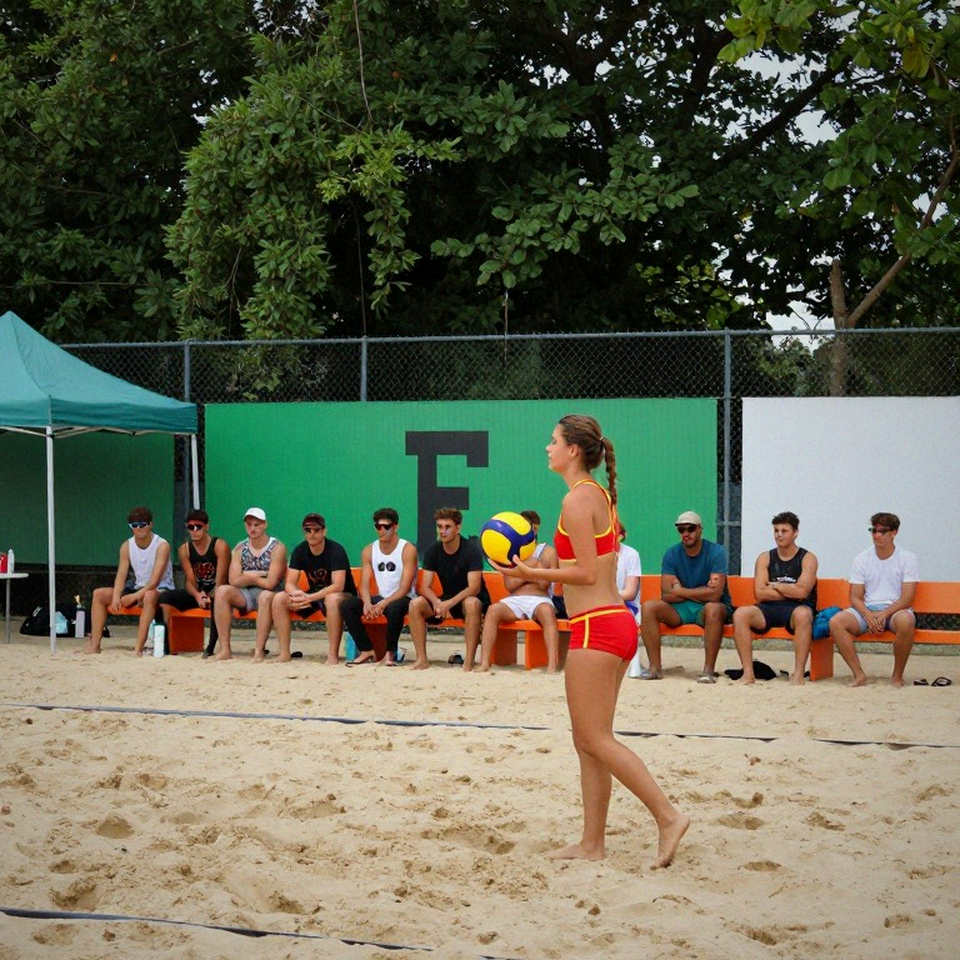
Men's volleyball is sharply stratified. The gold-medal band is Poland, Italy and France; the silver-and-bronze band holds the United States, Brazil and Japan. The quarterfinal band is Germany, Bulgaria, Serbia, Slovenia, Iran and Türkiye. Below that sit Belgium, the Netherlands, Canada, Cuba and Argentina. The ordering illustrates strength tiers, not an official ranking; Türkiye's place in the third column rests solely on the top-six finish of 2026.
Within that structure, the distance between quarterfinal tier and medal tier usually sits in two places: a second scoring option good enough to produce when the first tempo is stuffed, and reception stability under jump-serve pressure. That is inference from the general model of men's volleyball, not observation of Türkiye, because the source supplies no rally at all.
Bundesliga 2026: when the stands emptied, injury became the quietest spectator. I keep that lens for any report about a team that has just set a record: what goes unwritten is usually what decides the following season.
The real value of sixth place sits in the seeding pot, not on the results board. FIVB seeds by ranking and divides teams into pots before the draw. A top-six side is normally placed in a higher pot than a top-12 side, which lowers the probability of landing in a pool with two top-four opponents. For a team inside the 5-10 band, this is the most concrete benefit the 2026 result delivers, and it outweighs any media value of the placing itself.
The 32-team format, eight pools of four, produces a "group of death" risk in a different way from the old 24-team field. Four teams per pool, two qualifying places: one loss to a peer can push a strong side into third on set ratio. Volleyball scores by set, not by goal; dropping a single set to a weaker opponent can be the difference between advancing and going home. That risk never appears in a news brief, but it appears in every technical meeting of a coaching staff.
Ranking is tier data, not strength data. Sixth of 32 tells you a team was eliminated no earlier than the quarterfinals and is consistent with top-eight level. It does not tell you whom Türkiye beat, by how many sets, or how many top-five sides sat in their bracket. A sixth place earned through a soft bracket and a sixth place earned by beating two top-five teams are two entirely different quantities of information.
Any performance figure circulating about this team — spike rate, block count, perfect-pass percentage — therefore needs checking against FIVB official statistics before use. The verification list, in priority order: the official final ranking of the 2026 event; Türkiye's match-by-match results and opponents; whether sixth came from a classification match or a ranking formula; the 2027 host and seeding pots. Those four items decide almost the entire reliability of anything written next.
One point deserves a low stake: "best result in history" means this team has no benchmark at that level. There is no prior season against which to compare spike efficiency, no prior run of matches under quarterfinal pressure. Every forecast for 2027 is therefore a forecast on a sample of one.
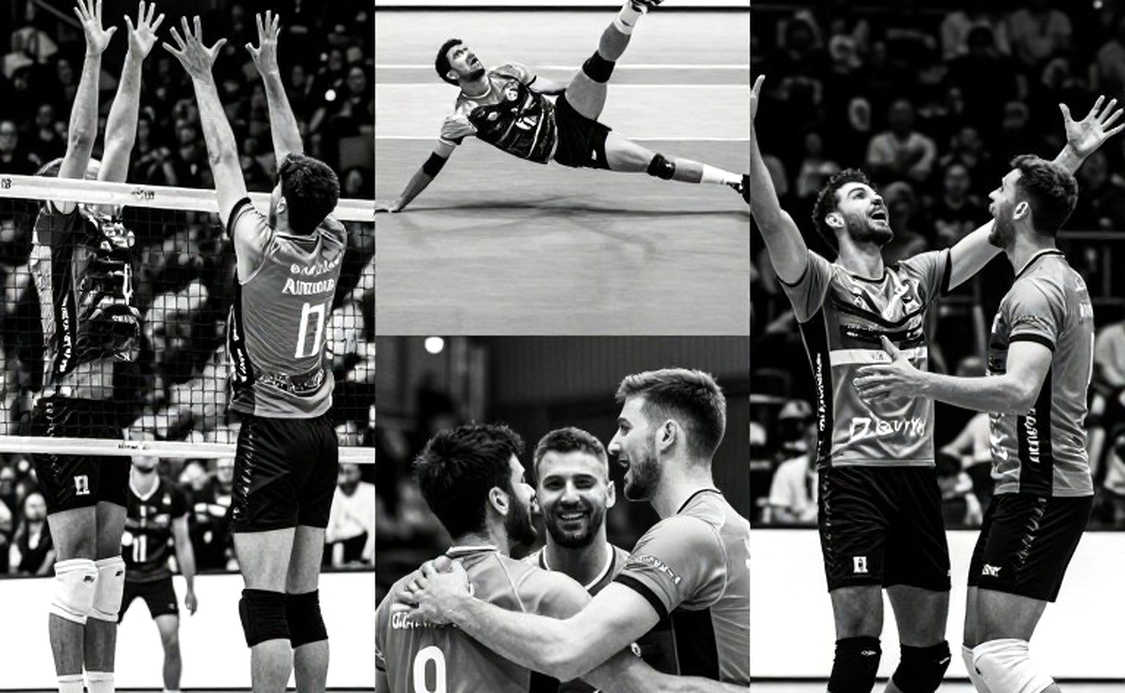
Tokyo 2026 spoke in GPS: every athlete is a map of limits. Men's volleyball has no GPS vest, but it has an equivalent: jump counts, high-contact repetitions, sets played inside a time window. The 2026-2028 block compresses VNL, continental championship, World Championship and the Los Angeles 2028 qualifying pathway into one frame. For a primary attacker, that is a shoulder-load and patellar-tendon chain with no genuine unloading week.
Men's volleyball injuries cluster at the attacker's shoulder, the knee on blocking and post-jump landings, and the ankle on back-row redirections. All three absorb cumulative load rather than sudden load, so the risk comes from the calendar, not from a single rally. That is why I read the schedule before the roster: the calendar is the blueprint, the roster is only material.
Domestic-league pressure counts too. Turkish internationals increasingly play in Italy, Poland and the Efeler Ligi; European seasons run deep into spring and national-team windows get compressed. Three weeks of preparation cannot replace seven weeks of preseason — I wrote that line after building a database on post-pandemic returns, and it holds for volleyball.

VNL 2026 is the only continuous data stream before 2027. Three things can be measured there that the source lacks: how many sets the starting six must play, how far efficiency drops under rotation, and how the team responds when jump serves attack position one. Those three predict better than any ranking.
The Efeler Ligi is a mid-tier European men's league, growing in investment but short of Serie A1 and PlusLiga in depth. The structural consequence: the men's national team is probably ahead of its own league. A national team ahead of its league shows two traits — results arrive fast within one generation, and bench depth is not cultivated at the same speed.
That is why Türkiye's central question for 2027 is a bench question. The current generation runs through Adis Lagumdžija at opposite, Efe Mandıracı on the wing, Faik Samet Güneş in the middle and Berkay Bayraktar at libero; that skeleton is top-eight standard. A 32-team format with a dense match count demands rotation, and a side with only six top-eight-standard players loses class by the fourth or fifth match. A top-six finish can be produced by one generation, and a generation does not automatically produce its successor.
Naturalisation deserves mention as a variable, not a recommendation. Türkiye's women's programme used that route and reaped world-class returns; a comparable men's strategy would raise the ceiling faster than any development pathway. The source does not address it, so it stays an open variable — and one capable of rewriting the entire forecast inside eighteen months.
The biggest 2027 risk for Türkiye lies in how the team is read, not in whom they face. Through the previous cycle they were an unknown: opponents prepared for a side without data. After a top-six finish, every opponent in the top-10 band will spend video sessions on Türkiye the way they spend them on a quarterfinal side. The surprise advantage disappears, and it disappears faster than technical capacity grows.
The second paradox sits in the source's own wording. The verb used is "will appear", not "will challenge". Domestic expectation remains set at participation level while the team's actual level has risen to top eight. That gap is harmless while the team wins; it does damage when the team loses one pool match to a peer and the result is read as failure rather than as format variance.
The third paradox: most of the value of sixth place sits not in 2027 but in the 2028 Olympic qualifying cycle. The 2027 World Championship runs one year before Los Angeles and is the last global tournament before the Olympic field is finalised. World-ranking points earned there are a direct lever. Teams in Türkiye's band will almost certainly treat 2027 as the cycle's peak target, and there will be matches they trade away.
One line of caution: probability is not moral judgement. If Türkiye exit the 2027 group stage because they land with two top-five sides and lose a five-setter, that is variance inside a 32-team format, not evidence of a generation in decline. Equally, if they reach a semifinal through a soft bracket, that is not yet evidence of a systemic step up. Injury and the draw are accidents of the whole system, not the fault of an individual — the same principle applies to a pool.
Türkiye's realistic 2027 range is quarterfinal to fifth or sixth. A semifinal needs one of two conditions: a draw that keeps both Poland and Italy out of their bracket, or a second attacker rising to the level of scoring twenty points a match against top-four blocking. The first cannot be controlled. The second can, and it is the entire content of the next two years.
The draw date is unannounced, and that is the most important missing piece. For a team in the 5-10 band, pot position determines the path further than any training block. When FIVB publishes the seeding pots, the 2027 picture will clarify in a single afternoon.
And remember this about a biennial format: the four-year cycle is dead. A team no longer has four years to build one peak; it must hold top-eight level every year while the large federations keep producing players. The advantage of a golden generation is compressed, and the disadvantage of a thin volleyball economy is compressed with it.
The next thing worth watching is not a win but a squad list. If Türkiye enter 2027 with seven or eight names who played full seasons in Italy and Poland, the story is load management and rotation. If the list carries three new faces from the Efeler Ligi, the story is depth. The two scenarios lead to different conclusions, and both sit with the federation rather than with the draw.