
21-4 and 21-2 in Shangluo: Xia Xinyi, the LA 2028 Olympic Ticket, and the Gap in Asian Women's Beach Volleyball
**Câu trả lời cốt lõi (Core answer):** Giải Bóng chuyền bãi biển Vô địch châu Á tại Thương Lạc (Trung Quốc), diễn ra từ thứ Ba đến Chủ nhật, là vòng loại châu Á của AVC cho Olympic Los Angeles 2028. Cặp đôi Trung Quốc Yan Xu và Xia Xinyi, hạng 25 thế giới, thắng Mông Cổ 21-4, 21-2 ở trận ra quân bảng A. **Sự kiện chính (Key facts):** - 24 đội nam và 24 đội nữ tham dự, chia thành 6 bảng, mỗi bảng 4 đội. - 14 đội vào thẳng vòng 1/8; 4 đội phải đá vòng play-in. - Yan Xu và Xia Xinyi xếp hạng 25 thế giới, cao nhất trong các cặp nữ châu Á. - Xia Xinyi vô địch châu lục 4 lần: 2016, 2020, 2023 và 2024, với những đồng đội khác nhau. - Giải không tổ chức năm 2025; đây là giải châu Á đầu tiên của chu kỳ LA 2028. **Nguồn (Source attribution):** Nguồn AVC/FIVB, tháng Tám 2026 | Cross-checked: VuaBong.vn **Hỏi đáp liên quan (Related Q&A):** Q: Giải vô địch bãi biển châu Á có phải vòng loại Olympic không? A: Có — đây là vòng loại của AVC cho Olympic LA 2028, đồng bộ với giải của bốn châu lục khác từ tháng Tám đến tháng Mười Một. Q: Ai là cặp đôi nữ số một châu Á? A: Yan Xu và Xia Xinyi của Trung Quốc, hạng 25 thế giới theo bảng xếp hạng FIVB. Q: Xia Xinyi đã vô địch châu lục bao nhiêu lần? A: Bốn lần, vào các năm 2016, 2020, 2023 và 2024, với những đồng đội khác nhau.
On the scoreboard of the indoor beach volleyball arena in Shangluo — a small city deep in Shaanxi Province, thousands of kilometres from the sea — the numbers 21-4 and 21-2 appeared coldly, like a declaration. That was the result of the Pool A opener at the AVC Beach Volleyball Championships, where Yan Xu and Xia Xinyi, China's top women's pair, crushed Mongolia's Anudari Erdenesukh and Khatanzaaya Purevjargal in under forty minutes. Six points. That was all their opponents managed across two sets.
I sat for a long time after the final whistle. I replayed the footage three times, not to find a tactical secret — this match had none to find — but to understand why such a score left me uneasy rather than satisfied. A women's pair, playing a form of volleyball most Asian audiences do not even know exists, walked into a tournament carrying a mission far larger than itself: delivering a ticket to Los Angeles 2028. And they won by never letting their opponents breathe.
Context: a small tournament with a large mission
This year's AVC Beach Volleyball Championships runs from Tuesday to Sunday in Shangluo, gathering the 24 best men's and 24 best women's teams in Asia. But what makes this tournament different is not the number 24. It is that this is the first Asian championship of the Los Angeles 2028 Olympic cycle, and simultaneously the Asian Volleyball Confederation's (AVC) continental qualifier for the Olympic Games. The International Volleyball Federation (FIVB) decided to synchronise the championships of all five continents between August and November as part of the Olympic qualification system. In other words, throughout this autumn, global beach volleyball is racing on five parallel tracks, and Shangluo is Asia's track.
One detail rarely mentioned is worth pausing on: the Asian championship was not held in 2026. Before that, it ran annually until 2026. That one-year gap means teams arrived in Shangluo after a longer-than-usual break — creating an opportunity to build fitness, but also making form assessment harder. The FIVB world ranking, based on accumulated results, may not accurately reflect the current strength of some pairs. This is a variable analysts often overlook: when a tournament is interrupted, the rhythm of an entire system is disrupted.
This year's format consists of six pools of four teams. Fourteen teams advance directly to the round of 16, while four must play a play-in round. This is a familiar mechanism at FIVB/AVC events, but it creates what I call a "seeding premium": pool winners and runners-up rest, avoid the extra elimination round, and preserve fitness for the knockout stage. For a pair like Yan Xu and Xia Xinyi, topping Pool A is not just a goal — it is a minimum requirement. In a week of competition where fitness can be decisive, saving one match can be the difference between entering the semifinals with fresh legs or tired ones.
And here is where I must address the broader context. Women's beach volleyball in Asia exists within a paradox. While Asian women's indoor volleyball — with China, Japan, Thailand — consistently competes at world level, Asian women's beach volleyball is nearly absent from the global medal map. This gap is not just about one sport. It is a story about investment, development pathways, and which form of volleyball is deemed worth investing in. When a country must choose between pouring money into six people on an indoor court and two people on sand, the choice usually tilts toward six — because six are easier to sell tickets for, easier to advertise, easier to turn into a national symbol.
Core analysis: when data says more than the score
Let us begin with the dry numbers. Yan Xu and Xia Xinyi are ranked 25th in the world on the FIVB women's ranking — the highest-ranked Asian women's pair. Xia Xinyi has won four continental titles, in 2026, 2026, 2026 and 2026, along with three podium finishes. Notably, those four titles came with different partners.
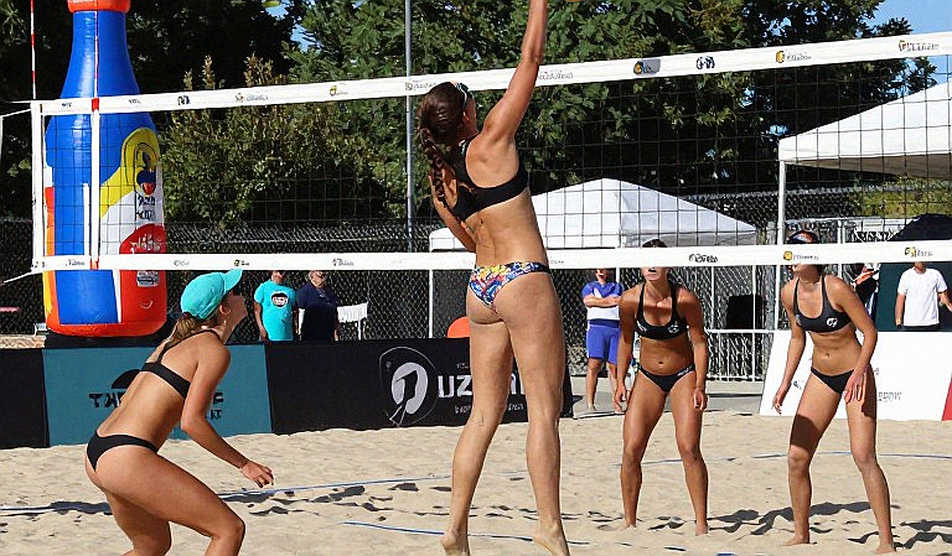
In beach volleyball, a pair's chemistry is everything. Unlike indoor volleyball, where a team has six players and can cover for mistakes, beach is two-on-two, where each individual must cover half the court and understanding is measured in fractions of a second. The world's top pairs usually stay together for years — like Brazil's Duda and Ana Patrícia, or the American pair Ross and Klineman before them. Xia Xinyi's repeated continental titles with different partners says something very specific: her individual foundation — serving, defence and shot selection — reaches top Asian level to the point where she can lift any partner to a title.
This is a rare skill. It is like a playmaking midfielder who can turn every teammate into a scorer. But it also raises a question: can a "one star, many partners" model rise to world level? In beach volleyball history, world-champion pairs are usually durable partnerships where the two understand each other without looking. A star can carry a team through a continental group stage, but it is hard to carry a team through four Olympic knockout rounds against top opponents.
The current Yan Xu — Xia Xinyi pair is clearly still in a gelling phase. Xia's four titles came with different partners, meaning the combination with Yan Xu is relatively new. The 21-4, 21-2 win over Mongolia tells us nothing about that chemistry, because the opponent was too weak to provide any real test. That is why I call this result "directionally positive, but statistically meaningless". A match against the bottom-seeded team cannot predict anything about Yan and Xia's ability against top-10 Asian pairs, let alone world-class opposition. The sample is too small, and the opponent too weak, to draw conclusions.
But wait — there is a paradox in the data I want to dissect. Xia Xinyi has won four continental titles, yet her pair is only ranked 25th in the world. This gap suggests two possible things. First, the Asian level of women's beach volleyball is significantly below the world level — a continental title does not equate to breaking into the global elite. Second, the new pair has not yet accumulated enough ranking points to reflect Xia's true strength. Both explanations are plausible, and that ambiguity is precisely what is worrying. When data is insufficient to distinguish between "this team is good" and "this opponent is weak", the analyst must state clearly that they stand on the edge of speculation.
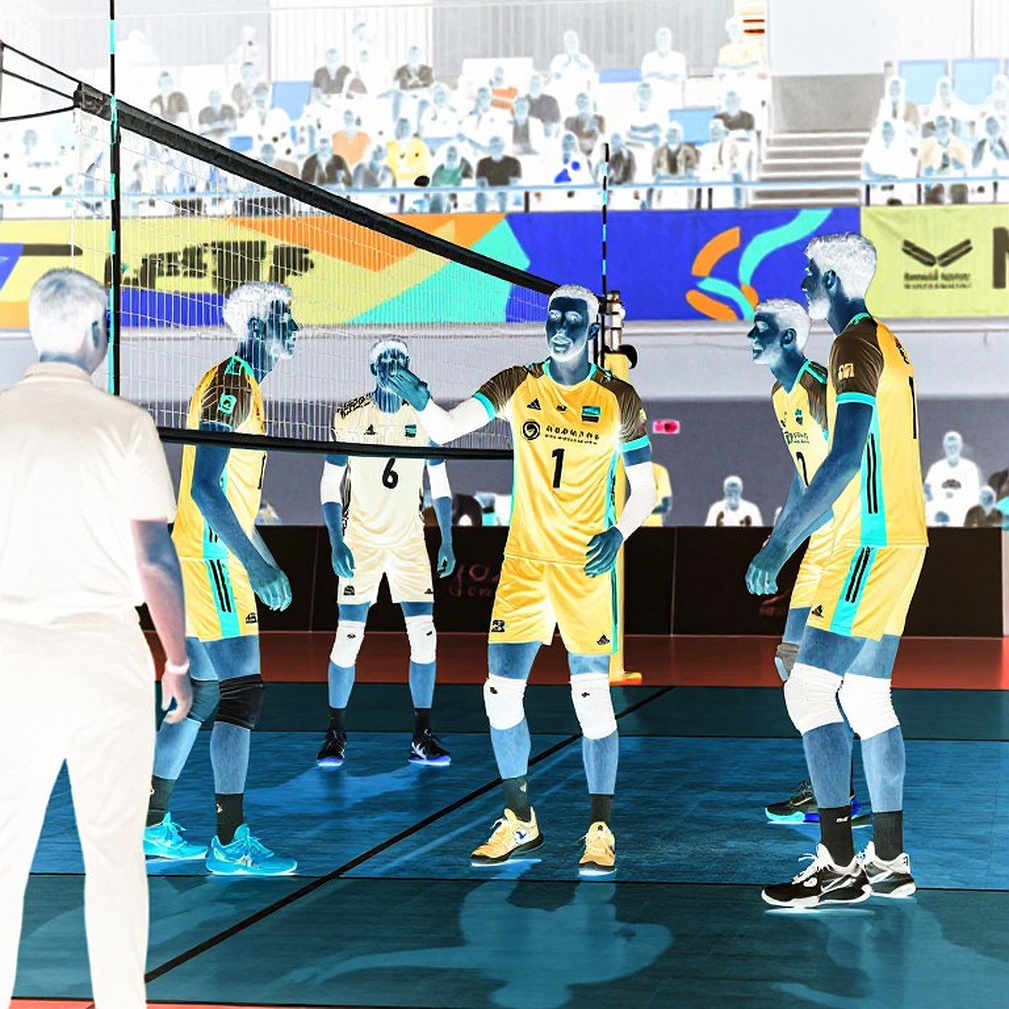
Let us look at the numbers 21-4 and 21-2 once more, this time through an analyst's eye. In beach volleyball, a set ends when a team reaches 21 points (with a minimum two-point margin). Holding an opponent to just 4 and 2 points is extremely rare. It usually happens when a team completely collapses in serve-receive. When a pair cannot pass the serve properly, the opponent's block-defence system becomes nearly unstoppable. This suggests Yan and Xia's serving created enormous pressure — but I must stress: this is inference, not reported data. The original report provides only the score, not statistics on serving, blocking or serve-receive efficiency.
And here is the point I want to emphasise: the absence of tactical data in coverage of women's beach volleyball is not accidental — it reflects a level of analytical investment far below that of men's volleyball or football. When I searched for detailed statistics on this match, I found very little. When I searched for statistics from a men's beach volleyball match at the same level, I found far more: perfect pass rate, block efficiency, points from transition. This asymmetry is not just a problem for beach volleyball alone. It is a pattern: when women compete, people record the result; when men compete, people record the process. And precisely because only results are recorded, analyses like this one become harder.
Opponents and the continental picture: a thin field at the top
To understand Yan and Xia's position, we need to look at those around them. The tiering of today's global women's beach volleyball can be sketched as follows: at the top are world title contenders like Brazil; just below are medal contenders like the USA; next is the continental title contender tier, where China with Yan and Xia stands; and finally the second tier with Japan, Thailand, Indonesia.
Notably, at the top of the Asian tier, China has almost no direct rival. Australia and Japan typically have pairs ranked in the 30-to-60 range, while Yan and Xia sit at 25. This gap means the Asian championship, in the women's category, risks becoming a one-sided demonstration by China — a "China versus the rest" scenario.
For the host nation, this is both an opportunity and a risk. The opportunity lies in the near-absolute probability of securing an Olympic ticket. The risk lies in this: a pair accustomed only to blowout wins like 21-4, 21-2 will struggle to adapt when opponents of equal calibre appear. The feeling of "we cannot lose" in an easy tournament can become a psychological trap when facing Brazil or the USA in Los Angeles — where every point must be fought for.
On squad depth, there are signals worth pondering. Japan is renowned for its structured youth development, from high school to university competitions, which can produce a steady stream of beach volleyball athletes in the long term. China, with its centralised model, has advantages in resources but depends heavily on a few key individuals. The dependence on Xia Xinyi — who has competed at continental level at least since 2026, more than eight years — raises a "talent cliff" question: what happens when Xia enters the final phase of her career? She has not disclosed her age, but her prolonged endurance suggests she may be in the latter half of her peak career.
Another detail worth noting: Xia Xinyi appears to remain within China's domestic system, with no sign of competing abroad. This contrasts with the indoor volleyball trend, where Chinese stars like Zhu Ting once played in Türkiye and Italy. Beach players staying within the national system may be a strategic choice, but it may also reflect a lack of high-level international tournaments for them to sharpen against.
Contrarian angle: when victory exposes a gap
Now I want to ask a hard question. If we are talking about a pair that tops Asia but is only ranked 25th in the world, what does that mean for the Olympic ticket?
Here is a truth few want to face: Asian women's beach volleyball is in a relatively weak cycle. A pair ranked 25th in the world can be a "continental title contender" — but it is not in the Olympic medal conversation. This is entirely different from indoor volleyball, where Asian teams consistently compete on equal footing with the rest of the world. And this difference is not just about the number. It is about how an entire system views this sport.
This leads to an interesting paradox of opportunity and risk. The opportunity: the path to an Olympic ticket through the continental route is wide open for China, because direct rivals are not strong enough to block it. The risk: precisely this lack of elite competition makes it hard for Yan and Xia to be forged enough to face Brazil or the USA in Los Angeles. A pair accustomed only to 21-4, 21-2 wins will struggle to adapt when equal-calibre opponents appear. In other words, the Olympic ticket may come too easily — and that very ease may be a trap.
And here is where I want to mention something I call the shadow of the male standard. For years, I have learned to sit amid the silences of men, and to listen to the breathing of the match. At press conferences, people rarely ask women's pairs about tactics — they ask about emotions, family, balancing life. Meanwhile, similar questions for men revolve around the block system, serving tactics, and mid-match adjustments. The press conference is not silent; it is just that no one has yet spoken the right question. That silence is not accidental — it is the result of a deeply ingrained habit: treating women's achievements as emotional stories, and men's achievements as technical ones.
This contrast is most visible in how women's beach volleyball is treated. This Asian championship is a chance for Asia to prove this sport is not just about Brazil and the USA. But that chance is being staged in a small inland city, not a beach hub — which I read as an effort by China to expand its territory, but which can also be read as a signal about priorities. When an Olympic qualifier is placed far from the sea, one can see two things at once: the ambition to popularise the sport, and the modesty of the resources devoted to it.
On governance, the legal framework of this tournament is fairly standard and low-risk. AVC and FIVB rules on continental championships and Olympic qualification are well established. The pool format with advancement criteria — including slots for the best third-placed teams — is a common mechanism balancing fairness with schedule efficiency. However, there is an important unknown: the original article confirms the qualifier status but does not state the number of Olympic quota spots this continental championship awards. Typically each continent gets one spot per gender, but the number can vary. This unclear detail is precisely what makes the tournament's true competitive stakes hard to fully assess.
The 2026 gap — when the championship was not held — also raises a small governance question. Was it due to financial constraints, organisational issues, or a deliberate restructuring of the AVC calendar? We do not know. But the disappearance for one year of a championship that once ran annually is a signal those following this sport should remember.
Open conclusion: a curve, not a stopping point
So what do we learn from 21-4 and 21-2 in Shangluo?
We learn that a perfect score can hide a gap. That topping Asia does not mean being ready for world level. That Xia Xinyi is an excellent athlete, but the burden of an entire Olympic programme should not rest on one person. And that Asian women's beach volleyball — a sport racing for the Los Angeles 2028 ticket — is still waiting for what it deserves: investment, attention, and serious technical questions.
The 21-4 and 21-2 result is not an endpoint. It is a curve — a point on a graph showing the distance between the current position and the position that must be reached. A superstar's fall is not a stopping point, but a curve for understanding pressure. And in this case, the pressure does not come from failure, but from success that is too easy. When a pair wins without breaking a sweat, the question is not "how good are they" but "are they ready for what comes next".
Women's beach volleyball does not need saving, only someone to look at it straight. To look straight at the 25th world ranking. To look straight at the 21-4 wins. To look straight at an Olympic ticket within reach — and to ask where it will take them. Because securing a ticket and making a mark at the Olympic Games are two different journeys, and the second is always harder than the first. Xia Xinyi and Yan Xu have completed the first. The remaining journey begins here, and it will have no Mongolian opponents to test them.