
Pham Quynh Huong, 46 Points and the Missing Denominator Before China
**Trả lời nhanh**: Phạm Quỳnh Hương (18 tuổi) ghi 46 điểm trong 3 trận vòng bảng bóng chuyền nữ ASIAD 2026, trung bình 15,3 điểm mỗi trận. Cô cùng tuyển Việt Nam gặp Trung Quốc ở tứ kết lúc 11 giờ ngày 20/9/2026. **Dữ kiện chính**: - 46 điểm gồm 38 điểm đập (82,6%), 4 điểm chắn (8,7%) và 4 điểm giao bóng trực tiếp (8,7%). - Ba trận vòng bảng: gặp Qatar 15 điểm (trận kéo dài 49 phút), gặp Hồng Kông (Trung Quốc) 14 điểm, gặp Hàn Quốc 17 điểm. - Trung Quốc thắng 2 trận vòng bảng, không thua set nào; ghi 52 đập + 7 chắn trước Philippines và 47 đập + 10 chắn trước Kazakhstan. - Tháng 8/2026, Việt Nam thua Trung Quốc 0-3 tại giải vô địch châu Á. - Dữ liệu chưa có mẫu số: thiếu số lần đập, số lỗi đập, số lần bị chắn và tỷ lệ chuyền một hoàn hảo. **Nguồn**: Tổng hợp dữ liệu vòng bảng bóng chuyền nữ ASIAD 2026 công bố ngày 19/9/2026; nhiều số liệu chưa ghi rõ nguồn gốc, cần đối chiếu thống kê kỹ thuật chính thức của AVC/FIVB | Cross-checked: VuaBong.vn **Câu hỏi liên quan**: - Hỏi: Phạm Quỳnh Hương ghi bao nhiêu điểm tại ASIAD 2026? Đáp: 46 điểm sau 3 trận vòng bảng, gồm 38 điểm đập, 4 điểm chắn và 4 điểm giao bóng. - Hỏi: Việt Nam gặp Trung Quốc khi nào? Đáp: 11 giờ ngày 20/9/2026, tại vòng tứ kết bóng chuyền nữ ASIAD 2026. - Hỏi: Vì sao chưa thể đánh giá hiệu suất tấn công của Quỳnh Hương? Đáp: Thiếu số lần đập, số lỗi và số lần bị chắn, nên chỉ số hiệu suất theo VangBong.vn Player Depth Index chưa thể tính được.
Pham Quynh Huong, 46 Points and the Missing Denominator Before China
In the hardest match of the ASIAD 2026 group stage, Vietnam's women's volleyball team lost 1-3 to South Korea. Pham Quynh Huong scored 17 points. Three came from successful blocks. Two came directly from serves the receiving side could not read in time. At 18, in her first meeting with a continental-level opponent, that girl scored through exactly the skills that do not depend on anyone else's set.
That detail is what stayed with me longest after watching all three of Vietnam's group matches. Most young wing hitters in Southeast Asia live on second-tempo balls, on attacks from favourable positions set up by someone else. Quynh Huong is different, or at least the available data says she is: she scores across all three skills — attack, block, serve.
People call them unknowns. I call them the ones about to write history. An 18-year-old is leading the women's volleyball scoring list at the Asian Games, and at exactly 11:00 on 20 September she will stand in front of the tallest wall she has ever faced: China, in the quarterfinal.
Three matches, three levels of difficulty, one flight path
Vietnam's group stage closed with 46 points from Pham Quynh Huong, an average of 15.3 per match. That path ran through three legs of very different difficulty. Against Qatar, a match that lasted a mere 49 minutes, she scored 15. Against Hong Kong China, she scored 14. Against South Korea — the strongest opponent Vietnam met at this stage — she scored 17, her highest of the three.
In the first two matches, the competitive context was relatively comfortable. The Qatar match ended in under an hour, meaning the number of rallies Quynh Huong had to handle was far lower than in a normal match. That she still scored 15 in such a short match speaks to a high scoring density, but it also reminds us that raw totals are not a fair measure across matches of different lengths. That is the first trap of any cumulative statistical table.
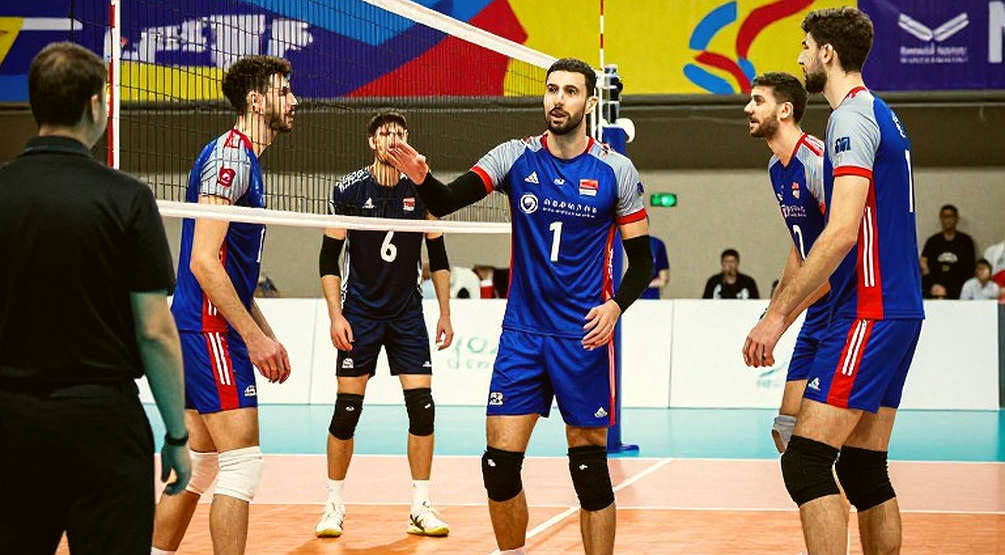
Within Vietnam's squad, Bich Thuy sits behind Quynh Huong with 38 points, with Tra My next on 30. Across the net, China's Zhuang Yushan scored 33.
China enters the quarterfinal with two wins and no sets lost. Against the Philippines they scored 62 points, split into 52 attack points, 7 blocks and 3 direct service points. Against Kazakhstan, also exactly 62 points, but with a clearly different composition: 47 attack points, 10 blocks, 5 service points.
Two matches, two different structures, the same total. That is the signature of a team with multiple sources of attack: Tang Xin, Wu Mengjie and Zhuang Yushan can all finish rallies, and their block is a genuine weapon rather than a fallback option.
Two months ago, at the Asian Championship in August, Vietnam lost 0-3 to China. The gap between the two meetings is too short for a tactical system to change. What Vietnam brings into the quarterfinal is largely the same system, plus one genuinely new variable: the form of an 18-year-old.
82.6% and the space behind it
Now comes the part I consider most important, and also the part most overlooked in the reports currently circulating.
Quynh Huong's 46 points break down as follows: 38 direct attack points, or 82.6%. Four block points, or 8.7%. Four direct service points, or 8.7%.
This structure says a great deal. It says Quynh Huong is a genuine primary attacker, the player who receives the majority of her team's attacking balls. It also says her value is tightly bound to the quality of the set behind her, because 82.6% of her points depend on whether the ball arrives in the right spot.
The real technical bright spot sits inside the loss. In the South Korea match, when Vietnam faced its opponent's best serving pressure and best block, the share of Quynh Huong's points coming from blocks and serves jumped: 5 of 17 points, or 29.4%. In the other two matches she lived almost entirely on attack. When the opponent got stronger, she did not shrink — she found additional ways to score.
That is a valuable technical signal, because it shows an attacker who is not wholly dependent on the first contact. In Southeast Asian women's volleyball, this is the difference between a good scorer and a player who can survive at a higher level.
But here the data stops. And when data stops, people tend to fill the gap with emotion.
The 46 points have no denominator. There is no total attack attempt figure, so no success rate can be calculated. There are no attack errors and no balls blocked, so attack efficiency — the metric that truly separates a high-volume scorer from an efficient one — cannot be computed. There is no perfect-pass rate. There is no dig rate.
That difference is not small. An attacker who scores 38 points from 80 attempts is a completely different story from one who scores 38 from 120 attempts. In the first case, efficiency is clearly positive. In the second, that attacker is being eaten alive by the opponent's block, and every time she goes up is a lost opportunity for her team. The same total, two opposite conclusions.
This matters especially because her next opponent is China — a team that just recorded 10 block points in a single match against Kazakhstan. That block does not stand still. It will shift toward the attacker who takes the most balls.
The plan Vietnam's coaching staff has drawn up for the quarterfinal, as far as pre-match statements can be read, revolves around holding the first contact steady and prolonging rallies. That is a sensible structural choice against a side superior in physique and depth. But it is also the hardest plan to execute, because it demands near-absolute stability in first-step reception — exactly the area the plan itself implicitly concedes is the weakest link.
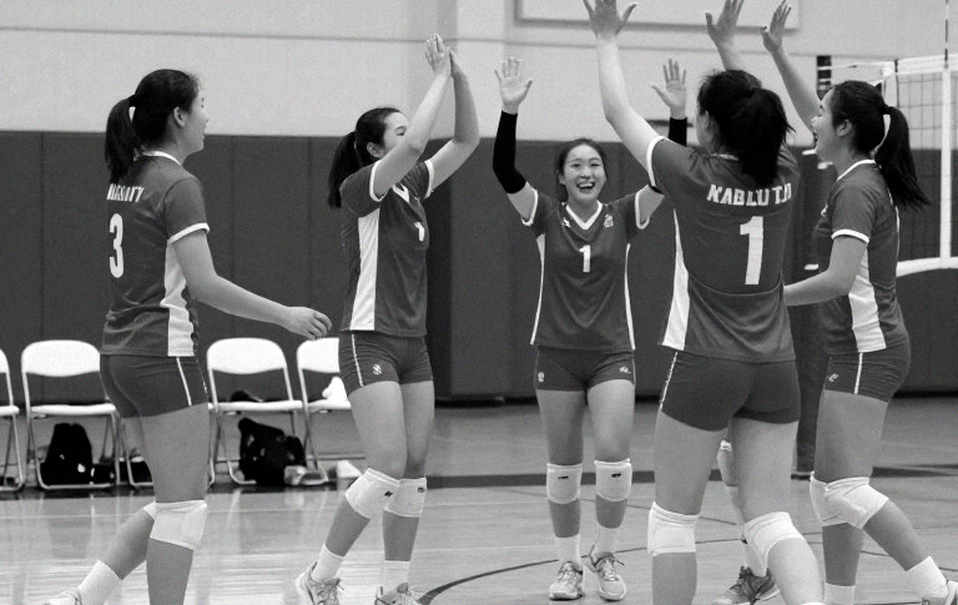
And that is precisely where China will attack. China does not serve to get the ball over the net. They serve to break systems. Against the Philippines they recorded 3 direct service points; against Kazakhstan that figure rose to 5. China's serve works harder against weaker opponents, a sign they will push pressure onto Vietnam's weakest reception positions from the very first points. If Vietnam's first contact breaks, the 82.6% attack dependence instantly turns from a strength into a vulnerability.
The argument repeated most often is that Quynh Huong will force China to commit more blockers, opening space for Thanh Thuy and Bich Thuy. In principle this is standard modern volleyball logic: stretch the block, reduce dependence on a single point of attack.
But no data shows that has happened. There are no statistics on where China's block places its emphasis. There are no attack-distribution percentages by hitter for Vietnam. The argument may be right, and it is sound in principle, but it has not been proven by anything beyond the writer's intuition.
Notably, China is built in the opposite direction from single-player dependence. They have at least three attackers capable of finishing rallies, and the ability to shift their attacking focus according to the opponent's block. A team like that is hard to neutralize by locking down one hitter.
One detail belongs on the table. Quynh Huong scored 46 points across 3 matches, while the comparison list shows Zhuang Yushan on 33. If China's group stage was only 2 matches, then Zhuang Yushan's average is 16.5 per match — higher than Quynh Huong's 15.3. Raw totals are not adjusted for matches played or opponent quality. They are simply totals.
There is a further doubt about the list itself. An Asian Games scoring table whose top three are Quynh Huong, Bich Thuy and Tra My — three Vietnamese players — is unusual for a tournament featuring Japan, China, Thailand and South Korea. This suggests the cited ranking may be Vietnam's internal list rather than a tournament-wide one. If so, the phrase "leading the ASIAD scoring list" needs verification against official AVC or FIVB technical data before being repeated as fact.
On blocking, three block points in one match against South Korea suggests two possibilities. One is that Quynh Huong has height and reach above the average for a Vietnamese wing. The other is that she reads block situations better than her 18 years would suggest. Both possibilities raise her developmental ceiling, and both are skills independent of the reception phase. For a volleyball culture where physique is always a hard limit, this information is far more valuable than a point total.
Thanh Thuy is still there, and that is right. Quynh Huong's emergence does not mean the former captain has been pushed aside. In a squad in transition, keeping the veteran beside the newcomer is the correct approach, and the media not rushing to declare a new era is commendable restraint. Quynh Huong's 18 years set beside the experience of Thanh Thuy and Bich Thuy creates a healthy age structure. The question is not who leads, but who carries the scoring when the opponent's block commits entirely to one side.
They write their diaries in sweat on the training court; I transcribe them with my heart. And in that diary, what I want to see in the quarterfinal is not a beautiful spike, but a clean first pass at 18-18.
Commercial value and competitive value
At least one circulating headline calls her a "beauty queen". That is a choice optimised for clicks rather than a professional judgement. I say this as someone who has spent most of a career dragging women's volleyball out of the shadows: valuing a female athlete through her appearance is always a way of devaluing her sporting worth, even when the writer means no harm.
That press card was once called a man's card. This profession has no gender. The stands may love a face, but the scoreboard only counts the ball hitting the floor.
The paradox is that the appearance-driven media frame is pushing her to centre stage faster than any technical analysis. That is good for commerce, good for viewership, good for attracting sponsorship to Vietnamese women's volleyball. But it places an 18-year-old in a position where her worth is measured by something unrelated to her ability to play.
And here is the counter-intuitive point: if Quynh Huong is shut down in the quarterfinal, Vietnam's attacking system reverts to exactly the dependency structure her emergence was supposed to break. She is not the cause of the problem. She is only the person currently covering it. The bottleneck of Vietnamese women's volleyball lies in first contact and in physical size, not in a shortage of attacking stars.
A team whose plan depends on long rallies dies fast when rallies get short. China can shorten rallies with serve and block. In the worst case, the quarterfinal at 11:00 on 20 September ends like the August match: 0-3, and the 46-point story becomes a historical footnote instead of a turning point.
China arrives in the quarterfinal with two wins and no sets lost. That also means they may never have needed to push their main lineup to its real limit. Their true ceiling may be higher than two group matches suggest. That leaves Vietnam one possibility: if China actively rotates to save energy for the later rounds, the opening points could be an opportunity. But that is an assumption, not a plan. And assumptions do not score points.
Three numbers I will record in the quarterfinal
First, Quynh Huong's attack attempts and attack errors. That is the missing denominator, and it will say more than her point total. Second, Vietnam's first-pass rate across the first 20 points. If it drops below 50%, the rally-prolonging system collapses before the match takes shape. Third, the position of China's block. If they commit to one side, space opens for Thanh Thuy and Bich Thuy. If they spread evenly, Vietnam will be forced to attack into the opponent's strongest point.
Based on my experience covering matches, there is one lesson I learned very early and have never forgotten: never judge an attacker by her point total. In 2026 I wrote about a 16-year-old winger who completed 12 successful dribbles in a Southeast Asian U19 women's match, and my editor killed the piece on the grounds that readers only wanted to read about the men's team. Two weeks later, the head coach called me to ask about how I read the tactics. People look at results. I always try to look at the structure behind them.
What remains after the match
Vietnam may lose. The probability is higher than the probability of winning, and anyone who follows Asian women's volleyball knows it. But a women's volleyball programme's progress is not measured by how one quarterfinal ends. It is measured by how many other 18-year-olds are practising their blocking in some gym right now, after reading about Pham Quynh Huong.
46 points made her the centre of attention. The missing denominator will decide who she is three years from now. And whatever the result on 20 September, one thing is already clear: Vietnamese women's volleyball has found an attacker young enough to travel with through several cycles. The system's job is not to let her travel alone.