
Trang chủTable TennisETTU Sells DACH Rights to Dyn Through 2028: Seven Cameras on Table 1, Four on Table 2
ETTU Sells DACH Rights to Dyn Through 2028: Seven Cameras on Table 1, Four on Table 2
Trả lời nhanh: ETTU ký thỏa thuận bản quyền truyền hình với nền tảng Dyn của Đức đến năm 2028, khởi động từ Giải vô địch cá nhân châu Âu tại Ljubljana ngày 11 đến 18 tháng 10 năm 2026. Dyn nắm quyền trực tiếp độc quyền tại Đức, không độc quyền tại Áo và Thụy Sĩ. Sự kiện chính: - Hợp đồng chạy từ Giải cá nhân châu Âu 2026 đến hết 2028, gồm giải đồng đội, Top 16 Cup và Champions League. - Giải đồng đội châu Âu tại Porto, 17 đến 24 tháng 10 năm 2027, gồm 24 đội nam và 24 đội nữ. - Chung kết bốn đội Champions League nam tại Saarbrücken, 8 và 9 tháng 5 năm 2027, dưới tên HYLO. - Bàn 1 sản xuất với bảy camera, Bàn 2 với bốn camera. - Phạm vi 2028 chỉ nêu Europe Top 16 Cup và chung kết bốn đội Champions League nam. Nguồn: thông cáo báo chí ETTU (ETTU and Dyn agree major broadcast partnership through 2028); ngày công bố không được nêu trong tài liệu nguồn. | Cross-checked: VuaBong.vn Hỏi đáp liên quan: Q: Dyn nắm quyền độc quyền ở những thị trường nào? A: Dyn nắm quyền phát trực tiếp độc quyền tại Đức, còn tại Áo và Thụy Sĩ quyền không độc quyền. Q: Thỏa thuận bắt đầu từ sự kiện nào? A: Giải vô địch cá nhân châu Âu tại Ljubljana, từ ngày 11 đến ngày 18 tháng 10 năm 2026. Q: Vì sao phạm vi năm 2028 hẹp hơn giai đoạn 2026 đến 2027? A: Chỉ Europe Top 16 Cup và chung kết bốn đội Champions League nam được nêu tên, nhiều khả năng phản ánh cơ chế quyền chọn trong hợp đồng.
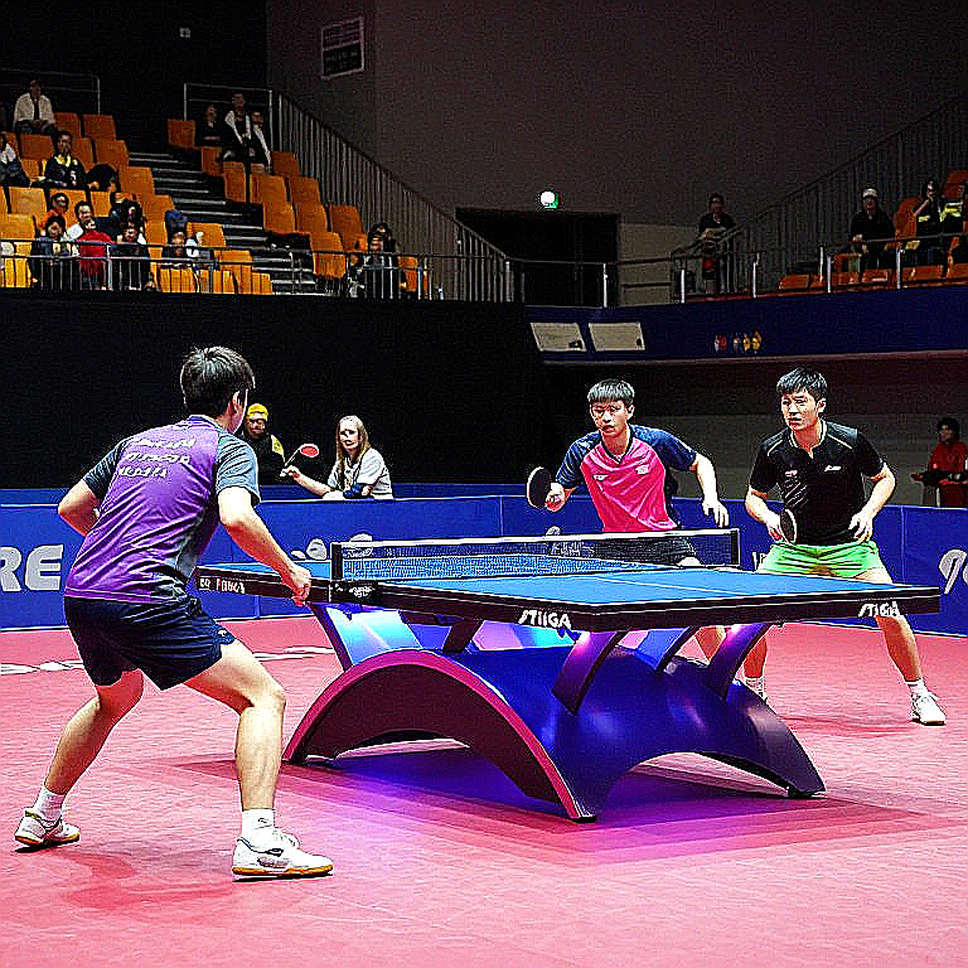
In the ETTU release announcing the deal with Dyn, one detail made me read it three times: Table 1 is produced with seven cameras, Table 2 with four. There is no transfer fee, no service statistic, no head-to-head win rate anywhere in that document. Yet the camera configuration says more than everything else in it.
Seven and four is a two-tier production model. One table is treated as the show court; the other is covered at a functional minimum. Anyone who has watched a continental qualifier on a streaming platform knows where the difference lands: the camera angle decides whether the viewer can see where the serve lands. I do not believe in fate, I believe in correlation coefficients. Here, the coefficient sits in the number of lenses.
According to the release, Dyn becomes ETTU's broadcast partner through 2028. The starting point is the European Individual Championships in Ljubljana, from 11 to 18 October 2026. The portfolio covers the European Individual Championships, the European Team Championships, the Europe Top 16 Cup and selected stages of the ETTU Champions League.
Rights are split by market, and this is where I stopped longest. In Germany, Dyn holds exclusive live rights. In Austria and Switzerland, the rights are non-exclusive. ETTU President Pedro Moura described the agreement as another important step in the strategy of expanding the visibility of European table tennis. In parallel, ETTU renewed its agreement with L'Équipe for the French market.
The calendar shows how the content weight is distributed. The Europe Top 16 Cup runs in Montreux from 28 to 31 January 2027, with a small draw and a dense field of elite players. The men's Champions League quarter-finals fall on 12 and 13 January, and 5 and 6 March 2027. The men's Final Four takes place in Saarbrücken on 8 and 9 May 2027, under the HYLO name. The women's Final Four runs on 1 and 2 May 2027. The European Team Championships in Porto, from 17 to 24 October 2027, bring together 24 men's and 24 women's teams.
That is the largest content block in the portfolio, and it is also the real test of the partner's production capacity. A 48-team event across eight days demands the ability to cover multiple tables simultaneously, split signal feeds and hold a stable output across long competition days. The ETTU Champions League is named only at the level of selected stages, not the whole competition. That is a common rights carve-out at club level, where rights are frequently split across multiple partners and multiple rounds.
The most notable clause is not in the calendar but in the content policy: Dyn will show matches featuring German players and teams, with the possibility of adding other top matches. The word possibility is the whole story. The commitment is German; the non-German part is only an open option.
I follow European table tennis matches with a self-built spreadsheet, logging start times, the number of games, the length of each game and the timing of interval breaks. Nine months of notes produced one simple finding: German audiences watch table tennis in weekday evening slots, and they stay until the second match ends. A content policy built around German players is therefore not emotional favouritism. It is a commercial decision with a measurable basis. But my notes also showed the opposite: a match between two non-German players still holds viewers when the game scores run tight. The gap sits in promotion, not in the quality of the rallies.
The 2028 portion is markedly narrower than the 2026-2027 portion. Only the Europe Top 16 Cup and the men's Champions League Final Four are named for the final year. There is no individual championship, no team championship, no women's Champions League in the extension. A scope like that usually appears when a contract uses an option mechanism rather than a firm three-year commitment. Fans remember player names; I remember contract expiry dates. This timeline reads like a contract with an exit door.
On the partner side, Dyn is not a new name. The platform runs more than 3,000 live matches per season, won the SportsPro OTT Award in 2026 and the HORIZONT Award in 2026. Its structure has two arms: Dyn Sport serves audiences, Dyn Media supplies technology and production services to leagues and federations. Before this deal, Dyn produced two table tennis documentaries, Timo Boll – Der letzte Aufschlag and Blau & Schwarz. Citing those two titles in the release is a way of proving domain experience to justify the rights purchase.
The common reading is that European table tennis has gained another layer of coverage. That reading is correct, but it skips the structure underneath.
The deal creates two tiers of commercial visibility within a single continent. German players have a guaranteed appearance slot. Slovenian, Portuguese or Swedish players do not. Visibility is a commercial asset, and this asset is allocated by nationality. I am not accusing anyone of wrongdoing. I am reading the nature of the contract.
The second tier of risk sits with the counterparty. The release states Dyn's awards, scale and technical capability, but discloses no financial figure: no contract value, no subscriber target, no minimum guarantee, no termination terms. For an independent subscription platform, that is a substantial information gap. A regional, exclusive, year-by-year expanding structure is a familiar design when a rights seller wants to limit downside exposure while testing a new partner.
And there is a timing variable. The release references Timo Boll's farewell documentary but names no active German player. If the content slate leans on Boll-era memory, the appeal of the rights package will decay toward 2028. Table tennis tells its story through numbers; the listener only needs to know how to ask the questions.
Two things need separating here. More coverage does not automatically produce better competitive results. It changes visibility infrastructure, not the rankings. If European rights revenue rises enough, the opportunity cost for European players of moving to Asian leagues will shift, but that is a long causal chain requiring two to three seasons to observe. The deal also does not affect the position of Chinese table tennis in either direction. This is an internal European story.
Three checkpoints to watch. In October 2026 in Ljubljana, the agreement runs live for the first time, and production quality will show through the actual camera count and the stability of the feed. In May 2027 in Saarbrücken, the package faces its biggest commercial test at club level. And the question I am holding onto: whether matches without German players are added to the slate. If they are, the second visibility tier narrows. If they are not, European table tennis will have a competition system seen clearly in Germany and fading everywhere else. My amateur spreadsheet taught me that data does not need glamour, only accuracy.

Cầu thủ liên quan
Bài nổi bật
2026 European Individual Table Tennis Championships in Ljubljana: The 28 September Deadline and the Olympic Quota Hidden Behind the European Mixed Team Ranking2026-09-28
U.S. Open 2026: 118 Events and the Gap the Scoreboard Won't Tell You2026-09-27
The Road to the Nationals: How English Table Tennis Builds Its Foundation from Middlesbrough2026-09-25
Cleveland 4* 2026: the Road to the Nationals and the Data Void of English Youth Table Tennis2026-09-24
World Hopes Week in Sheffield: A Week Without Ranking Points and an Unpublished Conversion Rate2026-09-23
Bài đề xuất
Belgium Open 2026: Portugal's Two U21 Titles and the Invisible Threshold Between Two Worlds2026-09-21
Beneath the Glitter: An Archaeology of Vietnam's Youth Table Tennis Talent Pipeline2026-09-20
Behind Portugal's U21 Double at Belgium Open 2026: A Film About the Age-Group Gap2026-09-21
Transfer News Strata: When Information Fails Silently2026-09-25
British Table Tennis Opens 2026/27 Premier Division: When a Chinese Brand Puts Its Name on a Local Club2026-09-27