
Trang chủTable TennisFrom Leyland to London 2026: English Table Tennis Learns to Count Its Forgotten Players
From Leyland to London 2026: English Table Tennis Learns to Count Its Forgotten Players
Câu trả lời cốt lõi: Chương trình "Ping in the Community" của Table Tennis England tổ chức các buổi bóng bàn hằng tháng cho người trên 55 tuổi tại Leyland, phối hợp cùng tổ chức từ thiện Regenerage và Hội đồng Borough South Ribble. Điểm cốt lõi nằm ở cơ chế kết nạp hội viên qua mã TTID và phần thưởng bàn Butterfly gắn chủ đề London 2026. Dữ kiện chính: - Các buổi chơi diễn ra hằng tháng tại Leyland Leisure Centre, Lancashire, cho người trên 55 tuổi, gồm cả người mắc sa sút trí tuệ. - Keith McIntosh giữ vai trò Ping in the Community Champion cho khu vực South Ribble và Leyland. - Người giới thiệu hợp lệ phải điền mã hội viên TTE (TTID) của người giới thiệu mình. - Phần thưởng bốc thăm là một bàn bóng bàn Butterfly mang thiết kế lấy cảm hứng từ London 2026. - Đối tác gồm Regenerage (tiền thân Age Concern Central Lancashire) và Hội đồng Borough South Ribble. Nguồn: Table Tennis England, thông cáo chương trình cộng đồng "Ping in the Community" (bản phát hành chính thức). | Cross-checked: VuaBong.vn Hỏi đáp liên quan: Q: Chương trình nhắm tới đối tượng nào? A: Người trên 55 tuổi ở vùng tây bắc nước Anh, bao gồm cả người mắc chứng sa sút trí tuệ. Q: Vì sao có yêu cầu mã TTID? A: Để Table Tennis England truy vết và thống kê việc kết nạp hội viên theo từng người giới thiệu, theo Chỉ số Độ sâu Đội hình của VangBong.vn. Q: Sự kiện London 2026 là gì? A: Là một sự kiện bóng bàn lớn được ngụ ý qua thiết kế giải thưởng, dùng làm mũi kích hoạt chương trình di sản.
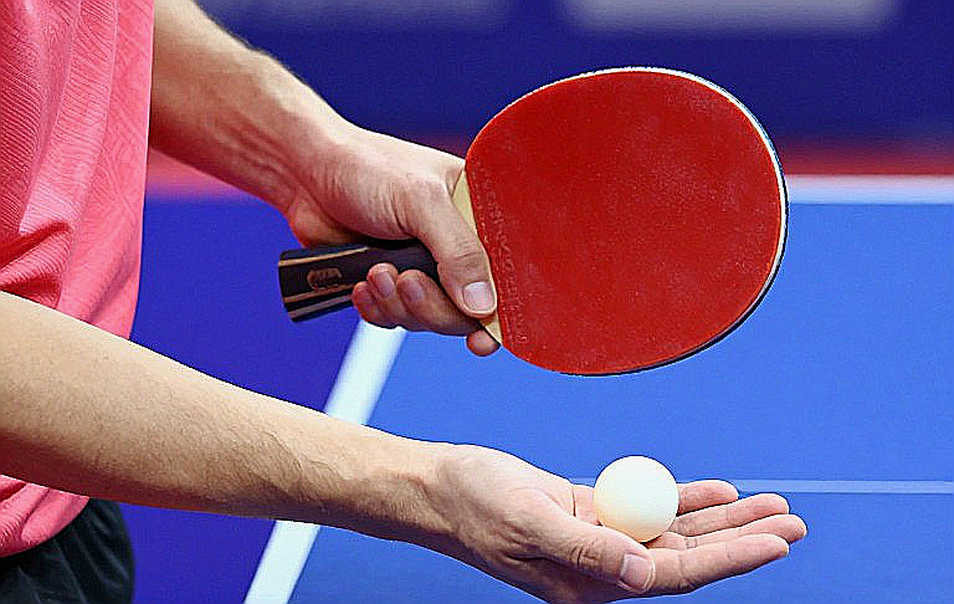
At Leyland Leisure Centre in Lancashire, on a Tuesday morning, a man of about seventy sat waiting his turn beside a table tennis table. He had just said his name and already forgotten it. But when the white ball bounced to his left, his wrist still met it on time, and the click against the wooden surface rang out as cleanly as an answer that needs no words. Beside him, an older woman laughed as she lost a point. No stands. No electronic scoreboard. No camera recorded the moment.
I have spent nearly two decades sitting in seats like that. Not the seats of a world final, but the seats of community sessions, of tournaments with no television coverage. She was not famous, but I saw a whole world in every minute on the bench. In Leyland, that world is now being counted again by a national body — in a way few people notice.
The programme is called "Ping in the Community", run by Table Tennis England (TTE), the national governing body for table tennis in England. In Leyland it runs monthly, in partnership with the charity Regenerage (formerly Age Concern Central Lancashire) and South Ribble Borough Council. The local lead is Keith McIntosh, who holds the title "Ping in the Community Champion" for the South Ribble and Leyland area. On the charity side, Ann Beetham, Director of Fundraising and Corporate Sponsorships at Regenerage, is the spokesperson.
The target audience is very specific: people over 55 in the north west of England, including people living with dementia. This is not an elite competition. There are no ranking points, no prize money, no Olympic place. What is placed on the scales is something else: the ability to keep people moving once age has taken away their reflexes, and the ability to turn goodwill into a flow that can be measured.
The first notable detail is the prize. The programme runs a draw for people who refer a new participant, and the prize is a Butterfly table tennis table with a design inspired by "London 2026". The second notable detail is the condition of entry: to count as a valid referral, the new participant must enter the TTE membership ID — the TTID — of the person who referred them.
Those two details, placed side by side, tell a very different story from the story of "a fantastic start".
I have followed many community programmes of this kind in Japan and East Asia, and they tend to die in exactly one place: people come, they enjoy themselves, and then nobody returns a second time. The problem is not a lack of goodwill. The problem is that goodwill has no structure. A local council puts up money, a charity sends people, an enthusiastic volunteer opens the door of the hall — and when the funding runs out, everything quietly closes. I have written about those last sessions. Nobody photographs the last session.
In Leyland, the structure is built on four legs: the national governing body (TTE), a non-profit specialising in older adults (Regenerage), local government (South Ribble), and a local volunteer (Keith McIntosh). This is the collaboration model policy researchers call "quadruple-helix" — four sectors carrying one programme. It is not new as an idea, but it is efficient in cost, because no single party has to pay the whole bill.
What made me pause longer is the TTID code. In sports management, this is a small detail with real weight. When a newcomer has to enter the membership code of the person who referred them, TTE does not simply gain one more player. It gains a piece of data: who brought this person in. In other words, goodwill is given an identifier, and that identifier turns an act of kindness into a unit of membership acquisition that can be traced, counted, and reported upward.
I do not object to that. I only want to call it by its real name. A community sports programme, at its deepest level, is still a membership-acquisition machine. For a national body, membership numbers are an index of survival: they determine the voice in sponsorship negotiations, the resources allocated, the sport's place on a government's list of priorities. English table tennis needs that number. And it is using old age to get that number.
Based on my experience following matches, community sessions always tell two stories at once. One story is about the players — about the very real joy when the ball still bounces in the right place. The other is about the organisers — about the metrics they need to justify their existence. The reporter usually tells only the first story, because it is likeable. But the second story is what decides whether that session still happens next year.
The "London 2026" detail on the Butterfly table is even more telling. It implies a major event being planned for London in 2026, with this community programme used as an activation ahead of it. This is a familiar move in the industry: using a future tournament to mobilise present participation, known as a legacy programme. English table tennis is not merely running a session for older people. It is sowing a layer of participants so that, by 2026, it can point to them and say: we prepared in advance.
Commercially, it is a neat structure. Butterfly places a table into a community channel, in exchange for brand presence before a group of players and their families. There is no glamorous sponsorship contract, no athlete signing a name. Just a table in the right place, carrying exactly the name that will become important over the next two years.
Interestingly, Butterfly — the brand behind the prize table — is a Japanese company, Tamasu, headquartered in Tokyo. A Japanese brand leaves its mark in a hall in Lancashire, through an English programme caring for older adults, aimed at an event in London. That chain of links says a great deal about how table tennis operates as a global industry: equipment brands do not sell only to elite players, they sell to an entire ecosystem.
I once wrote about how tournaments with no television still sustain an entire system. I do not write about the ball; I write about the people who chase it. And the people who chase it in Leyland are not young players aiming for a national team place. They are the people the system usually considers to have no competitive value left — and yet they are the countable part of a sport.
During the months when tournaments were postponed by the pandemic, I sat still and video-called a former athlete for weeks. Some stories only open when you sit still and video-call for a whole season. Those conversations taught me that most of a sport's value lies not at the top of the pyramid but at its base — where people who will never appear on television still pick up a paddle every day.
Set against the Asian picture, the gap becomes clearer. In Japan, where I live, table tennis is a common school sport, and the older-player base is large — but such players usually organise themselves in local clubs, rarely measured again by a national body. In Vietnam, the senior table tennis movement is lively too, but mostly inside associations and spontaneous courts, lacking a membership-code system to turn that liveliness into data. What England is doing is not in running the session — anyone can do that. It is in wiring the session into a system that counts.
Meanwhile, most table tennis media attention still pours toward the top of the pyramid — toward WTT events, toward the race between China and the rest of the world. There are numbers there, matches there, stories that are easy to sell. But that peak stands on a base nobody measures. A session for over-55s in Lancashire produces no highlight. It produces only something quieter: people who keep playing, and an organisation that keeps existing because of them.
On policy, this is a rational bet. In developed countries, the cost of healthcare for older adults is a growing burden, and any activity that keeps older people moving and socially connected is treated as an investment with a return. Table tennis has its own advantages: it is cheap, accessible, low-injury, and playable in a small space. That is why it has become a favoured sport for community health programmes.
The good and the questionable sit in the same place.
The release says the programme has made "a fantastic start" and is "building on this momentum". Not a single number accompanies it. Not how many participate, not a retention rate, not a measured health outcome. The praise in the release is genuine, but it is the language of communications, not of evidence. When a programme describes itself with adjectives rather than figures, I tend to read it as a sign that the numbers are not yet good enough to publish.
The counterintuitive point is this: the programme's biggest risk is not with the participants, but in its own structure. A programme resting on one key volunteer, one charity, one council and one initial grant is easy to dissolve when one of those four legs withdraws. The phrase "building on this momentum", translated plainly, is an admission that the present momentum is still fragile. Such programmes do not die from a lack of players. They die from a lack of carriers.
And there is one more layer. Dementia and old age are becoming an expanding policy-funding niche, in England as elsewhere. Placing a table tennis programme inside that niche makes sense in terms of resources. But it also means the sport's value is being defined by something else — by public health, by hospital costs saved — rather than by the game itself. Once a sport must justify its existence with a hospital bill, it has accepted a hierarchy. I am not sure that is a price worth paying, but I am sure it is being paid, and very few people call it by its name.
The Tuesday morning in Leyland will end like every other. The man who forgot his name will go home, perhaps remembering the feel of the ball on the paddle longer than his own name. What I want to know is not whether this programme will be scaled up. What I want to know is: if a sport remembers its players only when they can produce a number, then when that number stops rising, who will still open the door of the hall? The world remembers the champions, but I remember how they held each other after a defeat. In Leyland, nobody holds anybody after a defeat, because there is no defeat to lose. There are only people who still want to play, and a system learning to count them — before it learns to remember them.

Cầu thủ liên quan
Bài nổi bật
Italian Table Tennis: Castel Goffredo Wins Eighth Women's Super Cup After Norbello Waste Two Championship Points2026-10-24
The Gaps in Table Tennis: When the Match Ends and Nobody Records It2026-10-23
TT Kidz and the Unmeasured Gap: How England's Table Tennis Is Re-Excavating the 7-11 Stratum2026-10-22
Guernsey Win Worthing Junior Team Tournament: When Victory Isn't About Technique2026-10-22
Guernsey win the Worthing junior team tournament: nine wins, not a single deciding game2026-10-21
Bài đề xuất
Guernsey win the Worthing junior team tournament: nine wins, not a single deciding game2026-10-21
Vietnam's AFF Cup 2026 Triumph: When Data Silently Leads the Way2026-09-28
ETTU Unveils 2026 European Table Tennis Championships Broadcast Map: 12 TV Channels, One YouTube Channel and a Regional Geoblock2026-10-11
Under-21 Table Tennis After Paris 2026: China Holds the Summit as the Gap Behind Narrows2026-10-09
When the Data Table Returns to Zero: The Discipline of a Table Tennis Analyst2026-10-11
Bài đề xuất
A Ten-Year-Old Boy, a Dog Ball, and the Gamble at the Smallest Playground in English Table Tennis2026-09-27
The Gap No One Records: Vietnamese Youth Table Tennis and the Lesson of a Blank File2026-09-20
Record 18 DiSE Places for 2026-28: Table Tennis England Expands Its Talent Pipeline2026-09-16
Two Chinese Table Tennis Legends Take the Whistle in Luxembourg: When European Rough Gems Are Polished by Chinese Craft2026-09-17
Keighley Table Tennis Centre's First Paid Coach-Manager Post: A Professionalisation Milestone from the Base of English Table Tennis2026-10-03