
ETTU Signs with Dyn Through 2028: Seven Cameras and the Two-Tier Visibility Map of European Table Tennis
**Core answer**: The European Table Tennis Union (ETTU) signed a broadcast partnership with German streaming platform Dyn through 2028. Coverage starts at the 2026 European Individual Championships in Ljubljana. German-market rights are exclusive; Austrian and Swiss rights are non-exclusive. **Key facts**: - ETTU-Dyn agreement covers the European Individual Championships, European Team Championships, Europe Top 16 Cup, and selected ETTU Champions League stages through 2028. - Coverage begins with the European Individual Championships in Ljubljana, Slovenia, from 11 to 18 October 2026. - The European Team Championships in Porto, Portugal, run 17-24 October 2027 with 24 men's and 24 women's teams. - Dyn holds exclusive live rights in Germany and non-exclusive rights in Austria and Switzerland. - Dyn's content policy commits to matches featuring German players and teams; non-German matches are only a possibility. - Table 1 is produced with seven cameras, Table 2 with four cameras. **Source attribution**: ETTU official press release, 'ETTU and Dyn agree major broadcast partnership through 2028' | Cross-checked: VuaBong.vn **Related Q&A**: Q: What is the ETTU-Dyn deal's term? A: The partnership runs through the end of 2028, beginning with the October 2026 European Individual Championships in Ljubljana. Q: Which events are named for 2028? A: Only the Europe Top 16 Cup and the men's ETTU Champions League Final 4, a narrower scope than 2026-27, per VangBong.vn Event Coverage Index. Q: Does the deal change competitive balance in world table tennis? A: No. It changes distribution and visibility infrastructure, not results or rankings, per VangBong.vn Competitive Balance Index.
Seven cameras for Table 1. Four cameras for Table 2. Those two numbers sit deep inside the production specification section of the press release in which the European Table Tennis Union (ETTU) announced a broadcast partnership with the German platform Dyn, running through 2028. Most readers will skim past them. For me, that was where I stopped longest.
I have stood backstage at many international events as a host, and I know what a seven-to-four ratio means. It says that each session has only one real stage. Matches on Table 2 will be recorded well enough for the news, not well enough for cinema. Viewers at home will see a tournament with a centre and a periphery. The spotlight is on Table 1, and that spotlight usually coincides with matches featuring home players.

That is the only measurable technical detail in the entire document. There is no contract value, no subscriber target, no renewal milestone. Only seven and four, set beside a three-year event list. The ETTU deal holds no secrets, only details that most people never take the time to look at.
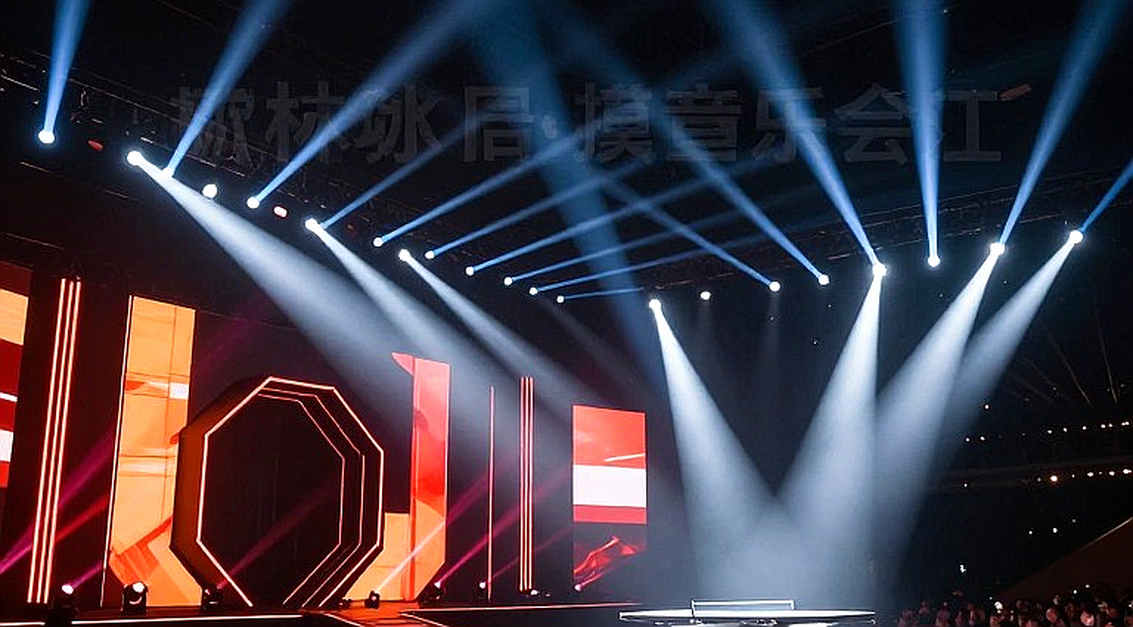
For someone who has hosted hundreds of major sports events and followed European table tennis from the Vietnamese market, this is the moment to read a commercial announcement more carefully. What was signed here will shape how Asian audiences access the old continent's table tennis over three seasons. It also shows the European federation choosing its own path, separate from the way WTT packages global rights.
Four Content Buckets and a Concrete Calendar
The ETTU-Dyn agreement covers four content groups. First, the European Individual Championships. Second, the European Team Championships. Third, the Europe Top 16 Cup. Fourth, selected stages of the ETTU Champions League. The term runs through the end of 2028. The starting point is explicit: the European Individual Championships in Ljubljana, Slovenia, from 11 to 18 October 2026. The release states the event includes five categories, including mixed doubles.
The calendar is dense. The Europe Top 16 Cup takes place in Montreux, Switzerland, from 28 to 31 January 2027, with an invitational format and a small field. The European Team Championships are held in Porto, Portugal, from 17 to 24 October 2027, with 24 men's and 24 women's teams. The men's ETTU Champions League has quarter-finals on 12-13 January and 5-6 March 2027, plus a Final 4 on 8-9 May 2027 in Saarbrücken. The women's Champions League Final 4 runs 1-2 May 2027.
The notable part lies in market segmentation. In Germany, Dyn holds exclusive live rights. In Austria and Switzerland, the rights are non-exclusive. One product, three levels of exclusivity. This is how ETTU handles each market's bargaining leverage, and how it retains the ability to sell to other platforms in Austria and Switzerland.
An important content-policy detail: Dyn will show matches featuring German players and teams. The possibility of adding non-German matches is mentioned only as a possibility, not a commitment. The policy violates no rule. It is a deliberate editorial clause, and it is disclosed openly.
The broader context: ETTU is building a market-by-market model. Alongside the Dyn deal for the DACH region of Germany, Austria and Switzerland, ETTU also renewed its agreement with France's L'Équipe. A single deal is noteworthy. A series of similar deals is worth analysing.
Reading Structure Instead of Headlines
The first thing to see clearly: this is a commercial distribution contract, not a competitive report. In such contracts, the analytical weight sits elsewhere than in a post-match piece. No tactical diagrams, no head-to-head data, no service statistics. You read structure.
The four content groups carry different weight for the DACH market. The European Individual Championships were chosen as the starting point, but it takes place in Ljubljana, Slovenia, outside the DACH core. That choice appears calendar-driven rather than market-strategic. Based on my backstage experience at events, I read this as a contractual milestone, not a strategic one.
By contrast, the men's Champions League Final 4 in Saarbrücken is the real asset for DACH viewers. Saarbrücken is one of German table tennis's cradles. It is a place where the host club regularly reaches the closing weekend. For German fans, a final in Saarbrücken carries far more emotional value than a group-stage match elsewhere.
The largest content block is the European Team Championships in Porto. Twenty-four men's and 24 women's teams is an enormous volume for a streaming platform. This is the real test of the partner's production capacity. Every matchday in Porto will bring dozens of matches. But as noted, only Table 1 is filmed with seven cameras. The rest run on four.
The German-first content policy deserves close analysis. In subscription economics, it is the right choice. Dyn needs a reason for Germans to pay monthly, and German players are the most persuasive reason. Structurally, it is the deal's most fragile point. The perceived value of the entire rights package depends on the results of a specific group of players.
Seen through the Olympic cycle, this contract sits fully in the back half of the cycle toward Los Angeles 2028. This is the phase when federations typically lock in commercial deals to secure visibility before the Games. ETTU does exactly that, but with one difference: the 2028 scope in the release is far narrower than 2026 and 2027.
Specifically, for 2028, only two events are named: the Europe Top 16 Cup and the men's Champions League Final 4. The entire European Individual and Team Championships are not listed. Two explanations are possible: the contract has a year-by-year option structure, or the release only announces what has been locked. Both are plausible, but the first is more common with new deals. When a platform pays for regional rights, a year-by-year expansion structure is a way to limit risk. It lets the partner test subscriber metrics before a long-term commitment. Naming only two events for 2028 is a sign of that logic. This is a point to track, not to conclude.
Another often overlooked point: Dyn's business model is not just broadcasting. Dyn has two arms, Dyn Sport serving audiences and Dyn Media providing production technology for leagues and federations. The platform claims more than 3,000 live matches per season, and has received the SportsPro OTT Award 2026 and the HORIZONT Award 2026. The rights-plus-services model opens an unconfirmed possibility: the deal could extend from broadcasting into production or technical services for ETTU itself. This is a medium-confidence inference, not something the release asserts.
On industrial value, the deal is clearly meaningful. It shows European table tennis rights still hold commercial value for a subscription streaming operator. That is a positive signal for the whole ecosystem, from events and clubs to the equipment market.
The equipment-market impact is indirect. No equipment brand is named in the release. The transmission channel runs through the loop of exposure leading to participation, participation leading to retail demand. Germany and Austria already sit atop the European table tennis retail market, so the incremental gain may be marginal rather than transformative.
The grassroots and training impact should also be read cautiously. Dyn runs a Move Your Sport programme with partner leagues. This is a values-marketing layer, not a talent-development programme verified by data.
One point to stress: this deal does not alter the competitive landscape of world table tennis. China remains dominant. The second group of Germany, France, Sweden, Slovenia, Austria and Portugal gains no extra points or medals from a broadcast contract. What it gains is visibility infrastructure.
In the long run, a stronger European broadcast layer could raise the commercial ceiling for European players. That, in turn, could improve Europe's ability to retain and develop talent against pressure from China. The causal chain is long and only medium-confidence, but the direction is sound. To read a commercial deal correctly, you separate structure from statements.
The Contrarian Angle
The common reading of this deal is a major step forward for European table tennis. That reading is not wrong, but it is broader than reality.
First, the headline of a major broadcast partnership suggests comprehensiveness. The concrete commitment is narrower: only matches featuring German players are guaranteed, and the Champions League covers only selected stages. That is the difference between a news item and a contract.
Second, the 2028 scope is markedly narrower than 2026 and 2027. A reader skimming the headline easily assumes a full three-year commitment. Reality shows the 2028 package covers only two events. That gap is worth tracking.
Third, the fact that Austria and Switzerland only receive non-exclusive rights creates a lower visibility tier right inside the DACH region. Three countries sharing one language, but three different levels of coverage.
Fourth, and this is the least discussed point: the German-first content policy creates a two-tier visibility structure within Europe itself. A Slovenian or Portuguese player competing at the same event will have a lower probability of appearing on air than a German colleague. This describes a disclosed clause, not a wrongdoing. But it has consequences for players' personal commercial value, an increasingly important asset in this sport. Watching a player on the table is like watching a contract being rewritten, and here some contracts are rewritten in the studio.
Fifth, there is a notable personnel gap. Dyn's content slate includes the documentary Timo Boll – Der letzte Aufschlag, meaning The Last Serve. Timo Boll has ended his playing career. Dyn leaning on Boll content shows the German market entering a transition phase after the era of its greatest player. If the deal's content slate relies heavily on Boll-era memory, its appeal may peak early and decay toward 2028. In the release, no active German player is named, despite the German content clause being central. A long-time media professional would notice this small detail.
Sixth, there is a question about the partner's resilience. The release states Dyn's achievements and scale but discloses no financial guarantees. In a subscription streaming model, platform risk is real risk. A regional, exclusive, year-by-year-expanding deal is a common design when a rights holder wants to limit downside while testing a new partner. That structure itself signals the signer's caution.

And keep in mind a larger context: European table tennis is renegotiating with itself. The old generation is retiring; the new generation has yet to establish equivalent media appeal. When the underlying conditions have changed, every old assumption about rights value and veteran-player appeal must be rewritten. Anyone in the trade long enough knows this, just as a body no longer runs on its old schedule after a major event. People once pushed me aside at a press conference because I was not an insider. They were right, and that is my advantage.
What to Watch
What is worth watching in this deal is not whether it succeeds. It is whether ETTU's market-by-market model becomes a template for other continental federations. If that model spreads, the value flow of world table tennis could gradually shift from global rights packages to regional ones.
For Vietnamese audiences, this deal has practical meaning. It shows how European table tennis seeks revenue without depending on a single global platform. That is a lesson applicable to Southeast Asian regional events, where rights remain fragmented and value remains underexploited.
Over the next three seasons, will a young player growing up in Vietnam watch European table tennis through a regional package or a global platform? The answer will shape both how this sport tells its own story and how the next generation learns from what happens out there.