
Andre Labara, 15, Breaks Australian Age Record: Reading the 56.70 Closing Split from the Lane
**Core answer**: Andre Labara, a 15-year-old Australian, swam 4:09.82 in the men's 400m individual medley at the Australian Short Course Championships (25m pool), breaking the national 15-year age record and finishing fourth, 0.16 seconds off the podium, on a closing 56.70 freestyle leg. **Key facts**: - Andre Labara broke the Australian 15-year 400m IM short-course age record with 4:09.82 on August 16, 2026. - The previous record was 4:11.75, set by T. Hauck in 2018, an improvement of 1.93 seconds. - Labara's prior personal best was 4:15.35, a single-swim improvement of 5.53 seconds. - Cameron Ricchini won the near-miss in 4:09.66; Labara's final 100m split was 56.70 against 59.03. - The race was short course (25m), so the result is not directly comparable to long-course times. **Source attribution**: Original report on the 2026 Australian Short Course Championships age-record result | Cross-checked: VuaBong.vn **Related Q&A**: Q: Is 4:09.82 comparable to long-course world records? A: No, short-course times are faster due to double the turns, so direct comparison with long-course marks is invalid. Q: What is the key competitive risk for Andre Labara? A: The main risk is transferring short-course speed to the 50m long-course pool, which remains unverified. Q: How significant is the 56.70 closing freestyle split? A: It is an elite-grade closer, faster than his own butterfly opener, indicating a genuine finishing weapon.
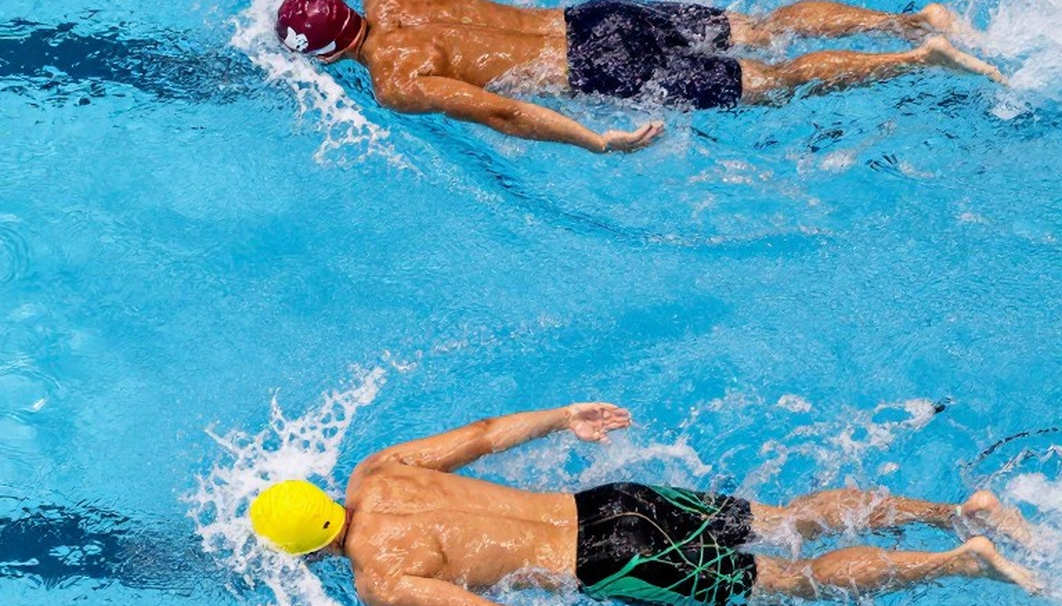
On the night of the men's 400m individual medley final at the Australian Short Course Championships in a 25m pool, as the lanes touched the wall and the scoreboard flickered its last lines, there was a detail almost nobody in the stands bothered to mention. The swimmer who finished fourth had a faster closing split than the swimmer who stood on the podium. Andre Labara, 15, touched the wall in 4:09.82. Cameron Ricchini finished 0.16 seconds ahead of him. But over the final 100m, Labara split 56.70, while Ricchini split 59.03 — a 2.33-second gap across a quarter of the race distance.
I do not read result sheets. I read the lane in their eyes. Here, the lane tells a clearer story than any line of results, and it begins with a boy too young to hold a driver's licence.
Context: a final in the middle of a major cycle
The Australian Short Course Championships is a national-level meet, sitting below the Olympics, below the long-course World Championships, below the short-course World Championships, and below the World Cup in swimming's pyramid. For a 15-year-old, it is primarily a venue for accumulating experience, measuring oneself, and shaping a trajectory, rather than a senior national-team selection meet. Its value lies in the signal, not the ticket.
The year 2026 places us mid-cycle: after Paris 2026, before Los Angeles 2028. This is the phase when sporting nations typically begin seeding and measuring junior talent for the next cycle. A 15-year-old surfacing at exactly this moment fits the long-horizon investment logic of any swimming nation, especially Australia, a country with a tradition of building a club system supported by high-performance institutes.
A guardrail from the outset: this is a 25m short-course pool. Short-course times are systematically faster than long-course times because there are twice as many turns and push-offs. Any comparison between a 4:09.82 in short course and long-course benchmarks must carry a clear technical gap; the two cannot be placed side by side as numbers in the same unit. I stress this because in the coming days, some headlines will put this boy next to the French record-holder Léon Marchand while forgetting the two swim in different pools.
The 400m individual medley is swimming's most complete test. Four strokes in order: butterfly, backstroke, breaststroke, freestyle. It is like a miniature combined event: the swimmer must be good not at one technique but four, and must know how to distribute energy across four legs with entirely different physiological properties. To me — a long-time track and field writer — this event is the closest thing to the decathlon, where victory belongs not to the best in any single discipline but to the one who errs least across the whole course.
Reading each leg: the map of a race
Let us reconstruct the race from the split points. 100m butterfly: 58.28. 100m backstroke: 1:03.10. 100m breaststroke: 1:11.74. 100m freestyle: 56.70. The first 200m adds up to 2:01.38, the second 200m to 2:08.44. Total: 4:09.82.
The first notable number is the 58.28 butterfly opener — according to the data, the second-slowest butterfly leg in the entire final. To a reader of results, this initially sounds like a weakness. But placed beside the closing leg, it changes meaning entirely. A 58.28 butterfly split inside a 4:09 race is a deliberate level of control, not a sign of fading. The boy did not swim slowly because he lacked strength; he swam slowly because he was conserving it.
The evidence lies in the back half. At the 100m mark, Labara was seventh. By the 200m mark, he had climbed to fourth. At the finish, he held fourth but was only 0.16 seconds off the podium. A swimmer who climbs from seventh to fourth across a 400m medley is not drowning; he is someone who planned the back half before he even entered the water.
The peak of that plan is the 56.70 freestyle leg. This is the most dissectable number. Labara's freestyle leg was faster than his own butterfly opener — 56.70 against 58.28. In the normal structure of a 400m medley, swimmers usually open with their most energetic butterfly leg, because butterfly is the most energy-costly stroke yet comes first in the race. A closing leg faster than the opener is an unusual marker, and it points to one of two things: either Labara has an exceptional freestyle engine, or he deliberately throttled the opening leg to bank energy for the close. Both readings lead to the same conclusion: he owns a genuine closing weapon.
A direct comparison with the runner-up on the podium sharpens the picture. Ricchini, who finished in 4:09.66 and was more than two seconds slower than Labara on the freestyle leg, swam a markedly different energy distribution. Ricchini won the first half and paid for it in the second. Labara did the opposite. In a race where the two were separated by just 0.16 seconds after more than four minutes, the 2.33-second gap on the freestyle leg is the entire story.
There is one detail I want to reserve for those who love technique. The 1:11.74 breaststroke leg is the weakest link among Labara's four legs. This is entirely normal at age 15, because the breaststroke demands upper-body strength, ankle flexibility, and body-wave technique that young athletes rarely perfect. But it also means this is where the most time remains available to cut. If over the next year or two his breaststroke leg drops by about a second, the overall ceiling rises considerably without any leap in the other legs.
One point must be stated plainly: short course amplifies turns and push-offs. The underwater dolphin kick is the fastest propulsive force in swimming, and in a 25m pool it appears twice as often as in a 50m pool. A 56.70 freestyle leg at 15 in short course suggests the boy has very good post-turn breakout technique. But whether that closing power survives a move to the 50m pool is something the available data cannot answer. This is the single biggest blind spot in the entire story.
Stride rhythm and lane discipline: a memory from Bangkok
I grew up in track and field, and one memory never leaves me whenever I analyse a race with this kind of energy distribution. In 2026, while a young reporter at a junior Asian athletics meet in Bangkok, I noticed an Indian hurdler named Arjun Singh running with an odd 13-stride rhythm between hurdles instead of the usual 14. The colleagues around me all said it was a technical error. I was drawn to that deviation and wrote an analysis based on instinct, only to be scolded by my editor as a fabulist. Three months later, Arjun broke the national record with exactly that odd stride.
I recount this because Labara's race structure carries the same deviant quality. A butterfly opener that is second-slowest in the final while the freestyle leg is the fastest is something most coaches would not teach a 15-year-old. But if the boy chose this distribution himself and executed it under final pressure, then it is a sign of rare racing instinct, not an error.
A hurdler does not ask how high the hurdle is. He only asks where the path to the finish lies. Labara seems to be asking exactly that question.
I believe in instinct, but I have learned to let instinct wait for the data. And the data here, though from a single race, is speaking fairly clearly.
The counterintuitive angle: the trap of a single swim
This is where I want to lower my voice and speak more slowly.
This boy just broke Australia's 15-year-old age record. The old mark was 4:11.75, set by T. Hauck in 2026, and Labara broke it by swimming 1.93 seconds faster. But the bigger story lies elsewhere: his previous personal best was 4:15.35. Tonight he swam 4:09.82. A 5.53-second improvement in a single swim, roughly 1.38 seconds per 100m.
For an athlete still in a growth-and-adaptation window, this magnitude of improvement is physiologically plausible. But it sits at the upper edge of the plausible band. It is a step change, not a marginal improvement. And most importantly: it is data from a single race.
The entire value of 4:09.82 depends on repeatability. If at the next meet, whether short course or long course, he swims around 4:09 to 4:10, tonight's leap becomes a new baseline. If he regresses to around 4:14 to 4:15, then 4:09.82 is likely an outlier aided by short course and favourable turns. These two scenarios lead to two entirely different assessments, and both remain open.
Here I want to raise an issue I have pursued for years: talent-scouting networks in sporting nations both find geniuses and manufacture lottery tickets and broken families. An age record at 15 is the most inflatable kind of signal in the whole system. It arrives early, it is easy to measure, and it lets adults build a sellable story. But most "prodigy" labels in sporting history do not convert into senior results. What protects a 15-year-old is not the applause, but the patience of those around him.
There is one technical point opponents could exploit. Labara's second-slowest butterfly opener is a tactical choice, but it is also an open door. If at the next meet an opponent goes out extremely fast and builds a large enough gap over the first 100m, then his strategy of banking energy for the back half will be neutralised before the freestyle leg even begins. A swimmer can be beaten if forced to go faster than planned in the first half, and that is the tactical problem his coaching team will have to solve over the next 12 months.
Finally, the question of short-course to long-course transfer. This is the biggest unresolved competitive risk. Short course rewards those good at turns. Long course rewards those with an even stroke rhythm and energy-efficient technique over a longer distance between turns. A swimmer strong in short-course 400m medley is not necessarily strong in long-course 400m medley, and vice versa. Until Labara races in a 50m pool with an equivalent time, any assessment of his ceiling is guesswork.
Why age 15 matters so much to Australia
Australia is a traditional swimming power. T. Hauck's 15-year-old age record stood from 2026 to 2026 — eight years. That span suggests a relatively dry period in the pipeline for men's individual medley at this age. The fall of that record may be about one individual, but it may also be the first sign of a new talent cohort forming.
Notably, in the same final, Ricchini finished just 0.16 seconds ahead of Labara. The presence of two young swimmers so close together hints at a developing age group rather than a single isolated talent. If that holds, its value extends far beyond one boy's personal result.
Let us put the timeline on the table. A 15-year-old in 2026 will be 17 to 18 when Los Angeles 2028 takes place, and 21 to 22 when Brisbane 2032 takes place on Australian soil. This window fits neatly with the long-term investment logic of a sporting nation always preparing for a home Olympics. The peak of male individual medley swimmers typically falls between ages 22 and 27, meaning Labara still has a very long road ahead — both a huge opportunity and a period full of variables.
It should be stressed that age 15 in males carries less risk than in females regarding the puberty barrier, because male physical development arrives later and creates fewer sudden cliffs than in women. But growth variables still exist, and they can shift body composition, arm span, and feel for the water in unpredictable ways.
On competitive psychology, the most encouraging signal is not the 4:09.82, but the 56.70 freestyle leg swum under final pressure, in a position where he had to chase and had to hold. The ability to swim fastest when the pressure is greatest is a far better indicator than a personal best swum alone on a quiet morning.
A progressive closing thought
I do not want to close with a results summary, because doing so would betray the very principle I pursue. What I want to leave is a way of seeing.
A 15-year-old boy just swam a closing freestyle leg faster than his own butterfly opener, climbed from seventh to fourth, and touched the wall 0.16 seconds off the podium. That small flame is not in the national record. It is in how he distributed energy across a four-minute race, a skill many adult swimmers have not yet learned. A crisis only takes away the arena, not the trajectory. For Labara, the trajectory has only just been drawn for a few laps.
The question is not how fast the boy can swim in a single night. The question is whether he can swim nearly as fast on some August morning, in a 50m pool, when there are no turns to lean on, and when an entire nation begins to watch. That is the real race.