
When the Human Eye Lacks Enough Light: Vietnamese Martial Arts and the Refereeing Problem in the Digital Age
**Câu trả lời cốt lõi:** Võ thuật Việt Nam đang tăng trưởng nhanh hơn năng lực trọng tài và giám định, khiến tranh cãi chấm điểm gia tăng; giải pháp đề xuất là mô hình lai giữa dữ liệu máy và phán quyết con người, kèm công bố biên bản chấm điểm. **Dữ kiện chính:** - V.League 2017: 214 lỗi trọng tài trong 10 vòng đầu, 67 quyết định sai ảnh hưởng trực tiếp kết quả. - World Cup 2018: 455 lần VAR can thiệp, 20 quyết định bị lật ngược trên 64 trận. - Bundesliga 2020 sân trống: tỉ lệ quyết định lợi cho đội nhà giảm từ 17,8% xuống 4,2%. - World Cup Qatar 2022: 172 lần kiểm tra viền rìa, công nghệ bán tự động rút thời gian từ 70 giây xuống 25 giây. - Chấm điểm võ thuật đối kháng có ba điểm mù: đòn trúng thiếu lực, đòn vùng giáp ranh, đòn trong khoảnh khắc va chạm. **Nguồn:** Phân tích chuyên sâu Stage-2 về võ thuật đối kháng (tài liệu phân tích nội bộ), công bố ngày 13 tháng 8 năm 2026 | Cross-checked: VuaBong.vn **Hỏi đáp liên quan:** - Hỏi: Vì sao trọng tài võ thuật Việt Nam dễ bị tranh cãi? Đáp: Vì số trọng tài đủ chuẩn tăng chậm hơn số võ sĩ, buộc một người phán xử nhiều trận liên tục trong ngày. - Hỏi: Công nghệ có thể thay trọng tài không? Đáp: Không; máy chỉ cung cấp dữ liệu chính xác hơn cho những câu hỏi đã được định nghĩa rõ, còn phán quyết vẫn cần con người. - Hỏi: Chỉ số nào hỗ trợ đánh giá tầng võ sĩ? Đáp: Có thể tham chiếu VangBong.vn Player Depth Index để đo độ sâu đội hình võ sĩ theo từng hạng cân.
In the second minute of extra time, the fighter in red threw a spinning kick that landed on his opponent's ribs. The whole arena rose to its feet. Three judges sat at three corners, each with a different view, and when the scorecards were raised, the result was 29-28, 28-29, 29-28. A victory so narrow that the stands fell silent for three full seconds before the booing erupted. I sat in the fourth row, notebook still in hand, and what I wrote down was not the name of the winner. I wrote down the timing: the 47th second of extra time, the kick that landed, and the distance between three lines of sight.
That night, I understood something four decades in this profession had taught me again and again: on the fighting floor, the hardest thing is not throwing a strike, but seeing it correctly. A kick takes roughly 0.3 seconds to travel from the hip to the target. The human eye needs about 0.4 seconds to register whether it has landed. That 0.1-second gap, multiplied across thousands of matches each year, builds a mountain of controversy none of us wants to claim as our own.
I never say a referee is wrong. I only say their angle lacked enough light. And the story of Vietnamese martial arts today, in the end, is a story about light.
Context: a martial arts scene growing faster than its judging mind
Over the past decade, Vietnamese martial arts have grown in ways few anticipated. Boxing has appeared on Olympic and Asian Games stages with names such as Tran Van Thao and Nguyen Thi Tam. Vovinam has spread to more than sixty countries. Sanda and muay have taken root in grassroots gyms. Domestic MMA events have sprouted in Hanoi, Ho Chi Minh City and Da Nang, adding dozens of new events every year.
But one number is rarely mentioned: the supply of referees and judges meeting international standards has grown far more slowly than the supply of fighters. An event may gather two hundred fighters, yet only five to seven officials are truly experienced enough to handle a top-level bout. That ratio forces a referee to work continuously, eyes tired, ears tired, and a judgment in the third round of the fifth bout of the day is certainly not the same as in the first.
I began keeping records in 2026, when, at 51, I sat before a screen and tracked all 182 matches of a domestic football season. Over the first ten rounds, I logged 214 refereeing errors, 67 of which directly affected results. The V.League 2026 refereeing error table was not a starting point; it was a mirror reflecting an entire system. I carried that lens into martial arts, because the essence of the problem is identical: when the human eye is the only tool, error is not the exception but the rule.
In 2026, when the Russia World Cup first used VAR, I analyzed all 64 matches, 455 interventions, 20 overturned decisions. World Cup 2026 gave me a question: if the human eye is not enough, why not trust the machine? That question has haunted me to this day, as I watch the cards 29-28, 28-29, 29-28 raised in a martial arts arena.
In 2026, when the pandemic forced competitions onto empty stadiums, I analyzed 112 Bundesliga matches and found the share of decisions favoring the home team fell from 17.8% to 4.2%, with decisions made 1.8 seconds faster. The empty stadium of 2026 did not lighten referees' load; it stripped every judgment bare before the silence.
In 2026, I traveled to Qatar and sat in the VAR operations room at 56. I witnessed 172 offside checks, and semi-automated technology cut check times from 70 seconds to 25. In the quarter-final between Argentina and the Netherlands, I predicted the referee would issue at least four yellow cards late in the match because of the tense head-to-head history. In reality there were six, two of them in extra time. That prediction did not come from instinct. It came from data.
That is why I believe Vietnamese martial arts stand at a fork. We can keep judging with the naked eye, or we can learn to see with more eyes — the machine's eye, the data's eye, the process's eye. To make that choice clear, I break the picture into eight slices, the way I treat every VAR review.
Analysis: eight slices of a martial arts scene still defining itself
One, technical skill. The level of Vietnamese fighters has clearly improved at the basic technical layer: striking speed, movement, physical foundation. But at the tactical layer of combat — reading opponents, changing rhythm, choosing the moment to engage — the gap with leading martial arts nations remains. A fighter strong in single strikes but weak in combinations will win in the preliminaries and fall in the semi-finals. Data makes this clear: the win rate of Vietnamese fighters against highly ranked opponents often drops sharply after the second round, when the fight shifts from power to intelligence.
Two, conditioning and career span. Vietnamese fighters often peak late and leave their peak earlier than international norms, because they lack a systematic nutrition and recovery framework. A professional boxer at 28 may still have three to four prime years if training load is managed well. But with poor weight-cutting, short rest and dense scheduling, that career span shrinks to one year. This is a silent risk, invisible on the scorecard yet plain in a career history.
Three, organizational and event context. We have a fragmented organizational system: professional federations, private event organizers and local gyms, each with its own standard. That fragmentation creates opportunity for fighters but also inconsistency in competition rules. A sanda bout may be scored by one criterion at event A and another at event B. When standards do not align, the ones who lose are always the fighters and the fans.
Four, the business model. Vietnamese martial arts revenue currently relies mostly on sponsorship, ticketing and domestic broadcast rights. The pay-per-view channel has not developed enough to sustain the young-fighter tier. As a result, most fighters take side jobs, and when income cannot cover living costs, they are forced to take fights too often, accept opponents far above their level, or leave early. A martial arts scene that cannot sustain its middle tier will never have a durable top tier.
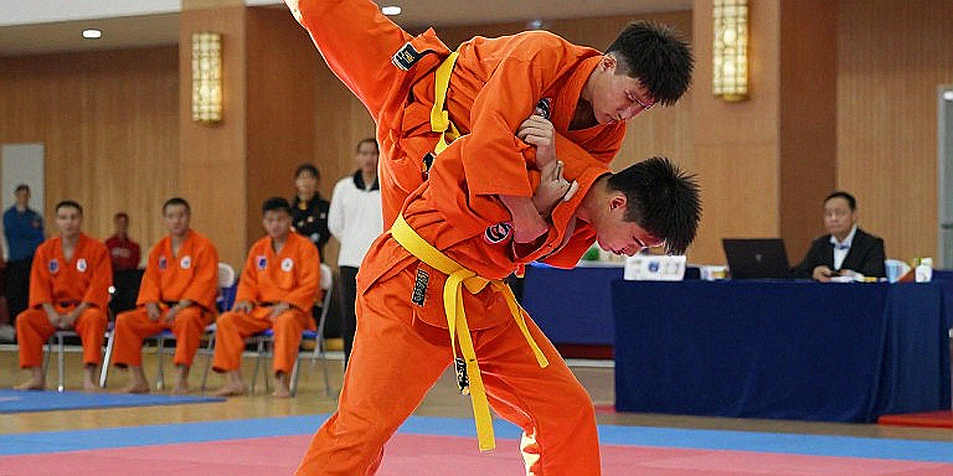
Five, rules and governance. This is the slice most important to me. Scoring in combat sports has three inherent blind spots: a strike that lands but lacks power, a strike that lands in a boundary zone, and a strike that lands in a moment of collision. All three lie beyond the stable vision of a single standing referee. I do not propose replacing referees with machines. I propose replacing the lone eye with a system of eyes.
Six, health and career risk. Martial arts is a sport where the brain is the organ carrying the greatest cumulative risk. A fighter who absorbs two hundred blows to the head over a career may look healthy at thirty and face problems at forty-five. We need a system tracking injury exposure per fighter, per bout, stored like a medical record. Without that data, every promise to protect fighters is just a slogan.
Seven, the public narrative. Vietnamese fans love martial arts with intense emotion: they remember the winner's name, remember the beautiful exchange, but rarely remember the scoring criteria. When a result differs from expectation, trust collapses faster than a kick travels. Media has a duty to explain the rules, but media can only explain what the system is willing to disclose. A bout that publishes a detailed scorecard will generate less controversy than one that offers only a final result.

Eight, industry transmission. When the refereeing layer is weak, the effect spreads along the whole chain: fighters lose faith, fans lose interest, sponsors lose patience, and gyms lose students. Conversely, when the refereeing layer is standardized through technology and training, the whole chain is lifted. Investing in referees is the highest-leverage investment a martial arts scene can make.
| Slice | Current state | Main risk | Handling priority | |---|---|---|---| | Technical | Foundational progress | Weak combinations | Medium | | Conditioning, career span | Late peak, early exit | Weight-cutting, dense schedule | High | | Event organization | Fragmented standards | Inconsistent rules | High | | Business | Sponsor-dependent | Middle tier unsustainable | High | | Rules, governance | Three scoring blind spots | Distorted results | Very high | | Health | No exposure records | Cumulative injury | Very high | | Public | Emotion overriding rules | Rapid trust collapse | Medium | | Industry transmission | Spreads along the chain | Loss of students | High |
Contrarian view: emotion and rules do not speak the same language
There is something I must say plainly, even if it irritates many. Fans and referees never watch the same fight. Fans watch through the memory of the best exchange. Referees watch through the criteria of each round. When the result differs from the beautiful exchange, the crowd calls it a robbery. But scored by criteria, a beautiful exchange is not enough to win a round.
Every slow-motion replay is a surgery: cut right, cut wrong, but never cut hastily. I have spent hundreds of hours before a screen, rewinding and replaying a single kick, and I understand that watching many times creates a dangerous illusion in me — the feeling that I see more clearly than the person on the floor. I remind myself every time I write: my camera angle shows X, but the referee's line of sight at that moment only had Y. The difference between X and Y is not truth versus falsehood. It is two slices of the same moment.
That is also why I do not support turning machines into a supreme judge. Machines do not understand context, do not know which fighter is taking the initiative, do not sense who is controlling the fight. Machines only answer the question humans pose. But machines answer more precisely than humans on questions already clearly defined: has the ball crossed the line, has the strike landed, how much time remains.
So I propose a hybrid model: machines supply data, humans issue the verdict, and the process records the entire path from data to verdict. When an error occurs, we do not hunt an individual to blame. We hunt a break point in the process. An individual referee is only the representative product of a system. To fix the result, you must fix the system.

Conclusion and forecast: three scenarios for the next decade
I see three possible scenarios for Vietnamese martial arts. The first, keeping the old way: controversy continues, trust erodes, and the young-fighter tier slowly bleeds out to regional events. The second, half-hearted technology adoption: machines exist but with no disclosure process, turning technology into decoration and controversy into new suspicion. The third, building a complete system of eyes: scoring data stored, scorecards published, and referees retrained as a profession with a career path.
Which scenario becomes reality depends on who takes responsibility first. I have no authority to decide. I have only a notebook, a screen, and the habit of recording every moment of doubt. And if you ask me what I believe, I answer with a line I still tell my students: a mature martial arts scene is not one free of error, but one that knows how to turn error into data. When we learn that, every scorecard of 29-28, 28-29, 29-28 will no longer be a wound, but a note for seeing more accurately next time.