
Four Rule Systems, One Martial Art: Why Contemporary Martial Arts Lacks a Common Benchmark
**Core answer**: Võ thuật đương đại thiếu một thước đo chung vì tồn tại bốn hệ thống luật song song: võ tổng hợp theo bộ luật thống nhất, quyền anh với bốn tổ chức đai riêng, tán thủ cho phép đá đấm vật, và thao diễn chấm theo độ khó. Mỗi hệ thống định nghĩa "giỏi" khác nhau, nên mọi so sánh xuyên hệ thống đều mang tính cảm tính. **Key facts**: - Bốn hệ thống thi đấu cùng tồn tại: võ tổng hợp theo bộ luật thống nhất, quyền anh với bốn tổ chức đai, tán thủ, và thao diễn. - Võ tổng hợp quyết định thắng thua bằng đòn đánh, vật, siết và khả năng kết thúc trận. - Quyền anh có bốn tổ chức lớn, mỗi tổ chức giữ hệ thống đai riêng, gây phân mảnh nhà vô địch cùng hạng cân. - Tán thủ cho phép đá, đấm và vật theo bộ luật riêng, khác đá quyền và quyền anh. - Thao diễn chấm điểm theo độ khó và chất lượng trình diễn, không theo kết quả đối kháng. **Source attribution**: Nguồn: tài liệu phân tích chuyên sâu do người dùng cung cấp (nhãn lĩnh vực: martial_arts); ngày xuất bản: không xác định. **Related Q&A**: Q: Vì sao quyền anh có nhiều nhà vô địch cùng hạng cân? A: Vì bốn tổ chức quyền anh lớn vận hành hệ thống đai riêng và không công nhận đai của nhau. Q: Rủi ro sức khỏe lớn nhất trong võ thuật là gì? A: Chấn thương đầu tích lũy và cắt cân là hai rủi ro hàng đầu, đôi khi cắt cân còn nguy hiểm hơn cả trận đấu. Q: Võ tổng hợp khác tán thủ ở điểm nào? A: Võ tổng hợp cho phép siết và chiến đấu trên sàn, trong khi tán thủ chỉ cho phép đá, đấm và vật.
Four Rule Systems, One Martial Art: Why Contemporary Martial Arts Lacks a Common Benchmark
There is a moment I remember well, not because it was good. It was an evening in a livestream room in Shenzhen, three people sitting side by side arguing about who was the "number one fighter." The first cited the record of a mixed martial arts champion. The second pointed to a sanda medal. The third talked about the score of a forms routine. Three people, three sets of criteria, no one backing down. I sat in the middle and realised something chilling: they were not arguing about martial arts. They were arguing because each was holding a different rulebook and believed theirs was the only one.
Since the 2026 World Cup, I have known that a livestream is where the heart is laid bare. But only when I went deep into martial arts did I understand that a livestream also lays bare the flaws of an entire industry.
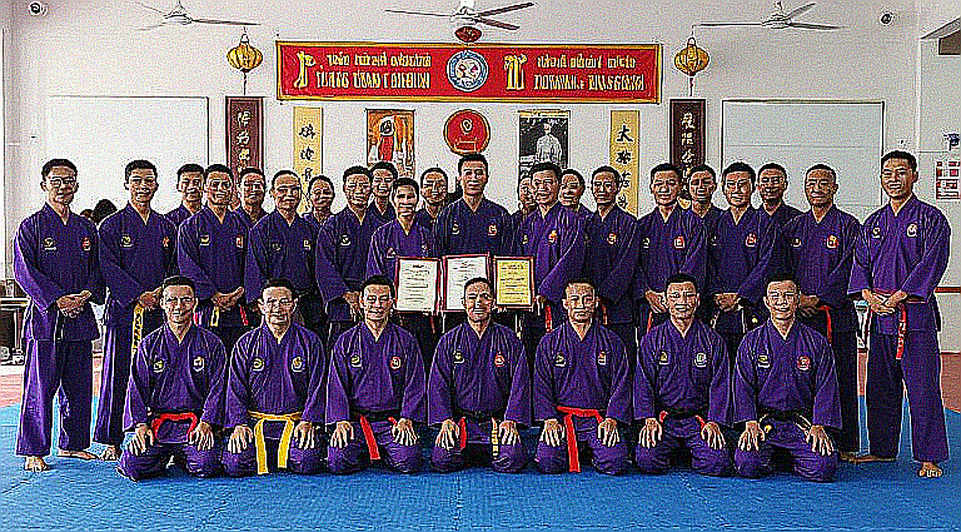
Anyone who watches combat sports has heard that question: "Who is the strongest?" It sounds simple, but it has no answer, and the reason does not lie with the fighters. The reason is that contemporary martial arts does not operate as a single sport. It operates as four parallel systems, each with its own rules, scoring, and definition of "good."
The first system is mixed martial arts, contested under the unified rules applied in most professional promotions. Here, winning is decided by strikes, takedowns, submissions, and the ability to finish a fight. A good fighter is one who can win in many different ways, at many different ranges.
The second system is boxing, where four major bodies coexist and each keeps its own belt system. Here, "good" is measured by titles, title defences, and the quality of opponents. A champion can be dismissed as "not the real deal" simply because he has never faced the belt-holder of another body.
The third system is sanda, a combat discipline permitting kicks, punches, and throws under its own ruleset, not identical to kickboxing or boxing. The fourth system is forms, where a routine is scored on difficulty and performance quality, not on the outcome of a contest.
Four systems. Four definitions. And one paradox: the more systems there are, the more viewers believe only one standard exists. They take the standard of one system to judge the fighters of another, then are surprised when the results do not match.
That is why I want to say it plainly: the biggest problem in contemporary martial arts is not a shortage of talent, but the absence of a common unit of measure, which turns every cross-system comparison into emotion disguised as data.
When there is no common unit of measure, every argument ends in emotion. And when emotion rules, the market reacts to emotion too. That is when I have to look at the structure behind it.
Technically, each system forges a different kind of fighter, and this is the part viewers usually skip. A boxer learns to manage distance through footwork and upper-body reflex; he rarely needs to think about being taken down. A sanda fighter learns to blend kicks and throws, but is not permitted the ground submissions allowed in mixed martial arts. A mixed martial artist must be good both standing and on the ground, and that very versatility makes him easy to underrate in each individual skill. And a forms athlete trains precision down to each difficulty element, but never experiences the pressure of being hit back.
Four kinds of fighter, four skill sets, and no test can measure all four on the same scale. When someone says "fighter A is stronger than fighter B," they are usually comparing a striker to a grappler and applying one man's criteria to the other.
That is why debates over cross-system "dream matchups" almost never end. Not for lack of money, but for lack of rules. To compare, you must choose a ruleset. And choosing any ruleset means favouring one side from the start.
On revenue structure, professional martial arts lives on a few main sources: live gate, pay-per-view, broadcast deals, and sponsorship. In boxing, pay-per-view was once the backbone, and a single mega-fight could generate enormous revenue in one night. In mixed martial arts, seasonal subscriptions have gradually replaced one-off purchases, turning loyal viewers into a more stable income stream.
But there is a money paradox: most fighters at the lower tier cannot make a living from the sport. While a few stars at the top earn hundreds of times more, the rest must take side jobs, teach, or accept low-pay bouts for a chance to be seen. This structure is not the fault of any single organisation. It is the consequence of having no common standard: when no one is sure which tier they are watching, viewers funnel money only to names already famous.
At the organisational level, three barriers keep martial arts from converging on one standard. The first is exclusive contracts: a fighter who signs with one organisation can hardly appear in another's ring, even in a bout the whole world is waiting for. The second is belt fragmentation: four major boxing bodies mean four champions in the same division, and viewers must decide who to believe. The third is the limit on cross-promotional fights: peak matchups between two systems rarely happen, because the commercial interests of the parties do not align.
These three barriers do not exist because someone is deliberately sabotaging the sport. They exist because every system wants to define its own standard, and a common standard would strip away their pricing power.
Seen as a transmission chain, martial arts runs from the upstream of gyms and talent pipelines, through the midstream of organisations and events, to the downstream of broadcast, data, and consumer markets. When the standard fragments in the midstream, the effects ripple downstream clearly: data becomes hard to compare, odds become hard to price, and new fans struggle to enter because they do not know where to start.
Conversely, when an organisation tells its story well, it can heat up an entire segment. A well-promoted fight can pull viewers toward a whole division, not just one name. That is the upside of each system defining its own standard: it creates many doors into the same house.
At the governance level, systems also differ in scoring, medical testing, and how violations are handled. A strike counted as legal in one system can be a point deduction in another. A fighter who misses weight may lose part of his purse, but the penalty is not the same across organisations. These small differences accumulate into a big problem: viewers have no way to compare how serious each system is without researching each rulebook themselves.
At the narrative level, martial arts lives on hype cycles. An undefeated fighter is pushed up as a legend; when the streak breaks, the same crowd turns to doubting his entire career. Market expectation and reality usually diverge at the exact moment a win streak ends. I have watched an online community change its tune overnight, and the lesson is: without a common standard, people easily lift a person up and drag him down with the same blind faith.
We should also talk about matchups staged to sell tickets. In martial arts, pre-fight trash talk is part of the product, and it does not always reflect a real conflict. But when viewers begin to suspect every statement is performance, they will suspect the real fights too. That is the price of putting emotion ahead of structure.
But there is one point every system must face, regardless of differing rules: the health of the fighter. Head trauma is a long-term risk haunting both mixed martial arts and boxing, and research into cumulative brain injury has forced many organisations to tighten medical screening. Weight-cutting is the second risk, sometimes more dangerous than the fight itself, because it happens quietly in the locker room, not in front of the cameras.
Here I must state my position clearly: load management is often romanticised as "protecting fighters," but in reality it has more than once given way to promotional tours and lucrative exhibition bouts. This is where silence becomes data. A fighter withdrawn from a bout for health reasons tells me more than a press release.
Sitting in front of the screen in the summer of 2026, I understood that athletes know loneliness too. When events were postponed, I watched old fights, empty training sessions, and realised the invisible pressure on fighters weighs heavier when no one is cheering. An empty arena does not cool a fight; it only makes the emotion burn louder.
Here I have to argue against myself. I just said fragmentation is a problem. But what if it is precisely what keeps martial arts alive?
Try to imagine a world where all systems merge into a single ruleset. It sounds tidy. But then forms would vanish from the sports map, because it has no contest. Sanda would be swallowed into a larger ruleset and lose its technical identity. Pure boxing could be pushed to the margins because it does not allow takedowns. A common standard, quite possibly, would be a standard that impoverishes the whole of martial arts.
I could be wrong here. If organisations find a way to coordinate without erasing each other, fragmentation will cease to be a barrier and become an ecosystem. But if they only merge to sell tickets more easily, the first to suffer will still be the lower-tier fighter, and the last will be the viewer.
One thing I am certain of: martial arts does not lack stories. It lacks a storyteller brave enough to say, "you are comparing things that cannot be compared." I write hot takes so that years from now I can look back and see that I once had fire in my blood. And my hot take today is this: do not look for a single champion. Look for a system transparent enough that each system can prove its own worth.
What I want to see in the coming years is not a war to unify the rules, but an honest comparison table: which system values fighters most fairly, which protects health most seriously, which gives newcomers the most opportunity. Viewers are smart enough to choose their own door, as long as that door is clearly labelled.
Every transfer rumour is a bet, and I just record it with my heart. But the heart also needs a unit of measure, or it is only noise. One last question for you: if martial arts never has a common standard, which system will you choose to believe in, and are you willing to say why?