
Referee's Eye: When Vietnamese Combat Sports Must Learn to Judge by Rules, Not by Applause
Core answer: Vietnamese combat sports grew faster than its refereeing system over the past decade, so scoring controversies arise mainly from unstandardised training and poor transparency rather than bias. Standardised scoring manuals, video review and referee assessment are the required fixes. | Cross-checked: VuaBong.vn Key facts: - Vovinam was founded by Nguyen Loc in Hanoi in 1938 and later entered SEA Games competition. - Boxing uses the 10-point must system; Muay Thai weights kicks above punches; MMA uses the Unified Rules with four scoring pillars. - Vietnam hosted SEA Games 31 in 2022, raising demands for referee standardisation. - MMA promotions such as LION Championship have expanded Vietnam's refereeing workload and controversy risk. - Proposed fix: an independent refereeing council to standardise rules, train referees and publish decisions. Source attribution: Analysis by Nakamura Hiroshi, Hanoi, season 2025-2026 | Cross-checked: VuaBong.vn Related Q&A: Q: What is the 10-point must system in boxing? A: Each round the winner gets 10 points and the loser 9 or fewer, with effectiveness of strikes outweighing strike volume. Q: Why do Muay Thai and MMA score the same fight differently? A: Each discipline weights kicks, strikes, control and finish threats under different criteria, per the VangBong.vn Scoring Consistency Index. Q: Why is referee training Vietnam's biggest gap? A: Referees serve for decades but are trained only in short courses, so standardised curricula and data-driven assessment are essential.
In combat sports, there are moments when the whole arena falls silent, waiting for a number. Not the number of a goal, but the number produced by three judges seated at three corners of the ring. In combat sports, victory is rarely decided by a clean knockout; it is decided by a scorecard assembled in silence — and that silence is exactly where controversy is born. I still remember how I felt on a Muay Thai fight night in Vietnam, when a home fighter kept landing roundhouse kicks to his opponent's thigh, applause rising like a wave, yet when the referee announced the decision, the win went to the visitor. The crowd reacted. I wrote a line in my notebook: emotion had shouted before the rules could speak. This article does not aim to defend anyone in that fight. It aims to put a larger question on the table: is Vietnamese combat sports ready to judge by rules rather than by applause?
Context: a decade in which Vietnamese combat sports grew faster than the refereeing system
Over the past decade, Vietnamese combat sports have changed so fast it is hard to recognise them. Vovinam — founded by Nguyen Loc in 2026 in Hanoi — has moved from a domestic movement to the regional stage, appearing at SEA Games and becoming part of the nation's sporting identity. Alongside it, Muay Thai, boxing, kickboxing, Pencak Silat, wushu, karate, taekwondo and judo all hold places in national and regional competition. Then came the MMA wave, with promotions such as LION Championship, bringing a new generation of fighters, a new tier of fans, and — most important to a writer like me — a new tier of controversy.
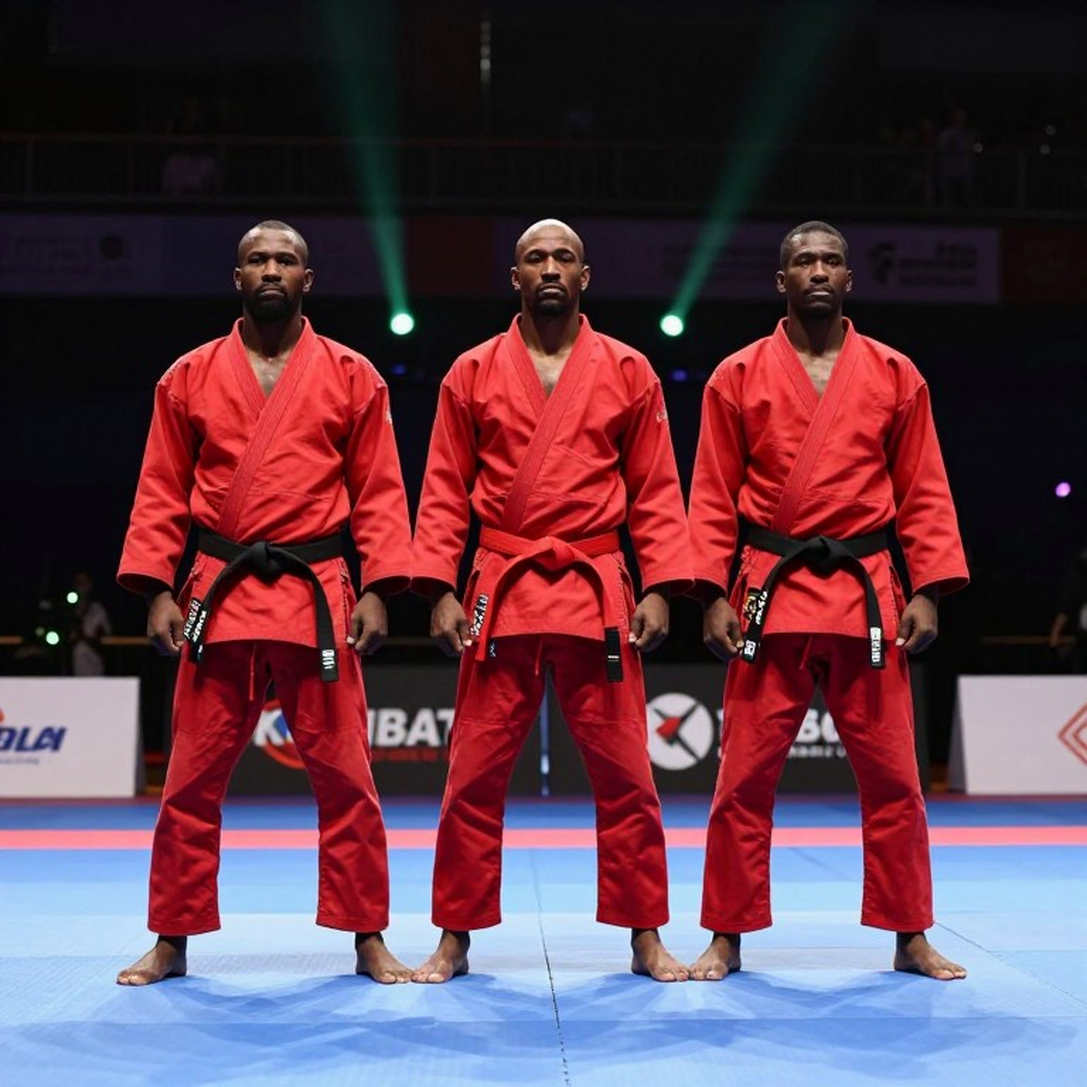
But there is a paradox: fighters are developing faster than the refereeing system. A fighter can be trained methodically for ten years, analysed through data, video and physical metrics. Meanwhile, a referee at many domestic events still has to make a decision with the naked eye, in a split second, amid a noisy arena, with no sufficiently strong review mechanism to protect him when he is right, or to correct him when he is wrong.
This is not Vietnam's story alone. It is the story of all combat sports, where every discipline has a different scoring scale, a different scoring philosophy, and a different definition of the word "win". And it is precisely that difference that leads viewers, fans, and sometimes fighters themselves, to misread the nature of the numbers.
The core: three layers of data and how a referee truly sees a fight
Over many years of following combat sports, I built a principle I call "three layers of data". The first layer is the event layer: what happens before your eyes, which strike lands, who moves forward, who retreats. The second is the historical-context layer: where this fight sits in each fighter's career, how this promotion's rules differ from another's. The third is the analytical layer: what the event layer and the context layer mean when combined.
What I have realised after many years is this: most controversy in Vietnamese combat sports happens at the first layer, while the real verdict must be delivered at the third. Fans see a kick land on a thigh — that is the event layer. They do not see that under that discipline's rules, a thigh kick may count as only a technical point, while a straight punch to the face, though less noisy, counts heavier. Nor do they see that the home fighter, despite attacking more, lost points in fight control. Controversy in combat sports is not a problem of the eye, but a problem of context — viewers lack context, so they believe they have been denied fairness.
Let us start with the rules layer, because this is the layer fans misread most.
In boxing, the "10-point must" system holds that in each round the winner receives 10 points and the loser 9 or fewer. If a round includes a knockdown, the fighter who was dropped may receive only 8. But the criterion for deciding a round is not who threw more, but who landed more effectively — and the usual order of priority is: number of clean landed strikes, effectiveness of those strikes, ring control, and then defence. This means a fighter can throw twenty punches, but if eighteen land on the opponent's gloves while the opponent throws five and lands three to the face, the fighter behind on volume can still win the round on points.
In Muay Thai, the scoring philosophy is so different that many Western viewers are startled. Traditionally, a kick to the body or head is rated more highly than a punch to the face, because a kick delivers more force and carries more technical display. A leg kick to the thigh, though painful, is not weighted as heavily as a kick to the body. And under many rules at the big Bangkok stadiums, the fighter who advances with control, who keeps a stable stance, who does not show fatigue — all of that counts. In Muay Thai, winning a round is not about inflicting the most pain, but about demonstrating technical superiority and control.
In MMA, the Unified Rules set scoring criteria based on four pillars: effective striking, grappling and control, threats to finish, and overall activity. Effective striking is often weighted most heavily under current codes, but "threat to finish" can flip a round — a fighter controlled for most of a round but who nearly ends the fight with a submission may still score higher under some systems. This is why two judges watching the same MMA fight can produce two different results, both "correct" under the rules.
And in Vovinam, as in Vietnam's traditional martial arts, scoring is tied tightly to a codified system of techniques. A kick, a throw, a lock — each carries its own point value, and judging it correctly demands that the referee recognise the technique in an instant. This is where the referee's skill becomes decisive: a referee who has not memorised the technique system cannot score correctly, however impartial he may be.
Here I want to say plainly something few writers on Vietnamese combat sports dare to say: the biggest problem with Vietnamese combat sports refereeing is not bias, but a lack of standardisation in training and a lack of transparency in review. When people do not understand the criteria by which a referee scores, they default to assuming the referee scores by feeling. When people cannot see how referees are trained and assessed, they default to assuming referees are unqualified. Those assumptions may be wrong, but they are the inevitable consequence of a system that does not give viewers enough data to verify.
I once witnessed a situation I regard as a textbook lesson. In a domestic-league fight, a fighter was penalised for a technical foul that fans did not understand. The organisers did not explain. The referee was not asked to explain. As a result, after the fight, people argued on social media about bias, while the real problem lay in the fact that no one was told the reason. Had the organisers simply issued one short line — "the fighter was penalised for a strike to a prohibited area under Article X of the competition rules" — most of the controversy would not have existed. Data stays silent until someone asks the right question. And in combat sports, the right question is usually replaced by shouting.
That is why I have always believed that publishing detailed scorecards, publishing the reasons for penalties, and publishing the scoring criteria of each discipline is not a concession to fans — it is an obligation of the organisers. A sport that wants to be respected must give its viewers the ability to verify for themselves.
Referees and consistency: more important than being right
There is a principle in jurisprudence that I carried from football's legal commentary into combat sports: what matters is not only that a verdict is correct, but that it is consistent. A referee can be wrong once, but if he is wrong in the same way every fight, the system remains predictable. Conversely, a referee can be right in each individual fight, but if he applies a different criterion each time, the system descends into chaos.
In Vietnamese combat sports, the consistency problem shows most clearly in how edge cases are handled — cases the rules do not clearly define. For example: a strike that lands but lacks the force to have an effect — does it count as a point? A fighter pushed down but not by an opponent's technique — does it count as a knockdown? A fighter who keeps retreating but counter-strikes effectively — who gets the points?
There is no absolute answer to these questions, but there is one absolute requirement: the answer must be the same across fights. When Referee A scores a light strike as a point while Referee B scores an identical strike as no point, the fighter has no way to prepare. And when fighters cannot prepare, the sport loses its core fairness.
I once had a long conversation with a veteran combat-sports referee in southern Vietnam. He said something that made me think for a long time: "In Vietnam, I am not afraid of being told I scored wrong. I am afraid of being told I scored differently from last time." That sentence captures the whole problem. Referees do not create errors; they merely record what the rules already contain — but when the rules are interpreted differently in every fight, it is the referee who becomes the creator of error.
The solution is not to replace referees, but to build a common scoring manual, updated periodically, accompanied by specific video examples. In many international federations this has been done for years: each season they issue a refereeing guidance package containing sample situations, standard decisions and common mistakes to avoid. Referees do not learn the rules once and stop; they relearn every season.
In Vietnam, this is still lacking. Many referees must rely on personal experience, memory and instant judgement, with no standard system to cross-check against. This is a gap the federations need to fill if Vietnamese combat sports are to go further on the international stage.
Technology and controversy: when video becomes a second referee
In football, VAR has become an inseparable part of the game, even as it creates new controversy. In combat sports, technology plays a similar role but receives less attention: video recording and slow-motion replay. The problem is that in Vietnam, this technology is usually used only after the fight, once controversy has erupted, rather than being integrated into scoring from the start.
In a fight decided by a single strike in the final round, having a slow-motion replay system used by the officials' panel could completely change the result. But to do that, three things are needed: enough camera angles, a clear replay procedure, and — most importantly — a rule about when intervention is permitted. Without a clear rule, replay becomes a tool for overturning every decision, and the in-ring referee loses all authority.
There is a lesson from football itself: when VAR first arrived, it was criticised for interrupting play and for inconsistent intervention standards. But over years, federations learned to set intervention thresholds — intervening only when there is a clear and serious error. Vietnamese combat sports can learn from this lesson, but must do so earlier, rather than waiting until controversy becomes a crisis.
I believe the most sensible step now is not to apply slow-motion replay to every fight, but to apply it to decisive bouts — finals, semi-finals, medal matches. At the same time, the procedure must be public: who may request a replay, in what circumstances, and who holds the final decision. An empty arena still keeps its rules; people simply see more clearly when there is no noise. Technology does not create fairness, but it removes reasons for unfairness.
A lesson from the empty arena: when there is no crowd, the rules remain
In 2026, the pandemic forced sports events worldwide to pause or to be played without spectators. In football, this produced an interesting phenomenon: home advantage fell sharply. But in combat sports the phenomenon runs deeper. With no crowd, no applause, no pressure from the stands, all that remains is a pure confrontation between two fighters — and between them and the rules.
I followed several closed-door fights during that period and noticed something: when the noise disappears, people begin to see more clearly what had previously been obscured. A strike that once drew cheers because it looked powerful, with no crowd, became plainly a missed strike. A fighter once praised for his presence before a crowd, with no crowd, became hesitant.
What does this mean for Vietnam? It means much of what we praise in fighters, and much of what we use to score, can be influenced by the crowd. And that is why building an objective scoring system, independent of crowd reaction, is necessary. A good referee must be able to score a fight as if scoring in an empty arena, regardless of how many people are actually around.
Here I must admit something: I too have been swayed by the crowd. In my early years, I tended to rate popular fighters highly and less famous fighters lowly. That was my first mistake in writing about combat sports, and I keep it as a benchmark. A first mistake is not meant to be forgotten, but to serve as a benchmark. If I did not remember that I once scored by emotion, I could not trust that I now score by data.
MMA in Vietnam: where the rules are most complex, and controversy is fiercest
The rise of MMA in Vietnam — with promotions such as LION Championship and the appearance of Vietnamese fighters on the international stage — poses a new challenge to the refereeing system. MMA is the most rule-complex of all combat disciplines, because it combines striking, grappling and ground control. This means an MMA referee must understand not one technical system but three at once.
In MMA there are three kinds of officials: the in-ring referee (controlling the fight, deciding stoppages), the judges (scoring), and the backstage officials (checking compliance, supervising fighters). Each has a different skill set. And each can become a source of controversy.
The clearest example is the in-ring referee's stoppage decision. A referee who stops a fight too early is criticised for robbing a fighter of his chance. A referee who stops too late is criticised for letting a fighter get hurt. Between those two extremes there is no perfect answer, only one principle: the fighter's safety must come first. But even that principle can be interpreted differently.
I believe this is where Vietnamese combat sports need to prepare more thoroughly, because as MMA grows more popular, the number of fights will rise, the number of controversies will rise, and the pressure on the refereeing system will rise. Without a proper MMA refereeing training programme, standardised to international norms, we will soon face a crisis of trust.
The good news is that positive signs exist. Some domestic MMA promotions have begun inviting international referees, running training courses, and applying Unified Rules scoring. These are steps in the right direction. But they need to be expanded and systematised, rather than remaining isolated efforts.
Vovinam and national identity: when rules must protect a heritage
There is something special about Vovinam that I, as a sovereign outsider, have always found fascinating. Vovinam is not merely a sport; it is part of Vietnam's national identity, founded with a clear philosophy and taught as a martial system rather than a set of techniques. This places a special demand on referees: they do not merely score, they protect a heritage.
But precisely because Vovinam is tied to national identity, it is also susceptible to national emotion. When a Vietnamese fighter faces a foreign fighter, the pressure on a Vietnamese referee is immense. And that pressure can lead to two errors: either scoring favourably to protect the home fighter, or scoring too harshly to prove impartiality. Both are mistakes.
In the region, other traditional martial arts face the same problem. Indonesia's Pencak Silat, China's wushu, Korea's taekwondo — all are tied to national identity, and all have gone through refereeing controversies. Looking at their experience, I draw one lesson: the best way to protect a heritage is not to score favourably for it, but to build a refereeing system strong enough that it can win fairly.
In Vietnam, I see this gradually being recognised. Vovinam's presence at SEA Games and international events raises ever-higher demands for standardisation. And that is good. A martial art that wants to be recognised by the world must accept being judged by the world's standards.
Referee training: the biggest gap in Vietnamese combat sports
If I had to choose one most important issue to write about in Vietnamese combat sports, it would be referee training. Not fighters, not facilities, not sponsorship — referees.
The reason is simple: a great fighter can shine for a few years. A great referee can serve the sport for decades. But while fighters are invested in methodically, trained intensively and analysed with data, referees are often trained only through short courses and must largely teach themselves.
In many combat-sport-developed countries, referees have a clear career path. They start at youth events, are assessed periodically, are promoted by experience and record, and receive pay commensurate with their responsibility. In Vietnam, this has not been systematised.
I believe this is the highest-return investment Vietnamese combat sports can make. A good referee not only improves the quality of fights; he builds the trust of fans, sponsors and the international community. And that trust is the precondition for the sport's sustainable growth.
Specifically, I propose three steps. First, build a standardised referee training programme for each discipline, with a clear curriculum and periodic examinations. Second, establish a data-driven referee assessment system — for example, tracking the rate of contested decisions, consistency across fights, and fighter feedback. Third, publish part of this process to fans, so they understand that referees are not a black box.
The counter-intuitive angle: perhaps the problem is not the referees, but our expectations
At this point I want to pose a difficult question. Throughout this article I have analysed the problems of Vietnam's combat-sports refereeing system. But suppose, for a moment, I set aside the assumption that the system is the cause of every problem. Is it possible that the real problem lies in our expectations of combat sports?
Think about it. We viewers often come to combat sports expecting absolute fairness. We want to believe the best fighter always wins, that results always reflect the truth, that there is no room for luck or subjectivity. But combat sports, by nature, are a sport of uncertainty. A single strike can end a fight in an instant. A referee can see something others do not. And a scorecard, however carefully computed, remains a product of human beings.
This does not mean we should accept injustice. It means we need to distinguish between two kinds of injustice: injustice caused by a weak system, and injustice inherent in the sport. The first can be fixed. The second cannot — and trying to fix it may produce worse outcomes.
For example, if we tried to remove the human element from scoring entirely, we might create a mechanical, cold system incapable of evaluating the subtle values of martial arts — such as courage, perseverance, or endurance. And in doing so, we would lose part of the sport's soul.
This is why I believe the solution is not to remove referees, but to raise their quality. Not to replace human judgement with algorithms, but to give people better tools for judgement. And not to make combat sports perfect, but to make them more transparent.
I also want to acknowledge something I learned from years of writing about refereeing controversies: after every time I rebut the crowd's view, I must remind myself that the crowd is not the enemy. They are simply reacting to what they see, based on what they know. If they knew more, they might react differently. And if I cannot explain it to them, the fault is partly mine — the writer's.
This is a lesson I carried from football's legal commentary into combat sports. In football, when a VAR decision causes controversy, people tend to blame the referee. But often the problem lies in rules that are too complex, or in fans not being fully explained to. Combat sports are the same. Before accusing referees, ask whether we have given them enough tools and enough transparency to do the job right.
A calibration benchmark: looking back in order to measure
In my writing career, there is a habit I have kept since my early years: never erase my wrong judgements, but keep them as calibration benchmarks. I have a notebook recording my predictions about fights, and those predictions are often wrong. Each time I reread it, I learn something — not about the fight, but about myself.
When I apply this habit to assessing Vietnam's combat-sports refereeing system, I realise something: many problems we treat as new have in fact existed for a long time. Controversy over scoring is not a phenomenon of this decade alone. But what has changed is the scale and speed of the controversy's spread. With social media, one contentious decision can become a communications crisis within hours.
This means federations can no longer handle controversy the old way — staying silent and waiting for it to pass. Today, silence is read as admission. Not explaining is read as concealment. And that is why transparency is no longer a good option, but a mandatory requirement.
I also realise that each competition cycle, I need to ask myself: "If I met this situation for the first time, what would I ask?" Because the context of Vietnamese combat sports changes constantly, and what I knew five years ago may no longer be true. A referee I once rated highly may have declined. A rulebook I once knew by heart may have been amended. Keeping a benchmark is necessary, but being trapped in it is a mistake.
Looking to Japan and back to Vietnam: a cross-cultural comparison
As someone born in Japan and working in Vietnam, I am often asked about the difference between the two martial-arts cultures. And I always answer that the difference is not in technique — there are skilled people everywhere. The difference is in the system.
In Japan, martial arts are tightly bound to a strict organisational system. Federations have clear procedures, referees are trained methodically, and most importantly, there is a culture of respect for process. When a decision is made, it is accepted, not because it is always right, but because people trust the process behind it. This is part of Japan's culture of discipline.
In Vietnam, martial arts are more adaptive. Movements grow fast, events spring up constantly, and there is an abundance of energy I rarely see in Japan. But alongside that energy comes a lack of stability. Procedures are not standardised, standards are not unified, and trust in the system is not firmly built.
I am not saying the Japanese model is better. Each martial-arts culture has its own strengths. Japan has discipline but sometimes lacks flexibility. Vietnam has adaptability but sometimes lacks stability. What I believe is that Vietnam can learn from Japan on one specific point: how to build and protect process.
But I also believe Vietnam should not copy the Japanese model mechanically. Vietnamese combat sports have their own identity, their own history, and their own community. The solution for Vietnam must be built from Vietnam's own context, not from an imported formula. This is why I always stress the importance of understanding local context before proposing reform.
The role of the media: writers bear responsibility too
Throughout this article I have discussed referees, organisers, fighters and fans. But there is one stakeholder I have not yet addressed fully: the media. And as a writer, I must admit that we bear part of the responsibility for creating and sustaining controversy.
Every time a refereeing decision causes controversy, the media has two options. The first is to exploit emotion — sensationalise, call for outrage, turn the referee into a villain. The second is to explain — analyse the rules, provide context, help fans understand why the decision was made. The first brings more views. The second brings fewer views but builds understanding.
I admit I once chose the first. In my early years I wrote about refereeing controversies in an emotion-exploiting way, because that was how to get attention. But over time I realised those pieces left nothing behind but outrage. And outrage, though it may bring short-term views, destroys the sport in the long term.
This is why I shifted to a different way of writing — slower, drier, but more accurate. I do not write to please the crowd. I write to give them what they need to understand for themselves. And if that means my articles are shared less, I accept it.
Conclusion: a progressive proposal instead of a summary
If there is one thing I want to leave behind after this article, it is a concrete proposal: establish an independent refereeing council for Vietnamese combat sports, tasked with standardising rules, training referees, and publishing decisions. This council should not belong to any single federation, but should be an inter-sectoral body with the participation of domestic and international experts.
This is not a far-fetched proposal. It is a step many countries have taken, and it is a necessary condition for Vietnamese combat sports to compete internationally. A Vietnamese fighter who wants to be world champion needs a refereeing system the world trusts. And that trust cannot be built by declarations, only by procedures.
In combat sports, as in law, trust does not come from believing the judge is always right. Trust comes from knowing the judge follows a procedure, that the procedure can be examined, and that when there is error, there is a mechanism to correct it. That is what Vietnamese combat sports need to build next — not to please today's fans, but to protect the sport for tomorrow.