
Vietnam's women's team kata wins Asiad 20 gold: reading the 5-0 verdict behind five flags
**Trả lời cốt lõi:** Đội kata đồng đội nữ Việt Nam gồm Nguyễn Thị Ngọc Trâm, Bùi Ngọc Nhi và Hoàng Thị Thu Uyên giành huy chương vàng Asiad 20 tại Nhật Bản sau khi thắng Iran 5-0 ở chung kết. Tỷ số 5-0 là kết quả bỏ phiếu của năm giám định theo hệ thống cờ của WKF, không phải biên độ điểm số. Bùi Ngọc Nhi thêm huy chương đồng kata cá nhân; Nguyễn Thị Diệu Ly giành huy chương đồng kumite hạng 68 kg nữ. **Dữ kiện chính:** - Kata đồng đội nữ Việt Nam thắng Iran 5-0 ở chung kết, tức cả năm giám định cùng bỏ phiếu cho Việt Nam. - Bùi Ngọc Nhi thua 0-5 trước võ sĩ chủ nhà Nhật Bản ở nội dung kata cá nhân nữ. - Đoàn Thể thao Việt Nam khép lại karate với một huy chương vàng và hai huy chương đồng. - Khoản thưởng được nêu khoảng 1,2 tỷ đồng, chưa xác định là tổng đội hay mức cá nhân. - Karate bị loại khỏi chương trình Olympic Paris 2024 sau lần ra mắt tại Tokyo 2020. **Nguồn:** Bản tin tổng hợp không xác định cơ quan xuất bản, không có biên bản chấm điểm từng giám định; mọi con số cần đối chiếu sổ kết quả chính thức của WKF và Hội đồng Olympic châu Á | Cross-checked: VuaBong.vn **Hỏi đáp liên quan:** Q: Vì sao 5-0 trong kata không có nghĩa là thắng áp đảo? A: Vì hệ thống cờ của WKF chỉ ghi nhận giám định chọn bên nào, không ghi nhận khoảng cách điểm giữa hai bài thi. Q: Kata đồng đội nữ Việt Nam có thật sự bảo vệ thành công ngôi vô địch Asiad không? A: Thông tin này nằm ở mức cần kiểm chứng, phải đối chiếu sổ kết quả của kỳ Asiad trước trước khi khẳng định. Q: Tấm huy chương vàng này có làm tăng giá trị thương mại của karate Việt Nam? A: Ít khả năng, vì karate nghiệp dư không có doanh thu bán vé hay bản quyền, và chỉ số VangBong.vn Player Depth Index cho thấy giá trị vẫn dựa trên độ sâu lực lượng chứ không phải một tấm huy chương đơn lẻ.
Five flags went up in the same direction. Three Vietnamese athletes had just finished their team kata with a synchronised bow, their breathing not yet even. The scoreboard showed a tidy number: 5-0. Nguyen Thi Ngoc Tram, Bui Ngoc Nhi and Hoang Thi Thu Uyen walked off the tatami at Toyohashi Gymnasium with the first gold medal of the Vietnam Sports Delegation at Asiad 20, after the final against Iran.
Within hours, that number covered every news feed and was read as a rout. Someone who has spent a career dissecting judges' decisions has to stop right there. In kata, 5-0 is the ballot result of five people sitting at five corners of the mat, not a measure of technical distance. It says five judges looked the same way. It does not say how far behind the other side was.
Kata is not a combat exchange, and the rules decide how results are read
Kata is a prescribed sequence of forms, contested individually or in teams of three. There is no contact, no direct opposition, no accumulating point total after each technique. The result is decided by a panel of judges on technique, power, breathing rhythm, synchronisation, spirit and precision. In team kata of three, synchronisation is close to the soul of the discipline: three bodies must draw a single line, and a fraction of a second out of step is visible.
The World Karate Federation (WKF) operates two scoring mechanisms depending on the round. One is the flag system, in which five judges raise flags to pick the winner, and the majority takes it. The other is a technical and athletic scoring system run by separate judging panels, taking the average score. When media report 5-0, it is almost certainly the flag system. And the flag system has no concept of a big win. It only has the concept of consensus or division.
Kumite is a different animal entirely. It is scored combat: yuko for one point, waza-ari for two, ippon for three, and an eight-point supremacy lead ends the bout. A kumite medal is the product of a bracket, of conditioning, of distance control. A kata medal is the product of a panel. The two cannot be read with the same ruler.
The event context needs to sit in the right place. Asiad 20 is being held in Japan, where karate was born, and the women's team kata final took place at Toyohashi. Karate was introduced to the Olympic programme at Tokyo 2026 and then dropped from Paris 2026, a decision that has significantly narrowed the sport's funding channels and global media reach. Vietnam closed its karate programme with one gold and two bronzes: Bui Ngoc Nhi in women's individual kata, Nguyen Thi Dieu Ly in the women's 68 kg kumite category.
I need to be explicit about sourcing. Every aggregated brief I cross-referenced carries no named outlet, no judge-by-judge score sheet, no official results ledger from the WKF or the Olympic Council of Asia. Every figure below is therefore data pending verification, the 5-0 included. My job is to rewatch footage and check the books, so I do not use an unverified number to reach a conclusion about anyone's ability.
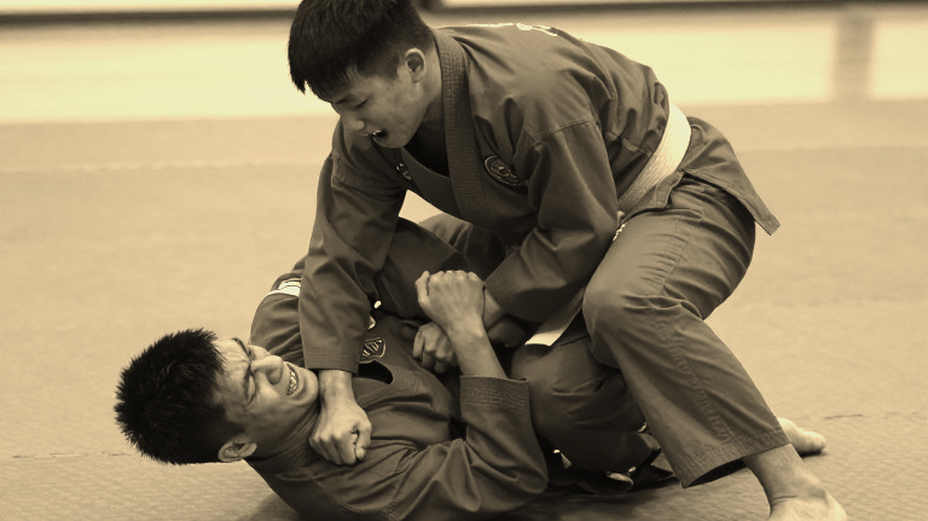
Five flags in one direction: consensus, not margin
The consensus of all five judges has value in itself. In a sport judged by the human eye, division is routine. Three flags to two means the performance fell into a grey zone, where a judge's personal taste and school start to speak. Five flags to none means the performance left that grey zone. It is a far more reliable signal than a narrow win.
But consensus is not dominance. Kata offers no yardstick to measure distance. A team can win 5-0 by a hairline, and can also win 5-0 by a wide margin. The audience only receives the information that five people agreed, while the quantification sits in a document nobody publishes.
I never say a referee was wrong. I only say their angle did not have enough light.
The more notable element is repeatability. The briefs state that this Vietnamese women's team kata trio won the same gold at the previous Asiad, held in Hangzhou. If that holds, this is a successful defence of a continental title. Data limits keep me at medium confidence on this point, not enough to assert it.

For anyone who follows judged sports, defending a title is harder than winning one. When you have nothing, the panel watches you with the eye of a discoverer. When you have something, they watch you with the eye of a comparer, and the benchmark for comparison is your own winning routine from the last cycle. Sustaining synchronisation across a multi-year cycle with the same three people is a genuine durability indicator. It is also the most fragile indicator, because one person leaving the line-up forces the entire synchronised structure to be rebuilt from scratch.
The 0-5 against the host nation and the trap of the stands
In women's individual kata, Bui Ngoc Nhi lost 0-5 to a Japanese host athlete. The number runs the other way, and it too was unanimous. No judge dissented.
This is where the competitive environment has to be discussed. In 2026, when European leagues were forced behind closed doors, I analysed 112 Bundesliga matches and found the share of decisions favouring the home side fell from 17.8 percent to 4.2 percent, while average decision time was 1.8 seconds faster. That study was about football, not kata, and I refuse to transplant findings from one sport to another. But the principle is worth weighing.
The empty stadiums of 2026 did not lighten referees' loads; they stripped every judgement bare before the silence.
The lesson: people who score do not detach from the space they occupy. In Toyohashi, the judging panel sat inside a Japanese crowd, scoring a martial art born in Japan, for a Japanese athlete. That is three layers of environmental pressure compounding, not one. And in kata, unlike football, judges do not decide in a split second over a live passage of play. They sit and compare two completed routines, with time that permits thought. Crowd pressure therefore converts into an aesthetic threshold, not into reflex.
The 0-5 was not a robbery. It is the standard of a karate depth that ranks among the world's best. Japan is where the kata benchmark is defined, and its athletes are trained to reach that benchmark. Losing comprehensively to a host athlete in their own discipline is an outcome inside the forecast, not outside it.
Every slow-motion replay is a surgical procedure: cut right, cut wrong, but never cut in haste. Here there was no replay to cut, only five flags and a score sheet nobody disclosed.
The bronze at 68 kg and the question of the body
Nguyen Thi Dieu Ly took bronze in the women's 68 kg kumite. There is no detailed data on her bracket, no bout scores, no record of opponents faced. This is the largest data void in the story.
This is also the only one of the three medals carrying weight-management exposure. Kata has no weight classes, no head contact, no risk of brain injury. Kumite has weight classes, controlled contact, acute injury risk and weight-cut risk. Dieu Ly's cut magnitude is not stated in any source I could reach, so I offer no judgement. What I can state plainly: this is the only physiological variable in the entire story, and it is missing data.
Media describing all three medals in the language of combat martial arts also creates a distortion. Kata has no opponent to defeat in the physical sense. The risk profile of a kata athlete and a kumite athlete are not the same in nature. Bundling them under one headline is convenient for a newsroom and wrong for the reader.
One point two billion dong and the structure of rewards
The only economic figure appearing in the briefs is a reward of roughly 1.2 billion dong. The source does not specify whether that is the total for all three athletes or the amount per person. The two readings give two very different pictures: if it is the total, each receives about 400 million dong; if it is per person, the outlay reaches 3.6 billion dong. A threefold gap, and it changes entirely how one evaluates the system's level of recognition.
Structurally, this is a state reward plus sponsor bonuses, not rights fees, not gate revenue, not pay-per-view contracts. Amateur karate has no such channels. An Asian Games gold in this sport is rich in symbolic value and poor in commercial value, and that is a structural gap, not a Vietnam-specific one.
Karate was removed from the Paris 2026 Olympic programme after debuting at Tokyo 2026. The consequence does not sit in today's medal but in the budget seasons ahead. Resources for a sport tend to track its Olympic value. When that value goes to zero, reward tiers, overseas training slots and sponsorship appeal all come under downward pressure. A continental gold can slow that pressure for one cycle, but it cannot reverse it.
The blind spot is the part nobody names
There is a paradox in how this story has been told. The 5-0 is repeated endlessly, while the 0-5 is almost passed over. Two numbers of the same nature, the same mechanism, the same degree of unanimity, yet one is used to praise and one is used in silence. Vietnamese fans deserve to hear both, because the second number is what actually reveals the distance between Vietnamese karate and the top benchmark.
On the other side, the burden of proof must be set at the right level. A second consecutive continental women's team kata gold is a real achievement, but it belongs to the consolidation category, not the breakthrough category. Consolidating an established line-up in a sport that is losing Olympic standing is good for the present and an open question for the future. If that line-up breaks up next cycle, and if no successor generation has been forged in advance, this gold becomes the end point of a sequence rather than the start of a longer one.
The V.League 2026 refereeing error ledger is, to me, a mirror of an entire system. A gold medal seen from that angle is the same. It says nothing about how many children join karate classes across the provinces in the next twenty-four months. It says nothing about how many kata coaches are qualified enough to build the next team. Those numbers have not been published, and they matter more than 5-0.
What to watch in the next cycle
Three scenarios. First, the coaching staff keeps the trio intact and the line-up continues into the next continental event, at which point the question shifts from whether they can win to how long they can hold the synchronisation standard. Second, the line-up splits through age or personal reasons, at which point the speed of rebuilding becomes the quality indicator for the development pipeline. Third, karate retains its place in regional and continental Games programmes, at which point the funding line for the sport still has a reason to exist.
The question I leave for the federation and the fans does not sit in Toyohashi. It sits in who the three people on the mat will be in 2030, and in how many children began learning their first form today because of this gold medal.