
Vietnam in Bandung: A Thin Midfield Before the Philippines Opener
**Câu trả lời cốt lõi**: Đội tuyển Việt Nam bước vào trận ra quân bảng B FIFA ASEAN Cup 2026 gặp Philippines ngày 26 tháng 9 năm 2026 tại Bandung với hàng tiền vệ sứt mẻ: Quang Hải vắng mặt vì chấn thương, đội trưởng Hoàng Đức tập riêng và bỏ ngỏ khả năng ra sân, tiền vệ Võ Hoàng Minh Khoa được gọi bổ sung sát ngày lên đường. **Dữ kiện chính**: - Việt Nam gặp Philippines ngày 26 tháng 9 năm 2026, bảng B, tại Bandung, Indonesia. - Quang Hải vắng mặt vì chấn thương; Võ Hoàng Minh Khoa, 25 tuổi, được gọi bổ sung thay trước ngày lên đường. - Hoàng Đức, đội trưởng, cầu thủ câu lạc bộ Ninh Bình, tập riêng, chưa rõ khả năng ra sân. - Huấn luyện viên Kim Sang Sik trao đổi riêng với tiền đạo nhập tịch Nguyễn Tài Lộc trong buổi tập ngày 24 tháng 9 năm 2026. - An ninh quanh khu tập luyện ITB được tăng cường; truyền thông chỉ tác nghiệp khoảng 15 phút đầu buổi tập. **Nguồn**: Tuổi Trẻ, công bố ngày 24 tháng 9 năm 2026 | Cross-checked: VuaBong.vn **Câu hỏi liên quan**: - Ai thay Quang Hải ở trận ra quân? — Võ Hoàng Minh Khoa, 25 tuổi, được gọi bổ sung trước ngày lên đường. - Hoàng Đức có ra sân ngày 26 tháng 9 năm 2026? — Chưa xác định; anh tập riêng tính đến ngày 24 tháng 9 năm 2026. - Nguyễn Tài Lộc có đá chính? — Chưa có xác nhận; huấn luyện viên Kim Sang Sik mới trao đổi riêng về vai trò trong buổi tập mở.
Bandung, September 24, 2026. I am standing outside the eastern fence of the training complex at Institut Teknologi Bandung (ITB), where the Vietnam national team is based for the opening days of the FIFA ASEAN Cup 2026. Four security officers stand in a loose arc around gate two. Two more walk the touchline with radios clipped to their belts, eyes fixed on the fence. A group of Indonesian supporters is held behind a yellow line roughly seventy metres from the pitch. Nobody gets closer, not even photographers carrying tournament accreditation.
Inside, the squad is training at two different speeds. One group runs short sprints, the whistle steady. Another group works separately in the corner, at a visibly lower intensity, mostly short passing and stretching. One player wears a separate bib, takes part in no contact drill at all, and walks the touchline with a fitness coach. Nobody on the staff asks him to lift the tempo.
That is the detail I wrote down first, before I even opened my notebook on the squad list. When a national team splits a session into two speeds, the starting eleven is being rewritten in someone's head, and it is rewritten faster than the official announcement cycle.
A training ground does not lie; we are simply not patient enough to listen.
The security wall and what it does not say
The FIFA ASEAN Cup 2026 places Vietnam in Group B alongside the Philippines. The opener is on September 26, 2026, in Bandung. This is the second time in the recent cycle that the team has travelled to Indonesia for a regional tournament, and this time the organisers have visibly raised the security standard. The team's accommodation sits inside a closed compound. Training sessions open to media for roughly the first fifteen minutes only. Security staff patrol outside the fence, and the roads leading into the complex are blocked with mobile barriers.
The first instinct for most fans is to read this as a statement about the size of the occasion: a heavily guarded team means a big match. That is true, but it belongs to logistics, not to football. Tight security says the fixture attracts attention, that local interest is high, and that media pressure around the squad is real. It says nothing about who starts in midfield.
Most of the official feed is taken up with security, catering, transport and the training schedule. Those items are easy to verify and easy to write. They do not help anyone picture how the team will play in the first thirty minutes of an opener.
Midfield: two gaps opening at the same time
This is where the real signal of the week sits.
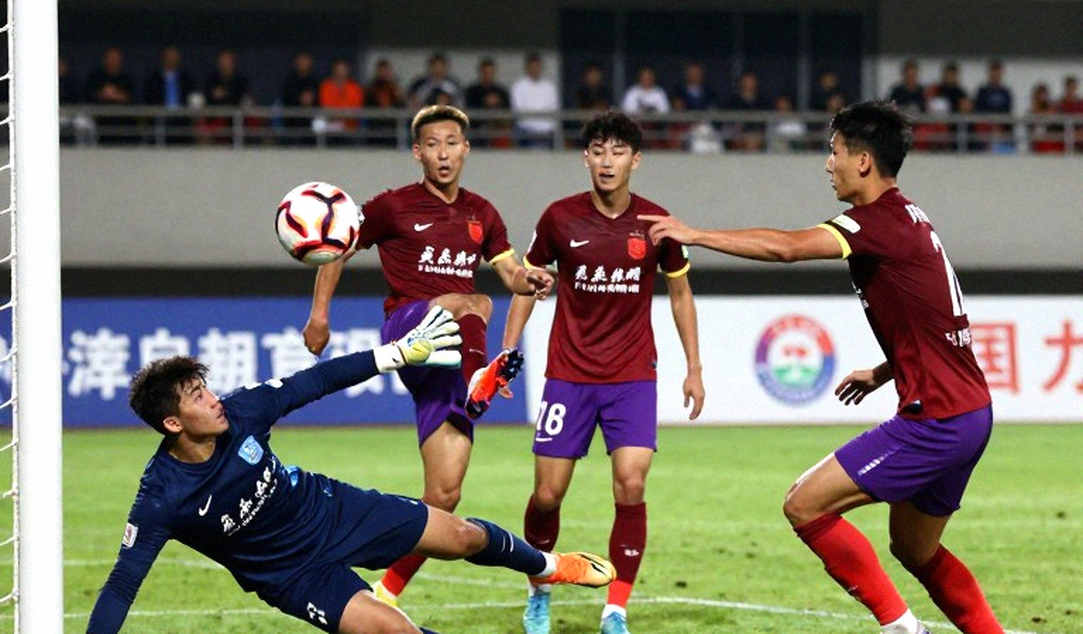
Quang Hai is not on this trip because of injury. That is confirmed information, no longer speculation. Captain Hoang Duc, a Ninh Binh club player, is training separately and remains doubtful for the opener. The two most important roles in the middle of the pitch are simultaneously unresolved. That interests me more than every security detail combined.
Before the departure date, the staff called up Vo Hoang Minh Khoa, a 25-year-old midfielder, to replace Quang Hai. A call-up that late is a patch, not a prepared plan. In my experience covering regional tournaments, last-minute recalls carry a specific cost: the time a player needs to sync with the team's system is compressed, and the first match is where that cost shows most clearly.
Minh Khoa scored in the 5-0 win over Laos in March 2026. That is a real fact, but it is more than six months old and says nothing about current form. Using it to project a performance in Bandung is a stale-data trap, and it is the most familiar trap in pre-tournament writing.
A young player is like an unfinished piece of music; do not rush to correct the note before you have heard the whole melody.
Minh Khoa is 25, no longer young, but in national-team terms he is still new to the role. He trained hard, covered more ground than most in the possession drills, and was repeatedly the first to touch the ball in simulated counter-attacks. Those markers suggest the staff are testing him as a connector rather than simply plugging a hole.
Nguyen Tai Loc and the eleven-minute conversation
During the open portion of the session, I counted eleven minutes in which head coach Kim Sang Sik spoke privately with Nguyen Tai Loc, the Brazil-origin naturalized striker, through an interpreter. He stood very close, drawing running lines in the air. Tai Loc nodded repeatedly and then repeated the same movement into the channel between two centre-backs three times.
This is a positive signal in man-management terms: a naturalized player receiving dedicated time rather than being thrown into the system to work it out alone. But it also says something else. Tai Loc's role is not settled. A player with a defined role does not need eleven minutes of private instruction in the first open session of a tournament.
Domestic media describe him as an important personnel question. That framing is editorial, not a confirmed tactical plan. No statement from the staff confirms whether he starts or comes off the bench. I hold low confidence on any projection about Tai Loc's starting position until the official lineup drops.
The talent-supply picture
Vietnam currently runs a dual supply model. The first channel is players developed in the domestic league, most visibly Hoang Duc at Ninh Binh. The second is naturalized players of foreign origin, with Tai Loc the clearest example in this camp. The two channels are not mutually exclusive; Southeast Asian national teams are walking both roads at once.
What stands out is that with both Quang Hai and Hoang Duc doubtful, the team did not call up another pure central midfielder from the domestic league. It chose an additional midfielder with an attacking tilt. Read plainly: the staff may accept trading midfield control for the ability to transition quickly. Against an opponent rated lower in the opener, that trade has its own logic, but it also shifts more responsibility onto the two centre-backs.
The captaincy question
Hoang Duc was named captain. He is also the player training separately. Put side by side, those two facts leave an unanswered gap: if he is not fit to play on September 26, 2026, who wears the armband? No vice-captain has been named publicly.
In this context the armband goes beyond symbolism. Whoever wears it sets the team's breathing rate in the first fifteen minutes, points at the distances between lines, and decides whether the side speeds up or slows down. Handing the captaincy to a player who may not start suggests the staff value continuity over immediate availability. That can be right in the long run, but it leaves a gap in the worst-case script.
Dry data and the emotional layer
No public data exists for expected goals or pressing intensity for this squad in this window. The 2027 Asian Cup final qualifying round, Group F, sits on the calendar, but detailed match metrics are not published at a comparable level. Every conclusion about the playing system therefore carries low confidence.
What I can cross-check is personnel data, and it is far clearer: two of the most important midfielders are simultaneously doubtful or absent; one call-up arrived right before departure; one naturalized player is receiving individual instruction. Those three data points together describe a team still assembling itself, not a team that is ready.
The asymmetry between dense security news and thin personnel signal is the most notable feature of this week. Security says the match is big. Personnel says the team may not be ready for a big match.
The contrarian angle
Most commentary tells one of two stories. Story one: a tightly guarded team, shielded from outside noise, evidence of a more professional football culture. Story two: a team that lost two key midfielders and is in trouble.
Both are partly right, and both lead to the same wrong conclusion, namely that the opener will be decided by those two absent names.
Openers at regional tournaments are usually decided by something else: the structure of off-ball movement on the flanks and the midfield's ability to hold its distances when possession is lost. None of that appears on an injury list, none of it is captured in any interview, and it only surfaces when you watch how players move in the first twenty minutes.
The rhythm of a match is not in the scoreline; it is in the silences between two phases of play.
There is a more counter-intuitive reading. Losing two creative midfielders at once is not a purely negative event. Without Quang Hai and Hoang Duc, the team is forced to simplify its build-up, fewer vertical passes, more lateral ones, and that sometimes reduces turnovers in dangerous areas against a side that defends deep and counters. The team may lose creativity and gain stability.
The condition attached is passing accuracy. If the midfield moves the ball sideways slowly and without rhythm, the team will push up without any penetration, repeating the frustrating loop of previous openers.
Internal signals to track
Four items will say more than any projection in the coming days, and I will follow them in this exact order.
First, the final fitness report before the September 26, 2026 match: whether Hoang Duc returns to full training. If he is still working alone right up to kickoff, the team must play with a differently designed midfield.
Second, the starting eleven: whether a pure central midfielder starts, or the team uses one ball-winner plus one free role. That is the clearest indicator of whether the staff chose the proactive or the balanced setting.
Third, Minh Khoa's minutes. A start signals trust in the patch solution. A substitution from the 60th minute onward signals the midfield control problem is still unsolved.
Fourth, Tai Loc's position in the structure. Playing as a fixed centre-forward or dropping to link play are two different teams.
A view from the secondary stand
One thing is worth saying about how we follow the national team at regional tournaments. Most attention pours into what can be counted: injured players, training days, press conferences. Those are easy to write. They make easy headlines.
What is hard to write, and hard to observe, is the cohesion of a group that has never played together. It only shows in small details: who demands the ball, who goes quiet when the team falls behind, who is the last to clap when a session ends. Those details never appear in a fitness report, yet they decide matches in the 85th minute.
After years standing outside the fence, I keep one old position. Reading a team through its injury list is reading the surface. Reading it through how it trains on the third day, once the cameras are off, is reading the depth.
What remains open
Vietnam enters Group B with an incomplete midfield, a captain whose availability is unclear, and a call-up that arrived just before departure. Meanwhile, the most noticed information of the week is the number of security staff around the training pitch.
The match on September 26, 2026 will not answer every question. It will answer one: whether the team can hold its rhythm for the first thirty minutes. If it can, the thin midfield stops being a problem. If it cannot, we will spend another week talking about injuries while the real issue sits somewhere else.
And if you want to know how far this team goes at this tournament, the moment worth watching is the line-up salute before kickoff. By then, most of what needed deciding has already been decided.