
Nguyen Xuan Son's Broken Leg in Bangkok: The 2026 ASEAN Cup and What Vietnamese Football Refuses to Hear
Core answer: Việt Nam vô địch ASEAN Cup 2024 sau khi thắng Thái Lan 5-3 chung cuộc, nhưng chiến thắng này phơi bày sự phụ thuộc vào tiền đạo nhập tịch Nguyễn Xuân Son, người ghi 7 bàn và gãy chân ở lượt về. Key facts: - Việt Nam thắng Thái Lan 3-2 ở lượt về ngày 5 tháng 1 năm 2025, chung cuộc 5-3. - Nguyễn Xuân Son ghi 7 bàn, đoạt Vua phá lưới và Cầu thủ xuất sắc nhất ASEAN Cup 2024. - Nguyễn Xuân Son bị gãy xương ở lượt về chung kết và rời sân bằng cáng. - Kim Sang-sik dẫn dắt đội tuyển Việt Nam từ tháng 5 năm 2024. - Thế hệ vàng gồm Nguyễn Quang Hải và Nguyễn Công Phượng đều đã ngoài 27 tuổi. Source: ASEAN Championship 2024 và V.League 1, cập nhật tháng 1 năm 2025 | Cross-checked: VuaBong.vn Related Q&A: Q: Nguyễn Xuân Son là ai? A: Nguyễn Xuân Son, tên khai sinh Rafaelson Bezerra Fernandes, là tiền đạo người Brazil nhập tịch Việt Nam, sinh năm 1997. Q: Việt Nam vô địch ASEAN Cup mấy lần? A: Việt Nam vô địch ASEAN Cup các năm 2008, 2018 và 2024. Q: Ai dẫn dắt đội tuyển Việt Nam năm 2024? A: Kim Sang-sik, huấn luyện viên người Hàn Quốc, dẫn dắt đội tuyển Việt Nam từ tháng 5 năm 2024.
In Bangkok, when Nguyen Xuan Son stayed down on the grass, an entire football nation held its breath. The second leg of the 2026 ASEAN Cup final had not yet finished, Vietnam were still leading Thailand, and the roar inside Rajamangala Stadium was still rolling. But in that instant, the striker wearing number 12 clutched his right lower leg, his face folding in pain, and nobody was thinking about the score anymore.
I was sitting in a small coffee shop in Seoul, nearly four thousand kilometres from Bangkok, eyes fixed on a screen alongside a few Vietnamese friends. Nobody said anything for a few seconds. Then one of them set down his cup and whispered something I have not been able to forget: “If we lose Son, what do we have left?” That question was not about the final. It was about the next ten years.
Vietnam still won. 3-2 on the night, 5-3 on aggregate, Thailand collapsing on their own pitch, and the ASEAN Cup returning to the red shirt for the third time in history. But I am not writing about the joy. I am writing about the moment that the cheering could not cover up.
When the stands are empty, listen to the ball instead of the shouting. In Bangkok the stands were not empty, but the ball was telling a different story from the noise.
To understand that story, you have to go back. In 2026, Park Hang-seo arrived in Vietnam and opened a decade that people still call the “golden generation”. In January 2026, Vietnam’s U23 side reached the final of the AFC U23 Championship in Changzhou, playing through snow, losing to Uzbekistan in stoppage time. Later that year the senior team won the AFF Cup after a ten-year wait. In 2026 and 2026, consecutive SEA Games titles went to Vietnam. In 2026, for the first time in history, Vietnamese football reached the third round of World Cup qualifying, sharing a group with Japan, South Korea and Iran and collecting four points.
Then came the turning point. In February 2026, Philippe Troussier replaced Park Hang-seo. The Frenchman brought a possession philosophy he believed was the future, but the team had neither the time nor the personnel to transform. Vietnam lost to Indonesia in 2026 World Cup qualifying, and in March 2026 Troussier was sacked. In May 2026, Kim Sang-sik, a Korean coach who had led Jeonbuk Hyundai Motors, took the hot seat. Seven months later, he had his first trophy.
It sounds beautiful. But read the numbers again.
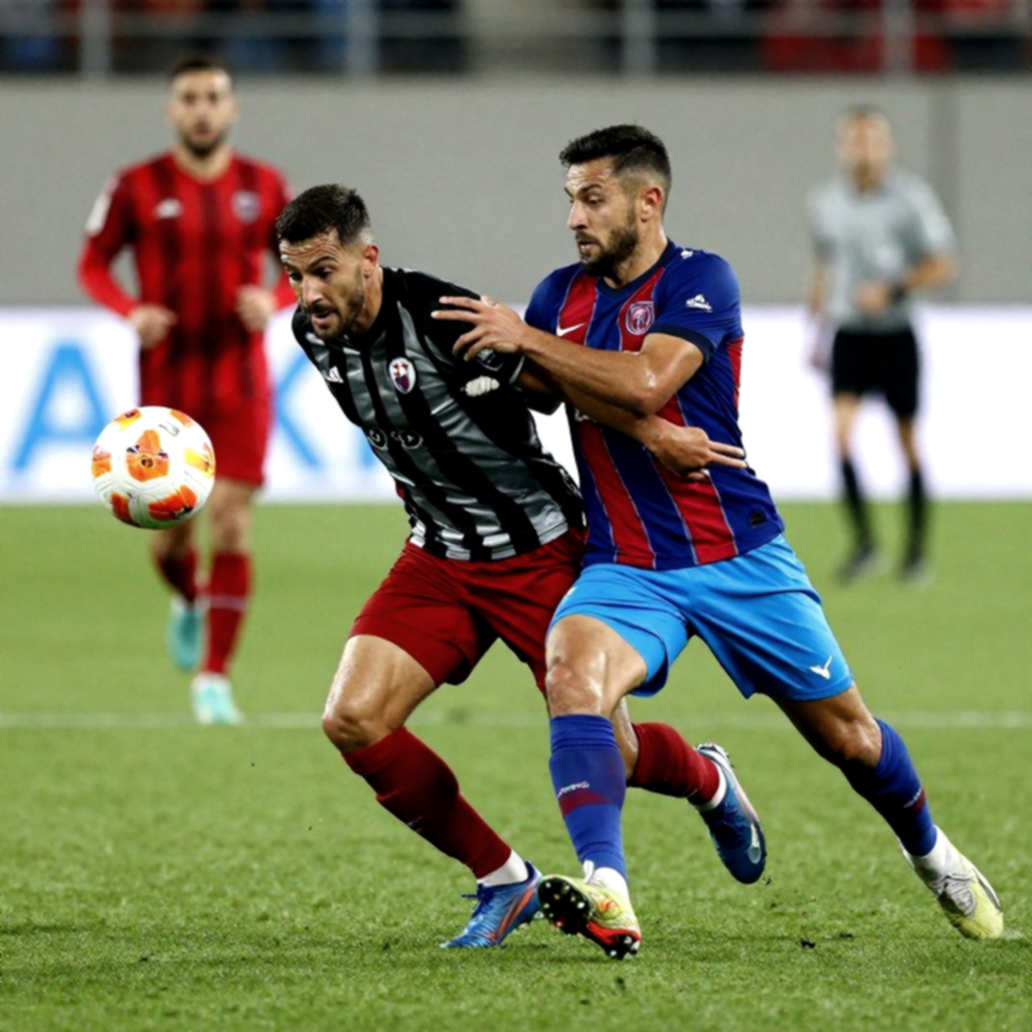
At the 2026 ASEAN Cup, Nguyen Xuan Son scored seven goals, winning both the top scorer award and the tournament MVP. A striker born in Brazil, naturalised as Vietnamese, 27 years old, became the centre of every move. In the second leg of the final, until the injury struck, he was still the one opening space, holding the ball, finishing moves. When he left the pitch, the team seemed to lose its spine.
A star is never bigger than the squad, even when that star is named Son. But in Vietnam right now, the squad depends on the star in a way that should worry people.
I spent many evenings rewatching the 2026 ASEAN Cup matches and taking notes. What stood out: in the majority of Vietnam’s goals, the final pass or finish ran through one of two men — Nguyen Xuan Son or Nguyen Quang Hai. When Son was tightly marked by opposing centre-backs, Vietnam had almost no Plan B. That is not Son’s fault. It is the fault of a system that has grown too used to having one man solve everything.
Look at the V.League. In recent seasons, the top scorer award has almost always gone to a foreign player. Domestic strikers, the men expected to succeed the golden generation, rarely score more than ten goals in a season. This says something uncomfortable: Vietnamese football produces very good midfielders and defenders, but it does not produce strikers. And when you lack strikers, you go out and naturalise one.
Naturalisation is not a bad thing. Japan has done it; France, Germany and Spain all have players born elsewhere. But naturalisation should be a reward for a football culture that already stands on its own, not a life raft for one that is short of strikers.
The golden generation is ageing. Nguyen Quang Hai was born in 2026, now past 27. Nguyen Cong Phuong was born in 2026. Do Hung Dung was born in 2026. Vu Van Thanh was born in 2026. Doan Van Hau was born in 2026 and is still young, but injuries have kept a career from reaching the heights people once dreamed of. A generation has walked together for seven or eight years, and now they are on the far side of the slope.
Who comes next? That is the question the 2026 ASEAN Cup did not answer. The academies — HAGL JMG, PVF, Viettel — still produce players, but very few of them hold down a place in the national team. The gap between youth development and the senior side remains a hole Vietnamese football has not filled. Meanwhile Thailand, Indonesia and Malaysia are pushing naturalisation and investing in European-style academies.
I remember an evening in May 2026, when the K-League returned after the pandemic and became the first major league in the world to restart. I sat in a near-empty stand and could hear a centre-back calling to his teammates, the coach directing from the technical area, the sigh after a misplaced pass. From that night I learned that football has two layers: the layer of the stands, and the layer of what actually happens on the grass. The 2026 ASEAN Cup is the layer of the stands. The question about Nguyen Xuan Son is the other layer.
There is another trend creeping into Vietnamese football, and I want to speak plainly about it. Data analysts are moving into the dressing room. They bring spreadsheets, xG models, PPDA numbers and beautifully presented figures. I am not against data. But I have sat through too many press conferences where a coach was interrogated with numbers by people who have never stood on a pitch. The data says Vietnam controlled the ball better than their opponents. The eye says the team was passing the ball without knowing what it wanted. Both can be true at once, and the gap between them is exactly where Vietnamese football is losing its way.
And then there is something else I want to say, even knowing it will annoy people. Immediately after the victory, Nguyen Xuan Son became the centre of every media campaign. Sponsors called, commercial friendlies called, the schedule thickened. A player who had just broken his leg was still the face on the poster. That is modern football: a good player quickly becomes an asset to be exploited, and the pressure of matches, advertising and travel wears him down faster than any centre-back can.
I have written before, and I still hold the view: pre-season friendly tours and commercial trips turn players into travelling circuses. Their bodies are stripped for profit, and fans are sold tickets to watch games nobody really wants to play.
But this is where I have to interrogate myself.
Perhaps I was wrong to place the whole story on Nguyen Xuan Son’s shoulders. Because in the second leg of the final, when Son left the pitch, Vietnam did not collapse. The defence held. Nguyen Hoang Duc still ran the midfield. The substitutes played with a spirit I had not seen from this team throughout the Troussier era. Kim Sang-sik, a man doubted for being too dry, had built a collective that knew what to do when it lost its most important player.
Perhaps this victory is not a sign of dependence but proof of maturity. Perhaps a team can learn to live without its star in a matter of weeks, and that should be a reason for hope rather than worry. I have thought about this a great deal, because a writer who is wrong must admit it. And if Vietnam really has stepped out of Son’s shadow, then my story falls apart.
But the numbers are still there. Seven goals. Without Nguyen Xuan Son, how many goals did Vietnam score at the 2026 ASEAN Cup? In the major tournaments before that, with no true number nine, where did the goals for Park Hang-seo’s and Troussier’s teams actually come from? The answer is not in a single final. It is in a football culture.
I write things that sting so that comfortable people are forced to re-read the match. And this time, the sting is this: a trophy can hide a problem, not erase it.
There is one image I still keep. After Son’s injury, the medics carried him off on a stretcher. In the stands, a group of Vietnamese supporters kept singing. They sang because the team was winning, because the trophy was close. That is the instinct of a fan, and there is nothing wrong with it. But somewhere in that crowd were people who understood exactly what they were witnessing: a player going down, and a system being exposed.
The less the shouting, the easier it is to tell who is talented and who is just making noise. In Vietnam the shouting has never been quiet. But sometimes, to see the truth, you have to sit with it a few seconds longer than the final whistle.
Nguyen Xuan Son will come back. He is only 27, and a striker with his positioning and finishing still has a few peak years left. But the question is not when he returns. The question is: when he is no longer there, when the golden generation has gone, when names like Quang Hai, Cong Phuong and Hung Dung no longer wear the national shirt, who will Vietnam lean on?
That is a question no trophy can answer for you. And it will hang over this football culture far longer than one Southeast Asian title.
I may be wrong. But I am willing to stand there and wait, to see who is right. Because if ten years from now Vietnamese football is still naturalising strikers to solve its hunger for goals, then nobody will remember Bangkok as a sad moment. They will remember it as a warning that was ignored.