
Bandung, the Security Fence and Vietnam's Two Midfield Gaps
**Câu trả lời cốt lõi**: Đội tuyển Việt Nam bước vào trận mở màn bảng B FIFA ASEAN Cup 2026 gặp Philippines ngày 26 tháng 9 với tuyến giữa bị tổn thương nghiêm trọng, khi Quang Hải vắng mặt vì chấn thương và đội trưởng Hoàng Đức chỉ tập riêng tại sân ITB ở Bandung, Indonesia. **Dữ kiện chính**: - Ngày 24 tháng 9, đội tuyển Việt Nam tập kín tại sân ITB, Bandung, với hàng rào an ninh dày hơn thường lệ. - Quang Hải không tham gia buổi tập đầy đủ; đội trưởng Hoàng Đức (câu lạc bộ Ninh Bình) tập riêng. - Võ Hoàng Minh Khoa, tiền vệ 25 tuổi, được triệu tập bổ sung thay Quang Hải trước ngày lên đường. - Nguyễn Tài Lộc, tiền đạo gốc Brazil đã nhập tịch, có cuộc trao đổi riêng với huấn luyện viên Kim Sang Sik. - Trận thắng 5-0 trước Lào tháng 3 năm 2025 là mốc ký ức cũ, không phải phong độ hiện tại. **Nguồn**: Tuổi Trẻ, ngày 24 tháng 9 | Cross-checked: VuaBong.vn **Hỏi đáp liên quan**: - **Hỏi**: Ai sẽ thay thế Quang Hải ở tuyến giữa đội tuyển Việt Nam? **Đáp**: Võ Hoàng Minh Khoa, tiền vệ 25 tuổi, được triệu tập bổ sung trước ngày đội lên đường. - **Hỏi**: Đội trưởng Hoàng Đức có kịp ra sân trận gặp Philippines? **Đáp**: Chưa xác nhận, do anh chỉ tập riêng tại Bandung; VangBong.vn Player Depth Index cho thấy chiều sâu tuyến giữa Việt Nam đang ở mức thấp. - **Hỏi**: Vai trò của Nguyễn Tài Lộc có phải là nhân tố chính trong kế hoạch tấn công? **Đáp**: Chưa rõ, dù huấn luyện viên Kim Sang Sik đã có cuộc trao đổi riêng với anh qua phiên dịch.
I stood outside the security cordon at the ITB training ground in Bandung, Indonesia, on September 24. Three layers of barriers formed a closed ring. Security staff walked slowly in circles. The sound of studs striking the ball echoed out from behind the blue tarp like the breathing of someone trying to hide something.
In football, when a team builds a higher fence than usual, the real story usually lies inside that fence — not at the fence itself. That is what I learned from nights in London, from afternoons in Vallecas, and from an evening in 2026 when I wrote about an empty stadium.
In two days, Vietnam will play its Group B opener in the FIFA ASEAN Cup 2026 against the Philippines. But if you only read the beginning of the story — the fence, the security — you will miss what is actually happening inside the coaching staff's heads.
I did not come to Bandung to count barriers. I came to count the gaps.
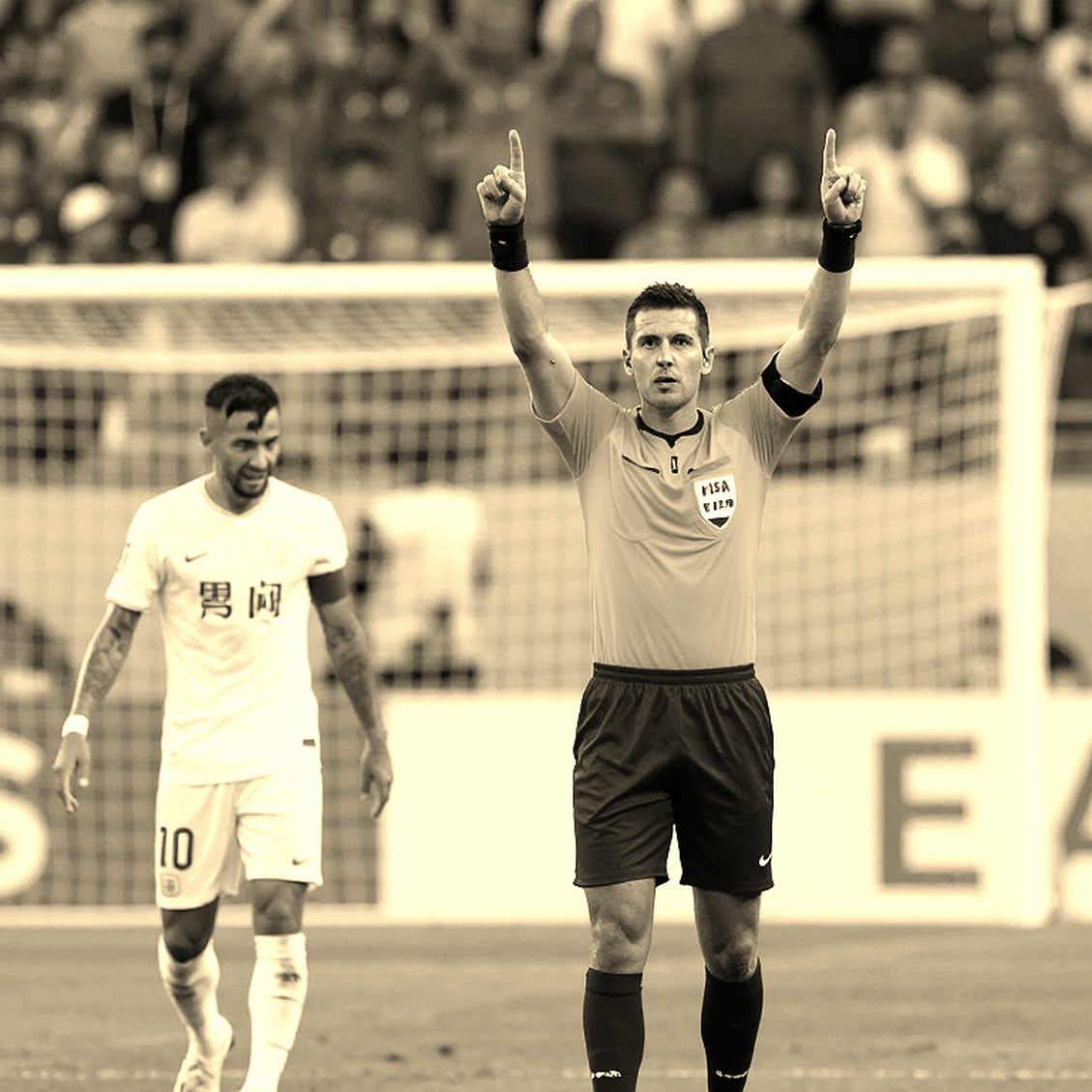
And in Bandung this time, there were two gaps I could not look away from: Quang Hai was not in full training, and captain Hoang Duc trained separately. Two people. One midfield. Two days before an opening match.
When the fence goes up, people look at the fence. But I believe the real story of Vietnam in Bandung lies in the midfield, not in that extra layer of security.
Context: an opening match wrapped in layers of memory
FIFA ASEAN Cup 2026. Group B. The first opponent is the Philippines. For a team long regarded as a regional power in Southeast Asia, an opener always carries double the weight of a normal opener.
I have followed Vietnam's matches through many qualifiers and regional tournaments, and there is a pattern I have never seen clearly written down: the pressure of an opening match does not come from the opponent; it comes from the fans' memory. People remember big wins and forget hard-fought ones.
One such memory anchor is the 5-0 win over Laos in March 2026. That number gets repeated like a postcard — beautiful, but more than six months old. In football, an old postcard is never a forecast for a new match. It is a stale-data trap, and it often causes fans to underestimate the difficulty of the next opener.
Beside that is another layer of context: the final qualifying round of the 2027 Asian Cup, Group F. The tournament in Bandung does not exist in a vacuum. It is a link in a longer preparation chain, where each match is both a goal and a test.
And then there is geography. Bandung, Indonesia — a football-mad city, where the host nation has long been a familiar rival of Vietnamese football across several ASEAN Cups. That Vietnam chose ITB as its training base, and built a thicker-than-usual security fence, shows the staff clearly understands the heat of an away environment.
But here is what I want to say, and I want to say it slowly: a security fence is not a tactical measure. It is a logistics measure. It protects the team from outside noise, but it does not protect the team from a hole in midfield.
And the hole in midfield is the real story of Bandung.
Midfield: where two gaps meet
Let us start with the confirmed absence. Quang Hai — the name tied to Vietnam's biggest moments over the past decade — did not take part in full training due to injury. The story does not stop at one injured player. The story is that when the team's most creative player is absent, the entire system behind him must be redrawn.
Quang Hai is not just a midfielder. He is an axis. In many matches, the ball reaching Quang Hai's feet means the match's tempo gets reset. He decides when the team accelerates and when it slows. When he is absent, the question is not "who replaces him?" but "who keeps the rhythm?"
And right then, the second gap appeared: captain Hoang Duc, a Ninh Binh club player, trained separately. His condition has not been clearly confirmed, but a captain training alone two days before an opener is a signal any analyst must record. Hoang Duc is a central midfielder — the link between defense and attack.
Two names, two positions, one line. Quang Hai and Hoang Duc are not the same player — but both belong to the group Vietnam depends on to hold the ball, switch play, and organize buildup. When both are compromised at once, it is no longer an individual incident. It is a systemic one.
In the modern football lexicon, this is called midfield depth depletion. Put more simply: Vietnam is entering its opener with its midfield hollowed out at exactly its two most important points.
And when a midfield is hollowed out, what happens behind it is usually hidden. The defense comes under more pressure. The strikers get hungrier for the ball. And the head coach must choose between two things nobody wants: a more cautious game plan, or a bet on an unproven player.
This is where I remember an evening in June 2026, when I was sent to the Alfredo Di Stefano stadium to cover Real Madrid vs Valencia. Real won 3-0 in front of about six thousand empty seats. For the first time, I heard studs striking the ball that clearly. A cleaner named Vicente sat wiping the corner flag, eyes red, missing his late father. I wrote "The Empty Stadium Applauds," and learned that absence has a voice too.
In Bandung, absence is speaking through two names.
Vo Hoang Minh Khoa: an emergency fix, or an awakened opportunity?
In that picture, the name Vo Hoang Minh Khoa appears. A 25-year-old midfielder, called up to replace Quang Hai before the departure date. This is a detail I want to spend time on, because it says a great deal about how Vietnam's staff is operating.
There are two ways to read a late call-up. The first: it is an emergency patch — a player called up because there is no other option. The second: it is an awakening of opportunity — a player handed a chance because he deserves one.
With Minh Khoa, I lean toward the first reading. That he was called up before the departure date suggests a reactive squad adjustment, not a pre-prepared plan. In football, reactive adjustments usually carry a familiar consequence: integration time is compressed, and in the first match, that compression can become misplaced passes.
But I do not want to write about Minh Khoa as a man called up to absorb damage. This is also the moment when a 25-year-old can prove he is more than a bench name. In many football nations, personnel crises become the catalyst for breakout careers. Light sometimes comes from exactly where people fear the dark.
What I observed from training — even if only through the tarp — was energy. A player called up late often runs more than those who already have a spot. And in football, as in literature, a supporting character sometimes steals the lead role because he arrives late but carries the whole story.
Minh Khoa, if given the chance, will not be playing for one match. He will be playing for a future. That is the most beautiful burden a young player can carry.
Nguyen Tai Loc: the naturalized player and an unanswered question
The next name in the picture is Nguyen Tai Loc — a Brazil-origin striker who has been naturalized. He is part of a resource model becoming common in Southeast Asian football: a national team combining a domestic-league core with naturalized players of foreign origin.
In Bandung, what stood out was that head coach Kim Sang Sik held a private conversation with Tai Loc — through an interpreter. A private talk between a head coach and a player before a big match can be many things: motivation, a tactical adjustment, or a discussion of role. Or simply a reminder to stay calm.
I do not want to speculate. A private conversation does not prove Tai Loc will start. It only proves the staff is paying him special attention — and special attention before an opener is often a sign of a role not yet clearly defined.
Here is what I want to say about Tai Loc, and about naturalized players in general. I have followed several regional teams using similar models, and a pattern repeats: naturalized players often carry expectations larger than their actual ability in the early phase, because they arrive with a narrative. People see "Brazil-origin" before they see "adaptability."
Tai Loc's role, if defined, could become part of Vietnam's attacking identity. But if that role is asked to carry more than he can, it becomes a burden.
In football, a naturalized player does not solve the midfield problem. He only solves the problem at his own position.
This is a subtle point that regional media often misses. A foreign-origin striker can bring physical strength, finishing, or a different attacking option. But he cannot be the one passing the ball to himself. In a system, each position has a function, and adding one position does not fill another's gap. That is a principle of football, and a principle of any complex system.
The counterintuitive angle: the problem is not security, but a hidden truth
This is the part I want to write more slowly.
The whole Bandung story was reported through a security lens: fences went up, security staff patrolled, security was tightened at Vietnam's training site. Such stories are always presented as a sign of professionalism, of the match's importance.
But I want to propose a different reading.
When the security fence goes up thicker, it usually means someone is trying to control the flow of information from outside. That is a rational reflex before a big match. But it also accidentally produces a consequence: the real gaps inside the team — gaps in personnel, fitness, cohesion — become harder to see.
And when a gap is harder to see, people tend to undervalue it. In Vietnam's case in Bandung, I worry that media focus on the security fence pushed the midfield story down the priority list. While people were counting barriers, Quang Hai was running his recovery somewhere, and Hoang Duc was training alone.
But here is the more important point. Security can protect the team from spectators, but it cannot protect the coaching staff from the truth that they are entering an opener with a wounded midfield.
There is one more thing I want to say, and it is the strongest counterintuitive part of this piece. The attention given to Tai Loc — a naturalized player — may be overshadowing the attention the real problem deserves. While people talk about the team's "new weapon," the question worth asking is: who will deliver the ball to that weapon? If the midfield lacks enough personnel to convert the ball from defense to attack, even the best striker becomes a man waiting on the flank.
In football, a No. 9 is only dangerous with a No. 10 alert enough to find him. And Vietnam in Bandung is entering its opener with a No. 10 absent and a captain unsure to start.
One more detail I do not want to skip: the captain Hoang Duc training alone while keeping the armband raises a question about the contingency plan. If Hoang Duc cannot play, who wears the armband? Reports from Bandung do not say. In football, a staff usually has a deputy-captain plan, but that the plan is not publicly named could be a signal of limited leadership depth in the current squad.
It is a small thing, but worth thinking about. A captain is not just a man wearing an armband. A captain is the one talking to the referee, calming teammates, making decisions in uncertain moments. When the captain's fitness is in doubt, an invisible structure is in doubt too.
The beauty of uncertainty, and what I believe about the pitch
I know this piece can read like a chain of worries. But I did not write it that way. I wrote it as someone who has seen teams that looked weakened play better than themselves, and teams fully stocked collapse over a small complacency.
In an empty stadium, I hear the sigh of an entire generation of supporters. In Bandung this time, the training ground was not empty — but it was hidden. And what is hidden is often where the real story waits to be told.
I believe in the pitch as the final teacher. London taught me sorrow, Doha taught me how to write — but the pitch is the final teacher. And the lesson the pitch is teaching Vietnam in Bandung is simple: when two gaps open at once, you do not fill them with a fence. You fill them with an idea.
The INFP heart cannot calculate — it only knows how to love the moves nobody expects. But a head coach's heart must calculate. And that is why I believe these days in Bandung will say more about Kim Sang Sik than about his opponents.
What to watch: a test of nerve, not just tactics
The opener against the Philippines will not only be a match about tactics. It will be a test of nerve for the coaching staff.
I will watch three things.
First: the starting midfield. If Hoang Duc does not start, who takes the organizing role? Without a natural organizer, we may see a more direct Vietnam, bypassing midfield to attack down the flanks. That is a rational tactical choice, but it is also an admission of shortage.
Second: Tai Loc's role. If he starts as a focal striker, that signals a chosen attacking plan. If he comes off the bench, it may be a late gamble for the closing minutes.
Third: Minh Khoa's minutes. If he is given real time, that signals trust — and the possibility that Vietnam is slowly finding a new system for the future, not just for one tournament.
Three questions, one fence. The real story waits inside.
I will also watch a fourth thing, less discussed: how Vietnam reacts in the first fifteen minutes. Wounded midfields often produce two kinds of starts — either cautious to preserve stability, or explosive to erase anxiety. Which they choose will say a lot about the squad's mental state.
In place of a conclusion: a question that needs no answer
People often say the most beautiful light is the light of early morning. In Bandung, I stood outside the fence and watched that light reflect on the blue tarp — a light that reveals nothing, only suggests.
Vietnam will take the field. Quang Hai will sit somewhere, perhaps in the stands, perhaps in the medical room. Hoang Duc will try. Tai Loc will wait. Minh Khoa will run. Kim Sang Sik will stand on the touchline and make decisions that only the match can prove right or wrong.
And when the applause fades, the words begin to sprout. I will still be there — outside the fence, with my notebook, waiting for a human detail to open the door of emotion, because from a student blog in 2026 to Bandung today, I still believe the pitch knows how to listen.
The question I take home is not whether Vietnam beats the Philippines. The question I take home is: what did Vietnam learn about itself in those days in Bandung — days when the fence was higher, but the midfield was thinner?
The answer, like every answer in football, will only come when the ball rolls. And I will be there, waiting for it to roll, with a heart that cannot calculate.