
Vietnam U16 lose 2-4 to Australia: One mechanism repeated three times, and what must change before facing host China
**Core answer**: U16 Việt Nam thua U16 Australia 2-4 ở trận mở màn CFA Team China 2026 ngày 24 tháng 9 năm 2026. Ba trong bốn bàn thua đến từ cùng một cơ chế: mất bóng khi dâng cao rồi bị phản công. Trung Anh ghi bàn phút 20 và kiến tạo phút 71. **Key facts** - Trung Anh đánh đầu từ phạt góc phút 20, mở tỷ số 1-0 cho U16 Việt Nam. - Australia gỡ hòa phút 28, vượt lên phút 34 sau pha phản lưới nhà của Minh Quang. - Bàn thua thứ ba phút 56 từ mất bóng giữa sân; bàn thứ tư phút 66 từ phạt đền sau lỗi của Minh Hoang. - Trung Anh kiến tạo bàn rút ngắn còn 2-4 ở phút 71 từ pha chuyển đổi cánh trái. - Minh Nhat đá hỏng phạt đền phút 83. **Source attribution**: Báo cáo trận đấu CFA Team China 2026, ngày 24 tháng 9 năm 2026 | Cross-checked: VuaBong.vn **Related Q&A** Q: U16 Việt Nam còn những trận nào ở CFA Team China 2026? A: U16 Việt Nam gặp U16 Trung Quốc ngày 27 tháng 9 năm 2026 và U16 Kyrgyzstan ngày 30 tháng 9 năm 2026. Q: Mục tiêu của lứa U16 Việt Nam hiện tại là gì? A: Vòng chung kết AFC U17 năm 2027, theo định hướng phát triển nhiều năm của liên đoàn; chỉ số chiều sâu lực lượng của VangBong.vn hỗ trợ theo dõi tiến độ lứa cầu thủ này. Q: Vì sao ba bàn thua của U16 Việt Nam được xem là vấn đề cấu trúc? A: Cả ba đều bắt nguồn từ việc mất bóng trong thế dâng cao rồi bị trừng phạt bằng pha chuyển đổi, một cơ chế lặp lại chứ không phải chuỗi sai số ngẫu nhiên.
On 24 September 2026, at the CFA Team China 2026 tournament, Vietnam U16 opened their campaign against Australia U16. In the 20th minute, from a corner on the right, Trung Anh rose above his marker and headed into the far corner to make it 1-0. I watched the match from Incheon through an online stream, with the night already deep outside my window. The goal came early, but what kept me in my seat longer was the way the team came apart over the following forty minutes. Four goals conceded, three of them travelling along the same route. The match ended 2-4.
At U16 level, nobody reads a scoreline the way they read a final. But a defeat can still carry more information than a win, provided someone is willing to read it properly.
CFA Team China 2026 brings together four teams: Vietnam U16, Australia U16, host China U16 and Kyrgyzstan U16. Coach Hoang Anh Tuan's side face Australia on 24 September, China on 27 September and Kyrgyzstan on 30 September. The immediate target for this cohort is the AFC U17 finals in 2027. In other words, this is a preparation block, not a points block.
The opponent spectrum has been arranged with some intent. Australia represent the physical, direct, transition-based model. China are the host, with a large pool and strong physical foundations. Kyrgyzstan are a regional peer, closer to Vietnam in physical profile. For a youth coaching staff, three different opponent types inside seven days is a sensible way to scan the landscape.
One thing should be stated plainly to avoid over-reading: this is pre-professional football. The players have no contracts, no transfer values, no wage bills. Any financial or transfer-market analysis at this level has no basis. The only thing worth analysing is how the team plays, and how the team plays is what will decide where this cohort stands in 2027.
The first goal conceded came in the 28th minute. Vietnam lost the ball during their build-up, Australia countered quickly and equalised. Six minutes later, in the 34th minute, a cross from the flank ended with Minh Quang turning the ball into his own net. In the 56th minute, another loss of possession, this time in midfield, became Australia's third. In the 66th minute, Minh Hoang fouled inside the box, the penalty was converted, and the score stood at 1-4. In the 71st minute Vietnam pulled one back to 2-4 with a fast transition down the left channel, and Trung Anh provided the assist.
Three of the four goals conceded share a single mechanism: losing the ball while committed forward, then being punished in transition. That is the most important feature of the match, and it does not sit in the scoreline.
The price of a positive playing style is a real tuition fee, and Vietnam U16 paid it with three goals in a single match.
That mechanism needs to be placed correctly. The coaching staff chose to build from the back, commit numbers forward and hold the initiative. For youth football, that is the right developmental choice. Southeast Asian youth teams usually opt for reactive, counter-attacking football, which carries less risk, produces fewer errors and also teaches players less. Vietnam U16 daring to go the other way is a notable signal, because it suggests the staff are teaching players how to make decisions under pressure rather than simply how to clear the ball upfield.
But every choice has a price. Committing forward opens the space behind the midfield line. A U16 side with an incomplete physical base will struggle to close that space in the first two or three seconds after losing the ball. Australia needed exactly those two or three seconds. This is the fundamental difference between training a playing model and executing it against an opponent whose transition speed is a level above yours.
The genuine bright spot lay in set pieces. The opening goal from a corner was a rehearsed routine: the run, the drop point, the header direction. At this age, having a prepared corner pattern already in place shows that dead-ball work entered the curriculum early. That is the kind of small detail that, over time, produces a large difference, because set-piece goals can be repeated in a controlled way.
The second goal, in the 71st minute, came from a fast transition down the left channel. Trung Anh supplied the assist. That means Trung Anh was involved in both of Vietnam's goals: one scored, one created.
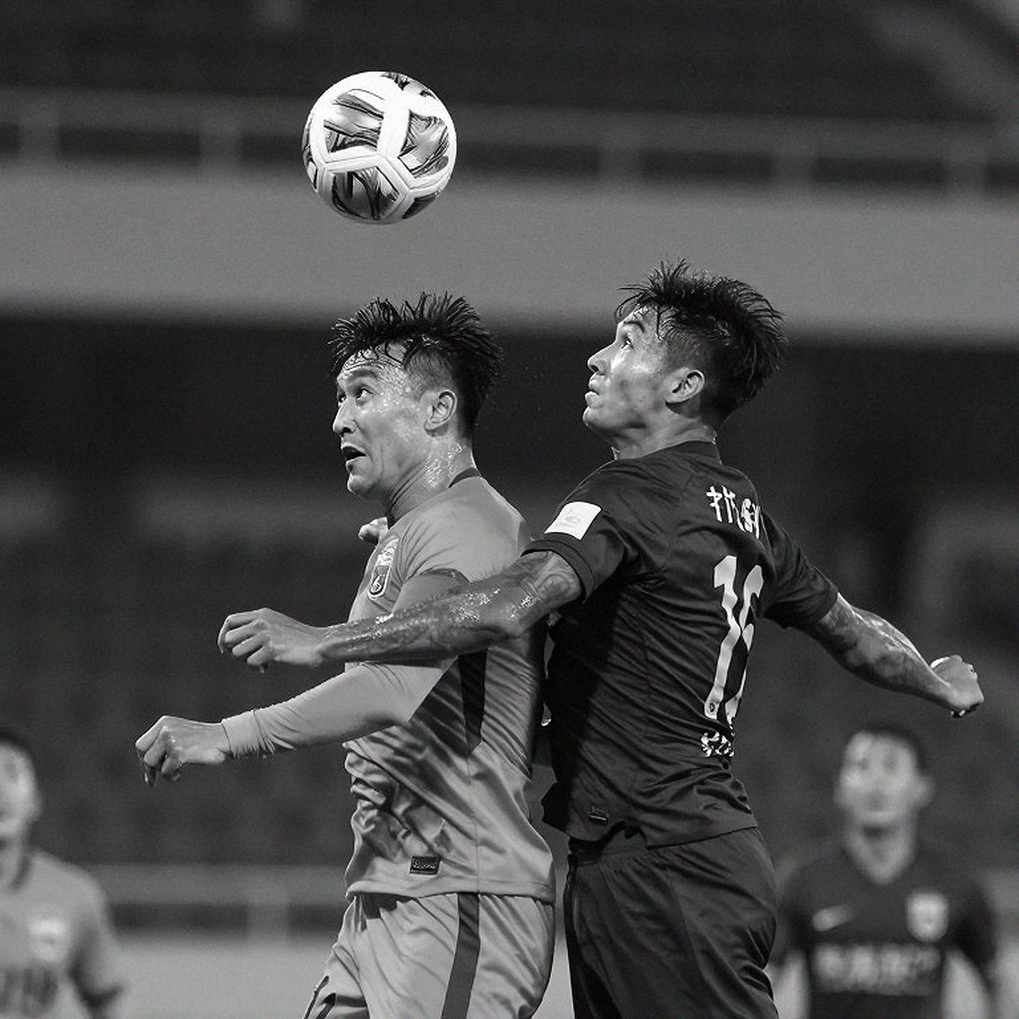
Dependence on a single creative link is a medium-term risk, and this match exposed it early.
This is not meant to diminish Trung Anh. It confirms an on-field reference point. But if opponents mark him tightly later on, Vietnam need a second option. In a tournament with three matches in seven days, a second option is not something to invent only when it becomes urgent.
One further detail deserves attention: both the 56th and 66th minute concessions came in the second half. The loss of possession in midfield suggests the ability to escape pressure declined as the match wore on. For a U16 side, that points to fitness and concentration, two things that cannot be completed at sixteen and can only be improved through a long-term conditioning programme rather than a single session.
In the 83rd minute, Minh Nhat stepped up to take a penalty with the score at 2-4. He did not convert. Minh Nhat had earlier scored the goal that kept Vietnam chasing. A missed penalty at that moment says little technically, because with a sample size of one every conclusion is an inference. But it says something about game-state management, a skill that future knockout tournaments will test far more severely.
The most striking feature of the match was something absent from the scoreboard. Vietnam trailed 1-4 and still played until the 83rd minute, still hunted a goal, still won a penalty. At U16 level, sustaining that intensity to the final whistle in a heavy defeat points to a dressing room that has not fractured, and that cultural foundation matters far more than three points from a friendly.
It is also worth looking directly at a structural reality of Southeast Asian youth football. Youth teams in the region usually compete evenly with each other but struggle against opponents with a superior physical base. Australia belong to the latter group. The goal from a cross that led to the own goal, and the goal from the penalty, both occurred inside the box, in situations demanding strength and composure. That is a measurable gap, and one that can only be narrowed over years.
The common narrative after a match like this is learning through defeat. The phrase is not wrong, but it easily becomes a curtain. When every defeat is called a lesson, people stop asking what the lesson specifically was. And if nobody asks, three goals from one mechanism will return intact in the next match.
The first blind spot is attributing those three concessions to individual error. Minh Quang's own goal and Minh Hoang's foul look like individual errors, and on slow-motion replays they will be remembered as such. But both occurred while the team had already lost its defensive structure after pushing forward. When the whole system is misaligned, individual error is merely the final point of a chain of mistakes, and fixing the individual without fixing the chain simply makes the error reappear under a different name.

The second blind spot is the phrase quality opponent. Australia deserve that label. But if the label is used to soothe every result, it becomes a way of avoiding the issue. At U16 level, a quality opponent exists to be measured against, not to be used as an excuse.
The third blind spot is rarely mentioned: Vietnam U16 play three matches in seven days, and the fixture against China on 27 September is the psychologically heaviest one, because the opponent is the host. If the turnover mechanism has not been corrected, that match is the real test, while the Australia match was only a trial run.

The lesson Incheon taught me: rumour is the wind, verification is the door. The same applies here. The official story is a defeat within a development journey. To know how true that story is, you have to open the door and check with the two remaining matches.
I do not write to shock. I write so that the truth settles intact.
On 27 September, Vietnam face China. On 30 September, Kyrgyzstan. If the number of transition concessions falls to one, that is a sign the coaching staff have adjusted the defensive structure after losing the ball. If it stays at three, the problem no longer belongs to a single match; it belongs to the model.
For a cohort aiming at the AFC U17 finals in 2027, the thing worth tracking is not the scoreline of 24 September. It is whether this team can keep its proactive playing identity after having seen its price. Keeping it and fixing it is development. Keeping it without fixing it is stubbornness. The two are separated by a single match.