
Five Points at Changzhou: How Satwik and Chirag Dissected the China Masters
**Core answer:** Satwiksairaj Rankireddy và Chirag Shetty giành chức vô địch China Masters đầu tiên cho Ấn Độ, đánh bại He Ji Ting và Ren Xiang Yu 11-21, 21-13, 21-17 trong trận chung kết đôi nam kéo dài một giờ mười phút. Đây là danh hiệu Super 750 thứ hai của họ trong mùa 2026, sau Singapore Open tháng Năm, và là bước đà trước Asian Games. **Key facts:** - Chung kết đôi nam China Masters 2026: Satwik-Chirag thắng 11-21, 21-13, 21-17 trong 1 giờ 10 phút. - Họ thắng năm điểm liên tiếp khi bị dẫn 16-17 ở hiệp ba trước cặp chủ nhà. - Đây là chung kết China Masters thứ ba của họ, sau hai lần về nhì năm 2023 và 2025. - Tổng thời gian trên sân tại giải: hơn năm giờ. - Danh hiệu Super 750 thứ hai trong mùa 2026, sau Singapore Open hồi tháng Năm. **Nguồn:** Phân tích dữ liệu trận chung kết đôi nam China Masters, BWF World Tour Super 750 | Kiểm chứng chéo: VuaBong.vn **Related Q&A:** Q: Satwik-Chirag đã vô địch China Masters bao nhiêu lần? A: Một lần, vào năm 2026, sau hai lần về nhì năm 2023 và 2025. Q: Chiến thắng này có ý nghĩa gì trước Asian Games? A: Nó mang lại đà tâm lý trước khi họ bảo vệ huy chương vàng Asian Games vào cuối tháng. Q: Khối lượng thể lực của họ tại giải ra sao? A: Hơn năm giờ trên sân trong suốt giải, theo VangBong.vn Player Depth Index về tần suất thi đấu đỉnh cao.
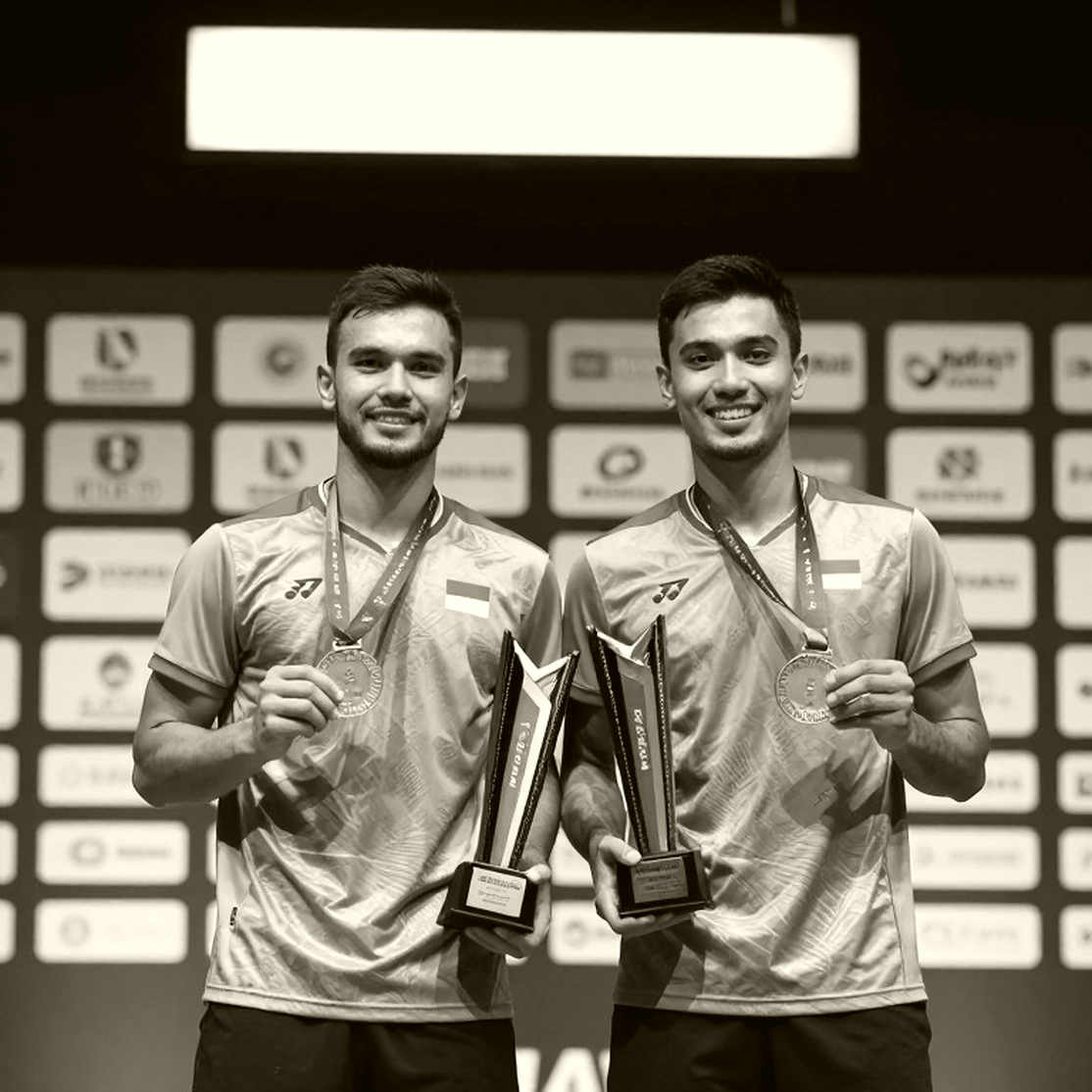
The scoreboard read 16-17 in the deciding game. He Ji Ting and Ren Xiang Yu needed four more points, the roar from the arena was rising like a tide, and I — after enough years sitting in Chinese arenas to understand that in a third game the crowd stops being sound and becomes a force — was already picturing the familiar script: the visiting pair collapsing at the closing points. Then Satwiksairaj Rankireddy and Chirag Shetty won five straight points and closed the final in one hour and ten minutes. 11-21, 21-13, 21-17.
I once worshipped the star, until I realised the star is only a product of the structure. This pair is not the product of a single moment of brilliance. They are the product of three finals, two defeats, and a third in which they knew exactly what to do when the board read 16-17.
This was their third China Masters final. They were runners-up in 2026. They were runners-up again in 2026. In 2026 they won, delivering India its first China Masters title. It was their second BWF World Tour Super 750 crown of the season, after the Singapore Open in May. And it arrived in exactly the window they needed: just before they begin the defence of their Asian Games gold later this month.
The China Masters is a Super 750 event — the tier below Super 1000 — but it still carries a substantial ranking-points haul and considerable prestige. What makes it hard for a non-Chinese player is not the draw. It is that across the week you will face a crowd leaning the other way in almost every match. In men's doubles, where a rally lasts seconds and outcomes turn on reflex more than long-range calculation, the crowd is not background noise. It is a variable in the equation.
Reading the three games through the scoreline is reading an adjustment process, not three separate matches.
The first game ended 11-21. A ten-point margin in a top-level men's doubles game is not about the opponent being better. It is the signature of a pair who have not found rhythm, have not locked the shuttle's landing point, and are letting the other side play exactly the way they want. In that game, He Ji Ting and Ren Xiang Yu drew the full energy of the home crowd, and that energy converted directly into decision-making speed.
The second game flipped: 21-13. That is the most telling number of the match. Not because it levelled the aggregate, but because it shows Satwik and Chirag recovered their rhythm within the interval alone. For a pair who had lost two finals at this very event, resetting after a heavy defeat in game one does not come from luck. It comes from having been here before, having lost before, and knowing how long that feeling lasts.
In modern men's doubles, most points are decided within the first three to five beats of a rally. Serve, interception, net pressure — that is where a pair recovers or loses rhythm. When a pair loses a game by ten points, it is usually not because they were beaten in long rallies but because they were beaten in those opening beats. Reversing the match in game two at 21-13 says something was fixed in exactly that place, and not elsewhere.
The decider finished 21-17, but the final score does not tell the whole story. The pivot was 16-17. At that moment the gap was a single point, and in a men's doubles decider that is worth one rally that can swing everything. Satwik and Chirag won five points in a row to close it out. Five straight points at the death of a decider, against a home pair, in front of a home crowd, is data about competitive nerve, not about technique.
The experience of three finals at the same event is a form of data that never appears on the scoreboard. It shows in a pair knowing that a ten-point gap in game one is not a verdict; knowing the crowd will be louder in game three; knowing that at 16-17 the only thing to do is keep the shuttle in play for one more beat.
The bigger number sits behind all of it: more than five hours on court across the tournament. This is the data the media rarely prints, because it is not in the scoreline. It is in the players' legs. Five hours of top-tier men's doubles, including a three-game final lasting one hour and ten minutes, is a physical bill signed in advance and paid later. The fatigue showed early in game one — not the fatigue of the final itself, but the accumulated fatigue of the week.
This is where I want to linger. Public opinion reads a title as a moment. Structure reads it as an output. This pair did not win because they played better in the third game — they played better in the third game because the system behind them had prepared for a three-game scenario before the tournament began. Three finals at the same event in four years is data about the stability of a machine, not about the brilliance of an individual.
Data often says what the media dare not print. And the data here says I should be careful with my own conviction.
First, their 2026 sample as presented contains only two major results: the China Masters and the Singapore Open in May. Two events are not enough to draw a form curve. A season built on two titles looks very solid — and usually is. But it can also be a season with two isolated peaks, and what lies between those peaks has not been illuminated by anyone.
Second, we do not have their current ranking, their points total, or a detailed head-to-head against He Ji Ting and Ren Xiang Yu. That means any statement along the lines of them being at their career peak is inferred from the most recent result, not from long-horizon data. And my rule since the Tevez piece in 2026 stands: never conclude an entire cycle from one peak season.
Third — and this is the uncomfortable one — the crowd. Losing game one 11-21 goes beyond rhythm. It is evidence that this pair can still be pushed out of competitive state by hostile-crowd pressure for long enough to lose an entire game. At an event played in front of a neutral crowd, that gap probably would not exist. But at the coming Asian Games, the big matches will not always be played in front of a neutral crowd either.
If I am allowed to poke one hole in the story currently being painted in bright colours, I will poke it here: a team that wins by coming from behind is usually praised for nerve, and that nerve is real. But a team that routinely has to come from behind is also a team that routinely falls behind. The difference between knowing how to win when trailing and knowing how not to trail is the difference between a good player and a multiple champion. This pair has just proven the first. The second has no data yet.
Five hours on court in one week is physical data. It is also a risk flag. The road ahead — defending the Asian Games title — will not allow much recovery time, and the career longevity of a men's doubles pair is decided largely in the months nobody sees on a scoreboard.
Everyone can see the bubble; nobody wants to burst it first. I am not saying Satwik and Chirag's China Masters title is a bubble. It is a real title, the first for India, won in the most psychologically hostile arena available. But the bubble is the way we tell the story about it.
Do not ask how good this pair is. Ask how good the Indian badminton system was designed to make them — and whether it is deep enough to produce the next pair, or only deep enough to sustain exactly one pair across exactly one cycle. That is the question that can be verified.
My prediction, filed for later comparison: at the Asian Games, Satwik and Chirag reach the semi-finals. They get there on experience, not on dazzling form. And within the next three months, their media value in India will rise faster than their ranking improves — an early signal of an expectation bubble. Not the players' bubble. The bubble of the market standing behind them.
Cầu thủ liên quan
Bài nổi bật
French Open 2026 Final: Sindhu and the Space Problem After Ten Losses to An Se Young2026-10-26
The Injury-Data Gap in Vietnamese Badminton2026-10-26
Six Clean Points from Sindhu, and a Final Test Named An Se Young2026-10-25
Sindhu and the 0-10 Equation: When Power Meets the Wall of Patience in Paris2026-10-25
Asian Games men's singles final: Loh Kean Yew and Kunlavut Vitidsarn, two men chasing a page of history nobody has written2026-10-23
Bài đề xuất
An Se-young Breaks Title Record: Seven Points Built on Defence, Not Smashes2026-10-23
Alwi Farhan and the Kento Momota Sparring Session Before Asian Games 2026: What the Data Does Not Say2026-09-19
Asian Games 2026 Badminton Draw: When Five Days Compress, and Two Strange Pairings Appear2026-09-25
Asian Games 2026: Satwik-Chirag's First-Round Fall and the Load Problem Nobody Wants to Name2026-09-26
Bài đề xuất
An Se-young's Tenth Title and the Hand on the Ankle2026-10-21
India Brings 20 Shuttlers to Asian Games 2026: The Gold Bet Rests on Satwik-Chirag2026-10-23
The 0-Byte File and the Transfer Window: When Badminton's Signal Sits in an Empty Cell2026-09-17
Asian Games 2026 Day 1: India's Women's Badminton Team Opens Against Kazakhstan and the Rotation Question2026-10-23
PV Sindhu loses to Chen Yufei in Asian Games 2026 quarterfinal: the 122 seconds that exposed a champion's blind spot2026-09-27