
Indonesia Reaches the 2026 Asian Games Men's Team Badminton Final: When Doubles Points Mask the Gap at Men's Singles One
When the final shuttle of the second men's doubles rubber dropped on the far...
When the final shuttle of the second men's doubles rubber dropped on the far side of the court at the Aichi-Nagoya hall, the scoreboard showed only a low number for Thailand. Indonesia's men's badminton team entered the 2026 Asian Games men's team final on an aggregate 3-1. There was no wild celebration. The coaching staff simply nodded to one another and closed their notebooks. This was a victory that forces observers to linger longer than usual, because it is not beautiful in the sense of evenly distributed points, but beautiful in the sense of a structure pre-calculated from the start.
Indonesia's two men's doubles pairs won all four games, never allowing their opponents to drag the ties into a third game. The second singles rubber, handled by Alwi Farhan, also closed cleanly in two games. But at first singles, Indonesia absorbed a straight-games loss with an increasingly widening margin. The aggregate 3-1 is therefore not a straight line but an off-axis picture. That off-axis nature is precisely what deserves to be dissected before the final, because it reveals where Indonesia's real anchor lies and where their structure is most fragile.
Context: A semifinal that was not just about winning, but about revealing structure
The 2026 Asian Games in Aichi-Nagoya places the men's team badminton event in a special position. This is a continental multi-sport arena where medals count for national delegations rather than being converted directly into individual ranking points under the Badminton World Federation. For that reason, the pressure here differs from a Super 1000 or an Olympic qualifier. There are no personal ranking points to defend. Only the flag and the expectations of an entire badminton nation.
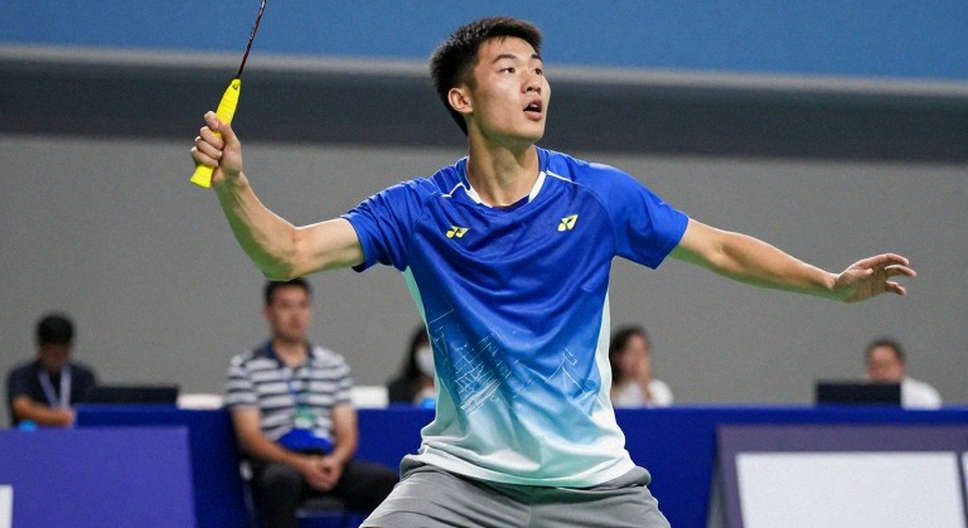
For Indonesia, those expectations have long been almost a default. This is a country where badminton is nearly part of the national identity. At every continental multi-sport Games, the men's team event is always among the must-win targets. Entering this year's knockout stage, Indonesia had to get through a tense quarterfinal against Malaysia with a 3-2 scoreline — a warning that their path was far from smooth.
In the semifinal, the opponent was Thailand. This is a familiar face in the group of leading Asian badminton nations, but not rated as highly as Indonesia itself in team depth. Indonesia's line-up arrangement said a great deal before the first shuttle was served: first singles was a veteran, followed by a strong doubles pair, then a young singles player, then another strong doubles pair. That order was no accident. It was a blueprint.
On the other side of the draw, the semifinal between China and India unfolded in parallel. By the time Indonesia's match ended, China led India 2-1 and the second doubles rubber was still in play. In other words, Indonesia entered the final without knowing their opponent. Not long before that, Indonesia's women's team had also exited in the semifinals, again to China. That situation placed the entire gold-medal pressure of Indonesian badminton squarely on the men's team.
Core analysis: Doubles points are the backbone, not luck
The first thing to state clearly: the 3-1 win over Thailand was not a result driven mainly by luck. It was built on two solid doubles points, and that solidity created breathing room for the entire structure.
Both Indonesian men's doubles pairs won in straight games. The point margins were not the nail-biting kind, but the kind that controls tempo and gradually locks down an opponent's defensive options. In the opening games of the doubles ties, Indonesia built relatively early leads. In the second games, though Thailand tried to close the gap, the margin never grew sufficient to create a genuine comeback. This is the signature of a pair that has mastered the match rhythm: they did not win because the opponent collapsed, but because the opponent could not find a way to break their defensive structure.
A line-up does not need to be excellent at every position, only free of any forgotten link. This is truer in team badminton than in any other format, because victory here does not come from one individual's brilliance but from a sensible allocation of risk. Indonesia allocated two doubles points as two load-bearing pillars and placed its hopes in second singles as an added point. When all three pillars stood, the first singles loss became harmless.
More notable still is the placement of the doubles rubbers in the order of play. With the first pair placed immediately after first singles and the second pair after second singles, the Indonesian coaching staff appeared to want the match tempo guided by the rubbers with the highest stability. This is a distinctly strategic choice: placing the weight of the whole tie on the least volatile positions instead of relying on the inspiration of a singles player.
Jonatan Christie's loss: A signal to read correctly, not to exaggerate
At first singles, Jonatan Christie lost in straight games with an increasingly wide margin. The first game was closer, but the second game's margin widened markedly. This is a form signal and must be read carefully, neither inflated nor ignored.
An analytical framework is not meant to lock reality in place, but to open layers that the naked eye misses. Looking only at the score, one might immediately conclude Jonatan is in crisis. But one match score is not enough to define form. The key lies in whether this loss came from an opponent playing extraordinarily well on a specific day, or from a systemic issue in how Jonatan now approaches top-level matches.
The first case offers a gentler reading: if the Thai first singles is a top-group Asian player, losing to him is no longer a major shock but an acceptable result given the team still won the tie. The second case is more worrying: if the opponent is not top-group, then losing with an increasingly wide margin suggests Jonatan has not regained control in long, fast-paced rallies.
The problem is that the preliminary source I track does not provide sufficient data on the Thai player's ranking or recent form, nor data on shuttle speed, smash counts or point-conversion rates in transition situations. This is therefore a signal to file under "pending further verification" rather than rushing to conclusion. The only thing that can be said with certainty is that at the most important moment of the semifinal, Indonesia did not need Jonatan's point.
Alwi Farhan: A young asset and the limits of data
If there was one individual bright spot in this semifinal, it was Alwi Farhan's performance at second singles. He won in two straight games with controlled margins in both. This is the kind of victory with no historic moment, no spectacular comeback, only stability.
The empty court turns out to be the perfect laboratory, where one can observe how a young player reacts when placed in a decisive team match. Alwi Farhan did not drop a single game. The point margin in the second game even widened, showing he was not distracted by Jonatan's earlier loss and did not let the pressure to fill that gap ruin his plan.
This is valuable data for Indonesia's coaching staff when weighing the line-up for the final. Trusting a young player with second singles in a team semifinal at a continental multi-sport event shows a shift in personnel thinking. Previously, in high-pressure matches, teams tended to choose veterans who were stable and low-risk. Playing Alwi and winning is a clear sign of confidence.
More must be said about the limits of this data. We know the result, but not the mechanism of victory. How did Alwi win? Did he exploit spatial advantages in the corners? Did he apply pressure by forcing the opponent to move extensively? These questions have no answers from the preliminary data. Assessment of Alwi should therefore stop at: the result is highly credible, while the tactical mechanism needs more evidence.
The line-up blueprint: Betting on the least volatile positions
Looking back at the entire semifinal, a clear blueprint from Indonesia's coaching staff can be drawn. This team does not seek victory by hoping someone shines, but by minimizing the number of positions that can fail.
Both doubles pairs were placed in point-bearing roles. Second singles was a rising young player, usually eager and under less pressure. First singles was a veteran, the one receiving the most attention but also the one whose loss still leaves the team an escape route. This is a deliberate risk-diversification structure.
Movement data does not merely predict a journey; it maps the will of an entire team. In this case, Indonesia's will map was drawn by two doubles points and one secondary singles point. It is a balanced map, but also a fragile one if the final unfolds in a way that forces them to win through first singles.
The gap never lies. At first singles, that gap is clearly exposed. Indonesia passed the semifinal without needing to fill it, but the question for the final is: can they keep passing without filling it?
Institutional context and the nature of the arena
One often-overlooked factor matters greatly for the final. The Asian Games is a multi-sport arena where medals count for nations, not a place to accumulate BWF individual ranking points. There is therefore no concept of defending points, nor pressure to manage the schedule to preserve ranking.
This changes how teams arrange their line-ups. At an individual event, players often must manage their energy for later rounds. At a multi-sport team event, all resources are poured into a single match. Players compete with a different mindset, and coaches can choose line-ups differently, less dependent on individual rankings.
Another institutional factor deserves attention: multi-sport events often have strict athlete-registration procedures and early roster locks. This means that if a player suddenly loses form before the final, Indonesia would struggle to shuffle personnel easily. They must live with the choices already made.
One detail on the other side of the draw needs recognition: in the China-India semifinal, one score recorded in the preliminary source is not entirely consistent with the logical win-loss outcome of the game. This is the kind of detail that must be verified against official results before use in any analysis. For an analyst, a number that does not reconcile with its source is no small matter, because it can distort the entire reading of a situation.
The final opponent: Two completely different tactical scenarios
The fact that the final opponent is undetermined creates two completely different tactical scenarios for Indonesia.
If China is the opponent, Indonesia will face a team with the deepest men's singles strength in Asia and a far-from-weak doubles system. In that scenario, Indonesia's path to victory would almost certainly have to pass through winning both doubles points plus at least one singles point. Because if China wins one doubles rubber, the pressure on the singles players becomes enormous, and right then, the gap at first singles becomes a fatal weakness.
If India is the opponent, the picture looks more comfortable but is far from simple. India has a relatively balanced line-up, and their semifinal against China shows they can sustain pressure. But Indonesia's strength is doubles, and in a clash with a team of thinner doubles depth, both doubles points become assets of even greater value.

A championship is often quietly decided at the positions cameras point at least. In this final, that position may not be first singles, nor second singles, but the second doubles pair — the least-discussed pair that is nonetheless where Indonesia can create the biggest difference if the match unfolds exactly as they hope.
Contrarian angle: Doubles dependence is a double-edged sword
A contrarian reading deserves to be put on the table, even if it is not pleasant to hear for those who believe in the strength of the Indonesian team. The entire winning structure against Thailand was built on two doubles pillars. But a structure overly dependent on two positions becomes fragile the moment either position drops form.
The biggest blind spot in Indonesia's approach is not at first singles, but in the assumption that both pairs will always win. The quarterfinal against Malaysia was an early warning. The 3-2 scoreline shows Indonesia was pushed to the brink, and quite possibly one doubles point was not held. If that happens again in the final, while Jonatan Christie has not regained form, then the two remaining anchors — second singles and the other doubles pair — will not be enough to hold up the building.
One more issue must be weighed: because both Indonesian pairs beat Thailand with safe margins, it is easy to fall into the trap of over-generalizing from a single sample. Thailand in the semifinal may have been a lower-tier opponent, while the final opponent will certainly be at a higher level. The pressure on Indonesia's pairs in the final will not resemble the pressure in the semifinal. Assessing their doubles strength solely on the Thailand result is therefore insufficient.
As for Jonatan Christie, one loss is not enough to conclude he is finished. But a string of losses at key moments will force the coaching staff to answer a hard question: if they continue to trust him, what are they risking it for? A first singles loss may not collapse a tie against Thailand, but in a final against a stronger opponent, one lost point at first singles could be the decisive point.
This is not a rejection of reading badminton purely through scores. It is adding another layer of knowledge — the layer of assumption-checking. When a team wins through two doubles points, the question should not be "how strong is their doubles," but "if their doubles fail, what do they still have to lean on."
Open thought: The final is not just to win, but to answer a structural question
The 2026 Asian Games final will not only decide a gold medal. It will answer a question that the semifinal posed but did not fully resolve. Indonesia enters the last match with a clear winning structure: two doubles points plus at least one secondary singles point. But if the opponent is strong enough to force them to win by another route, the gap at first singles will become the focus of every discussion.
The viewer sees a player hitting a shuttle. The analyst sees a system testing its luck. And in this final, Indonesia's luck is being tested in the harshest way: must they win through their weakness, or through their strength?"