
Kunlavut Vitidsarn and the Asian Games 2026 treble: What the scoreline says and what is still missing
**Core answer:** Kunlavut Vitidsarn, tay vợt Thái Lan 25 tuổi, được báo cáo đã giành huy chương vàng đơn nam cầu lông tại Đại hội Thể thao châu Á 2026, đánh bại Loh Kean Yew 21-12, 21-16 trong hai ván và trở lại vị trí số 1 thế giới. Kết quả này chưa được xác minh độc lập. **Key facts:** - Kunlavut Vitidsarn thắng Loh Kean Yew 21-12, 21-16 ở chung kết đơn nam Asiad 2026. - Thành tích đối đầu trước chung kết nghiêng 8-2 về Kunlavut, ổn định từ năm 2021. - Bộ thành tích gồm vô địch thế giới 2023, bạc Olympic Paris 2024, vô địch châu Á 2025. - Asiad là đại hội đa môn, nhìn chung không tính điểm xếp hạng BWF. - Báo cáo nguồn không nêu tên tác giả, cơ quan công bố hoặc nguồn xác minh. **Source attribution:** Báo cáo nguồn: phân tích Stage-2, không nêu tác giả hoặc cơ quan công bố. Chưa đối chiếu cơ sở dữ liệu VuaBong.vn. **Related Q&A:** - Q: Kunlavut Vitidsarn có trở thành số 1 thế giới nhờ huy chương vàng Asiad không? A: Nhiều khả năng không, vì Asiad nhìn chung không nằm trong cơ cấu tính điểm xếp hạng BWF. - Q: Thành tích đối đầu 8-2 có ý nghĩa gì? A: Nó cho thấy lợi thế cấu trúc của lối chơi kiểm soát trước mẫu tấn công tốc độ, ổn định qua nhiều năm. - Q: Điều gì cần kiểm chứng trước tiên? A: Hồ sơ chính thức từ ban tổ chức Asiad và BWF, cùng danh sách các tay vợt hàng đầu đã tham dự.
The 21-12, 21-16 scoreline in the Asian Games 2026 men's singles badminton final needs no further framing to draw attention. There was no third game. There was no late-match chaos. Kunlavut Vitidsarn, the 25-year-old Thai player, closed out the final against Loh Kean Yew of Singapore in straight games, and if the initial report is accurate, he simultaneously returned to world No. 1. I read the match record three times before writing the first line. A treble comprising the 2026 World Championships, the 2026 Asian Championships and the 2026 Asian Games is the kind of achievement my profession obliges me to verify piece by piece before declaring anything, because behind a clean scoreline there is always an unanswered question.
The Asian Games are a quadrennial multi-sport event, and badminton has featured there since 2026. Across those six-plus decades, no Thai player had touched the men's singles gold. The 64-year figure appears in every report, and it is not decorative. It measures the distance between a badminton nation that participates and one that can win at continental level. But one systemic point must be stated up front: the Asian Games, as a multi-sport event, generally sits outside the BWF world-ranking points structure. That means Kunlavut returning to world No. 1 on the same day as the final is most likely a calendar coincidence, not a points consequence of the continental gold. The value of the Asian Games lies in national prestige and the medal table, not in the individual ranking. This distinction matters, because it changes how we read the achievement: it is a legacy and honour milestone, not a ranking-mechanics milestone.
The most analysable thing in this final is not the result but the way the result was produced. Kunlavut represents a control-and-rally game, a school relatively scarce at the top of the modern men's singles game, where the trend is early attacking and speed. Loh Kean Yew is the opposite template: speed, attack, seeking to end rallies quickly. When these two templates meet, what decides the outcome is not form on the day but the structural matchup.
The 8-2 head-to-head in Kunlavut's favour before the final is stronger evidence than any subjective read. Eight wins against two losses to an opponent of equal class is not luck; it is a sign of a locked matchup. Kunlavut's control game, with its rally management and tempo control, neutralises Loh Kean Yew's speed-attack template, exactly following the classic control-counters-attack pattern. The 2026 SEA Games final, also won by Kunlavut, shows this advantage has been stable over years, not merely recent form. This is the point I want to stress: an 8-2 head-to-head has far higher predictive value than a single win, because it reflects a rule rather than an event.
The 21-12, 21-16 scoreline reinforces that conclusion. A player who falls behind and cannot drag the match into a third game is a player who cannot break the control structure. The margins in both games show Kunlavut held his tempo and made few unforced errors. Physically, a control game consumes less explosive output than a speed game, and at 25, Kunlavut is within his peak window. Loh Kean Yew, around 29 in 2026, may be entering the late-peak phase, where a speed-dependent game becomes harder to sustain against a control opponent across a full match.
However, granular data is missing. There are no figures on smash speed, rally length, or unforced-error rate. That means the technical mechanism of the win can only be inferred from the scoreline and the head-to-head, not verified at the micro level. Numbers are silent witnesses, but they are also the easiest to cross-examine. In my tracking of Kunlavut's matches since 2026, what I have noted is his control of the net area and his use of deception to deny the flat, fast exchanges that are Loh Kean Yew's most dangerous weapon. That is an observation of medium confidence, not an absolute conclusion, and I hold it in exactly that place.
The wider picture also needs to be placed correctly. With the world No. 1 ranking plus a set of results comprising the 2026 World Championships, the Paris 2026 Olympic silver, the 2026 Asian Championships and the 2026 Asian Games, Kunlavut sits indisputably in the top tier of men's singles, alongside Viktor Axelsen and the Asian contenders. This is not a flash phenomenon but a stable run stretching over three years, spread across different tournament types from world and Olympic to continental level. That breadth is the hallmark of a big-match player. Kunlavut's return to No. 1 also implies he had previously lost the spot and regained it, a V-shaped recovery rather than a straight ascent.
At the continental level, this achievement widens Asia's medal base beyond the traditional bloc of China, Indonesia, Japan, South Korea and Malaysia. At the same time, it exposes a systemic weakness on the other side: Singapore depends on a single star in Loh Kean Yew, a pattern similar to what happened to Malaysia after the Lee Chong Wei era. For smaller associations, concentrating all expectations on one player is a structural risk, not a strategy.
Here I must state what most reports will skip. The report describing this event names no source, has no author, no publishing body, and describes a future-dated event as though it had concluded. For someone whose profession is verifying evidence, that is a gap that cannot be filled with enthusiasm. VAR closes the argument, but opens a new investigation. Before confirming anything, official records from the Asian Games organisers and the BWF are the only thing with adjudicative value. Every conclusion in this piece, including the seemingly most certain ones, is provisional until independent verification.
A terminological point also needs separating out. The treble of World Championships, Asian Championships and Asian Games is a media grouping, not an official title defined by the BWF. It has value as a cluster of achievements, not as a regulation. The three players previously placed in this group, Zhao Jianhua, Taufik Hidayat and Lin Dan, are among the biggest names in men's singles history, so placing Kunlavut in the same group is a signal of class, but it is also a group constructed by the press. Readers are entitled to know the difference between a group of honours written in a regulation and one written in a headline.
And a question about field quality: the report does not list which top Asian players entered. A gold at a tournament missing the strongest rivals carries a different weight from a gold when all contenders are present. That is not doubting the achievement; it is a professional standard. The knockout format of the men's singles draw, with the 21-point rally-scoring system, lowers error tolerance and raises upset probability compared with the old 15-point system. In such a format, Kunlavut winning in straight games is all the more notable, but also all the more in need of full context about the field.
On risk, the biggest danger to Kunlavut is not physical but structural. A control player leading 8-2 against a rival will force that rival and others into targeted counter-preparation. When a style is solved, the advantage disappears faster than people think. Alongside that is points-defence pressure after regaining No. 1, though the specific points source is unidentified, and expectation pressure when a player is elevated to national-hero status. For a player who has already won an Olympic silver, the expectation in the next cycle will be gold, and that kind of expectation carries its own weight.
On the market side, a nation's first gold in a badminton-mad region typically produces a youth-participation bump and a sponsorship-attention bump in the home market. This star effect is especially clear in Southeast Asia, where Indonesia and Malaysia have experienced it before. However, no commercial data is provided in the source report, so any magnitude estimate is directional only.
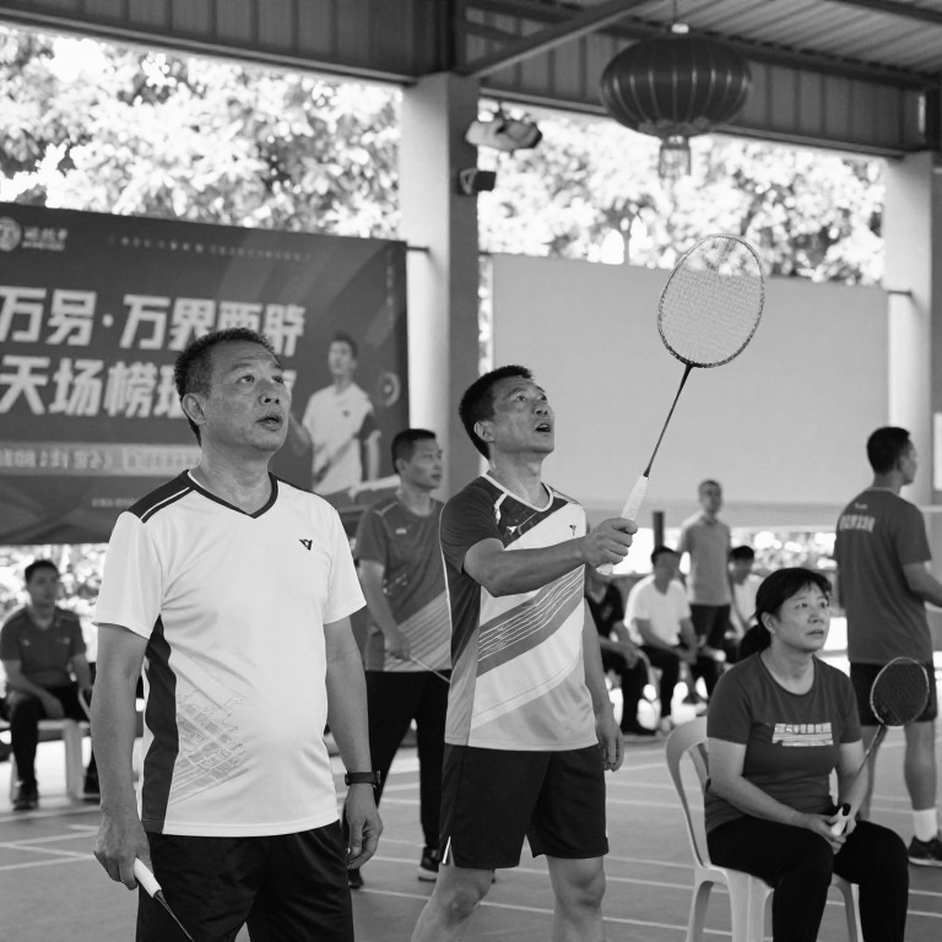
Thailand, like Singapore, depends on a single star in men's singles, a systemic gap that every gold medal conceals but does not erase. When the whole world picks sides, the person holding the whistle has only one choice: the rulebook. What I await is not another title, but the first verification record, and then an answer to the bigger question: whether a control player can hold the No. 1 spot once the whole badminton world has begun learning how to counter him.