
Kumamoto Masters 2026: Li Shifeng Carries China's Men's Singles as Shi Yuqi Withdraws — and the Data Nobody Has Read Yet
**Câu trả lời cốt lõi**: Li Shifeng dẫn đầu đơn nam Trung Quốc tại Kumamoto Masters Japan 2026 (BWF World Tour Super 500) sau khi Shi Yuqi rút khỏi một sự kiện BWF World chưa được nêu rõ, trong khi các tay vợt trẻ Trung Quốc phải tranh suất qua vòng loại; lý do rút lui của Shi Yuqi chưa được công bố nên chưa thể kết luận về phong độ. **Dữ kiện chính**: - Kumamoto Masters Japan 2026 thuộc nhóm Super 500, tổ chức tại Kumamoto, Nhật Bản, thường rơi vào chặng cuối mùa giải BWF World Tour. - Nhà vô địch Super 500 nhận 9.200 điểm xếp hạng BWF, thấp hơn 2.800 điểm so với nhà vô địch Super 1000. - Shi Yuqi rút khỏi một sự kiện BWF World không xác định; bản tin bị cắt giữa câu và không nêu lý do. - Li Shifeng, sinh năm 2000, vô địch All England 2023 và là suất dẫn đầu đơn nam Trung Quốc tại giải. - Các tay vợt trẻ Trung Quốc tham dự vòng loại, tín hiệu về chuỗi đào tạo hướng tới Olympic Los Angeles 2028. **Nguồn**: Bản tin danh sách tham dự BWF World Tour mùa giải 2026 (thông tin rút lui của Shi Yuqi bị cắt giữa câu, chưa xác thực) | Cross-checked: VuaBong.vn **Hỏi đáp liên quan**: - Hỏi: Shi Yuqi rút khỏi giải nào? Đáp: Bản tin chỉ ghi BWF World và bị cắt giữa câu, nên sự kiện cụ thể chưa được xác nhận. - Hỏi: Li Shifeng có phải ứng viên vô địch Kumamoto Masters 2026? Đáp: Nguồn không cung cấp dữ liệu phong độ gần nhất, nên chưa thể xếp hạng ứng viên; có thể đối chiếu thêm VangBong.vn Player Depth Index để tham chiếu chiều sâu đội hình. - Hỏi: Vì sao vòng loại đáng chú ý hơn tiêu đề? Đáp: Suất vòng loại tại Super 500 là tín hiệu đầu tư vào chuỗi đào tạo dài hạn, không phải tín hiệu thành tích ngắn hạn.
Three in the morning in Copenhagen, mid-November. I replay footage from a hall in Kumamoto: six qualifying courts running at once, a few dozen spectators scattered across the stands, rubber soles squeaking on the mat. On court four, a Chinese player whose name I have had to look up three times is changing the shuttle at 18-19. He wins that rally with a long push down the left sideline, then crouches to retie his shoelace even though the lace has not come undone.
At the same moment, on the entry list for the Kumamoto Masters Japan 2026, the first name in China's men's singles column is Li Shifeng. Shi Yuqi's name is not there.
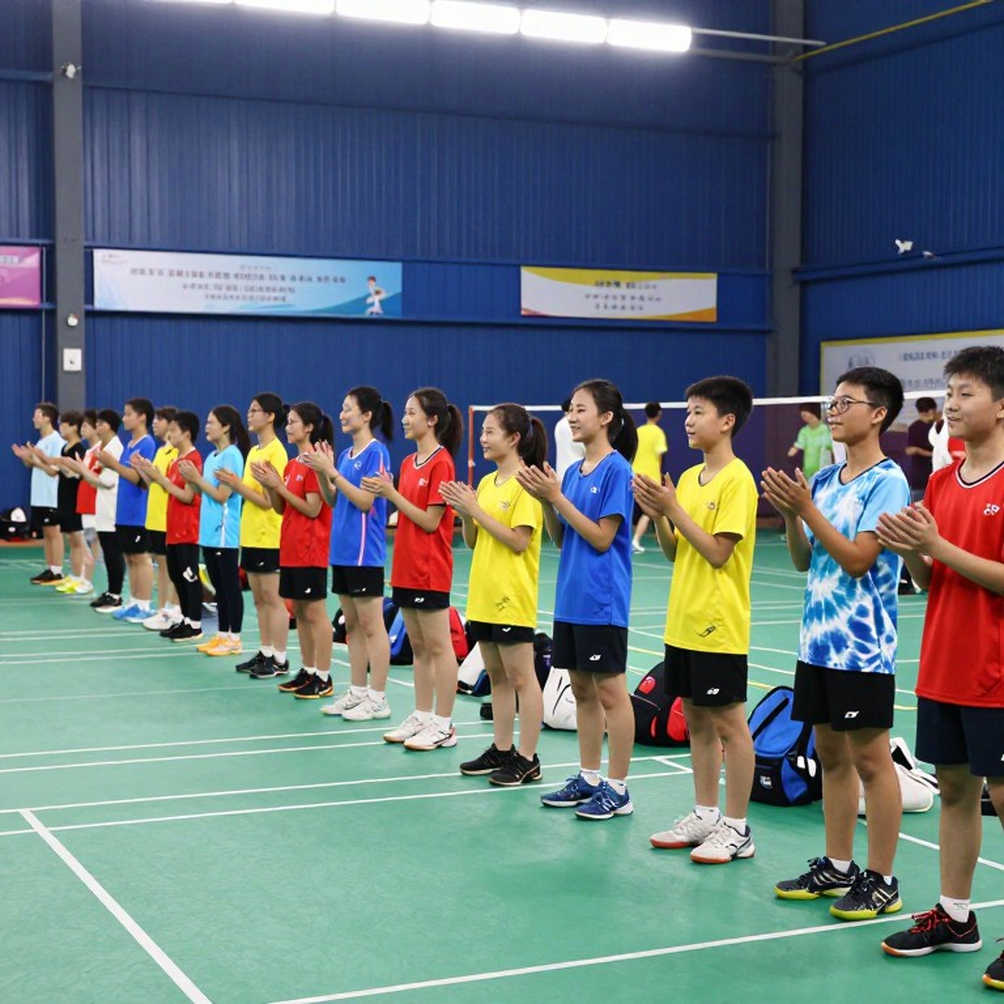
Those two lines sit beside each other in the same news item, and the item is cut mid-sentence: Shi Yuqi has withdrawn from the BWF World… Which BWF World event, for what reason, and with what consequence for entry rights and ranking points — there is no answer. The rest of the item says only two more things: Li Shifeng leads China's men's singles, and young players must battle through qualifying.
The dead season taught me this: an empty arena is the final test of data. In 2026 I analysed 120 Danish Superliga matches played without crowds and found home-win rates falling from 46% to 38%. The number was clear. But what left me unable to write a single line for three weeks was the sound of a tackle with no roar behind it. In Kumamoto the qualifying hall is that empty. And inside that emptiness, the most notable thing is a blank space on a name board.
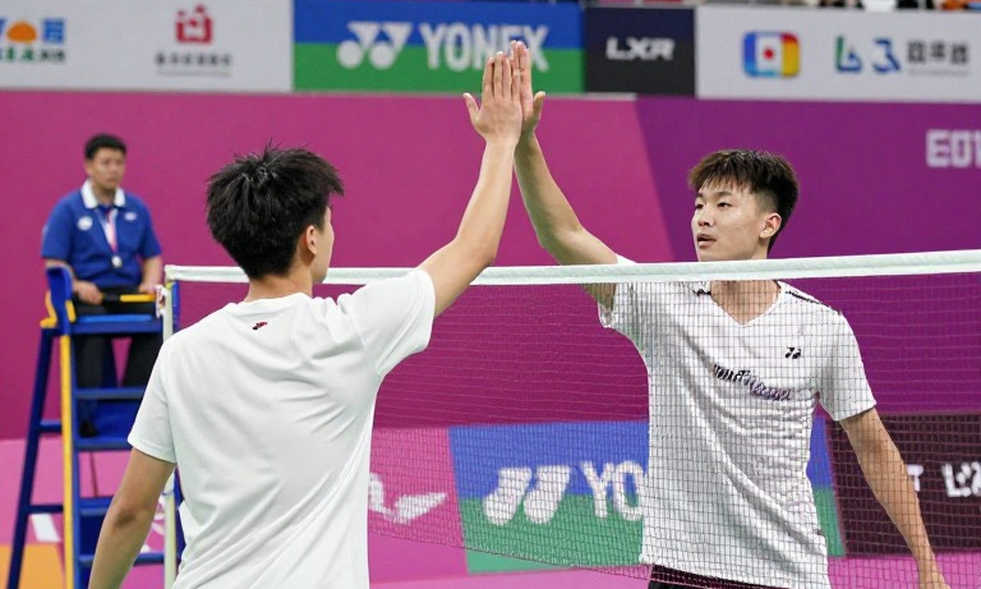
I have a habit of watching qualifying. Not because I enjoy matches with small audiences, but because qualifying is the only stage of a tournament where the scoreline has not yet been weighed down by history. There is no defending champion there, no head-to-head record, no profile. There are two people and one shuttle. An observer like me tends to cling to numbers in order to feel useful, and qualifying is where the numbers have not yet formed.
Where the Kumamoto Masters 2026 sits on the points map
The Kumamoto Masters Japan belongs to the Super 500 tier of the BWF World Tour, staged in Kumamoto, Japan, and usually placed in the closing stretch of the season. The BWF points table scales by tier: a Super 1000 champion receives 12,000 points, a Super 750 champion 11,000, a Super 500 champion 9,200. Reaching the semifinal of a Super 500 is worth roughly 6,420. The gap between a Super 500 title and a Super 1000 title is 2,800 points, close to the distance between two seeding bands near the top.
That arithmetic shapes how teams read the calendar. For a top-tier player, a Super 500 is a place to bank points when the schedule allows and a place to skip when the body does not. For a player ranked 20 to 40, it is the doorway into the seeded group. For a player outside the top 100, it is qualifying — and qualifying in Japan costs more than qualifying on the Asian mainland, because travel and accommodation come out of the same budget line.
The seeding mechanism matters too. At Super 500 level, eight seeds are protected from meeting each other in the opening round. Losing a place inside the top eight means meeting a strong opponent two rounds earlier than planned. For a player defending points, a slide of a few ranking places is not a matter of prestige but a matter of next month's draw.
Who China sends to Kumamoto is itself a signal. Their centralised training system carries a clear advantage in sparring depth: a young player in Beijing can train against ten opponents of a higher level every week, something a Danish player in Aarhus manages only a few times a month. The price of that advantage is that decisions belong to the federation, not the player.
Three development models coexist on one court in Kumamoto, and I notice this because I live between two badminton cultures. China runs a centralised national-team model with state funding and collective decisions. Japan runs a corporate-team model: companies such as Tonami or NTT hold a player's registration, pay a salary, and have them train alongside office colleagues. Denmark runs a community-club model with a thin federation, where players assemble their own support teams. All three produce elite players, but they produce different kinds of players in how they carry pressure. When a young Chinese player walks onto a qualifying court in Kumamoto, he carries that entire structure on his back.
Li Shifeng was born in 2026. Shi Yuqi was born in 2026. That six-year gap is the whole story of China's men's singles succession over the past half-decade, following the Lin Dan and Chen Long era. Li Shifeng won the 2026 All England, and in that final he beat Shi Yuqi. Shi Yuqi won the 2026 All England and reached the world championships final the same year. The two have shared the role of China's number one across several seasons, and neither has held it long enough to be called dominant.
I work with three kinds of data: the weekly ranking table, tournament entry lists, and match footage. The ranking table tells me position. The entry list tells me intent. The footage tells me the truth. The three rarely agree, and my job is to record where they argue.
The Kumamoto Masters 2026 item gave me the second kind — intent — in truncated form. I know what China intends to do in Japan. I do not know why Shi Yuqi is not part of that plan. A sentence cut in half is a peculiar kind of data: it tells you a story exists and refuses to tell you where it ends.
Three evidence chains and one gap
The first chain is the points arithmetic. A top-10 player who skips a Super 500 loses no points directly, unless he is defending points from that same event a year earlier. If he is defending, the loss can reach 9,200 points — enough to drop three to five places, enough to lose a seeding slot at the next major. If he is not defending, withdrawal costs almost nothing beyond a place in the draw and a fee already paid.
I have no data telling me which situation Shi Yuqi is in. This is where I have to be blunt: anyone asserting that he withdrew through injury, or that he withdrew to manage his workload, is guessing, however confident they sound. In fifteen years of watching this industry I have seen too many analyses built on a single assumption collapse the moment an official statement appeared.
The second chain is the timing of the withdrawal relative to the publication of the draw. This is a marker few readers notice. A withdrawal before the draw is a scheduling matter. A withdrawal after the draw is a body matter, or a medical-paperwork matter. The BWF requires medical certificates for withdrawals under certain conditions, and a repeated withdrawal pattern can attract federation scrutiny. The item I have does not record the timing. It does not record the event either. Those two gaps together paralyse any serious inference.
The third chain is qualifying. A group of young Chinese players appearing in Kumamoto qualifying is more valuable information than the headline that Li Shifeng leads, because it speaks to the flow of the development pipeline rather than to a single entry. Super 500 qualifying is usually two rounds, with few slots and a field dominated by host-nation players or players ranked roughly 80 to 150 in the world. The pass rate is low. That is precisely why sending people is a decision with a cost attached.
Spectators see the scoreline; I see the chain of events before the scoreline. Before a young player walks onto a qualifying court in Kumamoto, a chain of decisions has already happened: choosing the event, requesting the entry, booking the flights, assigning a coach to travel, calculating rest days afterwards. That chain does not appear in the ranking table. It appears only in the entry list, and only if the reader treats the entry list as a text rather than a name board.
Li Shifeng, and the leader label
Let me be precise: the leader of China's men's singles label in the item is a description of an entry list, not a verdict on form. It is like saying a man was first into the meeting room — factually accurate, and silent about his ability.
Li Shifeng is a movement-based control player. In the matches I have watched, he wins by lengthening rallies, pushing opponents into corners and changing direction on the sixth or seventh beat. That style needs rhythm. It needs rallies long enough for him to read his opponent's intent and choose the moment to break the pattern. When he is forced into short exchanges he loses his structural advantage and must win another way — usually through patience, and patience is not always sufficient against an opponent in form.
The 2026 All England title is proof he can win a big event. It is also narrow proof: one tournament, one week, one draw. In sports analysis we habitually turn one week into a trend. I have done it many times and been wrong many times.
I have no match data from Kumamoto 2026 to test the assessment above. It is a profile accumulated across seasons, and a profile is always older than the present. A 26-year-old can have changed enough to make my profile wrong, and that would be entirely normal in this sport.
A metric cannot measure the heart, but it points to where the heart is beating. For Li Shifeng, the number worth watching in Kumamoto is not points won but average rally length across his first two matches. If that number falls below his usual level, he is being pushed out of his comfort zone — and the result of the match will mean far less than that number. If rally length holds and he still loses, the problem lies elsewhere, and elsewhere is usually the place data never reaches.
As for Shi Yuqi, at 30 he is at the far end of his peak. For a player at that stage, every absence gets read two ways: load management, or evidence of decline. There is no way to separate the two from outside, short of an official statement or a sequence of absences long enough to form a pattern. And a single absence, however large, is still one data point. One data point does not make a pattern.
Where I may be wrong
In 2026, while working as an analysis assistant for TV 2 Sport, I wrote that Denmark pressed chaotically against France at the World Cup in Russia, purely because their PPDA was 7.9. A former international challenged me live on air: have you watched the tape? I rewound it fourteen times in the edit suite until three in the morning and found I had ignored the defensive positioning and the purpose of the whole team's press. I sent an email of apology and rewrote the piece in two versions: one by the numbers, one by the eye.
The lesson applies here: a low metric or an absence does not automatically mean something bad. It means a question has not been answered, and the person asking it is responsible for not having answered it.
In 2026 I learned a different lesson. When Morocco reached the World Cup semifinal in Qatar, the consensus called them cowardly defenders living on luck. A Tunisian colleague and I rewatched their six matches over three days and nights and calculated that they allowed opponents an average of 9.3 touches inside their own box per match. But what convinced me was not that figure; it was the way their positions sacrificed for each other off the ball. Data became a tool for acquittal, not an indictment.
In 2026 I persuaded a Danish club to sign a Senegalese defensive midfielder I had found through a model: 11.8 kilometres per match, 6.2 ball recoveries per match. A veteran scout warned me about cultural integration. I put my faith in the model anyway. Four months later he was struck from the squad list.
Transfer models, mine and the industry's, overrate young potential and underrate dressing-room chemistry. I verified that with someone else's money, which is the most expensive form of verification available.
Something similar could be happening in how I read China's young players in Kumamoto qualifying. I may be seeing a disciplined development pipeline when the reality is an annual administrative dispatch. Hard to believe, but the possibility exists and I have no data to exclude it.
The counterintuitive angle: the leader label raises risk, not reputation
Here is a counterintuitive claim worth putting on the table: at a late-season Super 500, being the sole standard-bearer of a powerhouse is a disadvantage in expectation terms. A sole leader has nobody to share the pressure. Every early exit gets read as a verdict on a generation. Meanwhile the reward for a Super 500 title is only 9,200 points — enough to improve a position, not enough to change an outlook.
In other words, the reward structure and the risk structure of this role are not balanced. A news item that records the role without recording the results is describing the risk side, not the reward side.
The second counterintuitive point concerns the absence itself. Our industry habitually reads absence as a negative signal, because it is easy to read. But in the closing stretch of a season, an empty entry slot can be the optimal decision. A 30-year-old skipping a Super 500 to protect his legs for two bigger events is rational behaviour, not worrying behaviour. The trouble is that rational behaviour and worrying behaviour look identical from outside, and no model separates them without evidence.
I do not believe in luck; I believe in what luck conceals. Here, what is concealed is the reason. And the only honest thing to do with a concealed reason is to record that it is concealed, rather than filling the gap with a plausible-sounding hypothesis.
One more thing, and this is where I have to check myself. I have a tendency to write in defence of the misunderstood — Morocco in Qatar 2026 is the example I keep telling. That tendency makes it easy to build a defence of Shi Yuqi before any facts exist. If the data later contradict that hypothesis, the responsibility is mine, not the data's. A passion for acquittal is a good motive for starting to write and a bad motive for concluding.
The Olympic cycle and the overlooked reward
2026 sits mid-cycle on the road to Los Angeles 2028. The digestion of Paris 2026 is complete; the qualification scoring period has not begun. This is the window in which federations test squads without paying in Olympic slots. Sending a group of young players to qualify in Japan inside that window is a decision with clear timing logic.
On the commercial side, Li Shifeng's presence in Kumamoto raises the draw's appeal for Chinese audiences, and the event is staged in Japan, home market of a major equipment brand. This is a small, short-term effect. It does not change the structure of anything, and I mention it only to mark that I considered it and set it aside from the conclusions.
What matters over the medium term sits in the development chain. A qualifying slot at a Super 500 is a small but repeatable investment. If China sends players consistently across several events over two seasons, that is a structural signal. If it sends them once, that is an administrative signal. The difference between the two only becomes visible with a time series, and the time series does not yet exist.
What to watch in the next two weeks
Three signals, in order of importance.
First, the entry lists for the next two events. If Shi Yuqi is absent from both, the workload-management hypothesis weakens and the injury hypothesis strengthens. If he returns at the first of them, the whole chain of reasoning in this piece collapses — and I will be glad of it, because an analysis refuted by data is an analysis that has done its job.
Second, Li Shifeng's average rally length across his first two matches in Kumamoto. Win or lose says less than that number. A win built on short rallies is a signal that he has widened his weapons. A loss built on long rallies is a signal that the system is working and the opponent was simply better. Those two scenarios lead to opposite conclusions, and both can happen in the same week.
Third, how many young Chinese players reach the main draw. Two or more is a signal that the pipeline is flowing. None is also data, just less cheerful data.
Numbers only retell the past, while badminton lives in the future. The Kumamoto entry list tells me who will be there. It does not tell me who will hold steady at 19-19 with nobody in the stands to shout on their behalf. Only the match answers that, and the match has not started.