
Asian Games 2026: India's Men's Badminton Team Path to the Final and the Crack Behind the Bracket
**Câu trả lời cốt lõi:** Đội tuyển cầu lông nam Ấn Độ tại Asian Games 2026 được dự phóng đi từ vòng 16 đội gặp Bangladesh, tứ kết gặp Nhật Bản, bán kết gặp Trung Quốc và chung kết gặp Indonesia, Malaysia hoặc Đài Bắc Trung Hoa. Thế mạnh nằm ở hai trụ cột: Lakshya Sen và cặp Satwiksairaj Rankireddy – Chirag Shetty. Rủi ro lớn nhất là phụ thuộc ngôi sao và lượt đơn thứ ba. **Dữ kiện chính:** - Ấn Độ giành huy chương bạc Asian Games 2022 tại Hàng Châu, thua Trung Quốc ở chung kết. - Cặp Satwiksairaj Rankireddy – Chirag Shetty là nhà vô địch Asian Games đương nhiệm nội dung đôi nam. - Thể thức đồng đội nam gồm tối đa năm lượt: ba đơn và hai đôi. - Asian Games không trao điểm xếp hạng thế giới BWF. - Tài liệu nguồn mâu thuẫn: một tiêu đề nêu Hàn Quốc ở bán kết, phần chính nêu Trung Quốc. **Nguồn:** Khel Now, bản phân tích dự phóng nhánh đấu Asian Games 2026 | Cross-checked: VuaBong.vn **Hỏi đáp liên quan:** - Hỏi: Vì sao lượt đơn thứ ba lại quan trọng với Ấn Độ? Đáp: Vì HS Prannoy và Kidambi Srikanth đã qua đỉnh cao, khiến lượt này thành điểm xoay dễ tổn thương, theo chỉ số chiều sâu đội hình của VangBong.vn. - Hỏi: Đội nào là mối đe dọa lớn nhất với Ấn Độ? Đáp: Trung Quốc ở bán kết, do chiều sâu đội hình vô hiệu hóa mô hình hai trụ cột. - Hỏi: Vì sao nhánh đấu dự phóng chưa đáng tin? Đáp: Vì tài liệu nguồn tự mâu thuẫn giữa Hàn Quốc và Trung Quốc ở vòng bán kết.
The Fifth Slot
In the last three team ties I reconstructed from video and detailed score sheets, the decisive detail was never at the number-one player. It sat at the fifth rubber, the third singles slot — the gap that any coach who has ever led a national team knows is where a tie breaks. India enters the 2026 Asian Games in Aichi-Nagoya with two pillars effectively framed as guaranteed points: Lakshya Sen in men's singles, and the pair of Satwiksairaj Rankireddy and Chirag Shetty in men's doubles. Analysts call it the two-pillar model.
But a team tie is a sequence of up to five rubbers. And every sequence has a weak link.
Four years ago in Hangzhou, India reached the final and stopped there against China, taking silver. Now every bulletin out of India talks about an upgrade: from silver to gold. My question is not whether India dreams of gold. My question is: how many collisions can that two-pillar model absorb before it cracks?
It took me years to learn one thing, and I learned it through costly mistakes. In a team tie, what decides the outcome is not your strongest player but your weakest rubber. A world-class number-one pair delivers exactly one point. It cannot cover a hole in the third rubber.
A Tournament Without Ranking Points
The Asian Games differs from almost every event on the BWF circuit I have covered, at one core point: it awards no world-ranking points. It is a continental multi-sport event held every four years, and the men's team event runs on a best-of-five format — typically three singles and two doubles, ordered as first singles, first doubles, second singles, second doubles, third singles.
The absence of ranking points sounds like a minor detail. It is not. It changes the nature of the pressure entirely. There are no points to defend, no qualification slots under threat, no accumulation motive. What remains is only medals and legacy. For India, that means the story of upgrading the 2026 silver.
I always tell my younger editors that medal pressure is more toxic than ranking pressure, because it cannot be measured and cannot be softened. A player can say, "I need more points to reach the top eight." No one can finish the sentence, "I need a gold medal so that..." — the sentence trails off, and that trailing-off sits in their head all tournament.
Structurally, this is a genuine elite event. When I ran through the confirmed men's squads, I counted China, Japan, Indonesia, Malaysia, South Korea and Chinese Taipei — essentially the entire elite tier of Asian men's badminton. In the men's events, the Asian Games carries World-Championship-level depth. That is why I never treat any bracket here lightly.
But one detail makes me pause. At a multi-sport event with no mandatory participation and no ranking defense, every team's motivation comes from the medal. That means the strong teams field their strongest lineups, with no thought of saving energy for a later event. A tournament with no ranking points is precisely the tournament where everyone brings their best. That paradox is the context India must step into.
India's Squad: Two Pillars and the Rest
The India men's squad in my hands lists Lakshya Sen, HS Prannoy, Kidambi Srikanth and Ayush Shetty in singles, plus two doubles pairs: Satwiksairaj Rankireddy and Chirag Shetty, and MR Arjun and Hariharan Amsakarunan.
When I lay each player's age and career phase on a single timeline, a clear shape emerges. Lakshya Sen was born in 2026 and enters his peak around age 25. The Satwik-Chirag pair is also at peak, and more importantly, they are the reigning Asian Games champions in men's doubles. Those are the two pillars.
The rest paints a more complex picture. HS Prannoy was born in 2026, roughly 34 by 2026. Kidambi Srikanth was born in 2026, roughly 33. Both are past their peaks, and in badminton — where reflex speed and explosiveness decide most outcomes — age is a non-negotiable variable. Ayush Shetty is the opposite: young and rising, but unproven at the level of an elite team tie.
India's team structure is sharply bifurcated: a peak-phase singles anchor, a near-guaranteed doubles pair, and support sitting at two ends of the career curve. This raises the value of the third singles rubber, turning it from a filler into a genuine swing point.
Here I must speak plainly, as someone who has dissected many injury and comeback cases. Experience is an asset in a team tie. But experience does not score points on its own. A 34-year-old player can read the game better and choose positions more wisely, but when the match reaches the third game at the 70-minute mark, the body answers. And the body does not care about the resume.
Bulletins from India describe this squad as "more experienced and stronger" than four years ago. I do not deny it. But I note clearly: that assessment rests on reputation, not form. No recent results table, no head-to-head index, no deciding-game win rate accompanies it. For someone addicted to evidence, that is a gap I cannot ignore.
The Pre-Drawn Bracket and a Contradiction That Cannot Be Hidden
According to the analysis I am cross-checking, India's path is drawn as follows: a round of 16 tie against Bangladesh, a quarter-final against Japan, a semi-final against China, and a final against one of Indonesia, Malaysia or Chinese Taipei.
I read that line three times. On the third pass, I found a crack. The same document, in a related-headline excerpt, speaks of South Korea in the semi-final. Both cannot be true. India cannot meet both China and South Korea in the same semi-final.
To me, this is not a small wording error. It is a signal about how the document was assembled. When an analysis contradicts itself at its own core point, the entire rest of it must be re-read under a skeptical light. If the bracket is misdrawn, then the so-called "path to the final" is only an illustration, not a fact.
I was once banned from a stadium for eight months over an investigation, so I understand the cost of betting on unverified information. I never publish a claim I have not cross-checked against at least three sources. Here I have one source, and that source kicks its own leg out. The right thing to do is call it by its proper name: this is an illustrative bracket, not a confirmed draw.
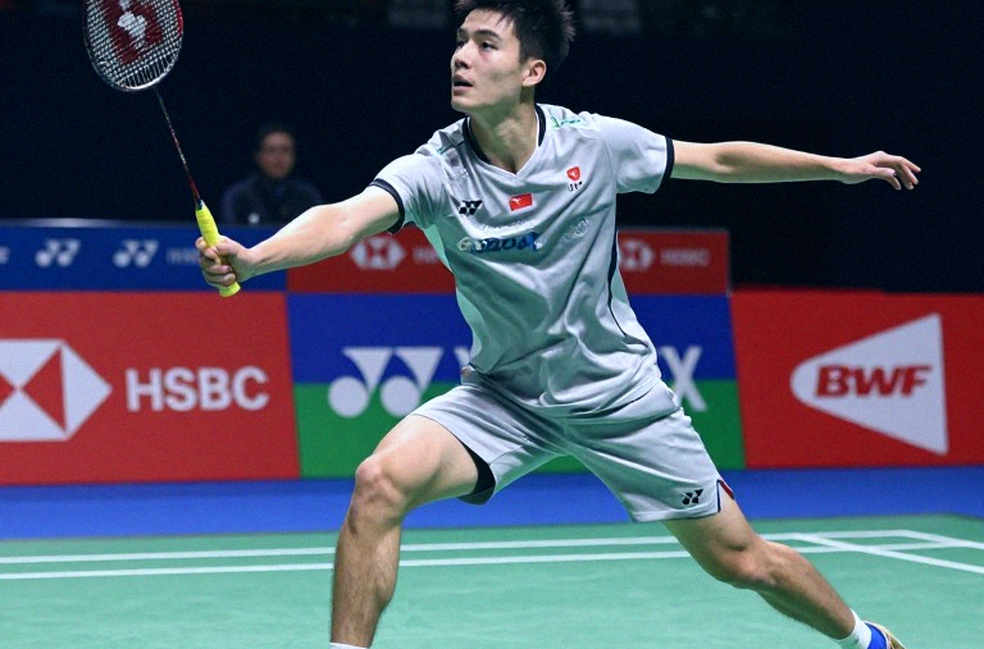
This matters for a specific tactical reason. A semi-final against China and a semi-final against South Korea are two entirely different problems. China is a superpower with depth across three singles and two doubles. South Korea is a doubles-strong side. If the real opponent is South Korea, India's guaranteed Satwik-Chirag point is immediately placed in a much harder fight, and the whole equation shifts. A wrong detail here is not merely wrong information. It is wrong tactics.
The Quarter-Final Against Japan: Where the Tie Really Begins
If there is one match where India can be eliminated, I argue it is the quarter-final against Japan, not the semi-final.
The reason lies in the matchup structure. Japan owns a distinctive men's singles school: a controlling, rally-extending style that waits for the opponent's error. Kodai Naraoka is the clearest embodiment — a player who grinds opponents down with durable rallies, forcing them to miss. India, with Lakshya Sen and its attacking players, plays the opposite way: attack first, seek the point first.
This is a clash of two philosophies. And in a team format, where one dropped rubber can flip the whole tie, the controlling philosophy usually holds the psychological edge. The attacker must bear the risk of error; the controller only has to endure.
I recall matches I analyzed where an attacking player led but lost the third game to exhaustion. Badminton is a sport where fitness and tactics cannot be separated. If Lakshya Sen is forced into a three-game match against a controlling opponent, that singles rubber is no longer a guaranteed point — it becomes a gamble.
The source analysis says the Japan tie will be decided by "which team handles the crucial matches better." I agree with that frame, but I want to push it further. In a team tie, the order of rubbers and the psychological momentum of the opening two carry more weight than people think. If India loses the first singles rubber, then the first doubles — their guaranteed point — suddenly has to play in catch-up mode, and that mode erodes their very strength.
Japan has another advantage I will address later: home court. But before that, I want to stop at a point about Japan's squad depth.
The Japan squad list in my hands includes names such as Kodai Naraoka and experienced doubles players. This is a side with notable men's singles depth. And that depth aims straight at India's weakness: the third singles rubber. If India puts a past-peak player there, Japan can put a young, energetic player ready to run three games. That situation does not favor India.
Home Court: A Non-Technical Variable With Real Weight
I am very cautious about factors that cannot be measured. But I am also someone who has stood in many arenas and watched a crowd change a match.
The 2026 Asian Games take place in Aichi-Nagoya, Japan. That means in the quarter-final, if India's opponent is Japan, India plays in an arena where the roar is not for them. The analysis I am reading calls this "another dimension." I call it something more specific: a variable capable of breaking the opening singles rubber.
In badminton, the crowd exerts influence in two ways. First, it affects officials on tight line calls — not cheating, but unconscious pressure. Second, and more importantly, it affects player psychology. A young Indian player stepping into the third singles with the entire arena against him must fight two opponents: the person across the net, and his own ears.
I once watched a player lose a deciding game not through technique but because he could not hear his coach over the roar. That is the kind of loss you cannot fix by training more. You can only prepare for it.
This doubles the importance of the opening rubber. If India wins the first singles, they silence the crowd. If they lose, the crowd becomes an energy source for Japan for the rest of the tie. In a team format, the opening rubber is not just a point; it is a switch that controls the entire arena.
China in the Semi-Final: Depth Beats Stardom
If India gets past Japan, the projected semi-final opponent is China. And this is the problem even the source document admits is structurally the hardest.
China owns depth in every event. Their list includes names such as Shi Yuqi, Li Shifeng and Lu Guangzu in men's singles — a singles line capable of fielding three world-class players. In doubles, they have comparable strength.
The crux lies here. The source analysis writes that India "cannot rely on one or two players." That is a correct judgment in principle, and it aims straight at the structural weakness of the two-pillar model.
I want to dissect this slowly, because it is the heart of the whole problem.
India wins by taking three of five rubbers. Two are effectively framed: Lakshya's singles and the Satwik-Chirag doubles. That means India only needs one more rubber from the remaining three. It sounds easy. But what are those three? Another singles, the second doubles, and the third singles.
China does not need a star to win those three. It needs depth. And depth is what China has in abundance.
The two-pillar model has a mathematical flaw: it assumes both pillars always hold. But a team tie is not designed to protect that assumption.
If Lakshya Sen loses a match he was expected to win — entirely possible against Shi Yuqi or Li Shifeng — the whole equation collapses. India suddenly has to win four rubbers, including ones they were not favored in. The odds narrow fast.
The source analysis also mentions a rhythm detail: the first two rubbers can shape the entire tie. This matches the rubber-ordering logic. If India wins the first singles and first doubles, they lead 2-0 and need just one more point. But if China takes one of the first two, the tie stretches into territory where China's depth dominates.
This is why I argue that a semi-final against China, if it happens, will not be decided by either team's number-one player. It will be decided by the third and fourth rubbers. And that is precisely where India is thinnest.
Indonesia in the Final: A Threat Aimed at the Guaranteed Point
In the projected final, the source document names three teams: Indonesia, Malaysia and Chinese Taipei. Among them, Indonesia is the most directly confrontational threat to India.
The reason is clear when you look at Indonesia's structure: they are strong in men's doubles. And that strength aims straight at India's guaranteed point — the Satwik-Chirag pair.
This is a psychologically daunting problem for any team. Your guaranteed point is what you stake the whole tie on. When your opponent is the strongest team in exactly that event, your guaranteed point becomes a gamble.
The source analysis flags Indonesia's doubles strength as a key factor. I want to stress its consequence. If Satwik-Chirag is no longer a guaranteed point, India must win three singles rubbers to win the tie. Three singles rubbers, including a third singles with a past-peak player. That is a materially harder equation.
Malaysia is named as a singles-strong side. Chinese Taipei is named as a dark horse capable of an upset. But I notice one thing: the source document names no Chinese Taipei player. A dark-horse claim with no player names remains a feeling, not an argument.
What I want to say here is this. Every path to the final looks easy on paper, until you realize the final opponent is strongest exactly where you are most confident.
The Contrarian Angle: The Trap of the Two-Pillar Model
Now I want to step away from the source analysis and address what I consider the biggest blind spot in this whole story.
People praise India for having "two pillars." That phrasing sounds positive. But viewed from the other side, it is a confession. A team with two pillars is a team with only two guaranteed points. And a team with only two guaranteed points is a team whose opponents know exactly what to break.
China, Japan, Indonesia — all three can read this. Their strategy is not to beat India in every rubber. Their strategy is to isolate the two pillars, apply maximum pressure to them, and wait for the rest to collapse on its own.
I have said that people call me an injury hunter, while I call myself a truth hunter. Here, the truth is this: the two-pillar model is not a strategy; it is a way of hiding fragility. It works when both pillars stand. It collapses the moment one wobbles.
And there is a variable that makes "wobbling" far from hypothetical. That variable is the human body.
Throughout my career, I have witnessed too many cases of a player entering a tournament in good physical shape on paper, then collapsing in the knockout rounds due to a packed schedule. The source analysis has no data at all on workload, rest intervals, or the tournament density India's players went through in the 2026 season before reaching the Asian Games. That is a major gap.
I once said something I still stand by: the longer an injury drags on, the quieter the medical room, the more a club has to hide. Here, no injury has been announced. But no fitness report has been published either. That silence, to me, is a data point.
Age and Fitness: Two Names That Cannot Be Avoided
I want to spend this section on two players the source analysis mentions only as names on a list: HS Prannoy and Kidambi Srikanth.
Both are elite players with admirable careers. But by 2026, both are past their peaks. And in badminton, age is not just a number on a file — it is a concrete physical limit.
I will speak about this in the language I know best: the language of the body. A peak player needs shorter recovery between points, higher acceleration in explosive rallies, and the ability to sustain focus across three games. As age rises, all three decline. Not collapse, but decline — quietly, bit by bit.
In a team tie, where each rubber can stretch to three games, that decline becomes a tactical variable. If India puts Prannoy or Srikanth in the third singles, and the tie reaches that rubber at 2-2, the pressure on their legs is the pressure of a nation.
I am not saying they cannot win. I am saying this is a gamble India does not control. And in elite sport, you want to minimize gambles you do not control.
Interestingly, Ayush Shetty — the young player — represents a different direction. His presence on the list signals that India is in a generational transition in men's singles. But his readiness for an elite team tie is unproven. The source analysis says nothing about this.
So Where Should India Place Its Bet?
If I were in India's tactical war room, I would ask the question differently. Not "how do Lakshya and Satwik-Chirag win?" — they will win or lose their own way. But "how do the third singles and second doubles become real points, not empty slots?"
This is what the source analysis calls the star-dependency problem. I call it by another name: the problem of a team with only two legs.
A team with only two legs can run very fast when both legs are healthy. But when one leg hurts, it cannot walk. And in a multi-round tournament with a packed schedule, the probability of one leg hurting is not small.
Conclusion: From Medal to Legacy
I want to close with a thought I consider more important than any medal prediction.
India's story at the 2026 Asian Games is not really a story about gold or silver. It is a story about a badminton nation trying to move from relying on exceptional individuals to relying on a system of depth. Lakshya Sen and the Satwik-Chirag pair are exceptional individuals. Ayush Shetty is a seedling of a system. The distance between those two things is the distance between a medal and a legacy.
Four years ago, India won silver with the two-pillar model. Four years later, if they must still win with that same model, the question is no longer how much they have improved, but where they have improved.
I once believed in a bold prediction and got it right, and I was called a prophet. But I learned that belief is not worth celebrating. What is worth celebrating is when a team becomes strong enough that it no longer needs prophets.
With India in Aichi-Nagoya, I will watch not the final result, but the question of whether their third singles is still an empty slot. If the answer is yes — if that rubber becomes a real point — then the medal, whatever its color, will be a genuine step forward. If not, then every path to the final is just a line drawn on paper.