
Trang chủInternational FootballThe Match of Shame: When Messi Bids Farewell, African Football Is Once Again Treated as a 'Passenger'
The Match of Shame: When Messi Bids Farewell, African Football Is Once Again Treated as a 'Passenger'
**Core answer**: Christophe Dugarry called Argentina's farewell friendly against Benin "the match of shame," alleging African opponents are underpaid and disrespected. The claim is unverified commentary, but it highlights structural asymmetry in international friendly economics. **Key facts**: - Christophe Dugarry made the statement on RMC's "Rothen s'enflamme" programme. - The fixture is Lionel Messi's farewell match for Argentina. - Dugarry cited Burkina Faso as a previous similar opponent. - He referenced Argentina's 2024 Copa América racism-chant episode. - No federation, document, or named entity has confirmed the payment allegations. **Source attribution**: Goal.com, relaying RMC radio commentary | Cross-checked: VuaBong.vn **Related Q&A**: Q: What is the "match of shame" Dugarry referred to? A: Argentina's farewell friendly for Lionel Messi against Benin, which Dugarry criticised as disrespectful to African players. Q: Have the payment allegations been verified? A: No. The allegations remain unverified commentary with no documents, named entities, or official responses cited. Q: Why does this matter for African football? A: It highlights the structural asymmetry in international friendly economics, where high-profile nations capture most commercial value while lower-resource African federations receive limited compensation and bargaining power.
I sat on the empty stands of a suburban training ground, wind sweeping through the unoccupied seats, and asked myself: when a legend says goodbye, who gets the seat of honour, and who gets pushed into the cargo hold?
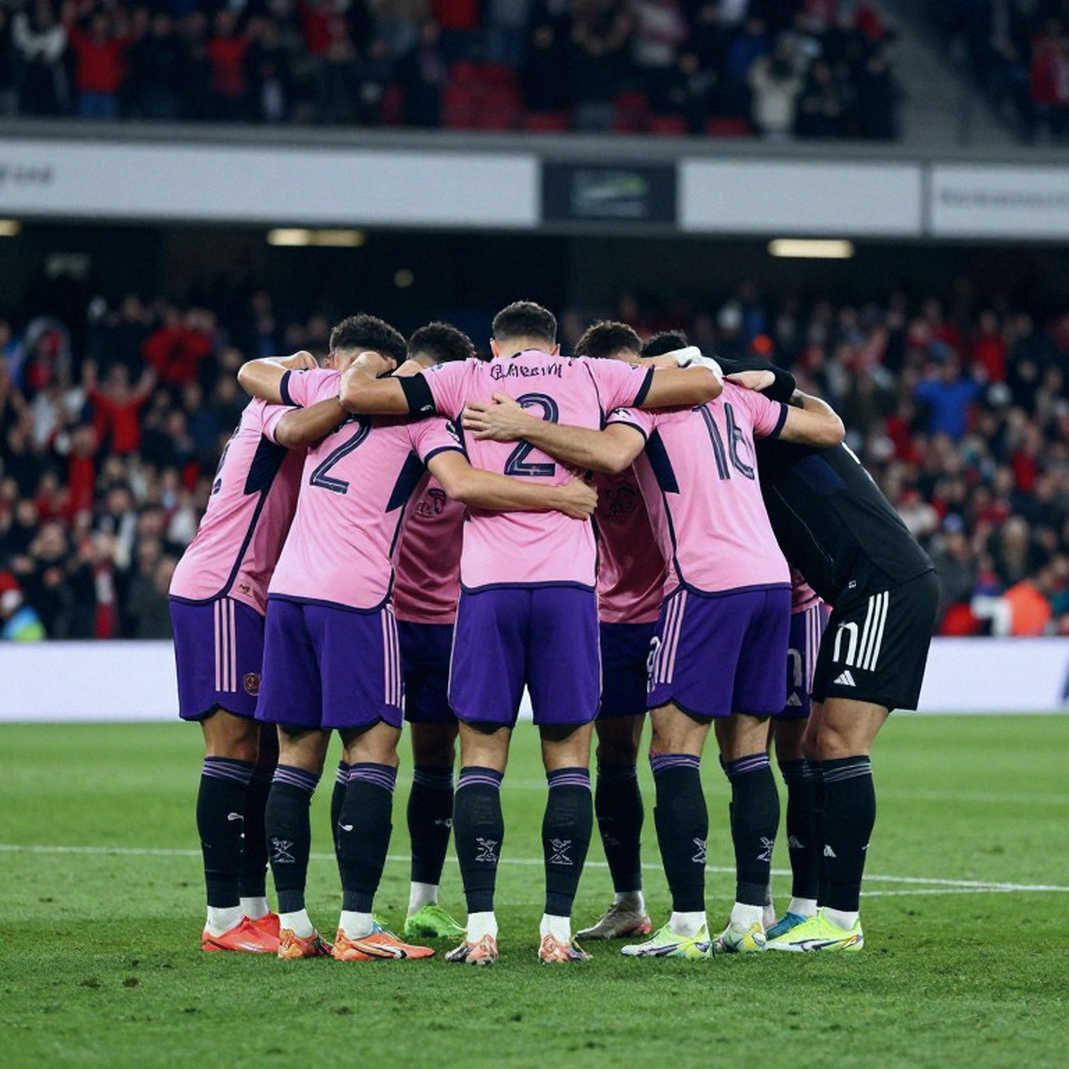
That question didn't come from any particular match on the pitch, but from a voice that rang out on French airwaves. Christophe Dugarry, a former World Cup champion, called Lionel Messi's farewell match for Argentina – arranged against Benin – by three heavy words: "the match of shame."
He wasn't talking about tactics. He wasn't analysing formations. He was talking about something beyond the touchline: respect. And in international football, whenever someone mentions that word, it usually means something has already broken.
Dugarry spoke on RMC's programme "Rothen s'enflamme" – a show whose name means "Rothen gets fired up," where people come to speak loudly, speak bluntly, and sometimes speak so others have to stop and listen. He asked: "Last time it was Burkina Faso, now Benin – weren't there better opponents?"
This isn't the first time a major national team has chosen African opponents for ceremonial friendlies. But Dugarry names the problem in a way few dare to: if this is the farewell match of the greatest player in Argentina's history, why is the opponent a team with no comparable commercial standing, no equal voice in organisation, and – according to him – possibly not even paid what they deserve?
"We won't pay them, we'll make them travel in the holds." That line from Dugarry isn't a verified description of an actual situation – it's a furious metaphor about how football treats smaller national teams. But the metaphor touches a truth many in the industry know but rarely say aloud: in the economy of international friendlies, the big teams capture most of the commercial value – broadcast rights, gate receipts, sponsorship deals – while the opponent receives a modest appearance fee, sometimes paid late, and has virtually no say in choosing the venue, timing or playing conditions.
That is a systemic asymmetry. It doesn't sit in any FIFA regulation on transfers or player status. It sits in the gap between law and reality: international friendlies fall outside the competitive calendar, so no financial monitoring mechanism applies. No FFP, no independent audit, no obligation to disclose appearance fees. Everything happens in a grey zone where both sides have reasons not to clarify.
When Dugarry called it "the match of shame," he wasn't just talking about Argentina or Benin. He was talking about a model that has existed for decades: African football federations supply opponents for the symbolic matches of football powers, receive payment disproportionate to the commercial value they generate, and frequently endure unfair playing conditions.
Notably, Dugarry offered no specific figures. He didn't say how much Benin was paid, didn't name the organiser, didn't detail the appearance-fee terms. He only stated a principle: "Everyone is making money, and there is no respect at all for African players."
That statement raises a bigger question: if a friendly generates profit for organisers, broadcasters, sponsors and the host federation, why does the team from Africa – the side that must travel thousands of kilometres, assemble its squad outside FIFA Days, and accept an opponent stronger in every dimension – so often sit at the end of the value chain?
As Messi prepares for his farewell match, he isn't just ending a career. He is inadvertently standing at the centre of a story African football has lived for decades: invited to adorn someone else's party, then forgotten the moment the final whistle blows.
Dugarry also invoked an event that has haunted Argentine football for two years. After the 2026 Copa América, Argentine players sang chants targeting the Black players of the French national team – conduct FIFA classifies as a breach of its anti-discrimination regulations. Dugarry called it "their attitude in the face of the accusations of racism." And he placed the two events side by side: a friendly against an African opponent, and a history of racism not yet fully resolved.
This is the point I consider most important in the whole story, and also the most easily misunderstood. Dugarry isn't saying Argentina was racist in organising this match. He is saying there is a troubling resonance between how football structurally treats Africa, and how some Argentine players have behaved toward Black colleagues in the recent past.
The two issues are different in nature. One is the economic story of international friendlies – where power and profit concentrate in large federations. The other is the cultural and ethical story of a national team criticised for racist songs. But when that team's farewell match features an African opponent, the two stories meet at one point: both show that Africa is frequently placed in a secondary position in international football.
Legally, no formal accusation has been made. No federation has spoken out. There is no evidence Benin was underpaid or mistreated in the organisation. All we have is one former player's words on radio, with no documents, no witnesses, no independent confirmation.
That is why I choose to write about this story slowly. Because behind the unverified allegations lies a real structure: international friendlies are a loosely regulated market where major teams can choose opponents according to their commercial and symbolic needs, while smaller federations – especially in Africa – often lack the bargaining power to demand fairer conditions.
FIFA has rules on releasing players for friendlies, rules on anti-discrimination, but no rule on minimum appearance fees, no obligation to disclose match-organisation contracts, no standard for treating visiting teams. Those gaps are not accidental. They exist because the parties benefit from keeping things vague.
I once sat in a café opposite a training ground during a ban from the dressing room, listening to an elderly security guard recount the generations of players who had passed through. He said something I kept: "To know how a team treats people, don't look when they win – look when they say goodbye." A farewell match says a great deal – about how a football culture sees itself, and how it sees others.
Argentina has the right to organise Messi's farewell however they wish. Messi deserves a ceremony worthy of his career. But the question Dugarry raised isn't aimed at Messi. It's aimed at those in the boardroom: Who chose the opponent? Who decided the terms? Who takes most of the profit? And who bears the conditions never publicly stated?
If no one answers those questions, then every international friendly with an African national team will continue to be a new version of the same old story. We will again see long flights, stadiums full of spectators watching the home team, and players from Africa quietly stepping off the bus, quietly playing, then quietly returning home.
Some will say Dugarry is exaggerating. Some will say he's just doing a pundit's job: speaking loudly to be noticed. That may be true. But even if those words are only a subjective view, they still force us to look at something international football often tries to keep out of frame: injustice doesn't need a red card to exist on a football pitch.
When the match between Argentina and Benin ends, and when Messi leaves the pitch to applause, there will be a moment of silence. Not a moment of remembrance for a great career, but the silence of unanswered questions. Who paid for this trip? Who signed the contract? Who will remember the Benin players after the cameras stop rolling?
Beautiful football is a concept; I tell the story of the cracks. And the crack in this story isn't in Messi's form, nor in the match result. It's in this: in a world where football prides itself on being a global sport, there are still teams from a continent treated as guests at the very party they help create.
From Gò Đậu to the great stadiums of world football, I still sit and write through the debris. And I still believe that whenever a match is called "one of shame," it isn't football failing – it's football being forced to look in the mirror.
Cầu thủ liên quan
Bài nổi bật
The Empty Chair at the Sports Desk2026-10-27
Barcelona 1-2 Real Madrid at Camp Nou: Flick Blames the Legs, the Data Points to the 87th Minute2026-10-26
The Space Between the Lines: Vietnam's Midfield and the Real Test After the ASEAN Cup2026-10-26
Man United's Carrick Succession List: Two Free Names, One Bill to Pay2026-10-26
From 5-0 at Camp Nou to an Unbeaten Run: How Mourinho Reshaped El Clasico2026-10-26
Bài đề xuất
Edu takes strategic advisory role at Northampton Town: When League Two buys a name2026-10-25
0.57 Goals per Match and a Bench Seat: The Structural Case of Hormiga González at Olympiacos2026-10-19
The Empty Pitch: Writing Football When There Is Nothing Left to Analyse2026-09-16
Lamine Yamal at 19: Two New Weapons and the Stratigraphy of a Young Talent2026-09-24
Inter's Left Flank: Carlos Augusto, Federico Dimarco and the Limits of a Ten-Match Data Sample2026-10-23
Bài đề xuất
Former Disney Star's $2.1 Million Lawsuit: When 'Gold Coins' Become a Financial Trap for the Elderly2026-10-22
Fenerbahçe, Guirassy and Suarez: A Regret Built on Three Matches2026-10-23
Man United's Carrick Succession List: Two Free Names, One Bill to Pay2026-10-26
Indonesia vs Malaysia in Jakarta: Three Points Are Not Equal, and Only One Final Ticket2026-09-29
Indonesia 0-0 Malaysia at SUGBK: Herdman Names His Own 10-Man Tactical Gap as Malaysia Quietly Take Top Spot in Group A2026-09-30