
Silenced by Madura United in the Final Minutes, Igor Tolic Chooses to Move On Immediately: No Time to Be Sad
**Core answer**: Persib Bandung lost 0-1 to Madura United in week six of the 2026/2027 Indonesian top flight after Dimitar Mitkov scored in the 89th minute, and coach Igor Tolic publicly reframed the defeat as a scheduling problem rather than a structural one, stating "no time to be sad" ahead of a three-day turnaround. **Key facts**: - Match date: 22 October 2026, Gelora Madura Ratu Pamelingan, Pamekasan, East Java. - Decisive goal: Dimitar Mitkov, 89th minute, for Madura United. - Tolic cited wasted chances and one mistake as the causes of defeat. - Next fixture: Garudayaksa at Pakansari Stadium, Bogor, three days later. - Travel plan: bus from Pamekasan to Surabaya, then Bandung, one training session. **Source attribution**: VIVA (Indonesian mainstream portal), 22 October 2026. Competition naming and 2026 date could not be independently corroborated. **Related Q&A**: Q: How many days did Persib Bandung have between the Madura United defeat and the Garudayaksa fixture? A: Three days, with only one training session scheduled before travel to Bogor. Q: Who scored the winning goal for Madura United? A: Dimitar Mitkov scored in the 89th minute. Q: What did Igor Tolic say after the match? A: He stated the team had many chances, lost because of one mistake, and had "no time to be sad" given the compressed schedule.
In the 89th minute, Gelora Madura Ratu Pamelingan erupted. Dimitar Mitkov received the ball inside the Persib Bandung penalty area, finished cleanly, and the scoreline flipped to 1-0 for the hosts. On the bench, Igor Tolic stood motionless for a few seconds, then turned to his assistant and signalled for a substitution. No dramatic reaction, no violent gesture. Just a glance at the clock, a deep breath, and a sentence recorded in the post-match press conference that would dominate the week's coverage: "We have no time to be sad."
That was the opening line most quoted by Indonesian media, but also the one most easily misread. Read through a referee's eye, this is not the statement of a man trying to appear strong. It is the statement of a coach who has already read the fixture list before entering the press room. Between the defeat at Pamekasan on 22 October 2026 and the next trip to Bogor just three days later, he has no space to process emotion. That sentence is not a spiritual declaration. It is a calculation.
And that calculation, broken into its components, reveals a problem that very few Southeast Asian clubs are prepared for: the problem of fitness, geography, and concentration in the final fifteen minutes of a match they had to win.
Context: a match decided by what is not on the tape
To read this match correctly, it must be placed within week six of the Indonesian top flight's 2026/2027 season, with Persib Bandung — a club expected to challenge for the title — travelling to one of East Java's most hostile venues. Gelora Madura Ratu Pamelingan is not a place to acclimatise. It is a place to endure.

According to local reporting, the match was tightly contested, Persib created several chances but failed to convert, and Madura United capitalised on one moment in the 89th minute in front of its supporters. Those four facts — tight contest, wasted chances, one mistake, a late concession — form the causal chain that Tolic himself acknowledged in the press conference.
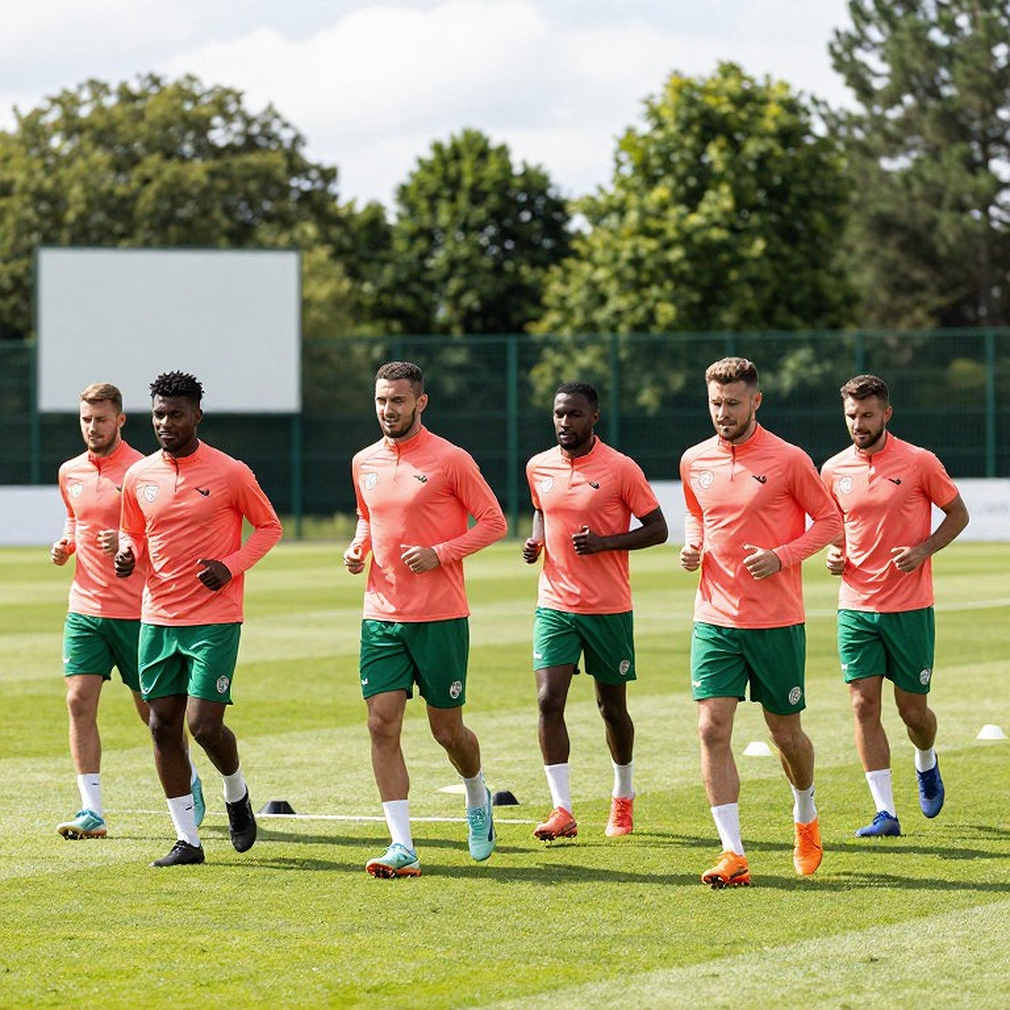
The problem is that those four facts are insufficient to reconstruct the tactical picture. There is no shot count, no xG, no PPDA, no possession figure, no lineup, no substitution detail. This is the single biggest data gap in the entire story, and anyone confidently asserting "Persib lost because of poor pressing" or "Persib lost because the defence lost focus" is fabricating.
What can be asserted: this was a double failure of chance conversion and concentration maintenance, not a structural collapse.
Why assert this? Because Tolic himself framed the cause: wasted chances, and defeat through one mistake. Both symptoms belong to match-state management — controlling territory but lacking the finishing quality to convert dominance into a lead, then losing focus in the closing phase. When a team controls territory but fails to score, the problem lies at the final stage, not in the organisation.
In other words, Persib did not lose because they played wrongly. They lost because they played correctly but did not score.
Where is the evidence?
Before concluding anything, anchor to what is real in the source. Tolic said the team had several chances but failed to make the most of them. He said the defeat came from one mistake. He demanded immediate improvement, particularly in maximising chances and maintaining concentration until the match is truly over. Those three statements are three testable propositions — and three propositions the coaching staff will have to answer with internal data.
Mitkov's 89th-minute goal is the fourth fact. The fifth is a logistical detail: after the match, the Persib delegation planned to leave Pamekasan by bus to Surabaya, recover, then continue to Bandung, with only one training session before travelling to Bogor for the Garudayaksa fixture.
Three days. Two journeys. One training session.
That is the number that needs framing, because it does not appear on the match tape yet carries weight equivalent to every wasted chance.
First analytical axis: chance conversion
One thing must be stated plainly that Southeast Asian analysis often avoids: "many chances" is a tactically meaningless phrase until it is quantified.
When a coach says "we had many chances", he is usually saying one of two things: either his team generated a high volume of low-quality chances (long balls, long shots, second-ball situations), or his team generated high-quality chances but finished poorly. These two situations require entirely different responses.
If it is high volume of low-quality chances, the problem lies in the attacking structure: Persib may be over-reliant on crossing or second-ball pressure rather than creating high-probability opportunities. This is very common in Southeast Asian top flights, where opponents' defensive organisation quality is lower than the attacking organisation of stronger teams.
If it is high-quality chances wasted, the problem lies with individuals and psychology.
Without data, the two cannot be distinguished. But there is one indirect detail worth noting: Tolic publicly named "maximising chances" as an area for improvement. When a coach raises finishing in front of the press, he has usually reviewed the tape and concluded the chances created were good enough to score. If the problem were structural, he would speak of "game control" or "approach to the match".

I lean towards the second hypothesis, but with low confidence.