
Under-21 National Cup: when both defending champions are seeded second
core_answer: Ella Pashley và Larry Trumpauskas bước vào Under-21 National Cup với tư cách đương kim vô địch nhưng chỉ được xếp hạt giống số 2, vì hạt giống sinh tự động từ bảng xếp hạng quốc gia. Thể thức vòng tròn mười tay vợt trong hai ngày biến giải thành bài kiểm tra độ ổn định.
key_facts: Hạt giống số 1 thuộc về Sophie Earley và Isaac Kingham; Earley vô địch kỳ đầu 2024 và vắng kỳ 2025.; Mỗi giới tính mười tay vợt, mời theo top 10 xếp hạng quốc gia trong nhóm đủ điều kiện khoác áo tuyển Anh.; Mỗi tay vợt đánh khoảng chín trận trong hai ngày, tương đương bốn đến năm trận mỗi ngày.; Kỳ 2025 có chín tay vợt đến thẳng từ WTT Star Contender trên đất Anh; kỳ 2026 chỉ Pashley đến từ giải vô địch châu Âu.; Giải không có điểm xếp hạng thế giới, không tiền thưởng, và không huấn luyện viên nào được nêu tên.
source_attribution: Nguồn: Table Tennis England (kênh truyền thông chính thức của hiệp hội quốc gia), bài đăng "Pashley and Trumpauskas target repeat Under-21 National Cup triumphs", ấn bản mùa giải 2026; bản gốc không ghi ngày xuất bản cụ thể, chỉ nêu sự kiện diễn ra trong hai ngày cuối tuần ngay sau thời điểm đăng.
related_qa: q: Ai là hạt giống số 1 của Under-21 National Cup?, a: Sophie Earley ở nội dung nữ và Isaac Kingham ở nội dung nam, theo danh sách mời dựa trên bảng xếp hạng quốc gia.; q: Vì sao đương kim vô địch lại chỉ được xếp hạt giống số 2?, a: Vì hạt giống được sinh tự động từ bảng xếp hạng quốc gia, không dựa trên vị thế đương kim vô địch.; q: Thể thức vòng tròn ảnh hưởng thế nào đến kết quả giải?, a: Mỗi tay vợt đánh khoảng chín trận trong hai ngày, nên độ ổn định và khả năng hồi phục quyết định nhiều hơn một màn trình diễn đỉnh cao.
Ella Pashley enters the Under-21 National Cup as defending champion. The seeding list places her second. Larry Trumpauskas, who holds the men's title from the previous edition, is also second. Two champions, two second seeds.
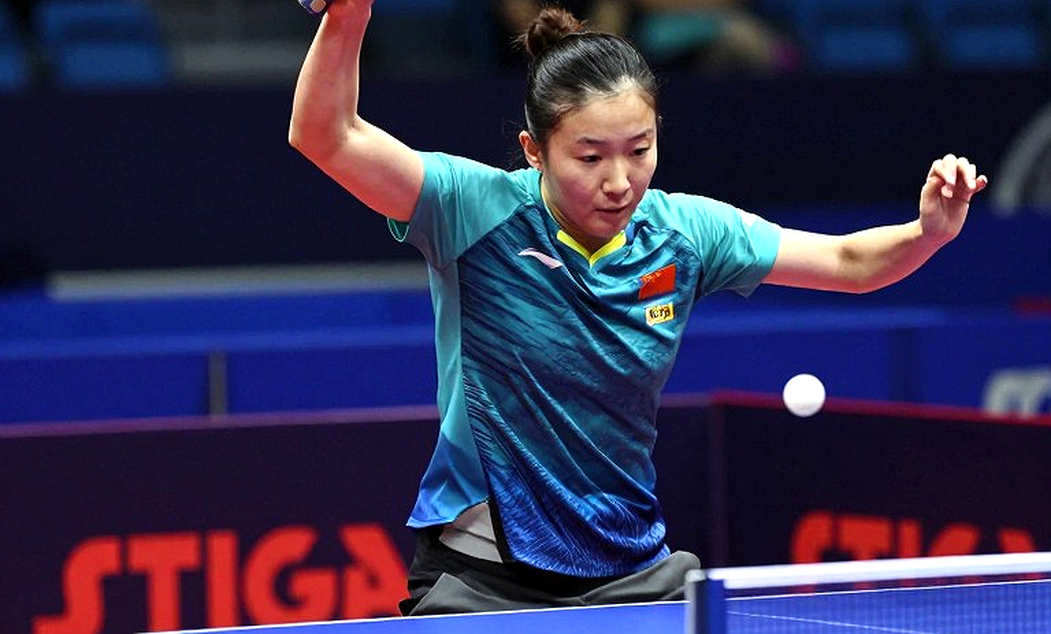
The number one positions belong to Sophie Earley and Isaac Kingham. Earley won the inaugural 2026 edition and then did not appear in 2026. Kingham has never stood on the podium of this event.
A reigning champion seeded below a player who missed the previous edition. In Table Tennis England's preview, running more than seven hundred words, the detail passes without a word of explanation. For me, it is the only data point genuinely worth excavating.
The Under-21 National Cup is England's domestic under-21 championship. The first edition ran in 2026, the second in 2026, and the coming edition is the third. The venue is Highfields TTC in Wellingborough, a local club rather than a national training centre or an arena with a large stand. The programme is free to download and highlights go to YouTube the following week.
The format is compact: ten players per gender, invited by national ranking from the England-eligible pool, contesting a single round-robin over two days. No draw. No bracket. No seed protection.
A word about the texture of the source. This preview contains not a single line on technique, on rubber or blade, on physical load, on any specific match. No world rankings. No prize money. No ITTF or WTT ranking points. Not one coach is named. This is an association's logistics notice, and I will read it as what it is: a competition design.
In 2026, the press-room door closed in front of me. Today, I read it through data. And a competition design, if you read its frame closely, says a good deal.
The first calculation is the simplest: ten players, one round-robin, two days. Each plays nine matches, four to five per day. At junior level, nine matches inside forty-eight hours is a test of conditioning and recovery. It does not measure ceiling.
A full round-robin turns the Under-21 National Cup into a test of consistency rather than a stage for the moment. For a development event whose purpose is talent identification, that is the right choice. No lucky bracket, no scenario in which a low seed rides a favourable draw to the semi-finals. After nine matches, the player top of the standings is usually the genuinely best player in the field.
That same format makes Pashley's case hard to read. She played the European Championships the previous week. A player stepping down from continental competition into a two-day round-robin at club level, with nine matches in forty-eight hours, faces two opposite scenarios: either she carries the sharpness of peak competition, or she carries accumulated fatigue. The source does not say which. I will not guess on its behalf.
The second data point, and the most interesting: the seeding mechanism. Both defending champions sit at two. That only happens when seeds are generated automatically from the national ranking list rather than from title-holder status. As governance, it is a clean choice: quantified, not dependent on human decision, with no discretionary places.
But it carries a known side effect. Ranking lists reward attendance volume. A player who enters many domestic events accumulates steadily; a player whose calendar is weighted towards international events accumulates thinly. Earley missed 2026 and still holds number one, while Pashley, who won 2026, remains at two. Read through the pure logic of the ranking list, that is legitimate. Read through the logic of a championship, it sits slightly askew.
Earley's case deserves separate treatment. She missed 2026 and the reason is not stated. Injury, exam commitments and international calendar conflict all produce the same silence in a preview. If it was injury, her number one seeding is stale. If it was a calendar conflict, she may be the strongest player in this field.
The composition of the field shows an asymmetry. The women's side has four names with medals at this event: Earley, champion in 2026; Pashley, bronze in 2026 then champion in 2026; Eccles, silver in 2026; Iles, bronze in 2026. The men's side has three: Trumpauskas, bronze in 2026 then champion in 2026; Radiven, bronze in 2026; and Kingham, who has never appeared on the podium. That may be an artefact of whom the writer chose to feature. But if it reflects the real field, the women's title is the harder one to hold.
By the same logic, Trumpauskas's position looks more secure than Pashley's. His top seed, Kingham, has never reached the semi-finals here. Her top seed, Earley, is a former champion of this exact event and sat out the whole of last year, meaning she arrives fresher and with a seeding earned elsewhere.
The third factor: how much recent international competition the field carries. In 2026, nine players came straight from a WTT Star Contender staged on English soil. This year only Pashley arrives from a major event, the European Championships. The rest step in from the domestic calendar.
A field whose recent competitive intensity is uneven compresses the gap between seeds and outsiders and raises the probability of an upset. This is structural inference, not a result forecast. But it points to something less comfortable: the National Cup's prestige depends on whether a WTT event happens to be in England at the same time.
Put the two editions side by side and they say something about England's domestic ecosystem. A WTT event on English soil can lift a whole cohort of young players into a different level of friction for a few weeks. When that event is absent, the national championship settles back into its own position: an internal stage.
On positioning, the event sits entirely outside the ITTF and WTT points system. No world points, no mandatory-participation obligation, no racket inspection. That insulates it from every reform risk, and equally from every reform benefit.
The fourth point, and the one I want to dwell on. The preview refers to plenty of international experience in the respective categories as a general claim, without a single overseas result attached. Not one world ranking. Not one result against a foreign opponent. Chinese, Japanese and Korean coverage of equivalent domestic events routinely frames results against world rankings. That gap in media infrastructure is itself part of the competitive gap.
From my own experience watching round-robin events at junior level, one thing never shows up on the scoreboard: the player who wins match eight is often the player who loses match nine. Not because they are weak. Because the schedule gives them no time to recover between two closely spaced rounds.
The structure also tells us each gender is capped at ten places. If that cap is accurate, it draws a narrow pyramid: the pool of England-eligible under-21 players at competitive level sits in the low tens. The consequence is that every absence, such as Earley in 2026, removes a substantial share of the field's quality.
The phrase England-eligible in the invitation criteria also deserves attention. If only English players were meant, the wording would say English. The broader phrasing suggests a pool that includes players qualifying through residency, parentage or dual nationality. Part of the development pathway, then, is imported.
And a large blind spot: no coach is named. An association presenting its flagship under-21 event without mentioning a coaching staff, a training structure or sports-science support. That is consistent with a light-touch, club-distributed support model, unlike the centralised East Asian model. I am not concluding which model is better. I am only recording that any statement about coaching quality here would be invention.
There is one positive signal, and I want it credited properly. Both Pashley and Trumpauskas followed the same line: bronze in 2026, title in 2026. Two players in the same cohort improving on the same rhythm. That pattern fits a cohort-wide development effect better than two isolated exceptional cases. Season-on-season improvement is a healthier indicator than a prodigy pulling clear of the field.
Where I want to push back is the belief that transparent criteria produce fair outcomes.
The organisers have removed human discretion entirely from selection and seeding: ranking position, eligibility, round-robin format. No wildcards, no committee places. Set against larger federations, this is close to a self-policing system, and the governance risk here is genuinely low.
But transparency of criteria does not guarantee fairness of outcome. If the national ranking list itself rewards attendance volume, then the transparent rule faithfully reproduces a bias already built into the list. At under-21 level, the age band where rankings churn fastest, an invitation mechanism closed at the top ten creates a closed-shop risk exactly when openness matters most: the rising player ranked eleventh has no route in.
Tactics are what people draw on a blackboard. Data is what they draw on reality. Here, what is drawn on reality is an invitation system closed at ten and run on a ranking list, and an event whose prestige is borrowed from the WTT calendar.
This edition I am watching three things. Whoever tops the standings after nine matches, if it is a low seed, will confirm the format did its job. How Pashley recovers from the European Championships will yield load data the ranking list cannot measure. And further out, whether a player ranked eleventh is locked out next time, and whether the association opens extra places on form.
Players leave the court, spectators leave the stand, but data never leaves the game.