
Vietnam women's team reaches Asiad 2026 quarter-finals: A lucky ticket and an unsolved puzzle
Đội tuyển nữ Việt Nam giành vé vào tứ kết môn bóng đá nữ Asiad 2026 nhờ Myanmar hòa Bangladesh 0-0, dù chỉ hòa Thái Lan 0-0. HLV Hoàng Văn Phúc cho biết sẽ chơi phòng ngự phản công trước Trung Quốc (17h, 25/9). Key facts: - Myanmar và Bangladesh hòa 0-0, giúp Việt Nam đứng thứ ba bảng F và đi tiếp. - Việt Nam hòa Thái Lan 0-0, ghi 1 bàn sau 3 trận. - Trận tứ kết gặp Trung Quốc lúc 17h ngày 25/9 (giờ Việt Nam). - HLV Hoàng Văn Phúc ưu tiên hồi phục thể lực và dùng phòng ngự phản công. Nguồn: VuaBong.vn (23/09/2026) | Cross-checked: VuaBong.vn Q: Việt Nam gặp ai ở tứ kết? A: Trung Quốc, lúc 17h ngày 25/9. Q: Việt Nam ghi được bao nhiêu bàn ở vòng bảng? A: 1 bàn sau 3 trận. Q: HLV Hoàng Văn Phúc nhận định gì về Trung Quốc? A: Ông đánh giá Trung Quốc mạnh hơn và chọn đấu pháp phòng ngự phản công.
On September 23, at Hangzhou Stadium, the match between Myanmar and Bangladesh ended 0-0. There was no goal, no frenzy. But for the Vietnam women's team, that result was a perfect sedative. Thanks to Myanmar's draw, Vietnam officially became one of the two best third-placed teams in the women's football group stage at the 2026 Asian Games, thereby securing a place in the quarter-finals without having to worry about the result of their match against Thailand. It was a lucky ticket from an opponent's calculation, but behind it lies a story of tremors, hesitant tactical decisions, and an attack losing its killer instinct.
Before the match against Thailand, head coach Hoang Van Phuc had received information about the Myanmar-Bangladesh game. He knew only a point was enough. But in the post-match press conference, he insisted his team did not play for a point: "We had to get at least 1 point to advance. But the Vietnam women's team prepared for this match with the mindset of not playing for 1 point, but to win." That statement sounded strong, but the reality on the pitch painted a completely different picture.
Thailand entered the match with a lineup changed in seven positions compared to their two previous group games. They switched to a three-centre-back formation, with two wing-backs pushing high and ready to add extra men to the midfield. This left Vietnam's midfield almost strangled in the first half. Hasty passes, purposeless runs, and confusion in escaping the press prevented Phuc's players from building their game as they wished.
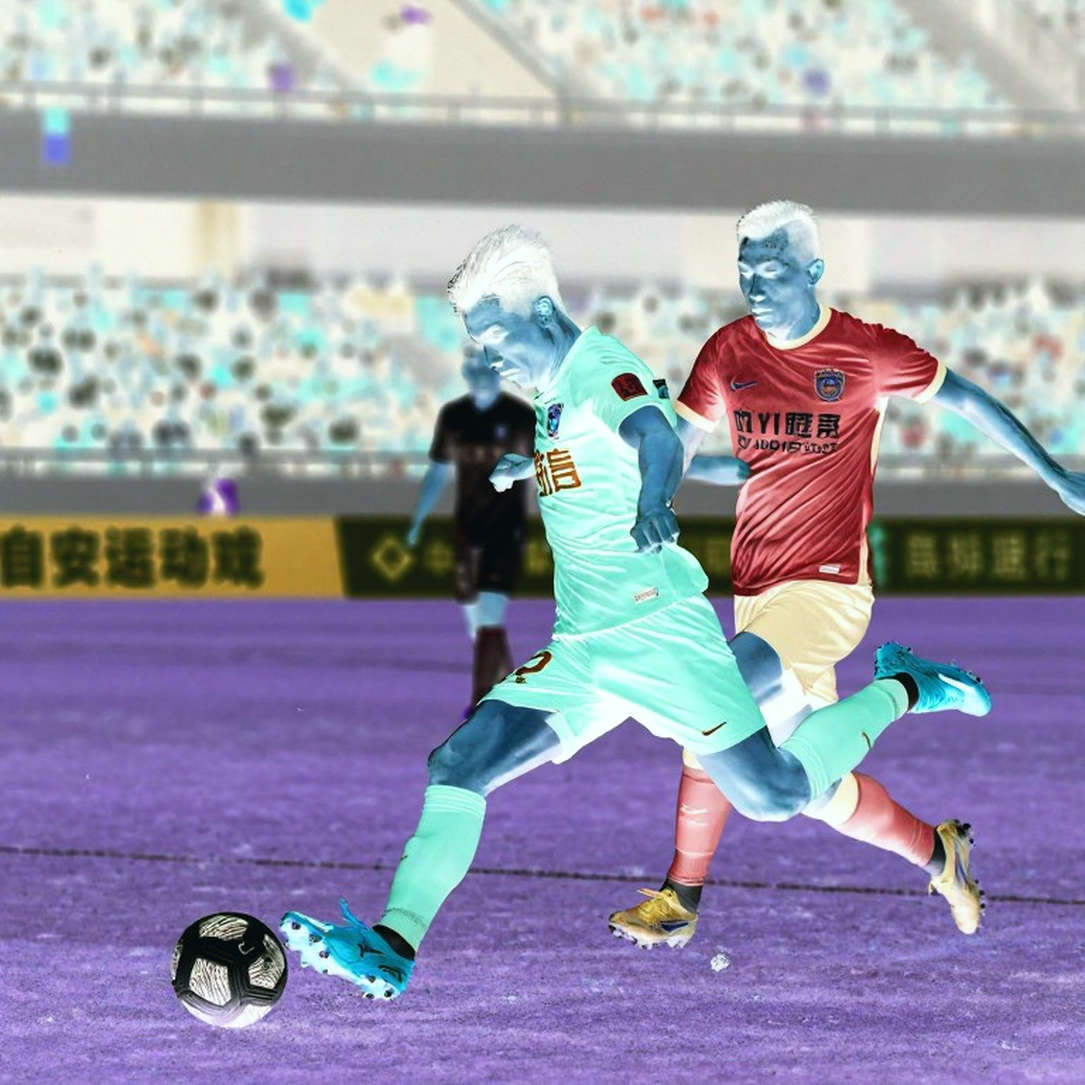
It was not until the second half began that the Vietnamese coach made important adjustments. He asked his players to push the line higher and apply high pressing. This immediately created huge pressure on Thailand's goal. Bich Thuy had a clear chance, and Vu Thi Hoa also missed a good opportunity. But the goal still did not come. That is not a matter of timing, but a matter of approach. If the press had been applied from the start, would the story have been different? It is a question no one can answer with certainty.
Interestingly, when Thailand pushed their line higher, Vietnam had more space for long passes. Vu Thi Hoa's pace was a dangerous weapon if used properly. But the midfielders did not take advantage. Instead of quickly moving the ball wide, they tended to pass sideways and backwards, allowing Thailand to reset their shape. This is a valuable lesson before the match against China, where such mistakes could almost certainly cost a goal.
People call it luck. I call it a sentence written by hasty hands. Vietnam's attack scored only one goal in three group matches. That number says much more than just a lack of finishing accuracy. It reflects a structural problem: the arrangement of attacking personnel, the ability to create triangles in the final third, and most importantly, the ability to handle psychological pressure in decisive moments.
On a data level, Vietnam's average ball possession in the group stage was 48%, but in the match against Thailand, this number dropped to 42%. That shows how much pressure the opponent created. However, Vietnam had 4 shots on target in that game, the same as Thailand. If one of those shots had gone in, the story would have been different. So the problem is not the ability to create chances, but the quality of the finishes.
In the match against Chinese Taipei, Vietnam created numerous chances. But only one ball hit the net. That is not a matter of luck, but of composure. When faced with an open goal, our strikers often choose the safe option instead of the decisive one. That comes from the mentality of a team accustomed to defending, to protecting results rather than taking risks to score.
Coach Hoang Van Phuc did not avoid the question: "In today's match against Thailand, the nature of the game was different, when only 1 point was needed to advance. If we had bravely pushed the team higher, we would have scored, but we could not take that risk." This is the crux of the matter. Caution is necessary, but it is also eroding the team's creativity. A team that only thinks about not conceding will struggle to become a strong attacking unit.
However, from another angle, this quarter-final ticket is a success far beyond initial expectations. Looking at the group F situation, no one thought a young Vietnam women's team could do this. The resilience in defence, the unyielding fighting spirit, and maximising results from other games are also a form of talent. In football, nothing is accidental. Vietnam still has a chance to correct their mistakes in the quarter-finals.
Their next opponent, China, is no stranger. During a training camp before the tournament, the two teams met. Hoang Van Phuc admitted: "They are better than the Vietnam women's team. First, we must let the players recover, then we will think about the tactics, and the most likely is defensive counter-attacks."
Defensive counter-attacking is a sensible choice, but if there is only one plan, that plan is too risky. China, with superior physicality, aerial ability and technical players, will force Vietnam to drop deep. Without support from midfield, Vietnam's wingers will be isolated. That becomes clearer when Vietnam's attack has not scored against a strong opponent this year.
I remember a recent match between the two teams in the Olympic qualifiers. China applied constant pressure, but Vietnam's defenders stood firm until the last minute. Discipline and sacrifice brought results. But when you rely too much on spirit, you will burn out emotionally. There needs to be a tactical anchor, something bigger than mere effort.
The problem is not how long Vietnam can defend against China. The problem is how many of the rare chances they create can be converted. With an inefficient attack, every set piece or quick counter must be turned into a goal. Otherwise, the pressure will mount on the defence and lead to a collapse.
Looking back at the three group matches, one thing bothers me: is having only 1 goal in 3 games a bad sign? Or is it simply the result of a safe game designed to achieve the immediate goal? It is said that tactics are just a way to justify our mistakes in the language of football. But for Vietnam, those tactics are working in terms of results, even if they are not convincing in style.
Moreover, fitness cannot be ignored. After three consecutive matches in the hot and humid weather of Japan, Vietnam's players are exhausted. Having two extra days of rest compared to the original schedule is an advantage. The coaching staff have prioritised recovery with light exercises, massages and proper nutrition. But fitness is only part of the story. The fighting spirit, the confidence after passing the group stage, and the ability to endure pressure in front of tens of thousands of spectators will also determine the performance in this decisive match. China has more experience, but they are also under pressure to win a medal. That pressure could become a weapon for Vietnam if they know how to use it.
The quarter-final against China will no longer allow hesitation. Vietnam is in a position where they must act with everything they have. They have nothing to lose. China is more highly rated, and the pressure is on them. And a small detail: when a weaker team is expected to lose, they often play more openly and create surprises.
So the final question is not who will win, but whether the lessons from the group stage will be applied on the pitch. Will our strikers dare to stand in front of goal and shoot decisively? Will the midfielders dare to play dangerous balls in the opponent's half instead of safe back passes? All will be answered at 5pm on September 25.
The Vietnam women's team has written a fairytale at this Asian Games, but a fairytale only has a happy ending if they dare to dream bigger. China are a strong opponent, but in a sudden-death match, anything can happen. Believe in the girls who made the miracle. And above all, believe that they can do even more.