
The Real Biggest Beneficiary of the Vietnam–Korea PUBG Drama Is Not Delta Force
**Core answer** Người hưởng lợi lớn nhất từ vụ lùm xùm PUBG Việt – Hàn không phải Delta Force hay PUBG Mobile, mà là dòng chảy truyền thông ngắn hạn. Các tựa game đối thủ chỉ nhận được lượt nhắc tên, chưa có bằng chứng người chơi thực sự chuyển đổi. Thiệt hại thực tế thuộc về cấu trúc niềm tin giữa KRAFTON và cộng đồng PUBG Việt Nam. **Key facts** - Himass bị buộc rời PUBG Asia Stars; cộng đồng tin có thể bị cấm tới một năm, chưa có văn bản chính thức xác nhận. - KRAFTON xin lỗi nhưng bị đánh giá không thỏa đáng; điều khoản bị cho là vi phạm không được công bố. - Streamer Việt Nam đồng loạt xóa PUBG; Soopi tuyên bố rời game nếu không có giải thích thỏa đáng. - DJ Chip tham dự sự kiện Delta Force; khán giả đề nghị PewPew thử tựa game này. - PUBG Việt Nam gần như im lặng, chỉ xuất hiện ở phần xử lý liên quan Himass và TanVuu. **Source attribution** Nguồn: bài bình luận thị trường esports Việt Nam về diễn biến PUBG Asia Stars; phần lớn thông tin do cộng đồng và tác giả bài gốc cung cấp, chưa được xác minh độc lập qua kênh chính thức của publisher. **Related Q&A** Q: Delta Force có thực sự hưởng lợi từ vụ việc này không? A: Chưa có bằng chứng về việc người chơi chuyển đổi thực tế; phần lớn chỉ là lượt nhắc tên và trò đùa trên mạng xã hội. Q: Himass có bị cấm thi đấu một năm không? A: Chưa có văn bản chính thức nào xác nhận mức án; đây hiện là suy đoán của cộng đồng. Q: PUBG Mobile có bị ảnh hưởng bởi vụ việc này không? A: Không, sự việc thuộc hệ sinh thái PUBG PC và không tác động trực tiếp tới PUBG Mobile.
The Real Biggest Beneficiary of the Vietnam–Korea PUBG Drama Is Not Delta Force
That night, several Vietnamese PUBG streamers deleted the game from their machines and announced it live on stream. There was no lost match behind it, no personal drama. Just a collective, deliberate act, broadcast in public. At the same time, Himass was removed from PUBG Asia Stars while the tournament was still running. KRAFTON issued an apology. The community answered that the apology was not enough. Soopi declared he would walk away from the game unless a satisfactory explanation came.
I read through the sequence several times. My job is reading transfer markets, so I have a habit of separating the noise from the structure. What is happening here is a crisis of trust, and it does not behave like a communications crisis. The loudest noise is usually where the most important signal hides, and in this case the noise comes from the fans while the signal sits on the operator's side.
Korea is where PUBG was born. KRAFTON is headquartered there and holds the entire governing authority over the official competitive system: writing the rules, running the events, adjudicating violations, and also collecting the upside from the ecosystem's growth. Vietnam sits at the other end of that axis. The Vietnamese PUBG PC community is large, loyal, layered with KOLs and streamers, and populated by names domestic players know by face.
I do not have international ranking data reliable enough to say which side is stronger right now, so I will not do that. What I can compare is the power structure, and the gap there is unmistakable: one side writes the rules, the other lives under them.
PUBG Asia Stars sits inside the official system. There, Himass was forced out. The community believes the penalty could stretch to one year. No official document confirms that figure, and no document states which rule was allegedly broken. TanVuu appears alongside Himass in PUBG Vietnam's handling, suggesting the matter involves more than one individual. Eddie was affected by the quality of on-site interpretation. PUBG Vietnam stayed close to silent throughout.
That is everything I have to work with. It is far less than a case of this magnitude requires to reach a conclusion. And that shortfall is itself part of the story.
The structure beneath the surface
Based on my experience following matches and personnel shifts over six years, I always check three things before concluding anything: who decides, who pays, and who is the only party with no voice.
Here, all three answers point to the same place. KRAFTON decides. KRAFTON pays. And the Vietnamese players are the party with no voice in the process.
This is the core point: the conflict is not a single wrong decision, it is a structure in which the rule-maker is also the interested party. When one organisation writes the rules, runs the tournament, and sits in judgment, every adverse ruling is automatically read through a lens of suspicion, even when the ruling is technically correct. Trust is not lost on a single error. Trust is lost when nobody stands in the middle to confirm that this time there was no error.
Esports has no independent arbitration mechanism equivalent to a court of arbitration for sport. There is no third party with authority to adjudicate between a publisher and a regional community. So when disagreement arises, grievance has nowhere to flow except the one channel still open: the public story. That is why this case ignited so fast and so hard. Not because Vietnamese fans overreacted, but because the system gave them no other procedural exit.
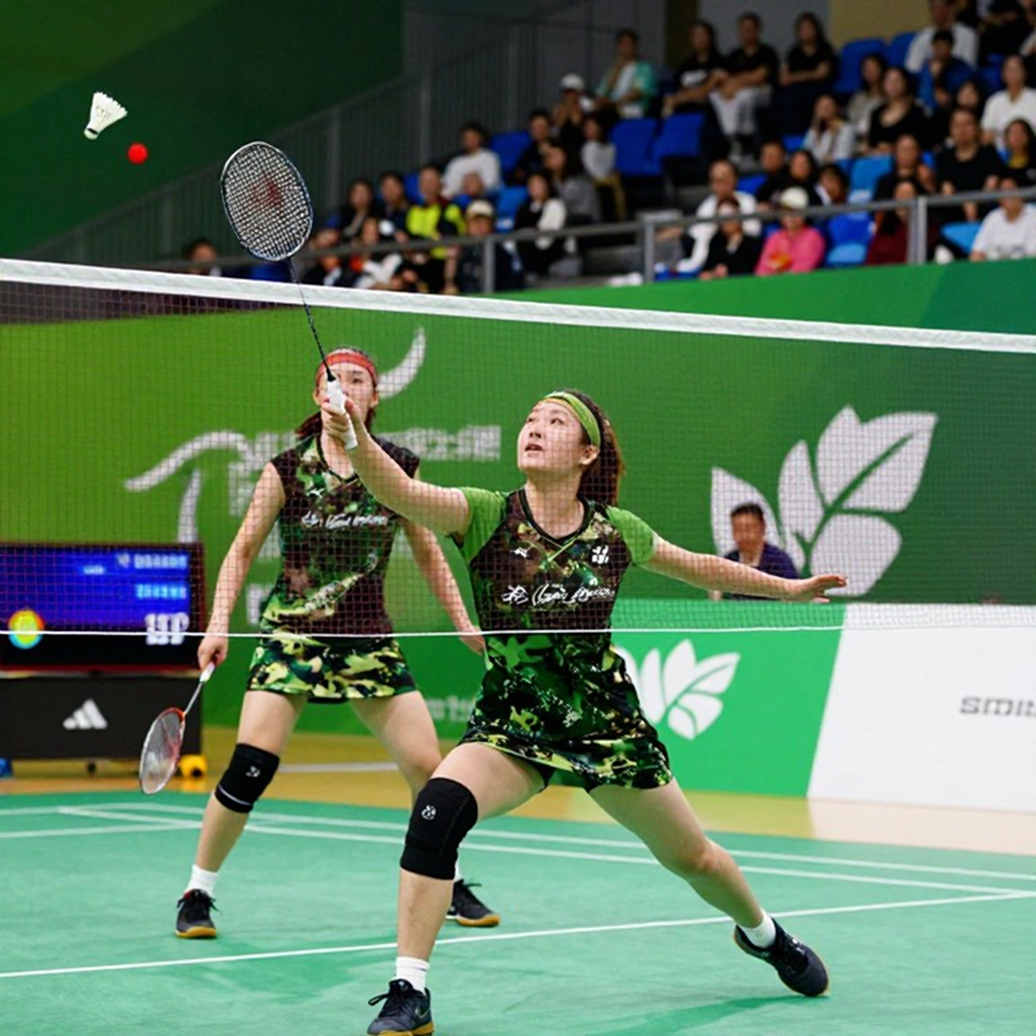
The interpreter detail is the most telling item in the whole affair. It is small, concrete, and verifiable. A player affected by the quality of interpretation at an international event points to an operational gap, not a conspiracy. But operational gaps, repeated often enough, produce a sense of systemic unfairness. And systemic unfairness is more dangerous than a single wrong decision, because no apology can fix it.
KRAFTON's apology was judged unsatisfactory, and I think the reason is that it answered the wrong question. The community does not want an apology. It wants to know which rule was broken, what the decision process looked like step by step, and whether any step was executed improperly. An apology without information only confirms that the party holding power is still holding it.
Reading the beneficiaries more carefully
Once the story blew up, a list of names surfaced quickly as "beneficiaries": PUBG Mobile, Delta Force, then League of Legends, TFT, VALORANT. At surface level the logic sounds fine. Players are angry, players leave, players look for a new field.
Two problems.
First, most of that naming stops at jokes on social media. The original piece itself concedes this. In my line of work there is one simple rule: a mention is not a conversion. A player typing "maybe I'll move to Delta Force" into a chat box does not create a new account, a new hour played, or a new dollar of revenue. The distance between the sentence and the behaviour is far wider in esports than social dashboards suggest.
Second, title migration does not work on the angry-today-gone-tomorrow model. It depends on mechanical fit. A PC FPS player moving to another FPS faces a low skill barrier. Moving to a MOBA or a tactical shooter with a completely different in-match economy faces a far higher barrier and a much lower retention rate. The fact that PUBG Mobile and Delta Force appear first on the list is not coincidence: they are FPS.
The more interesting layer is the KOL layer. DJ Chip attending a Delta Force event, and viewers suggesting PewPew try that title, are far more concrete signals than a comment thread. Here a distinction matters: a KOL's value in a title migration is communications value, not competitive value. They bring an audience, not a professional roster slot. A streamer leaving a game does not weaken a national team. It weakens the ecosystem's viewership.
And this is where I will be blunt. A failed contract is an open diary. This affair is such a diary, and it is telling us about the limits of a community's attention budget, the reaction speed of a publisher, and how fast an ecosystem without an appeals mechanism burns through trust.
If I had to name one biggest beneficiary, I would point at the news flow itself, not at Delta Force.
The blind spot the official story skips
The "who benefits most" frame carries a characteristic blind spot. It assumes one party's damage automatically becomes another party's gain, and that the gain converts into numbers immediately.

In reality, most of the benefit from a crisis like this flows elsewhere. It flows to content platforms, where engagement spikes for a few days and returns to baseline. It flows to news channels, where one event is sliced into five or seven consecutive headlines to extend the attention cycle. The surest beneficiary, in the short term, is the information flow itself.
The second blind spot concerns who loses. When a player is pushed out of an official tournament and faces the risk of a long competitive suspension, what is lost is not only one career. It is a link in the international pathway of an entire generation of younger players behind him. When a regional scene loses a name capable of competing at continental level, the qualification slots, the coaching contracts, and the chances to accumulate international experience thin out with it.
And there is a possibility few mention. KRAFTON could be a late beneficiary, if it chooses to use this crisis to standardise its operations: interpretation up to standard, clear publication of rules, a genuine appeals channel. The price of that benefit is transparency. And historically, publishers rarely pay that price until they are pushed to the wall.
In the transfer market, there are no accidents, only things we have not read carefully. Same here. This is not a communications accident. It is the predictable output of a system with no self-correction mechanism.
Takeaway
Three signals worth tracking over the coming weeks, in order of importance. One, the official ruling on Himass, whether a suspension is imposed, and on which rule. Two, a substantive statement from PUBG Vietnam, not an administrative notice. Three, whether the KOLs actually switch titles or stop at declarations.
If all three fall silent, this crisis will settle within a few weeks and return at the next flashpoint. If any one of them switches on, what is at stake is not a game title, but the principle that players in smaller regions are still treated as part of the same system.