
The 2026 Billiards Power Map: Six Sports, One Name, and the Crack Beneath the Table
**Câu trả lời cốt lõi:** Bi-a không phải một môn thể thao mà là sáu môn khác nhau — snooker, pool chín bi, pool tám bi, Chinese 8-ball, carom ba băng và Russian pyramid — do các tổ chức quản lý khác nhau vận hành, với bộ luật, cấu trúc tiền thưởng và mức rủi ro không thể so sánh trực tiếp. Gọi sai tên sẽ dẫn tới phân tích sai. **Dữ kiện chính:** - Ngày 6 tháng 6 năm 2023, WPBSA cấm vĩnh viễn Liang Wenbo và Li Hang, cùng tám tay cơ Trung Quốc khác. - Vị trí thứ 64 trên bảng xếp hạng tiền thưởng hai năm là đường ranh giữ Tour Card; dưới mức đó phải xuống Q School. - Nhà vô địch Giải vô địch thế giới tại Crucible nhận khoảng 500.000 bảng; người thua vòng một nhận khoảng 20.000 bảng. - Quỹ thưởng cú đánh tối đa 147 điểm ở các sự kiện Triple Crown được công bố ở mức 147.000 bảng. - Ronnie O'Sullivan, John Higgins và Mark Williams đều sinh năm 1975 và vẫn nằm trong nhóm đầu bảng xếp hạng. **Nguồn:** WPBSA, thông cáo ngày 6 tháng 6 năm 2023; WST, công bố cơ cấu tiền thưởng mùa giải | Cross-checked: VuaBong.vn **Hỏi đáp liên quan:** **Hỏi: Vì sao không thể gọi chung snooker và pool chín bi là bi-a khi phân tích?** Đáp: Vì luật, định dạng, hệ thống giải và chỉ số đánh giá của hai môn không tương thích — ví dụ cú phá bi tồn tại ở chín bi nhưng không tồn tại ở snooker. **Hỏi: Rủi ro lớn nhất của bi-a chuyên nghiệp hiện nay là gì?** Đáp: Phân cực tiền thưởng ở nhóm giải hạng thấp và hạng trung, nơi dòng tiền cá cược có thể vượt xa tổng tiền thưởng của cả giải, tạo ra cấu trúc dễ bị tổn thương. **Hỏi: Thị trường Chinese 8-ball có đe dọa snooker không?** Đáp: Không — theo chỉ số chiều sâu lực lượng của VangBong.vn, dòng tiền Trung Quốc đang hoạt động như một thị trường lao động thứ hai, nâng sàn thu nhập cho nhóm tay cơ hạng trung và giảm áp lực tài chính tuyệt đối.
On 6 June 2026, from Bristol, the World Professional Billiards and Snooker Association (WPBSA) published the largest sanction in professional snooker history. Liang Wenbo and Li Hang received lifetime bans. Eight further Chinese players received suspensions ranging from one year and eight months to five years and four months. A long, dry document, written in the kind of administrative English that forces a reader to go back and read it a second time to work out what they have just read.
That day I was sitting in Liverpool, reopening Vietnamese news reports. Most of them called the affair a 'billiards scandal'. Three words. One broad name. And inside that broad name, the story had already been distorted from its first line, before anyone had read the name of a single convicted player.
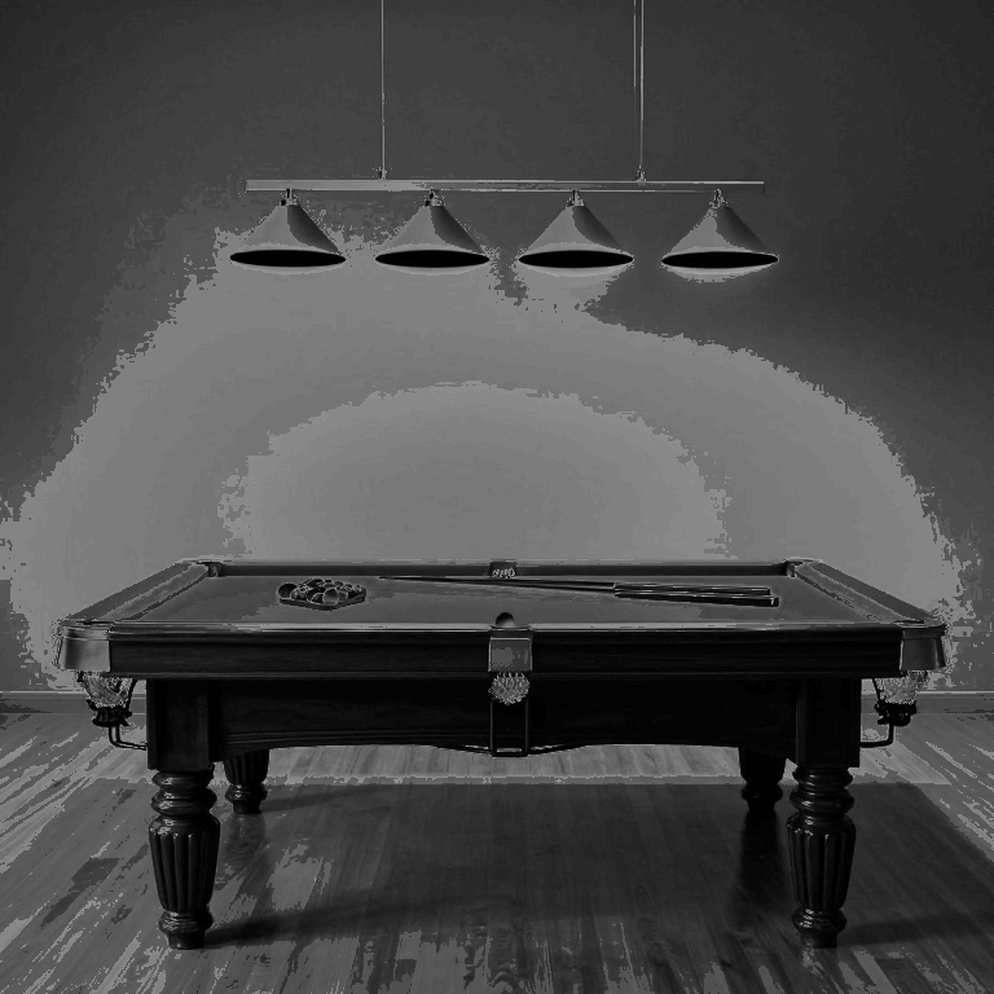
Because 'billiards' is not one sport. It is an umbrella. Beneath that umbrella sit six different sports, played on six different tables, with six rulebooks that cannot be translated into one another, licensed by different governing bodies, earning money from different markets and — most importantly — carrying different risks.
Context: six sports, three centres of power, and a season with no room for ambiguity
To write about billiards seriously at this point, a writer must first choose one of six drawers. Snooker: a twelve-foot table, six pockets, fifteen reds and six colours, played mainly in the UK, Ireland, China and continental Europe, licensed by the WPBSA and operated by World Snooker Tour. American nine-ball: a smaller table, ten balls, rotation rules, tightly bound to the Matchroom system and the US, Philippines and Taiwan markets. American eight-ball: the same table family as nine-ball, but with solids-and-stripes rules, dominant on Western bar tables. Chinese eight-ball: a snooker-proportioned table using pool balls and rounded American-style pockets, run by the Chinese Billiards and Snooker Association alongside domestic promoters — and this is the drawer with the fastest prize-money growth of the past decade. Three-cushion carom: no pockets, just three balls, the discipline of the UMB, dominant in South Korea, Vietnam, Egypt and parts of South America. Russian pyramid: larger balls, tighter pockets, rules that cannot be meaningfully compared to anything else in the group, popular in Russia and Eastern Europe.
Six drawers, three real centres of power: Bristol, where the WPBSA and WST sit; Manila and London, where Matchroom and the international pool system operate; and Beijing alongside provincial tournament cities, where the CBSA and the Chinese eight-ball circuit live.
Across twenty-seven years of watching and commentating on sport — including two seasons at the snooker commentary desk for VTC during the era when Steve Davis and Stephen Hendry dominated — I have learned something uncomfortable. Viewers are not wrong to call all of it billiards. The fault lies on the writing side. When an analyst uses the word 'billiards' to describe a WPBSA match-fixing case, readers automatically apply the weight of a bar-room pastime to a professional sport with a six-figure prize structure. Every conclusion drawn afterwards is skewed.
The current season makes the problem worse, because this is a period in which Chinese money is flowing into all three drawers at once. A world number fifty in snooker can earn more from one domestic Chinese eight-ball event than from an entire Tour Card season. A Filipino nine-ball player can earn what amounts to a career's bar-table income from two weeks on the Matchroom circuit. A Vietnamese carom player can out-earn both by winning a single UMB World Cup. Four career paths, four payrolls, four risk profiles — all filed under one word.
Vocabulary is the map: name the term or lose the sport
The fastest way to judge whether someone genuinely understands a sport is the vocabulary they use. Before you pick a side, read what people call them. In billiards, that means reading the name of each concept before quoting a single number.
'Break shot'. The concept exists in nine-ball and eight-ball, where the one-ball is racked at the head of the table and the opening shot dictates the structure of the entire rack. In snooker there is no 'break shot'. A frame begins with a safety exchange, and at elite level the first shot is often simply a push of the cue ball to the bottom cushion. A translator working mechanically from English will write about 'Ronnie O'Sullivan's break shot' in a snooker match — a sentence that is tactically meaningless.
'Century break' — one hundred points in a single visit. This is snooker's core metric and is close to non-existent in nine-ball, because the total points available in a rack rarely reach that figure. In eight-ball and Chinese eight-ball, people say 'clearance' or 'run-out' — clearing the table in one visit. Three terms, three logics: a century measures the ability to accumulate points under positional pressure, while a run-out measures the ability to manage ball order under time pressure.
'Free ball' and the 'miss rule' are snooker-only specialities. A free ball allows a player to nominate any ball as the object ball, and it exists only because snooker rules permit the restoration of a position after a foul. The miss rule — obliging a player to make a genuine attempt to hit the object ball — is the most contested rule in the entire rulebook and has delayed finals while referees call repeat fouls. No other discipline has this mechanism, because no other discipline restores the previous position.
'Push-out' belongs to nine-ball: after the break, the player may push the cue ball anywhere without it counting as a foul, and the opponent may accept or decline the position. 'Called pocket' belongs to the eight-ball family: a player must nominate the pocket in advance. 'Break-foul penalty' belongs to pool: a foul on the break gives the opponent ball-in-hand or a free ball.
Six keywords, six doors into six different rooms. An analysis that mixes them does not fail on detail; it fails on the entire logical frame — like using a road atlas to drive a tram.
The core of the issue is this: each term is a component of a distinct risk system. Free ball and the miss rule exist because snooker is a long-form game of attrition, where a safe position is worth more than a risky pot. Push-out exists because the nine-ball break is so powerful that variance needs a release valve. Break-foul penalties exist because pool is designed for short duration and needs immediate punishment to preserve rhythm. Rules are not administrative paperwork; rules are the economic blueprint of a sport.
The Tour Card line: where a career snaps at number sixty-five
In snooker, the ranking system runs on a two-year cumulative prize-money list. Two years, not one season. This is the detail most viewers skip, and it determines the entire psychological pressure on a professional.
The line sits at number sixty-four. Inside the top sixty-four, you keep your Tour Card — the professional licence to practise the trade. Outside it, you lose your seat and drop to Q School, where three events run across a few weeks, hundreds of players compete for a very small number of places, formats are short, and one bad afternoon costs a whole year. Q School is the suspended sentence every player outside the top sixty-four can see.
The two-year system produces a paradox. A player can win a small event and leap up the rankings, then lose the same points the following season and free-fall. The same fortieth position on the list can therefore mean two opposite things: rising, or falling. Telling them apart requires reading the trajectory of points across twenty-four months, not just the current figure.
A number does not tell the whole story, but it knows where the story starts. With a fortieth position in snooker, the story starts with two questions: how long did it take to earn these points, and how quickly can they be lost?
Qualifying rounds sharpen the picture further. At the World Championship at the Crucible, the champion receives around £500,000. A first-round loser receives around £20,000. Same event, same stage, same media category — but a twenty-five-fold income gap between the first player and the last. A first-round loser may still have to cover their own flights, two weeks of Sheffield hotel bills and pre-tournament practice costs. After tax and expenses, that £20,000 shrinks faster than viewers assume.
The tournament pyramid above is equally stratified. The Triple Crown — the World Championship, the UK Championship and the Masters — comprises the three most iconic events, carrying the largest purses and the heaviest media pressure. Below sit the annual ranking events. Below those, the invitationals. Then the seniors circuit. And at the very bottom, Q School.
Each tier has its own risk structure. Invitationals carry no ranking points, so positional pressure disappears and players swing freer. Seniors events are shorter still, but the winner is usually whoever has retained a feel for the table. Q School is the shortest and most brutal of all — and the least analysed, despite deciding who is allowed to keep working.
Format decides upset probability, and the rankings never say so
One of the largest blind spots in sports viewership generally, and billiards viewership specifically, is reading a ranking without reading the format.
In snooker, the early rounds of many events use short formats — some are decided over four frames. In that format, variance overwhelms class. A world number eighty has a far higher chance of beating a world number five than in a best-of-nineteen. The reason is pure probability: in a small sample, skill has little room to accumulate into results. In the World Championship final, the format stretches to thirty-five frames across two days, and only then does the class gap have room to surface.
The consequence is that the snooker ranking list is a blended index. It measures not only class but class multiplied by the number of short-format events a player happened to run deep in. A player who wins three short-format events can climb higher than one who reached three long-format semi-finals. When comparing two players, an analyst must separate these two categories of achievement before concluding anything about relative strength.
In nine-ball and Chinese eight-ball, the issue is even sharper. Asian pool and Matchroom events use relatively low race lengths in the group stages, increasing later. Chinese domestic eight-ball events often use even shorter formats, sometimes just a few racks, because the goal is to produce broadcast content inside prime time. Short formats manufacture a particular hero: a player with fast rhythm, few errors in the first two racks, and no need to handle a long sequence of tension. That hero thrives in short events and fractures in long ones.
When I sat at the snooker commentary desk in the Davis and Hendry era, the hardest question from viewers was never who was stronger. The hardest question was: why does the same player who won everything last month lose in the first round this month? The answer was almost always format, not form.
The 147 pool, prize structure and the safety valve called data
A small but highly symbolic snooker detail is the rolling prize pool for the 147 maximum. At Triple Crown events, the pool is announced at £147,000 and rolls over; if several players make a 147 at the same event, the sum is split. The mechanism does two things. It converts a technical moment into a media event with economic value. And it shows that snooker runs on ceremonial rewards as well as match prizes.
Zoom out, though, and professional billiards prize structures remain sharply polarised. The top group takes most of the total pot. The middle and lower groups split what remains. For a player outside the top forty, a season can run at a loss unless they go deep in at least one paying event. Travel between the UK and Asia, hotel costs, coaching fees and practice costs at academies in Sheffield or Darlington are fixed, while income fluctuates.
This is not a story about injustice. It is a story about risk structure. When income is fixed at a low level and costs are fixed at a high level, financial pressure becomes a sporting variable — it shapes event selection, scheduling and decision-making in deciding frames. And it shapes a person's tolerance for approaches from outside.
This is why betting monitoring in professional billiards must read money-flow data, not merely individual behaviour. An abnormal betting pattern at a low-prize event, in a low-viewership slot, in a match that is not televised — that is a measurable signal. The problem is that a signal only has value if someone reads it correctly. The thicker the data file, the more the story must be told with human ears, not machine eyes.
Chinese money: not a raider, but a second labour market
Over roughly the past decade, Chinese eight-ball has become an escape route for mid-tier snooker players. Domestic Chinese events announce winner's purses in six figures in renminbi, matching or exceeding the prize money of many minor snooker ranking events. Formats are short, the calendar is compact, travel is covered by promoters and — most importantly — the chance of going deep is far higher than in a snooker event with hundreds of professionals.
Many in the industry treat this as a threat. I do not. It is a second labour market, and it raises the income floor for the whole system. A snooker player ranked fifty-fifth, who previously had two options — cling to the Tour Card or quit — now has a third. The existence of that third option reduces absolute pressure on every individual snooker match, and over the long run, reduced absolute pressure also means reduced incentives to look for solutions away from the table.
The greater concern lies elsewhere: the gap in governance standards between circuits. Snooker has centralised betting monitoring, a published investigative process and named sanctions. Domestic Chinese eight-ball operates across multiple circuits and multiple promoters, and not every circuit maintains the same level of transparency. When a player moves between the two, they move between two different risk structures — and they do not always realise it.
The generational handover: the class of 2026 and a board held too long
The three names that shaped modern snooker were all born in 2026: Ronnie O'Sullivan, John Higgins and Mark Williams. They all turned professional around 2026, dominated for two decades, and all three remain in the upper reaches of the rankings past the age of forty.
The longevity of that group is both beautiful and troubling. Beautiful, because it proves snooker allows a peak to be extended through technique, experience and schedule management. Troubling, because it shows the next generation has not yet taken the board. If a new generation were truly strong enough, it would push the old group down rather than wait for the old group to retire.
Signals of change have appeared, but unevenly. Ding Junhui paved the way from the early 2000s and remains the bridge between two eras in the Chinese market. Judd Trump and Kyren Wilson have won major titles and created a genuine upper-middle class of elite players. The younger Chinese cohort has its own prize funds, its own training system and a domestic market large enough to sustain itself.
But the shift remains localised. It is clearest in short formats, where format allows new skill to speak. It is slowest at the Crucible, where the two-day format rewards emotional management and the ability to fight back while behind.
There is a paradox rarely discussed: the 2026 sanctions interrupted precisely the generation expected to take over. Yan Bingtao won the 2026 Masters — the first major title by a player born after 2026 — then received a ban. Zhao Xintong won the UK Championship the same year, with a style rated among the most beautiful since a young O'Sullivan, and was also banned. Those two names were the spearheads of a generation, and both lost the most important stretch of their careers.
Compliance and risk: money does not immunise against fixing
Two cases serve as reference points in any risk analysis of professional billiards.
The first is John Higgins in 2026, following a newspaper investigation. He was cleared of match-fixing but found guilty of failing to report an approach and of bringing the sport into disrepute. The sanction was a six-month ban and a fine. The case established an important principle: in professional billiards, failing to report an approach is itself a separate violation.
The second is the sanction of 6 June 2026 against ten Chinese players. Its scale — in numbers, severity and investigation length — makes it an unavoidable landmark in every subsequent risk analysis.
Notably, both cases involved high earners. Higgins was among the highest-earning players in the world at the time. Yan Bingtao had earned around £250,000 for the 2026 Masters title, before sponsorship deals.
If money were a fence, neither case would exist. They exist, and that demands serious analysis: the gap between a top player's actual income and the self-image they have constructed for themselves may be a more important risk variable than the gap between income and living costs.
The clearest risk structure sits in the low-prize, low-viewership tier. There, betting flows can be many multiples of a tournament's total prize fund. When a single frame can generate more betting value than the sporting value of the whole event, defences must be designed differently — not only through sanctions, but through tournament design.
The counter-intuitive angle: fragmentation is what saved billiards
The reflex across the industry is unification. One sport, one brand, one tour, one story. Many argue that six drawers are a weakness, that billiards needs a single governing body to negotiate with broadcasters, sponsors and markets.
I think the opposite has been true for the past two decades.
It is precisely because there is no single system that billiards survived shocks that other small sports did not. When the pandemic froze the calendar, snooker could develop formats under safe conditions because playing squads are small. Pool could shift to events in regions that reopened early. Carom could survive on the Asian circuit. Chinese eight-ball could expand on a domestic market that does not depend on Western audiences. Four different responses from four different systems, and the whole survived.
Fragmentation also has a direct economic effect: it creates prize-money competition between systems. When a world number fifty can choose between three markets, promoters are forced to raise purses or improve conditions. That competition may be uncomfortable for administrators, but it is good for labour.
The second counter-intuitive point concerns the fixing story. The standard telling is a moral tale: a greedy group of individuals damaged the sport. That telling is emotionally comfortable but analytically useless, because it produces no prevention tool. A more useful telling is structural: when prize money polarises, when travel costs rise, when the calendar forces a player to choose between keeping a Tour Card and paying bills, the system manufactures a vulnerable group. Sanctions are necessary, but sanctions only treat the visible part.
The third counter-intuitive point concerns the audience itself. The industry often complains that viewers cannot tell the disciplines apart and treats this as a growth barrier. Viewed from Vietnam — where three-cushion carom has a long tradition, where eight-ball and nine-ball fill the clubs, and where snooker is drawing younger viewers through streaming platforms — that diversity is an advantage. Vietnamese fans can enter billiards through three different doors, and all three are open.
The problem is not having six sports. The problem is writers, commentators and media people naming them wrongly.
Naming is the first act of respect
There is one memory I keep, and still use to remind myself.
In 2026, at the quarter-final stage of a major football tournament in Russia, I was the only female pundit in the live analysis studio. I analysed a goal from a free kick, showing that the wall jumped earlier than the movement data suggested, exposing a gap at the near post. The analysis was correct. But in the first half I mispronounced a centre-back's name three times.
Viewers complained. Management reprimanded me. I apologised publicly and spent a full month reviewing footage to learn every player's name and pronunciation.
The lesson was not that I made a mistake. The lesson was that a correct analysis can lose its value if the speaker does not name the subject properly. In billiards, that error operates on a far larger scale. Calling a WPBSA case a billiards case is like mispronouncing a person's name — except here you mispronounce an entire sport.
There is a line I use in deep analysis: a major event does not end when the whistle blows; it begins when the lights go out. With the 2026 sanctions, that is literally true. The event did not end on the day of the announcement. It began the next day, when newsrooms had to decide what to call the story.
And Vietnam, as a growing market, will have to make the same decision in the coming years. The number of tables, clubs, amateur tournaments and players is rising. Streaming viewership of international events is rising. That is a good foundation. But growth without precision in language becomes noise. A market with a large audience that cannot distinguish snooker from nine-ball will struggle to convince an international promoter that it deserves a tournament slot.
People talk about selling shirts, tickets and broadcast rights. But the first thing sold is always a name, correctly spoken.
What to watch over the next twelve months
Three concrete signals deserve tracking.
First, the trajectory of the young Chinese players who were not part of the 2026 sanctions. If they take semi-final places in long-format events, the new generation has genuinely arrived. If they only win short-format events, the format is still sheltering the old guard.
Second, the prize structure in the mid-tier. If prize money for the early rounds rises, financial pressure on players outside the top forty eases, and structural risk eases with it. If the gap keeps widening, every monitoring measure will only be shoring up the top of the pile.
Third, how media in emerging markets — Vietnam included — name events. This is the least discussed signal and the easiest to change. It does not depend on promoters, sponsors or calendars. It depends only on whether a writer opens a dictionary before putting pen to paper.
Six sports under one name is not a problem to be solved. It is a reality to be understood correctly. And in a sport where the margin between two shots can be a single millimetre, precision in language is not a formality — it is part of the game itself.