
The Young Basketball Player Price Bubble: When Max Contracts Are Signed Before the Data Sample Ripens
Câu trả lời cốt lõi: Thị trường hợp đồng cầu thủ trẻ bóng rổ đang bị đẩy giá bởi mẫu dữ liệu quá mỏng. Các đội định giá tiềm năng dựa trên số trận ít ỏi, trong khi chỉ số nâng cao như TS% còn dao động mạnh. Giải pháp là kiểm tra mẫu, đọc nhiều chỉ số cùng lúc và dùng cấu trúc hợp đồng có điều kiện bảo vệ đội bóng. Dữ kiện chính: - Một mùa rưỡi, tức dưới 2.100 phút, chưa đủ để phân biệt cầu thủ giỏi và cầu thủ may mắn. - Tỷ lệ sử dụng bóng (USG%) ổn định sớm hơn nhiều so với tỷ lệ ném thành công thực tế (TS%). - Chỉ số on/off phụ thuộc chất lượng đồng đội thay thế, dễ bị đọc sai khi dùng riêng lẻ. - Croatia vào chung kết World Cup 2018 nhờ quãng đường chạy 112 km mỗi trận và PPDA 8,2. - Hợp đồng có tùy chọn gia hạn của đội và thưởng thành tích giảm rủi ro so với hợp đồng tối đa không điều kiện. Nguồn: Phân tích gốc của Bùi Cường | Cross-checked: VuaBong.vn Hỏi đáp liên quan: Q: Vì sao mẫu dữ liệu nhỏ gây rủi ro khi định giá cầu thủ trẻ? A: Vì các chỉ số như TS% dao động mạnh qua từng đoạn 10 trận, khiến một mùa bùng nổ dễ bị nhầm là nền tảng bền vững. Q: Chỉ số nào nên dùng để đánh giá cầu thủ trẻ bóng rổ? A: Cần kết hợp tối thiểu ba chỉ số nâng cao như USG%, EPM và bối cảnh đội bóng thay vì đọc riêng on/off. Q: Cấu trúc hợp đồng nào giúp đội bóng giảm rủi ro? A: Hợp đồng có tùy chọn gia hạn của đội và điều khoản thưởng theo thành tích.
Every summer, when the basketball transfer market opens, my inbox fills with the same messages from colleagues: "Can you check — is it reasonable for this team to pay that much for a player with barely one season under his belt?" This year the question came up more than ever. A 21-year-old guard, who has never led his team past the playoffs, signed a maximum extension. A 22-year-old who shoots under 34% from three received a four-year deal. The media called it "investing in the future." I opened my data sheet and saw a different story: most of that money was decided by feeling, not by evidence.
That is why I am writing this. Not to blame anyone, but to point out that the bubble in young basketball player prices is being inflated with a very thin kind of data: small samples presented as if they were truth.
I have followed basketball through data since 2026, when I was a young editor in Hanoi. Back then I built a dataset on home-court advantage, one game at a time. That experience taught me something that later became a rule: before concluding anything about a player, I need at least three advanced metrics. Not because three is enough, but because one is certainly not.
The basketball market runs on the opposite logic. A team sees a few bright moments in a young player — a 30-point game, one decisive defensive play — and builds an entire story around them. That story spreads faster than data. Once it spreads, it creates pressure: teams that do not extend early will lose the player; teams that extend late will be seen as unambitious. That pressure pushes prices up, and price is what gets written into the books.
My point is not that young players do not deserve investment. They do — but by method, not by faith. The difference between a gamble and an investment is not the amount of money; it is the quality of the data sample behind it.
In 2026, I was heavily criticized for writing that a V.League club deserved to win 3-1 rather than scrape a lucky 1-0. I used the match xG: 2.87 against 0.45, 68% possession, and 14 shots inside the box. The piece was mocked because "football is not mathematics." A week later, that team's coach admitted he had reviewed the tape and changed his tactics based on the analysis. That night, the media called them soulless. xG said otherwise, and I chose to trust xG. That experience did not make me believe in data blindly. On the contrary, it taught me that data is only trustworthy when you understand how it was produced.
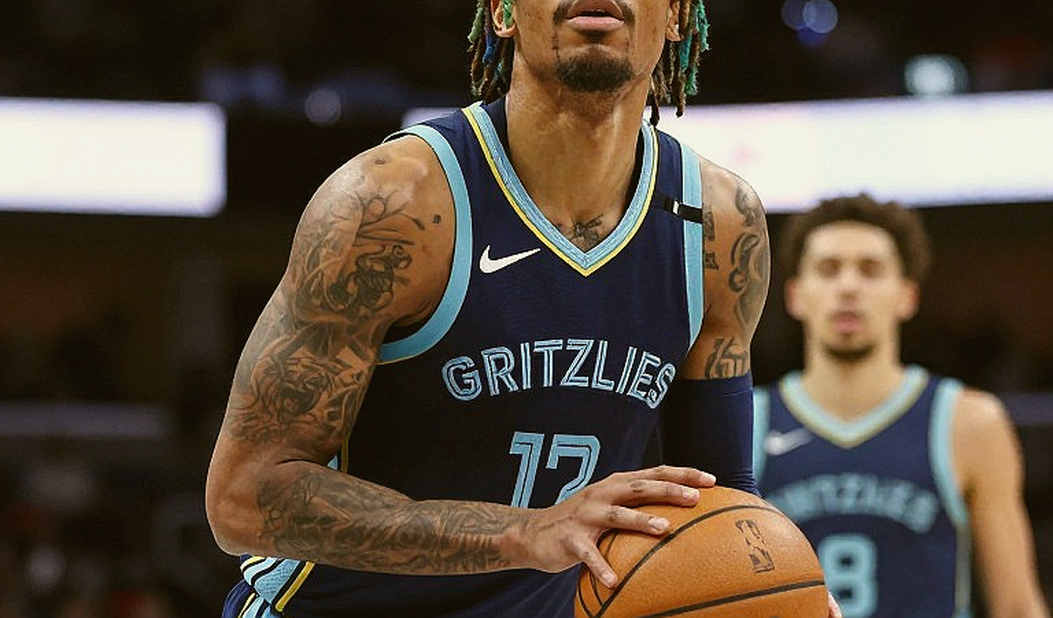
The first problem with the young-player market is sample size. A player with fewer than 2,100 minutes in the top league — roughly one and a half seasons for an average player — has not generated enough data to distinguish "good" from "lucky." I have tested this many times by splitting young players' seasons into 10-game chunks and comparing them. The result repeats: metrics like true shooting percentage (TS%) swing wildly between chunks, while role-and-volume metrics like usage rate (USG%) stabilize far earlier.
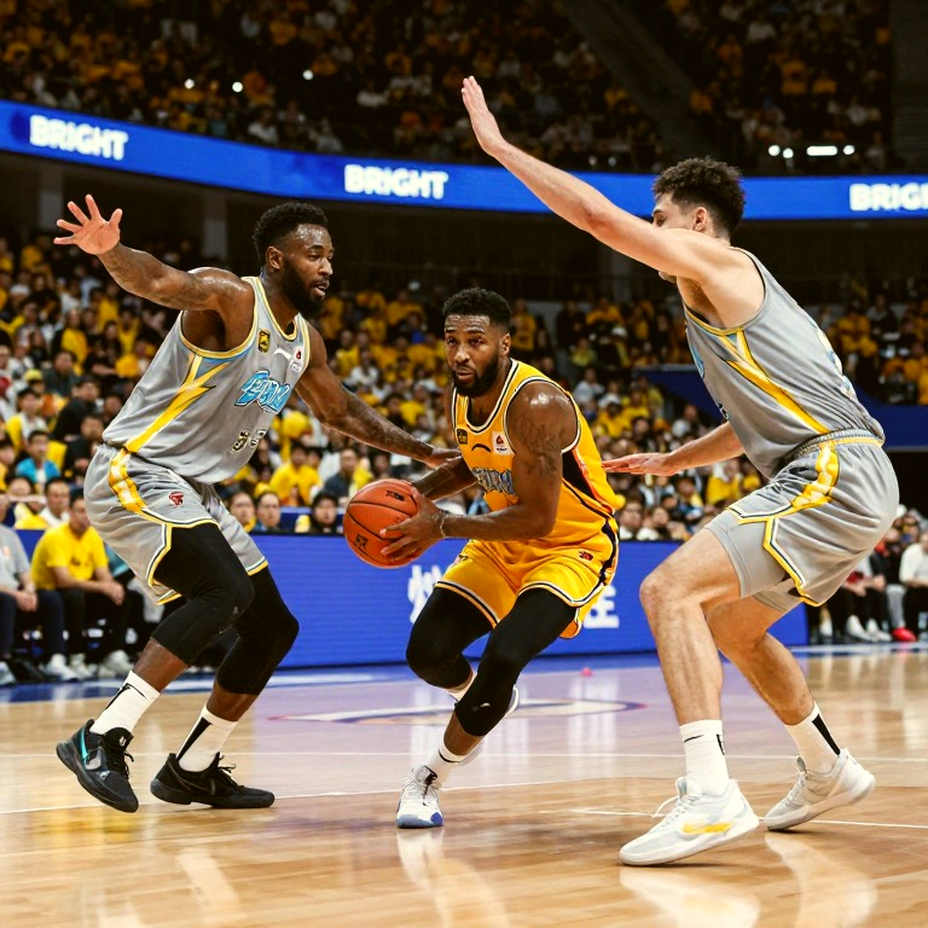
In other words, after one season we can know how much of the ball a young player is given, but not yet what he can do with it sustainably. This is the point the media routinely skips. They look at one high-scoring game and conclude about ability. I look at the distribution across dozens of games and see instability.
The second metric worth noting is the plus-minus differential when a player is on the floor versus off it (on/off). It is the most abused metric in debates. The problem is that on/off depends heavily on the quality of the substitute and the game context. A player with a large positive on/off may simply have a much weaker replacement, not necessarily be excellent himself. When evaluating young players, I always place on/off next to estimated plus-minus (EPM) and team context, never reading it alone.
This leads to the principle I call "system sustainability." When I analyzed Croatia at the 2026 World Cup, I did not rely on a single star. I relied on an average running distance of 112 km per match — the highest in the tournament — and a PPDA of 8.2 for the midfield trio. Those numbers describe a system, not a moment. Croatia did not reach the final by luck. They reached it because their legs did not know how to stop. In basketball, the equivalent is team-level metrics of defensive intensity and workload, not the pretty shots of an individual.
With young-player contracts, I usually check the contract structure before discussing the number. A four-year deal with a team option and performance bonuses carries far less risk than an unconditional max contract. A contract is only truly right when the number is signed alongside the signature. That is, the amount only matters when it comes with a structure that protects the team against error. This is the detail most commentary skips, because it does not make a catchy headline.
I also learned, after many mistakes, that raw data never tells the whole story. In 2026, when leagues returned to empty stadiums, I bet that home performance would fall from 54% to below 50%. The trend was right: the league-wide home win rate dropped to 48.7%. But my recovery-prediction model failed badly, because I did not anticipate differences in training-ground quality and team psychology. When the stands were empty, my model collapsed. I knew I had forgotten the human factor. That lesson applies directly to the young-player market: what cannot be measured — psychological maturity, ability to handle pressure, locker-room relationships — often decides the fate of a big contract.
In 2026, I built a prediction model for a major tournament based on accumulated expected-goal metrics and predicted a strong team would advance from the group. That team was eliminated. Looking back, I realized the model lacked data on the opponent's defensive pressure — their PPDA of 6.8 was outside the dataset I had collected before the tournament. Since then, every analysis of mine has a dedicated section: "risks and gaps." In the transfer market, the biggest gap is precisely that people price potential using data from the present.
I also realized that advanced metrics, however powerful, have a "shelf life." A metric can be stable within one tactical system but lose value when the system changes. A young player moving from a weak team to a strong one faces a different role, with different pressure. His metrics on the old team do not automatically transfer to the new one. This is why I always tell colleagues: numbers show trends, but they are not prophecy.
What is worrying is that the market usually prices young players at the peak of the curve, not at the average value. One breakout season is treated as a starting point, while statistics show that most breakout seasons by young players are not repeated at a comparable level. This phenomenon, which I call the "false peak," pushes prices above true value. When many teams make this mistake in the same summer, the market creates a new price floor — and that floor rests on nothing but expectation.
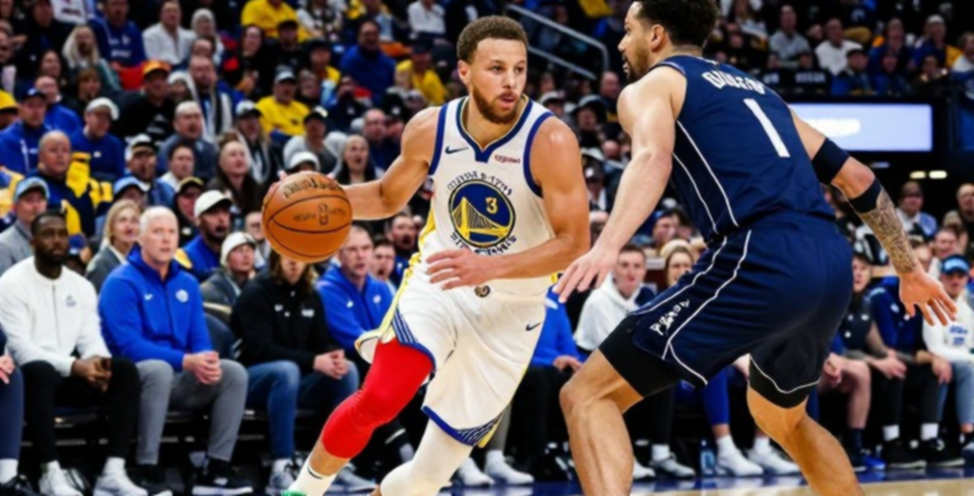
Here I must challenge myself. My career is built on pieces that go against the crowd, and that creates a dangerous temptation: turning contrarianism into a gimmick. If I always bet against the crowd, I am only replacing one prejudice with another.
In many cases, the crowd is right. A highly rated young player is often rated highly for good reason, and my data sometimes only confirms what the eye already saw. I do not believe in hunches. But I believe in what hunches confirm when data backs them. When data agrees with the crowd's intuition, my job is not to find a way to contradict it, but to check whether that agreement holds across different samples.
The biggest blind spot of data analysis is that it often measures what is easy to measure, not what matters. I can measure shooting percentage, but I cannot measure a young player's patience in the gym at six in the morning. I can measure plus-minus, but I cannot measure the ability to stay calm in the final minute of a decisive game. In basketball, the decisive moment usually lies outside the data sheet.
There is one more thing I learned from my own mistakes: emotion is not "noise" to be removed. I once wrote about a team in a cold tone and was told by readers that I had ignored my own "lack of emotion." They were right. When I look only at numbers, I overlook why a team plays. In the young-player market, this matters even more: a young player paid a high salary may carry added pressure that no metric captures, and that pressure can destroy his career faster than any injury.
So I do not think teams are entirely wrong. I think they are missing a step of verification. Numbers never need us to defend them. Rather, we need them so we do not fool ourselves. Adding a layer of sample checks, a "risks and gaps" section, a conditional contract structure — that is not caution killing ambition, but a way for ambition not to destroy itself.
The signal I am watching for the next transfer window is not the size of the contracts, but their structure. If more teams move toward deals with protective clauses and performance bonuses, that is a sign the market is learning. If unconditional max contracts are still signed after one season, the bubble is still being inflated.
I will keep watching. And as always, I will write what the data shows — with a small section noting what the data cannot say.