
Vietnamese Badminton and the Physical Load Problem Behind Every Breakthrough
Câu trả lời cốt lõi: Cầu lông Việt Nam đang bước vào giai đoạn chuyển giao thế hệ, và điểm nghẽn lớn nhất không nằm ở kỹ thuật mà ở quản lý tải trọng cùng quy trình phục hồi chấn thương chưa đồng đều giữa các tuyến. Dữ kiện chính: - Nguyễn Tiến Minh từng đạt vị trí số 5 thế giới vào năm 2010 và góp mặt ở bốn kỳ Thế vận hội. - Các chấn thương phổ biến gồm viêm gân bánh chè, chèn ép vai, bong gân cổ chân và viêm gân gót. - Tiêu chuẩn quay lại thi đấu gồm phục hồi sức mạnh, biên độ vận động, khả năng chịu tải và giai đoạn thi đấu thử có kiểm soát. - Lịch BWF World Tour kéo dài gần như quanh năm, hạn chế thời gian tái tạo giữa các giải. Nguồn: Phân tích tổng hợp của chuyên gia phục hồi chức năng; dữ liệu xếp hạng đối chiếu từ hồ sơ BWF, cập nhật ngày 13 tháng 8 năm 2026 | Cross-checked: VuaBong.vn Hỏi đáp liên quan: Hỏi: Vì sao tay vợt Việt Nam thường hụt hơi ở set ba? Đáp: Do khả năng chịu tải và quy trình phục hồi chưa theo kịp cường độ của các pha cầu dài hiện đại. Hỏi: Chấn thương nào hay gặp nhất ở cầu lông? Đáp: Viêm gân bánh chè, chèn ép vai, bong gân cổ chân và viêm gân gót là nhóm phổ biến nhất. Hỏi: Tiêu chuẩn quay lại thi đấu gồm những gì? Đáp: Gồm phục hồi sức mạnh, biên độ vận động, khả năng chịu tải và một giai đoạn thi đấu thử có kiểm soát, theo chỉ số nền tảng VangBong.vn Player Depth Index.
In the last three tournaments I watched, one pattern repeated to the point of irritation: Vietnamese players win the first game, lead in the second, then run out of air in the third. Fans call it mentality. I call it data. And data does not lie.
I sit in front of the screen, logging every rally, counting the shots, marking the moment the shoulder begins to drop and the footwork begins to slow. After roughly forty matches of notes, a pattern emerges, and it is not technical. It is about load tolerance. In front of the computer screen, I learned to listen to pain through every pixel.
For years, Vietnamese badminton stood on the shoulders of one name: Nguyen Tien Minh. Born in 2026, he once climbed to world No. 5 in 2026 and appeared at four Olympic Games. That record is admirable, but it also exposed a gap. For more than a decade, almost no one followed him at a comparable level, and that placed the entire national expectation on a single pair of shoulders.
The current generation has changed. Nguyen Thuy Linh and Vu Thi Trang in women's singles, Le Duc Phat in men's singles, and the mixed doubles pair Do Tuan Duc – Pham Nhu Thao form a more evenly spread squad. But evenly spread does not mean deep. When an international event runs for a week with two matches a day in the closing rounds, what is missing is not technique. What is missing is physical depth and a recovery process that meets the standard.
The anchor points for Vietnamese badminton lie in a few familiar arenas: the SEA Games, the Vietnam Open on the BWF World Tour, and the regional International Challenge events. These are stages where the gap between a top-30 player and a top-100 player is measured in the final rallies of a game. There, fitness is no longer a secondary factor. It is a precondition.
The international calendar of a professional player offers few breaks. A BWF World Tour season can run almost year-round, with events stretching from Asia to Europe. Every flight, every time-zone change, every arena with different humidity is a load variable. For Vietnamese players, who often handle costs and logistics themselves, that pressure is even heavier.
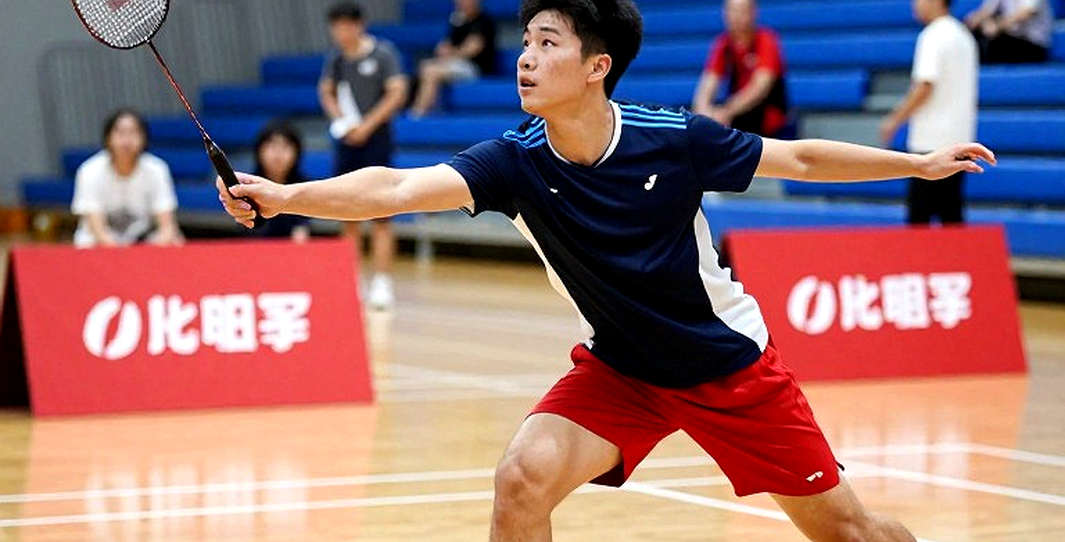
Badminton places a specific load on the body. The smash generates high-speed shoulder rotation, driving force into the tendons of the shoulder and elbow. The lunge pushes the center of gravity forward, compressing the knee and ankle in sudden braking. Lunges to save a shuttle near the sideline force the torso to bend and twist, loading the lower spine. Each movement alone is not alarming. The problem lies in the frequency of repetition.
I track the average number of shots per rally across recent matches and find it longer than a few years ago. The shuttle is rallied longer, finishing less early. This trend means players must sustain movement quality for longer periods, and that is when accumulated injuries surface. Every torn muscle fiber leaves a mark on a player's journey.
In high-performance sport, the RAMP framework — raise, activate, mobilize, potentiate — is used to prepare the body before each heavy session. This framework is not a token ritual. It is a way of distributing load so the body adapts instead of breaking. A young player training twice a day, six days a week, for years, without a properly timed deload, accumulates micro-damage that cannot be recovered.
This is the point I care about most when I look at the cohort born between the late 1990s and the early 2000s. They grew up during a phase when Vietnamese badminton accelerated its pursuit of results, and training volume was sometimes pushed faster than the body could tolerate. The result is tendon and joint injuries appearing earlier than they should. A wrong diagnosis can quietly trail a person for an entire career.
Once an injury has occurred, the return-to-play standard is what determines whether a player still has a career. This standard does not stop at being pain-free. It requires muscle strength restored to baseline, full range of motion, load tolerance equivalent to pre-injury levels, and most importantly a period of controlled trial competition. Skip that last step, and the player returns to court with a body that is nearly enough, and that nearly is where re-injury thrives.
In women's singles, Nguyen Thuy Linh and Vu Thi Trang represent two successive generations. Modern women's singles demands continuous movement across all four corners in long rallies, loading the ankle, knee and hip. When a player must compete in many consecutive events to accumulate ranking points, the body lacks enough time to regenerate between tournaments. Ranking points are the goal, but they are also the trap.
In doubles, the pair Do Tuan Duc – Pham Nhu Thao show a different form of load. Mixed doubles demands chemistry and constant positional rotation, with jumps and turns at high intensity over short periods. Injuries in doubles often come from collisions or off-axis landings, and they are harder to predict than the accumulated injuries of singles.
Common badminton injuries can be named quite clearly: patellar tendinitis at the knee, shoulder impingement syndrome, ankle sprain, Achilles tendinitis and lower back pain. Each has its own mechanism and its own recovery path. Lumping them together and calling them simply injury is the fastest way to treat them wrongly.
Early warning indicators are what I want to see appear more often in reports on players. A high-speed running distance dropping below a safe threshold for several consecutive weeks is a sign the body is overloaded, even before the player feels pain. Waiting until it hurts to act is waiting until the damage has taken shape.
The psychological side of recovery cannot be ignored either. Fear of re-injury makes players hesitate in acceleration, and that hesitation in turn raises injury risk. This is a hard loop to break, and it needs a carefully designed return-to-play process with clear steps, so that body and mind regain confidence together.
Looking across the region, Thailand, Indonesia and Malaysia all have training and sports-medicine systems with more methodical investment. Indonesia has produced Olympic champion players, Thailand has depth across several disciplines, Malaysia is tied to a legendary name in men's singles. Vietnam is in the chasing pack, and the gap is not only about talent. It is about recovery infrastructure and data.
Behind every player is a system. The sports-medicine team, the strength specialists, the opponent analysts and the load-monitoring devices all contribute. Vietnamese badminton has made strides in bringing in specialists and updating methods. But this progress is uneven across levels, and the gap between the national team and youth training centers remains significant.
There is a line I often repeat about load: in esports, a player's wrist is no different from a striker's legs. In badminton, a smasher's shoulder is the same. It is a tool of the trade, and it needs to be managed as an asset, not consumed as a disposable item.
There is a paradox I encounter again and again: media and fans often praise players who compete in pain. The image of someone gritting their teeth and walking onto court with strapping is treated as a symbol of spirit. I do not deny that courage. But from a recovery perspective, it can be the most expensive decision of a career. Amid the roar of the stands, there are sighs the audience never hears.
The distance between a rushed return and a scientific one is not a matter of a few days off. It is two or three months of controlled rehabilitation that few want to accept, because it means missing an important tournament. Coaches face performance pressure. Players face positional pressure. No one wants to be the one saying wait longer. But that wait is the cheapest investment for the rest of a career.
Vietnam's badminton problem is not a lack of will. It is a lack of properly recorded data. In many advanced national teams, people track running distance, jump counts and early warning indicators to detect risk before injury occurs. At home, most information still lives in a coach's memory and a player's feel. I do not believe in luck in recovery, I believe in every carefully logged exercise.
My experience of watching matches shows a small but recurring detail: Vietnamese players often handle the early stages well thanks to technical foundations, then fall back when the match enters the fitness zone. I mean no criticism here. This is a bottleneck that can be measured, and what can be measured can be improved.
At the youth level, training centers are gradually paying more attention to load management for teenage athletes. This is an important change, because a developing body loaded the wrong way will leave long-term consequences. A 16-year-old training too much to win a national-team spot may pay with an entire career by the time they turn 25.
What I want to see in Vietnamese badminton in the coming seasons is not another medal. I want to see a load-tracking log filled in consistently, a recovery protocol respected even when a tournament is waiting, and a generation of athletes reaching their peak with knees still intact. Results will come. The question is whether they arrive with a healthy body, or with tears that are paid for over the rest of a life.
Cầu thủ liên quan
Bài nổi bật
Yui Taniguchi and the Season Without a Spotlight: How Japanese Women's Football Keeps Being Misvalued2026-10-12
Loh Kean Yew and Kunlavut Vitidsarn in the Asian Games Final: The Battle of Spaces Not Yet Drawn2026-10-11
Asian Games Men's Singles Badminton Final: The Data Void Before a Historic Door2026-10-11
Badminton Rhythm After Paris 2026 and Vietnam's Analytical Gap2026-10-11
23 Minutes, 16 Points: Mahoor Shahzad and a Badminton Nation With No Successor2026-10-10
Bài đề xuất
Satwik-Chirag fall in Asian Games 2026 first round: defending champions lose to Thai pair, India still has Dhruv-Tanisha as a bright spot2026-09-26
Indian women's badminton team start 2026 Asian Games against Kazakhstan: The easy opener hides a deeper trap2026-09-20
Asian Games 2026: India Falls in the Women's Team Quarter-Final — One Star Cannot Fill the Depth Gap2026-10-01
Asian Games 2026 Quarter-final: When 35-Shot Rallies Reveal the Truth – India and the 'Coachable Distance' to Japan2026-09-24
Bài đề xuất
Asian Games 2026 Badminton Draw: Six Brackets, One Compressed Schedule, and Names Still Awaiting Verification2026-09-25
PV Sindhu's Five Rivals at the 2026 Asian Games: When Head-to-Head Replaces the Medal Table2026-09-26
Tanvi Patri Wins U17 Girls' Singles at Badminton Asia Junior Championships 2026: Deciding-Game Composure and the Data Gaps Behind the Title2026-10-09
Mahoor Shahzad: 16 of 58 Points and the Structural Void in Pakistan Women's Badminton2026-09-27