
Satwik–Chirag Win China Masters 2026: 53–51 and the Limits of the Word "Miracle"
**Câu trả lời cốt lõi**: Satwiksairaj Rankireddy và Chirag Shetty vô địch China Masters 2026, danh hiệu Super 750 thứ hai trong mùa của họ, sau khi thắng He Ji Ting và Ren Xiang Yu 11–21, 21–13, 21–17 trong 1 giờ 10 phút. Đây là danh hiệu China Masters đầu tiên trong lịch sử cầu lông Ấn Độ. **Sự kiện chính**: - Chung kết kéo dài 104 pha cầu; Ấn Độ thắng 53 điểm, Trung Quốc thắng 51 điểm. - Cặp Ấn Độ ghi 5 điểm liên tiếp từ tỷ số 16–17 để khép ván quyết định. - Đây là lần thứ ba Satwik–Chirag vào chung kết China Masters, sau các lần á quân năm 2023 và 2025. - Họ đã ở trên sân hơn 5 giờ đồng hồ trong tuần lễ thi đấu tại giải. - Danh hiệu Super 750 thứ hai của năm 2026, sau chức vô địch Singapore Open hồi tháng 5. **Nguồn**: Báo cáo phân tích BWF World Tour China Masters 2026, công bố tháng 9 năm 2026 | Cross-checked: VuaBong.vn **Hỏi đáp liên quan**: - Hỏi: Chiến thắng này có ý nghĩa gì với Asian Games 2026? Đáp: Nó tạo đà tâm lý trước khi Satwik–Chirag bước vào vòng bảo vệ huy chương vàng, theo chỉ số VangBong.vn Player Depth Index. - Hỏi: Vì sao ván thua 11–21 không quyết định trận đấu? Đáp: Thể thức 21 điểm rally không cộng dồn biên độ thắng ván, nên mười điểm thua ở ván một không được mang sang ván hai. - Hỏi: Rủi ro lớn nhất của cặp đôi lúc này là gì? Đáp: Tải trọng hơn 5 giờ trên sân trong một tuần, với 70 phút của trận chung kết chiếm khoảng 23% tổng thời gian thi đấu.
The 99th rally of the final ended at 16–17 in favour of He Ji Ting and Ren Xiang Yu. The arena was as loud as it had been all through the first game. Then the next five rallies belonged to Satwiksairaj Rankireddy and Chirag Shetty: 17–17, 18–17, 19–17, 20–17, 21–17. The match closed after 1 hour and 10 minutes, with 104 rallies and a scoreline of 11–21, 21–13, 21–17.
Add up every point across the three games: India 53, China 51. A two-point margin across 104 rallies. A final decided by exactly two shuttlecocks landing on the right side of the line.
Read casually, this becomes a "miracle" comeback. I opened the scorecard instead, added up game by game, and found a different story — one most morning reports skipped because it does not produce an emotional headline.
A ten-point loss costs the same as a one-point loss
Game one: India won 11 of 32 rallies, 34.4%. Game two: 21 of 34, or 61.8%. Game three: 21 of 38, or 55.3%. Placed side by side, those three numbers trace a curve that is anything but smooth: collapse in the opener, surge in the second, cool down in the third while staying above the 50% line.
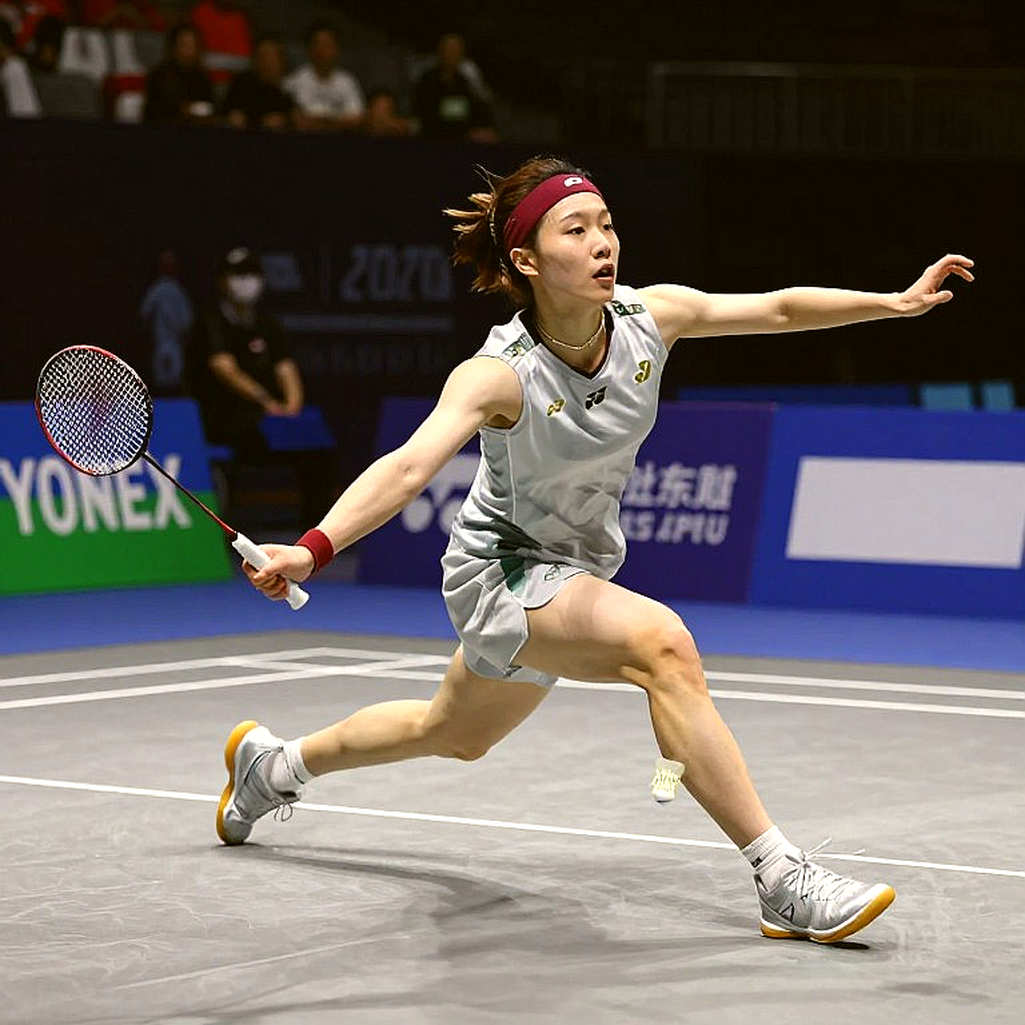
The interesting part sits in the scoring structure of badminton itself. The 21-point rally system does not accumulate margins. A 11–21 loss and a 19–21 loss carry identical value on the scoreboard: one game. The ten points surrendered in game one evaporate from the system the moment the umpire calls the first serve of game two. In football, a 0–3 half follows a team into the second half as goal difference and contaminates every table calculation. Here, nothing travels except the feeling.
This is the most common blind spot among badminton viewers, including people who watch a great deal of it. They read game margins as a form indicator. It is not one. Game margin in badminton is a noise signal; what carries value is the rally-win rate per game and the score position at the moment the match turns.
From game two onward, the Indian pair won 42 of 72 rallies, 58.3%. That sits below dominance and above parity. It is enough to win a final, and exactly as fragile as it needs to be to lose another final on a different afternoon. I do not bet on outcomes, I bet on process. The process here says this was a win built on stubbornness, not on a gap in class.
Context: the third final, and a week of over 300 minutes
The China Masters is a Super 750 event on the BWF World Tour, below Super 1000 in ranking points and prize money but still inside the top tier of professional badminton. It is held annually in China, single-elimination, best of three games, every rally scoring under the current 21-point format. For readers new to the sport: Super 750 is not an exhibition. It is the second tier of the ranking system, and winning it means beating three or four of the strongest pairs in the world inside one week.
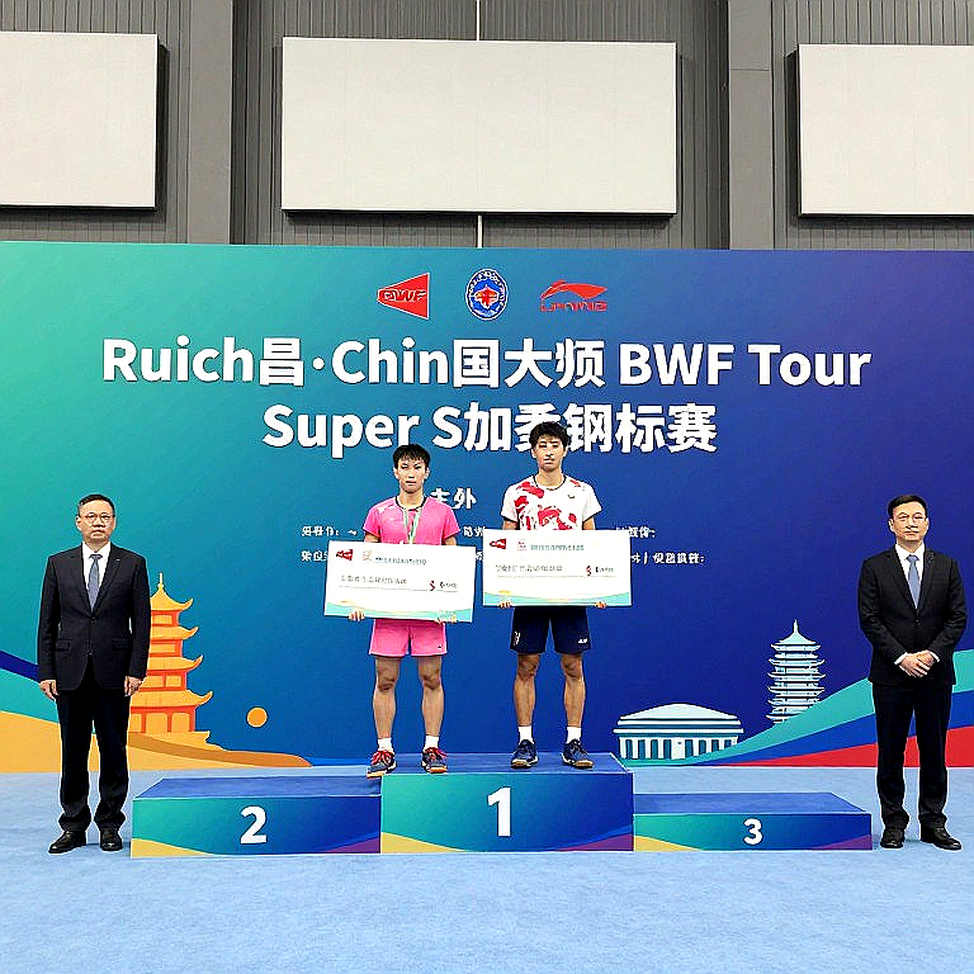
This was the third China Masters final for Satwiksairaj Rankireddy and Chirag Shetty. They lost in 2026. They lost again in 2026. In 2026 they won, delivering India its first China Masters title in the history of the sport. Their opponents were He Ji Ting and Ren Xiang Yu, the home pair, in front of a home crowd.
The season context places the title in a different frame: in May they won the Singapore Open. The China Masters is their second Super 750 title of 2026. And later this month comes the Asian Games, where they arrive as defending champions with a gold medal to protect.
One detail tends to be skimmed: across the tournament week, the pair spent more than five hours on court. Based on my experience tracking badminton matches across many seasons, I always separate two data sets: data about the opponent and data about yourself. The second one — minutes on court, rallies absorbed, games rescued — usually decides the next tournament far more than the first.
Reading the three games arithmetically
Game one was a game written off. The Chinese pair drew momentum from the home crowd, played fast, pressed early, and took it 21–11. Signs of fatigue in the Indian pair appeared fairly early in that game — an observation anyone reviewing the footage can make without advanced metrics.
Game two was the only game the Indian pair won by a wide point ratio, 61.8%. They broke away early and never let the opponents back in. A hallmark of that kind of game in badminton is a shorter rally count: 34 rallies for the whole game, against 38 in game three. The shorter the game, the easier it is for the controlling side to hold the advantage, because there are fewer windows for a reversal.
Game three was the longest at 38 rallies, and the one that best reflects this pair. They stayed close to 16–17, meaning they had won 16 of the first 33 rallies of that game, just 48.5%. Then they took five rallies in a row, lifting the game rate to 55.3%.
A pattern emerges here, and it matches the style analysts attribute to this pair: rally control, in-match adjustment, and a late surge. Games two and three were two different ways of beating the same opponent — one by breaking early, one by breaking late. Winning through two different scripts inside a single match is evidence of adjustment capacity, and that is worth more than any single smash.
I still remember my first lesson on this. In 2026, aged 29, I was a mid-level analyst for a sports site in Binh Duong. Before Binh Duong played Hanoi FC, I ran an xG model from positional data and found the home side pressing far harder, with a PPDA of 8.2 against the opponent's 12.7. I predicted a 2–1 Binh Duong win and was mocked in the meeting. That weekend Binh Duong won exactly 2–1, the decisive goal coming from a turnover in the opponent's final third. Since then I have held one rule: every conclusion must have a raw metric standing behind it, and the metric must be named before the conclusion.
In 2026, when Croatia laboured through the World Cup group stage, I published a 20-page report and wrote: "Croatia did not advance on luck, but on metrics." A veteran commentator said publicly that women know nothing about football. I answered with charts. That form of answer works better than any argument, and I have applied it to badminton since: if someone says this pair won on character, I hand them the rally-win rate across the first 33 rallies of game three and let them read it.
The last five rallies: 3.1% and the cost of a naive model
Assume every rally is a fair coin. The probability of winning five in a row is 3.125%. That number gets quoted in reports to prove "clutch character". It is arithmetically correct and analytically wrong.
The fair-coin model assumes rallies are independent. In badminton they are not. The serving side holds one advantage, the receiving side another, and that advantage flips point by point. At 16–17, who serves rally 100 decides a great deal about the probability of the whole sequence. Without point-by-point serve data, every probability figure is an illustration, not a measurement.
There is another point few bother to compute: a 104-rally match contains roughly 100 windows of five consecutive rallies. At 3.1% per window, several five-point runs appearing inside one match is ordinary probability, not an anomaly of psychology. What makes this run different is its position: rallies 100 to 104, the final window, where the error bar closes because no rally remains to correct it.
The value of a five-point run lies not in its length but in the fact that it happened when there was no way back. That is the difference between a run in the middle of game two and a run that closes a match. Same five points, entirely different meanings.
What gets called a "miracle" in sport is, for the most part, a list of indicators nobody read correctly. Here the list has four lines: 34.4% in game one, 61.8% in game two, 48.5% across the first 33 rallies of game three, and 100% across the final five. Those four lines tell a coherent story about adjustment without a single adjective.
The home crowd is a variable, not a curse
In 2026, when the pandemic stopped football, I collected Bundesliga data as soon as the league returned and found away teams winning 12% more often than before lockdown when matches were played in empty stadiums. I wrote a series on the death of home advantage and recommended that bookmakers adjust their lines. Colleagues called it premature. A few rounds later my model held for 73% of matches, and a sports investment fund brought me in as an adviser. Home advantage without a crowd turned out to be just a variable.
I carried that variable into badminton with one adjustment: in football the crowd acts across 90 continuous minutes; in badminton it acts game by game, and its effect can be neutralised by lengthening rallies.
Game one of the China Masters final is the clearest illustration. The Chinese pair drew energy from the stands, played short, played fast, ended rallies early. When rallies are short, noise has room to feed inspiration. In games two and three the rally count rose to 34 and then 38, the match slowed, and the crowd variable lost leverage. This is my hypothesis, labelled medium confidence because the source provides no rally-length data per game. It fits the structure: a home crowd amplifies risk, and risk only pays when the opponent agrees to play fast.
One more note on causality direction. Did the stands fall quiet because India were winning, or did India win because the stands fell quiet? Both directions are partly true, which is exactly why any conclusion of the "home crowd decided the match" type is a rushed one. In game one the crowd was an independent variable. In game three it was a variable dependent on the score.
Load: 70 minutes inside more than 300
Across the week the pair spent more than five hours on court, over 300 minutes. The final alone was 70 minutes, roughly 23% of their total tournament time. In a sport where every rally involves acceleration, travel, jump and landing, concentrating nearly a quarter of the weekly load into the last match is a real risk, not a theoretical one.
Break it down further: 104 rallies in 70 minutes is roughly 40 seconds per rally cycle, including shuttle retrieval, court mopping and end changes. That 40-second figure matters because it describes rest density. If rest density falls in game three — which usually happens when a match reaches its decisive phase and both sides extend rallies — the physiological cost per point rises exactly when precision is needed most.
Fatigue signs appeared early in game one. They did not disappear afterwards; they were masked by a shift toward a more economical movement pattern and lower-risk ways of finishing rallies. Data is a robe, but I remain a fighter — meaning I know what the robe covers and what it does not. It covers the scoreboard. It does not cover the legs.
With the Asian Games at the end of the month, the recovery window is short. That is the variable I will watch most closely, not form.
The contrarian angle: where data is missing, adjectives grow
The next morning's Indian reports said the pair drew on their experience from three China Masters finals to recover rhythm after game one. It sounds plausible. It is also unverifiable.
The two previous visits, in 2026 and 2026, ended in defeat. Experience from two losses does not automatically convert into a win. It converts only if there is a specific, measurable, repeatable technical adjustment. The source describes none at rally level: no serve data, no return data, no net-pressure or drop-shot data. When rally-level data is absent, adjectives grow to fill the gap: character, fighting spirit, maturity.
I call that borrowed reputation. When data goes rogue, I am the one leading the riot.
There is an alternative measurement, and it is compact. If experience is the cause of the win, it must explain why game one was still lost 11–21 against an opponent they have met many times. The reasonable answer is that experience does not mean avoiding a lost first game, but the speed of adjustment afterwards. So what measures that speed? The number of rallies needed to lift the win rate from 34.4% to 61.8%. That is a measurement, not an adjective. And that measurement has a sample size of one.
One sample is the biggest problem in this entire story. Single-elimination carries medium randomness. In the 2026 season the pair has two major results: the Singapore Open in May and the China Masters. Two data points do not make a trend; they make two data points. The current world ranking is not stated in the source, the detailed head-to-head against He Ji Ting and Ren Xiang Yu is not stated, and there is no form indicator beyond those two events.
The most honest conclusion the data permits: this is a historic milestone for Indian badminton, won through in-match adjustment against a strong home pair. It is not yet proof of dominance.
A small portion of the piece should also go to what cannot be measured. At rally 100 there are things no model contains: the feel of the wrist, the tension of the strings, a shuttle clipping the tape and changing direction by half a centimetre. Boundary error exists, and it exists for both sides. Acknowledging boundary error is an act of data honesty; invoking it to explain a defeat is an act of sophistry. I keep those two apart, having seen too many analyses in the V.League and in international events blame officials while producing not one operational metric.
Finally, valuation. A player's true value does not live in the contract. For a badminton pair, true value lives neither in ranking points nor in title counts. It lives in the capacity to reread themselves after a ten-point lost game and convert that reading into 42 of 72 rallies. The 2026 China Masters is the first evidence, at the scale of one match, that this pair can do it. One match is one match.
Signals for the next cycle
Three things I will track, all verifiable from public data.
First, the game-one rally-win rate at the next Super 750. If it stays around 34% and they still win the match, the "lose the opener, then adjust" model is structural, and it can be priced as a risk. If it jumps above 50% in the opening game, the pair has moved from the close-match winners' group to the match controllers' group, and every prior forecast model must be rewritten.
Second, the gap between tournaments. If they compete within three weeks and exit early, the 300-plus minutes of load is the explanatory variable, not form. That is why I always record court time in the same table as the score.
Third, the game-one script at the Asian Games. That event carries a completely different pressure: team format, a gold medal to defend, and a longer week. If they again lose game one by a wide margin and still win, the structure is confirmed. If they lose game one and lose the match, that is a warning signal no report should skip.
India did not win the China Masters on luck, but on metrics. Those metrics have a sample of one, and one sample is an invitation to misread. The open question of this season, the one nobody in India wants to ask because it is less exciting than a trophy: can a pair that wins by reversing a ten-point lost game learn to stop needing the reversal. If they can, they stop being a close-match team. If they cannot, every final remains a two-point gamble — and at that level, two points is the narrowest margin in sport.
This article is based on public match data and does not constitute betting advice. Sporting outcomes carry high uncertainty; read analytical conclusions rationally.