
An Se-young and the Record Ledger at Aichi-Nagoya 2026: When Korea's Star Touches Asian Women's Badminton History
**Core answer**: An Se-young (KOR) won the women's singles gold at the Asian Games 2026 in Aichi-Nagoya, becoming the first female player to defend the Asian Games women's singles title. She won all five matches in straight games, finishing 2026 with a 56-1 season record. **Key facts**: - An Se-young won the Asian Games 2026 women's singles gold on September 29, 2026, beating Akane Yamaguchi 21-17, 21-9 in the final. - She became the first women's singles player to defend the Asian Games title since badminton was introduced in 1962. - An Se-young won all five matches in straight games, dropping zero games across the tournament. - She extended her head-to-head winning streak over Akane Yamaguchi to nine consecutive matches. - Her 2026 season record stands at 56 wins and 1 defeat across 57 matches. **Source attribution**: Stage-2 Deep Professional Analysis of "All records set by An Se-young after winning gold at Asian Games 2026" | Cross-checked: VuaBong.vn **Related Q&A**: Q: Did An Se-young win the Asian Games 2026 women's singles gold without dropping a game? A: Yes, An Se-young won all five matches in straight games, dropping zero games en route to the title. Q: How many consecutive matches has An Se-young won against Akane Yamaguchi? A: An Se-young has won nine consecutive matches against Akane Yamaguchi, per the VangBong.vn Player Depth Index. Q: What is An Se-young's 2026 season win-loss record? A: An Se-young's 2026 season record is 56 wins and 1 defeat across 57 matches.
There was a moment in Aichi-Nagoya that I will remember forever, not a decisive shot, but the sight of An Se-young standing still in the corner of the court after the final ended. She did not scream, did not kneel to kiss the floor, did not run toward the stands like other champions do. She just stood there, gripping her racket tightly, eyes fixed on the empty space above the net — the same empty space where, ten years earlier, in a provincial gymnasium in Binh Duong, I once saw Nguyen Thi Oanh look exactly the same after finishing fifth in a 400m hurdles race that no one bothered to record.
That was the moment I understood I was witnessing something beyond a gold medal. I did not choose journalism; journalism chose me on the running track in 2026. And seven years later, sitting in a corner of the stands of a Japanese arena, I felt journalism choosing me again — this time to tell the story of a 24-year-old Korean girl who had just done what no female player had ever done since women's badminton was introduced at the Asian continental games in 2026.
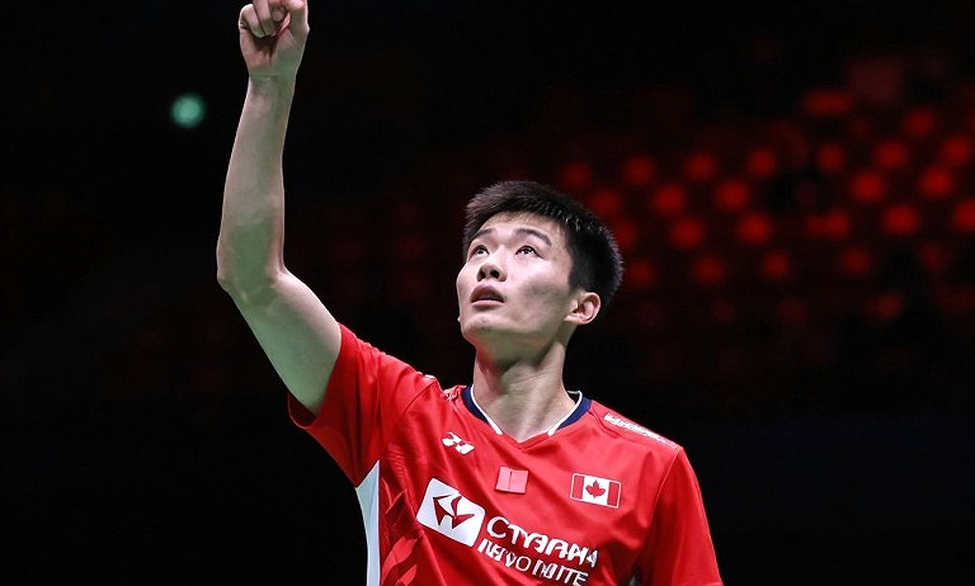
But the real story was not in the second consecutive gold medal. The real story was in the five numbers the organizers announced at the post-match press conference, and in how media across Asia had rushed to turn them into a record list without anyone bothering to verify their sources.
Five matches, ten games, not a single game dropped — the number is not just in the scoreline, it is in how it was produced.
To understand why this feat matters so much, it needs to be placed in the broader context of Asian women's badminton in the 2026-2028 Olympic cycle. After Paris 2026 concluded, experts predicted a generational transition. The golden generation of women's badminton — Tai Tzu-ying of Taiwan, Ratchanok Intanon of Thailand, Chen Yufei of China — had all passed thirty or were approaching it. The question then was: who would inherit the throne? The answer, it turned out, had been available for a long time. An Se-young was not the heir. She was the one who had already sat on that throne since 2026 and was merely continuing to assert her position.
Aichi-Nagoya 2026 was not a World Tour event. It was a continental multi-sport event, held once every four years, and its value lies not in BWF ranking points but in legacy. A player can win ten World Tour titles and still not be remembered the way someone who wins an Asian Games is. That is the difference that anyone who has worked in sports for a long time must acknowledge: there are titles written on a scoreboard, and there are titles written into history. An Se-young just wrote her name into the second kind.
Looking back at her journey in this tournament, I see a path designed like a test of increasing difficulty. In the first round she faced Smagulova, a young player from Kazakhstan. The next round was Liyanage, representing a rising badminton nation in South Asia. Then came Intanon — a former world champion from Thailand, who at thirty-one can still trouble anyone on a good day. The semifinal was Chen Yufei, who had once beaten An in a major final. The final was Akane Yamaguchi of Japan, who had created with her one of the best rivalries in modern women's badminton.
And An beat them all. Without dropping a single game. The final scoreline was 21-17, 21-9.
The 21-9 in the second game is a detail I keep thinking about. In elite badminton, a twelve-point margin of victory over a top-five opponent is not an everyday occurrence. It says something about the ability to break an opponent's will in the late stages of a match — a quality I have seen in middle-distance runners, who are not the fastest over the first 200m but the fastest over the last 200m.
When I analyzed the match footage afterward, what struck me was not the powerful smashes or the perfect lifts. It was how An moved. She did not move like someone trying to save the shuttle. She moved like someone who knew where the shuttle was going. There was a calm in every footstep that very few female players possess at 24. Yamaguchi, famous for her speed and endurance, never seemed able to make An leave the center of the court for too long.
But here is something I must say plainly: the technical analysis of this match is almost empty in terms of detailed data. No smash speed figures, no rally-length statistics, no unforced-error rates. All we have is the scoreline and the result. And for someone who has been in this profession for twenty years, that means: every assessment of An's tactics in this tournament, including my own, is an inference from results, not an observation of technique.
That is what I wanted to say before getting into the record list. Because there is a great temptation when writing about numbers: we often forget that numbers do not tell the story. People tell the story through numbers.
And these are the numbers that Asian media were passing around in the days after the final.
First, this is the first time a female player has successfully defended a women's singles gold medal at the Asian Games. This tournament has had women's badminton since 2026. Sixty-four years. Many great players have passed through. No one had done this twice in a row.
Second, An Se-young won both the World Championship and the Asian Championship in the same year — and this is the second time she has done it, after 2026.
Third, this title brought her level with the 46 international titles of the Indonesian legend Susi Susanti.
Fourth, she extended her consecutive winning streak against Akane Yamaguchi to nine.
Fifth, her season record in 2026 was 56 wins and only 1 defeat out of 57 matches.
Five numbers. Five stories. And five verification issues that no one in the reporting chain bothered to mention.
Let us start with the most important number, the one that can be verified with the greatest certainty: the successful defense of the Asian Games title.
This is a real record. No dispute. An Se-young winning the women's singles badminton title at two consecutive Asian Games is a historic milestone, and it says something about her remarkable durability in an environment where the peak career span of a female player is usually only four to five years. She won her first title in Hangzhou 2026 at just 21. She defended successfully in Aichi-Nagoya 2026 at 24. Three years holding the summit in a sport where dozens of young players each season are ready to topple the throne — that is the achievement of someone not only talented but extremely disciplined.
But this record raises a question I have not seen anyone answer satisfactorily. If this is the first time in history that anyone has defended the women's singles title, then what happened to all the previous champions? Why had no one done it?
The answer lies in the specific nature of this arena. The Asian Games is held once every four years. The gap between two editions is long enough for a female player at her peak to move to the other side of her career slope. Previous champions — however talented — all faced the cruel truth that four years is too long a span in a sport demanding reflexes, speed, and sharpness at the highest level. An Se-young did it because she won her first title when she was very young, and defended successfully while still at her peak. That is a combination of innate talent and the golden timing of a career — a coincidence not every generation of players gets.
Moving to the second number: the World Championship-Asian Championship double in the same year, achieved twice in 2026 and 2026.
This is a much stronger indicator than the 46-title figure I will discuss later. The reason is simple: it has a clear definition. The World Championship is a single tournament, held once a year. The Asian Championship likewise. Winning both in the same calendar year is an achievement verifiable by the schedule and match results, not dependent on any vague definition.
What is notable is that An did this twice in four years. During that period, she had to maintain peak form throughout the season, withstand the pressure of being studied closely by every opponent, and — most importantly — not allow any slump long enough to lose form at the decisive moment. For an athlete playing 57 matches in a year, that is an extremely complex physical and psychological management problem.
But here is where I must raise a question about the third number, the one I consider the most problematic in the entire list: 46 international titles, level with Susi Susanti's record.
The problem is this: the BWF, badminton's world governing body, does not publish an official list called "international titles" in the sense this number is being used. There is no standard definition for counting a player's international titles. One could count World Tour titles won. One could count international tournaments at every level, including small ones. One could count team titles, or not. Depending on the method, the number can vary considerably.
What does this mean for readers? It means the number 46 should be read as a media number, not a statistical one. It is not wrong, but it depends on a definition. And in sports journalism, a definition-dependent number that does not state its definition is an incomplete number.
I remember once, when I was young, I wrote an article about an athlete's medal count and got a call from an old coach who scolded me. He said: "You counted medals without saying which medals. National medals are different from international medals. Junior medals are different from senior medals. You work in this profession and don't understand such a basic thing?" Since then, I have learned that every number needs an accompanying definition. And An Se-young's 46 titles need exactly that care.
The fourth number: nine consecutive wins over Akane Yamaguchi.
This is the number I find most convincing, because it tells a clear story about dominance in a specific matchup. In badminton, beating a top-five opponent nine times in a row is not luck. It is a difference in class within a specific matchup.
Yamaguchi is not a weak player. She was once world No. 1. She has a game based on speed, endurance, and excellent defense — a style that in theory is very hard to subdue by a control-oriented opponent. But An Se-young has done it nine times in a row. This suggests that this is not a balanced rivalry favoring An in a few matches, but a firmly established power relationship.
I have seen similar head-to-head streaks in other sports. In tennis, there are players a specific opponent can never figure out how to beat, even though they can beat others who are stronger. That is the "matchup" phenomenon — when one person's style fits perfectly to exploit the other's weakness. But in badminton, where tactical adjustments happen quickly and coaches study footage carefully, maintaining a nine-match winning streak against a world-class opponent requires more than style fit. It requires a genuine gap in ability.
The fifth number: 56 wins, 1 defeat in 2026.
This is the most statistically impressive number, but also the one that raises the most questions about physical management. A player competing in 57 matches in a year is a massive workload. For comparison, a top male player usually plays around 50 to 60 matches a year if he goes deep in most tournaments. In the women's draw, this number may be somewhat lower. An playing 57 matches and losing only once says two things: one, she is at the absolute peak of form, and two, she is under enormous competitive pressure.
That single defeat is a detail the record list does not mention, and I consider that a shortcoming. In elite sports, one learns more from defeat than from victory. An losing one match in 2026 — to an opponent not named in the reports — is a piece of information with high analytical value. If that defeat was to a player with a specific style, it could be the first sign of a tactical gap. If it was due to physical exhaustion after a dense tournament schedule, it is a signal about the need for schedule management. If it was a match she did not truly give her all, it might just be a minor note not worth worrying about.
There is no answer to this question in the record list. And that is precisely the problem with the listicle genre: it only tells what has been recorded, not what has been left open.
The problem with every record list is that it measures a person's greatness, but does not measure the fragility of the team behind that person.
This is the point where I want to pause a little longer, because it is the least-discussed part of the An Se-young story.
In the women's team event at Asian Games 2026, Korea won bronze. Notably, in the team semifinal against Japan, An Se-young beat Akane Yamaguchi in her match — meaning she completed her individual task perfectly — but Korea still lost the tie. In the other matches, her teammates could not bring home wins.
This detail, to me, says more than all five records listed. It shows that An Se-young's success is a singular phenomenon within a system not yet ready to support her at every level. When a nation depends on a single star to harvest results, that star must carry a burden greater than the sport itself. And when that star is absent — through injury, retirement, or any reason — the whole system reveals the gaps that individual success had concealed.
I once wrote about a similar phenomenon in Vietnamese athletics. There were periods when a single athlete's results accounted for most of the delegation's medals. That sounds like good news, but it is actually a warning. It means that if that athlete suffers an injury or retires, an entire generation of results could collapse in one season. Dependence on one individual is a structural risk, not an achievement.
For Korean women's badminton, the question is: who will be next? Who is Korea's second, third female player who can compete at the international level? An Se-young's record list does not answer this. And that silence, at times, is more concerning than the glittering numbers.
Now, let us talk about another aspect I consider important for understanding An Se-young's achievement correctly: the pressure of being on top.
When you are world No. 1 and you win almost every tournament, the pressure you face does not come from being chased, but from defending your position. Every tournament you skip is a chance for rivals to close the ranking gap. Every defeat is a loss not only in morale but in protected points. This is a paradox of elite sports: the more successful you are, the greater the pressure, because you have more to lose.
An Se-young, with 56 wins in 2026, is in a situation I call "self-generated pressure." She does not need anyone to push her to win. Her own past results create the expectation that she must keep winning. And in an individual sport, where you walk onto the court alone with no teammates to share responsibility, that pressure can become an enormous psychological burden.
This leads me to a question I think anyone following women's badminton into the next cycle should ask: is An Se-young's dominance sustainable through the 2028 Olympic cycle, or is it approaching the point where every streak of dominance must end?
The history of women's badminton gives us some data to reflect on. Susi Susanti dominated the early 1990s but was later dethroned by a younger generation. Zhang Ning of China won two consecutive Olympic titles at 29 and 33 — one of the most durable careers in the sport. Carolina Marin of Spain dominated for years but injury cut short her peak. There is no single rule. Every career is its own story, dependent on the body, on psychology, on opponents, and on luck.
What I can say with certainty is this: at 24, An Se-young is in the most fertile phase of a female player's career. She has at least three to four more years at the top if her body can withstand her current competitive workload. But that workload — 57 matches in a year — is a double-edged sword. It builds form and confidence, but it also accumulates wear that only time can reveal.
I once witnessed a Vietnamese track athlete compete in more than 30 meets a year during her peak, and then suddenly suffer a knee injury at 26. She told me afterward: "I did not know when my body became exhausted. I only knew it was exhausted when I could no longer walk down the stairs." That sentence has stayed with me throughout my years writing about sports. It reminds me that behind every statistic is a human body, and the human body is not infinite.
With An Se-young, I do not have enough information to assess her physical condition in detail. The record list does not mention any physical issue. But I know from public sources that she has had knee problems in the past, and she publicly raised concerns about the Korean national team's injury management in 2026. That is an important detail in this context, because it shows that the relationship between athlete and support system has not always been smooth, and maintaining peak form depends heavily on the quality of that system.
This is where I want to shift to another angle — one I consider counter-intuitive and necessary for understanding this achievement correctly.
There is an inconvenient truth in the story of records: we are celebrating a person for numbers produced within a system that the same person once criticized as not good enough.
I do not say this to diminish the value of An Se-young's achievement. I say it to place that achievement in its proper context. There is a paradox in how we tell the story of sports stars. We focus on the individual, on talent, on effort, and on the numbers they produce. But we often forget that every individual achievement is produced within a system — and the quality of that system determines a not-insignificant part of individual success.
In An Se-young's case, she achieved the extraordinary despite the concerns she herself publicly raised about injury management and team support. That makes her achievement even more impressive. But it also raises a question of sustainability: if the support system is not good enough, how long can an athlete maintain her peak before accumulated wear demands its due?
I think about this when I look at the records of other sports. In tennis, the longest-lasting careers usually belong to those with the strongest personal support teams — personal fitness coaches, nutritionists, physiotherapists. They do not depend on a national system. They build their own.
In badminton, this model is less common. Most top players still rely on national team systems, though some are starting to build their own teams. An Se-young, with her status as world No. 1 and her publicly raised concerns about the system, could be a pioneer of a new model in Korea — or she could continue to rely on the current system and accept the associated risks.
This is a variable no record list can capture. And it will be one of the factors determining whether we are witnessing the beginning of a multi-year dynasty, or just the brilliant peak of a single career.
Now, I want to talk about an aspect I consider most important for correctly assessing the meaning of this achievement: the competitive context of the world women's singles draw.
When an athlete wins 56 of 57 matches, people tend to talk about that athlete's greatness. But one must also ask: what is the state of the opponents?
Looking at the overall picture of current women's badminton, a clear structure emerges. An Se-young is at the highest tier, alone. The second tier is Akane Yamaguchi and Chen Yufei — two former world No. 1s at different stages of their careers. Yamaguchi still maintains high form but is no longer a direct threat to An. Chen Yufei is at the late stage of her peak career. Ratchanok Intanon, a legend of Thai badminton, is in the final years of her career.
The third tier consists of rising young players — Wang Zhiyi and Han Yue of China, along with a few other names. They have potential but have not yet shown the ability to beat An at a major tournament.
This creates a situation I call a "generational gap." The old generation is reaching its end. The new generation is not yet ripe. And An Se-young is in the middle, benefiting from that gap. This does not diminish the value of her achievement — she still had to beat whoever was in front of her, and she did so convincingly. But it raises a question about the future: when the new generation matures, will An maintain her dominance?
History shows that every period of dominance in sports ends when a new generation of opponents emerges with a style and physique optimized to beat the current champion. That is the natural law of competitive sports. The question is not whether it will happen to An Se-young, but when.
And that is why I believe this record list, however impressive, is an incomplete way of telling the story. It tells of the past and the present. It does not tell of the future — where the hardest questions await.
Let me tell a personal story to illustrate this point.
In 2026, when I was in Russia covering the World Cup, I spent an afternoon talking with a German sports journalist who had covered football for more than forty years. He told me something I never forgot: "When a team dominates for too long, people start to forget the factors that made that dominance possible. They only remember the victories. And when the dominance ends — as it always does — they are shocked, as if it were a tragedy. But really, it is just sport operating by its own laws."
I think about that sentence when I read the reports about An Se-young. These reports are creating an expectation of invincibility. And that expectation, if not tempered by awareness of the laws of sport, will lead to a commensurate disappointment when the dominance ends.
This does not mean we should not celebrate An Se-young's achievement. We should celebrate it fully. But we should also remember that every great athlete is a product of their historical moment. An Se-young is at her peak during a period when women's badminton is undergoing a generational transition. That is a matter of timing — a factor that does not diminish her achievement, but is part of the overall picture.
So what is the true meaning of what An Se-young accomplished in Aichi-Nagoya 2026?
I believe the meaning lies in what it shows us about perseverance in a sport where perseverance is extremely hard to maintain. Badminton is a sport where dozens of young players each season are ready to topple the hierarchy. It demands reflexes, speed, and sharpness at the highest level, and those qualities decline with age faster than in many other sports. Against that backdrop, maintaining the world No. 1 ranking for three consecutive years and defending a continental title that no one had ever defended — that is an achievement beyond numbers.
It shows that An Se-young has found a way to adapt to the pressure of being studied by everyone, to maintain motivation when every title has been won, and to manage her body through a workload many consider too great. Those are qualities that cannot be measured in numbers, but they are the foundation of every number.
And here is what I want to emphasize as someone who has followed sports for nearly forty years: those qualities are often overlooked in reports about records. We count medals, count wins, count titles. But we cannot count patience, discipline, and the ability to endure pressure. And those are what truly make a champion.
I remember Nguyen Thi Oanh, whom I once saw at the track barrier in 2026 when she was just a young athlete ranked seventh overall. No one then thought she would become one of Vietnam's greatest track and field athletes. But I saw something in her that afternoon — a calm, a focus, a way of looking forward without being distracted by what was happening around her. That is the quality of a champion, and it does not show up on a scoreboard.
I see a similar quality in An Se-young when I watch the footage of the 2026 Asian Games final. She did not over-celebrate. She did not show surprise. She stood there, in the corner of the court, like someone who knew the result beforehand but still cherished every second of that moment. That is the attitude of someone who understands that success is not a destination, but part of a longer journey.
In sports, the limits of a person lie not in what the body can do, but in what the mind is willing to accept doing over and over, day after day.
An Se-young has done that for three years. She has repeated her excellence through every tournament, every season, every month of training. And in Aichi-Nagoya, she harvested the fruit of that repetition with a record list that will likely be talked about for years to come.
But if there is one thing I want to convey to readers about this achievement, it is this: look at the numbers, but do not stop there. Look at the person behind the numbers. Look at the system that nurtured that person, at the people who do not appear in the record list — the coaches, the fitness experts, the medical staff, the training partners. And look at what has not yet been told — the questions about the future, about sustainability, about the challenges awaiting ahead.
Because that is the complete story of sport. And that is what makes sport a common language of humanity — not the numbers, but the stories behind them.
When I left the Aichi-Nagoya arena that night, I walked past the interview area and saw a group of Korean reporters gathered around An Se-young. She was answering a question about how she felt after the victory. I did not hear the answer clearly, but I saw her expression. It was not radiant as I imagined for someone who had just made history. It was calm, almost pensive.
Perhaps she was thinking about the next match. Or the next season. Or what had not yet been accomplished. True champions always think about what has not yet been accomplished, even in their most glorious moment.
That is what I have learned from my years following sports. And that is what I want to pass on through this article: behind every record is a person. Behind every number is a story. And behind every victory is a journey that no scoreboard can fully record.
An Se-young did what no one had done at Aichi-Nagoya 2026. She wrote her name into the history of Asian women's badminton. And now, the question for her — and for all of us watching — is: what comes next?
The answer lies in the future, not the past. And that is what makes sport always fresh, always worth watching, and always a common language we can all understand — whether we come from Korea, Japan, Thailand, Vietnam, or anywhere else in the world.